
When Is Strawberry Season and How to Pick the Perfect Time to Harvest
Strawberry season runs from February to November depending on your region and variety. It’s earlier in the South and later up north.
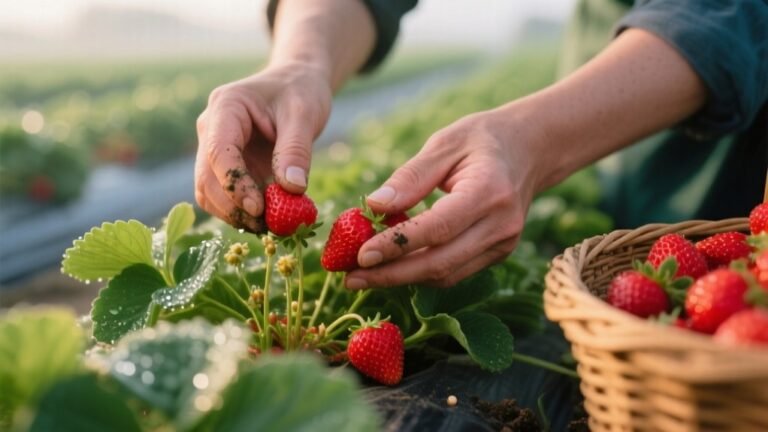
You’ll want to pick berries that are fully red, firm, and sweet-smelling. Ideally, harvest them in the cool morning hours to keep them fresh and avoid bruising.
Check your patch every 1 to 3 days to catch peak ripeness without missing a harvest. Keep picking consistently to maximize your yield and freshness.
There’s plenty more to know for the best results.
When Does Strawberry Season Start and End in Different Regions?
Although strawberry season varies across the country, you can usually find fresh berries from January through November.
Fresh strawberries are typically available nearly year-round, spanning from January through November across the country.
In the Deep South, strawberry season kicks off as early as February, with the peak harvest season arriving in late April and May.
If you’re in the middle U.S., like Illinois, expect the harvest season to start later, typically in May and June.
June-bearing strawberries produce a large crop over about three weeks, usually harvested from mid-June to mid-July.
For continuous picking, day-neutral strawberries offer ripe fruit from early July until the first frost.
Since the timing can shift yearly due to local conditions, you’ll want to keep an eye on local updates to catch the best harvest season and enjoy the freshest, ripest fruit.
How Weather Affects Strawberry Ripening and Picking
The timing of strawberry season depends heavily on weather conditions, which play a significant role in how the fruit ripens and when you should pick it. Ideal temperatures between 70°F and 80°F boost sweetness, while frost can delay the season by damaging blossoms.
Rain increases rot risk, so watch moisture levels closely. Cool weather slows ripening, extending harvest time, especially for day-neutral types. Sunny days followed by cool nights improve flavor, making your strawberries sweeter.
| Weather Condition | Effect on Ripening | Impact on Harvesting |
|---|---|---|
| Ideal Temp (70-80°F) | Best flavor & sweetness | Ideal time to harvest |
| Frost | Damages blossoms | Delays season start |
| Rainfall | Promotes rot | Harvest carefully to avoid |
| Cool Weather | Slows ripening | Prolongs harvest period |
| Sunny Days + Cool Nights | Enhances sweetness | Improves fruit quality |
Strawberry Varieties and Their Harvest Seasons
You’ll come across three main types of strawberries: June-bearing, day-neutral, and everbearing.
Each one has its own unique harvest times and growing needs. Knowing when each variety ripens is super helpful because it lets you plan your picking schedule to enjoy the best flavor.
Just remember, weather and soil conditions can also influence how and when your strawberries mature. So, it’s a bit of a dance between the plant and nature!
Types Of Strawberries
Three main types of strawberries, June-bearing, day-neutral, and everbearing, offer different harvest seasons and fruiting patterns to suit your growing needs.
June-bearing strawberries produce one large crop, usually in June, making them a favorite in any strawberry field for their best flavor. If you want a concentrated harvest, these are ideal.
Day-neutral strawberries keep fruiting from June until frost, allowing you to pick fresh berries throughout summer and fall.
Meanwhile, everbearing strawberries give you a good spring harvest with smaller crops later in the year.
With around 600 varieties in the U.S., you’ll find differences in size and taste, often with smaller berries packing more flavor.
Knowing these types helps you choose the perfect strawberry for your garden and harvest timing.
Harvest Timing Differences
Although strawberry varieties differ in their fruiting patterns, understanding their harvest timing helps you plan your picking schedule effectively.
June-bearing strawberries offer a concentrated harvest period, usually from mid-June to mid-July. It’s best to pick during those few weeks for peak flavor.
Day-neutral varieties produce strawberries continuously from early July until the first frost, giving you a longer window for fresh fruit.
Everbearing types start with a spring crop, then smaller harvests follow through summer and fall.
Keep in mind, harvest timing differences also depend on your region. Southern areas can start as early as February, while northern zones begin in June.
If you’re in the central U.S., May and June are typically the best months to pick ripe, flavorful strawberries.
Growing Conditions Impact
Because strawberry varieties have distinct growing requirements, their harvest seasons can vary widely. When you grow June-bearing strawberries, expect a single, large harvest from mid-June to mid-July.
If you choose day-neutral varieties, you’ll enjoy continuous harvests from June until frost, picking every few days. Everbearing strawberries offer a good spring harvest, with smaller yields through summer and fall, depending on your climate.
To maximize your strawberry harvest, focus on ideal growing conditions: well-drained, loamy soil with a pH between 5.5 and 7, and 6 to 10 hours of sunlight daily.
Understanding these factors helps you pick the perfect time to harvest and guarantees your strawberry crop thrives throughout the season.
How to Recognize the Perfect Time to Pick Strawberries
You’ll know strawberries are ready to pick when they’re fully red with no white or green spots and feel firm to the touch.
Plus, a sweet fragrance is a good sign—they’ve reached peak flavor.
For the freshest berries, try to harvest them in the cool morning hours.
And don’t forget to keep their green caps intact while picking!
Identifying Full Ripeness
When you want to pick strawberries at their peak, look for a consistent, vibrant red color covering the entire berry with no white patches. Identifying full ripeness means choosing fully ripe, red strawberries that offer the best flavor and sweetness.
Remember, strawberries don’t ripen further after picking, so timing is key. Pick them about 30 days after fertilization, when they’re firm, shiny, and fragrant.
Also, harvest in the cool morning and keep the green caps attached to maintain freshness.
| Ripeness Indicator | Description | Importance |
|---|---|---|
| Color | Uniform vibrant red | Guarantees sweet flavor |
| Texture | Firm and shiny | Prevents bruising |
| Fragrance | Noticeably sweet | Signals peak ripeness |
Color And Texture Indicators
Knowing how to spot the ideal color and texture can help you pick strawberries at their peak flavor.
Look for berries with a consistent, deep, shiny red color. No white or green patches should remain.
The texture should feel medium firm, signaling ripeness without being too hard or overly soft.
Trust your senses: a sweet, inviting scent often means the fruit is perfectly ripe.
- Bright, uniform color means juicy sweetness awaits
- Medium firmness guarantees a satisfying bite
- Sweet aroma signals peak ripeness
- A bit of stem attached keeps freshness longer
Optimal Picking Time
Picking strawberries at the perfect moment means watching for a fully red color with no white patches and harvesting them in the cool, fragrant morning hours. This ideal picking time guarantees you get the best berries bursting with sweetness and flavor.
Since strawberries don’t ripen after being picked, you want to wait until they show a consistent deep red hue and feel slightly firm. For June-bearing varieties, focus on mid-June to mid-July, when the harvest peaks.
Day-neutral types allow more frequent picking every few days until frost.
What Are the Key Signs of a Ripe Strawberry?
Because strawberries don’t continue to ripen once picked, you’ll want to look for a deep, consistent red color with no white patches to guarantee they’re fully ripe.
Ripe strawberries deliver the best flavor and texture, so here’s what you should spot:
- A rich red color covering the entire berry
- A noticeable strawberry scent that’s sweet and inviting
- Firmness that’s just right, not too hard, not mushy
- Green caps intact to keep freshness and prevent bruising
Why Is Morning the Best Time to Harvest Strawberries?
You’ll want to harvest strawberries in the morning when temperatures are cooler. This helps keep them fresh and prevents bruising.
Picking early in the day also maintains the berry’s firmness and flavor because heat can make them spoil faster.
Cool Temperature Benefits
When temperatures are cooler in the morning, you help strawberries maintain their freshness and firmness by harvesting early. The cool temperature benefits during morning harvesting strawberries are significant, ensuring you pick berries at their ideal ripeness.
Cooler conditions prevent softening caused by heat and reduce bruising risk. You’ll notice the scent of ripe strawberries is stronger, making it easier to identify the best picks.
Plus, harvesting early minimizes fruit rot by keeping berries from sweating.
Here’s why morning picking works best for you:
- Preserves berry firmness and freshness
- Enhances aroma for precise ripeness detection
- Reduces damage and bruising during harvest
- Extends shelf life by preventing early spoilage
Embracing these cool temperature benefits guarantees a delicious strawberry harvest every time.
Optimal Berry Freshness
Although strawberries look ripe throughout the day, harvesting them in the morning guarantees you get the freshest and firmest berries.
During strawberry picking, cooler morning temperatures help preserve ideal berry freshness by preventing bruising and moisture loss.
When you pick strawberries early, the berries stay firm and retain more flavor and sugar levels, since they haven’t been exposed to the day’s heat.
The cool night air keeps them crisp and full of sweetness, which quickly fades as temperatures rise.
Because strawberries don’t ripen much after being picked, harvesting at peak ripeness in the morning guarantees the best taste and quality.
How Often Should You Pick Strawberries?
Harvest frequency plays an essential role in getting the best from your strawberry plants. To maximize your harvest and keep berries fresh, you should pick strawberries every 1 to 3 days during the season.
For example, in Minnesota, daily or every-other-day picking prevents fruit rot and maintains quality. June-bearing strawberries need harvesting for 3-6 weeks, while day-neutral varieties can be picked continuously from early July until frost.
Regular picking helps reduce pest risks and boosts your yield.
How to Pick Strawberries Without Bruising Them
Picking strawberries regularly is only part of the process; how you pick them can make a big difference in quality. To avoid bruising, gently lift the green leaves to reveal hidden berries without pressing down.
Always pick strawberries with their green caps intact to maintain firmness. Proper picking means pinching the stem at least ¼ inch from the berry to prevent damage.
Choose berries that are fully red all around, as they’re ripe and more resilient to handling. Handle each berry with care. Squeezing or dropping can easily cause blemishes.
How to Store Strawberries Right After Picking to Keep Them Fresh
Once you’ve picked your strawberries, you should quickly move them to a cool, shady spot to preserve their quality and slow down spoilage.
To keep your strawberries fresh, store them properly by following these tips:
Keep strawberries at 32°F to 35°F with 90% to 95% humidity to maintain freshness.
Avoid washing strawberries until you’re ready to eat them to prevent moisture buildup and spoilage.
Use ventilated containers covered with plastic film or rigid domes to protect delicate berries.
For longer storage, freeze washed and dried strawberries in airtight containers, preserving freshness for up to a year.
How Much Work Does Strawberry Picking Take?
Keeping strawberries fresh right after picking is just one part of the process; you’ll also want to understand the effort involved in harvesting them.
Strawberry picking demands significant labor, especially for June-bearing varieties that need 6-9 pickers per acre every 1-2 days to guarantee a timely harvest.
Harvesting June-bearing strawberries requires 6-9 pickers per acre every 1-2 days for peak freshness.
Day-neutral strawberries require even more labor, with about 720 hours per acre annually due to their continuous picking season from early July until frost.
You’ll find the work physically demanding, needing preparation for heat, sun, and uneven terrain.
Factors like weather, soil health, and plant condition affect how often you must harvest. Daily picking is ideal to reduce rot and maximize yield.
While U-pick models cut down field worker hours, they increase customer management, impacting overall labor needs.
Frequently Asked Questions
Can Strawberries Be Harvested During Rain or Wet Conditions?
You can harvest strawberries during light rain, but you should be cautious about the rain impact on fruit quality.
Wet conditions can make harvesting tricky and increase bruising risk. Using careful harvesting techniques helps, but heavy rain usually compromises the berries. They absorb moisture and spoil faster.
It’s best to wait until the rain stops and the fruit dries to guarantee the best flavor and reduce contamination chances.
What Tools Are Best for Harvesting Strawberries Efficiently?
For efficient harvesting techniques, you’ll want the right picking tools. Use a lightweight, handheld basket to reduce strain and keep berries safe. Small scissors or pruners help you cut stems cleanly, boosting efficiency by minimizing damage.
Wearing gloves protects your hands, while a berry picker tool gently lifts strawberries without bruising. It’s perfect for larger fields.
Don’t forget a wide-brimmed hat and knee pads; they keep you comfortable and focused on picking quickly.
How Does Soil Type Influence Strawberry Harvesting Times?
Soil type directly influences when you’ll harvest strawberries because soil pH affects nutrient availability, impacting how fast plants grow.
If your soil has good drainage capacity, roots stay healthy, helping fruit ripen on time.
Poor drainage can delay harvest by causing root stress.
Also, nutrient levels play a big role. Nutrient-rich soil speeds development, so you’ll pick earlier.
Monitoring these factors lets you plan your harvest perfectly.
Are There Any Pests That Affect Strawberry Harvest Quality?
Did you know that the Spotted Wing Drosophila can reduce strawberry yields by up to 50% if unchecked?
Common strawberry pests like this, along with aphids and spider mites, seriously affect harvest quality.
You should implement pest management strategies and conduct regular pest impact assessments to protect your crop.
Monitoring is essential, especially in warm, humid conditions, to catch infestations early and keep your strawberries healthy and market-ready.
Can Strawberries Be Left on the Plant After Ripening Without Spoiling?
You shouldn’t leave ripe strawberries on the plant for too long because they can spoil quickly.
Even with good plant health, strawberries typically stay fresh only one to three days after ripening.
Proper harvest timing is key. You need to pick them promptly to enjoy their best flavor and avoid overripeness, which leads to rot and attracts pests.
Checking your plants daily guarantees you catch them at peak ripeness.
Conclusion
Strawberry season varies, but did you know that in some regions, strawberries can be harvested up to three times a year? That means more sweet, juicy berries for you to enjoy if you time it right.
By watching for bright red color and firm texture, you’ll pick the perfect strawberry every time. Remember to handle them gently and store them properly to keep that freshness longer.
Happy picking!