
What Do Bad Strawberries Look Like?
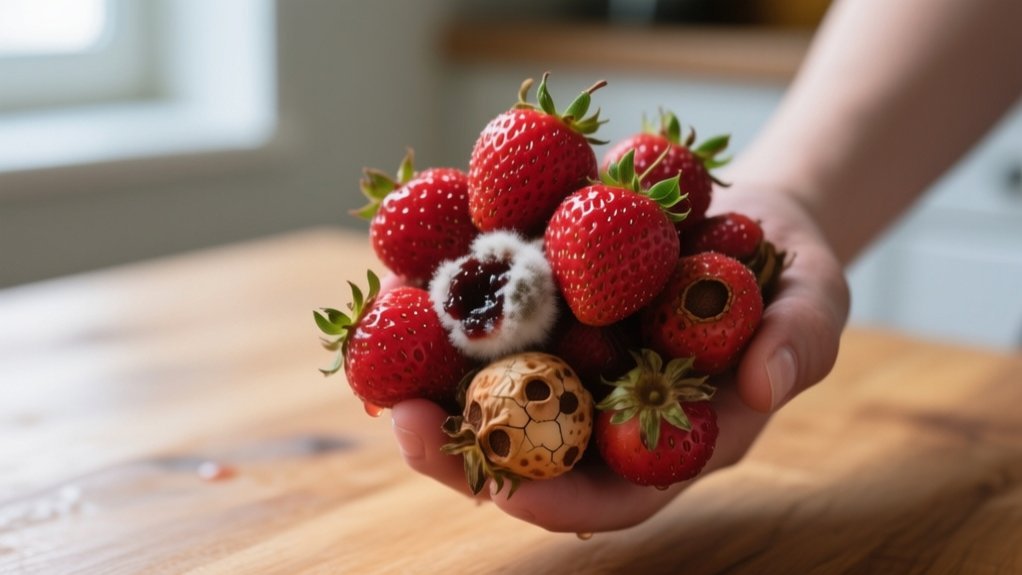
You’ll know strawberries are bad when they have fuzzy white, dark, or black mold patches, mushy or soft spots, and discolored leaves that yellow or brown.
They might smell sour or have an acrid, ammonia-like odor that’s off from their usual sweet floral scent. The fruit will feel less firm and more mushy, signaling spoilage.
If you want to avoid wasting good berries, keep an eye out for these signs and discover tips to prolong their freshness.
How To Tell If Strawberries Are Bad
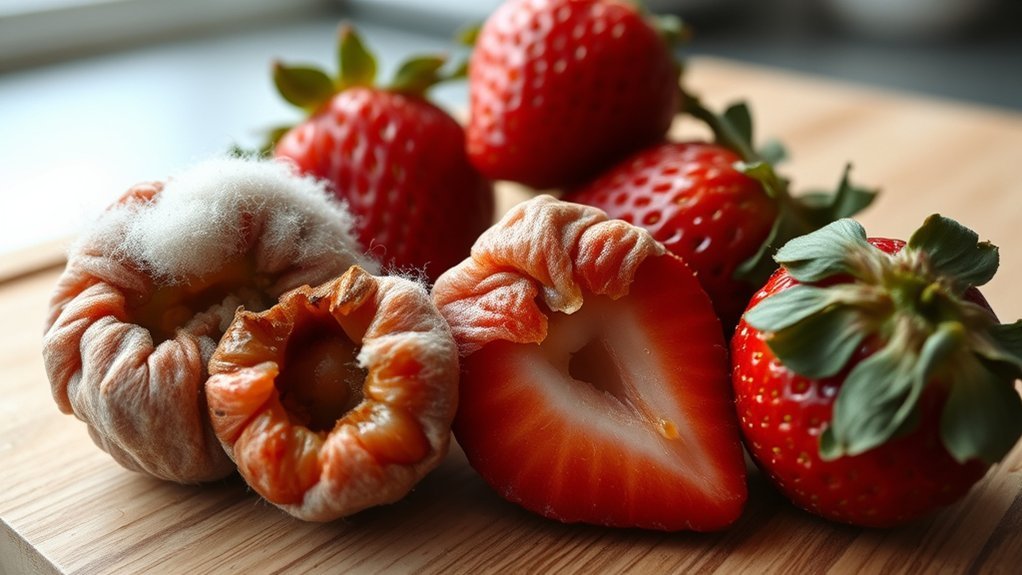
How can you tell if strawberries have gone bad? First, look closely for mold growth. Bad strawberries often develop white, dark brown, or black fuzzy patches on their surface. These spots can sometimes form internally before you see them outside.
Next, check the leaves. Discolored leaves that appear yellow, brown, or crinkly signal the fruit is aging and likely past its prime.
Touch the berries. Mushy spots are a red flag indicating spoilage.
Give them a sniff. A strong acrid or ammonia-like smell means you should toss them. Even if the strawberries look okay, if they lack a sweet floral scent or taste off, they’re probably spoiled.
Paying attention to these signs helps you avoid eating bad strawberries and keeps your fruit fresh.
How To Tell If Your Strawberries Are Ripening Or Rotting
Recognizing the difference between ripening and rotting strawberries can save you from throwing away good fruit or eating spoiled berries. Fresh strawberries should look vibrant and firm, while bad strawberries show clear signs of spoilage.
To tell if your berries are ripening or rotting, check for:
- Mushy spots, which suggest mold and spoilage
- White, dark brown, or black fuzzy mold on the surface
- Yellowing or crinkly leaves indicating decay
- A strong, acrid, or ammonia-like smell
- Soft spots or off-tasting berries
Why Firmness Is Key To Fresh Strawberries
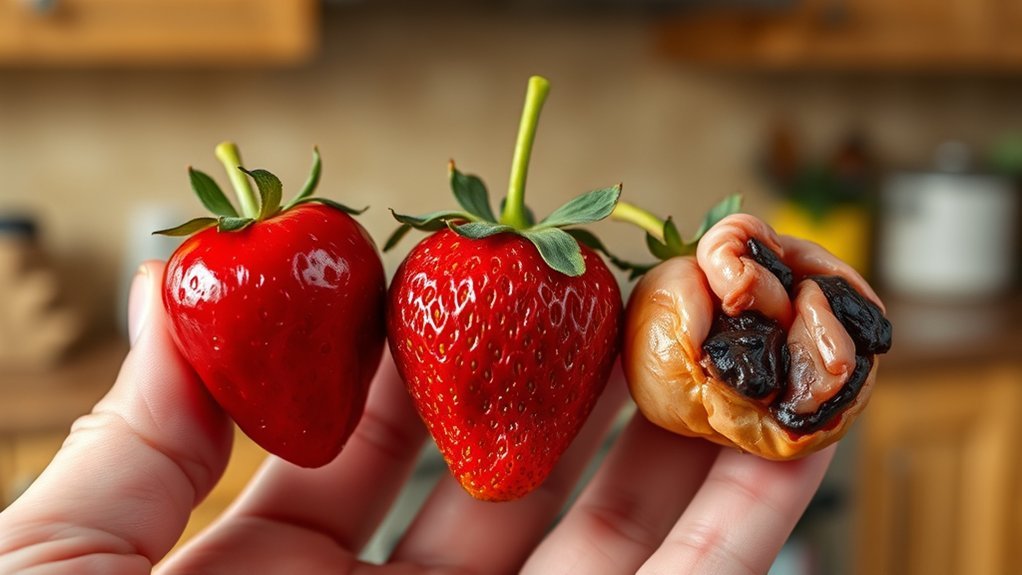
Firmness plays an essential role in determining the freshness of strawberries because it directly reflects their quality and ripeness. When you pick up strawberries, they should feel firm throughout; any softness or mushiness signals that they’re spoiled or beginning to rot.
Mushy spots often come before mold appears, so checking firmness helps you catch bad fruit early. Strawberries lacking firmness may also taste off, indicating they’re past their prime and best discarded.
Even if the surface looks okay, the internal structure can hide mold, making firmness a reliable freshness indicator.
Firmness reveals hidden mold inside strawberries, making it a key sign of their true freshness.
Proper storage is key to maintaining firmness and extending shelf life, so keep your strawberries cool and dry to prevent premature spoilage and enjoy fresh, tasty fruit longer.
How To Spot Mold On Strawberries
Since firmness helps you catch early signs of spoilage, the next step is to look closely for mold on strawberries.
Mold on strawberries often shows up as fuzzy spots that can be white, dark brown, or black. Keep an eye out for these clear indicators to avoid bad fruit.
Also, check the surrounding leaves. Discolored leaves that turn yellow or crinkly can signal mold growth nearby.
Here’s what to watch for:
- White or dark fuzzy patches on the berry surface
- Soft spots that feel different even if not visibly moldy
- A strong acrid or ammonia-like smell
- Discolored leaves near the fruit, yellow or shriveled
- Rapid spread of mold affecting multiple berries
Spotting these signs early guarantees you only enjoy fresh fruit.
How To Spot Mushy And Soft Areas On Strawberries
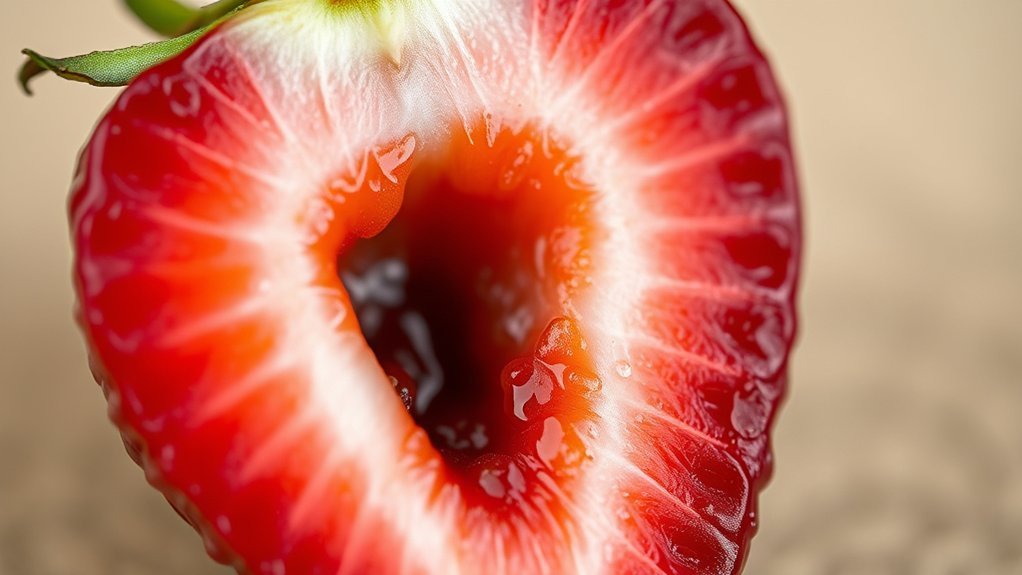
You can tell if strawberries have mushy spots by giving them a gentle squeeze. If some areas feel softer or different from the usual firm texture, that’s a sign.
Also, keep an eye out for darker red or brown patches—those often mean the berry is mushy or starting to spoil.
Catching these changes early can help you avoid eating berries that are overripe or damaged.
Identifying Soft Spots
Keep an eye out for darker red or brown patches on strawberries, as these soft spots usually signal over-ripeness or spoilage.
When you examine strawberries, feel for any mushy areas that break the firmness, indicating the fruit is starting to rot.
These soft spots aren’t just unappealing. They can lead to hidden mold and off tastes, making the strawberries unsafe to eat.
To spot soft spots effectively, look for:
- Darker, discolored patches on the fruit’s surface
- Areas that feel mushy or less firm than the rest
- Slightly sunken or wrinkled skin around soft spots
- Sticky or wet textures near these patches
- Early signs of mold that may be faint or hidden
Checking strawberries regularly helps you discard spoiled ones before they affect the rest.
Texture Changes To Note
Although strawberries may look ripe on the outside, subtle texture changes can reveal spoilage before you see visible mold or discoloration. When you pick up strawberries, always check for a firm texture throughout.
Mushy spots that feel soft or squishy are early signs of decay and signal that the fruit is starting to break down. These areas often lead to mold growth if not discarded promptly.
Moreover, watch for discolored spots, especially darker red or brown patches, which indicate rot beneath the surface. If you notice any mushy spots or uneven texture, it’s best to avoid eating those strawberries.
Visual Signs Of Mushiness
When inspecting strawberries, look closely for mushy spots that feel noticeably softer or squishier than the rest of the berry. These soft textures often signal early spoilage and can quickly lead to mold growth.
To spot mushy areas, gently press the strawberry and observe for:
- Darker red or brown discoloration
- Areas that yield easily under light pressure
- Wet or slimy patches on the surface
- Loss of firmness while the rest remains firm
- Spots that appear sunken or shriveled
Make it a habit to inspect strawberries regularly.
Mushy spots aren’t just unpleasant; they can spread rot to nearby fruit, ruining your entire batch. Paying attention to these signs helps you avoid eating spoiled berries and keeps your fruit fresh longer.
How To Spot Discoloration And Dark Spots On Strawberries
You’ll want to watch closely for any color changes on your strawberries, especially dark spots that might signal spoilage.
Now, not all blemishes mean the fruit is bad, so it’s important to tell natural marks from signs of decay.
Getting the hang of spotting these differences really helps you pick only the freshest berries.
Identifying Color Changes
If strawberries show dark red or brown spots, they’ve likely become overripe or started to spoil. You should carefully check for discoloration when inspecting your container of strawberries.
Look out for:
- Dark red or brown patches signaling overripeness
- Soft or mushy spots that indicate decay
- White, dark brown, or black fuzzy mold growing on the surface
- Yellowing or crinkly leaves suggesting aging fruit
- Any strange acrid or ammonia-like smells coming from the container
These color changes and textures mean the strawberries are past their prime and may not be safe to eat.
Catching these early helps you avoid wasting spoiled fruit and guarantees you enjoy only fresh, vibrant strawberries.
Recognizing Dark Spots
Noticing color changes on strawberries often leads you to spot dark spots, which deserve closer attention.
These dark spots usually appear as small, discolored areas that are darker red or brown, signaling early spoilage.
If you feel soft spots near these dark areas, it’s a clear sign of mushiness and potential rot, meaning the strawberry isn’t safe to eat.
Mold often shows up alongside dark spots, appearing as white, dark brown, or black patches with a fuzzy texture.
When you see mold, discard the berry immediately to avoid health risks.
Paying attention to these signs helps you avoid spoiled strawberries and guarantees you only enjoy fresh, flavorful fruit.
Recognizing dark spots is essential to prevent consuming bad strawberries with spoilage or mold.
Differentiating Natural Blemishes
Although dark spots on strawberries can signal spoilage, not all blemishes mean the fruit is bad. You need to differentiate between natural blemishes and signs of decay.
Natural blemishes often appear as small, harmless dark specks formed during growth. In contrast, discoloration like dark red or brown spots usually points to overripeness or the start of rot.
Watch out for soft or mushy areas, as they often accompany spoilage.
Here’s how to spot the difference:
- Small, dark specks that don’t affect texture
- Uniform red color with minor blemishes
- Dark red or brown discoloration spreading across the surface
- Soft or mushy areas indicating breakdown
- Unpleasant odors or yellowing leaves signaling spoilage
What Strawberry Leaves And Stems Reveal About Freshness
When you examine the leaves and stems of strawberries, you can quickly tell how fresh the fruit really is.
Healthy strawberry leaves should be vibrant green and firm. This indicates the plant is in good condition and the berries are likely fresh.
If you spot discolored leaves that are yellow, crinkly, or brown, that’s a sign the plant is aging or unhealthy. This can affect the fruit’s quality.
Mold on the leaves or stems is a clear warning that spoilage has set in. The strawberries may be compromised.
Understanding Sour Or Off Smells In Strawberries
Besides checking the leaves and stems, your nose can help you spot bad strawberries. Sour or off smells often signal spoilage even before you see mold. Fresh strawberries have a sweet, floral scent, so any acrid or ammonia-like odors mean you should toss them.
Your nose knows: fresh strawberries smell sweet and floral, while sour or ammonia-like odors signal spoilage.
When storing strawberries, use a paper towel to absorb moisture and place them in an airtight container to keep them fresh longer.
Watch out for these warning signs:
- Strong ammonia-like smell
- Sour, fermented odor
- Lack of sweet, floral fragrance
- Musty or moldy scent beneath the surface
- Unpleasant, sharp smells that make you hesitate
Trust your nose. If strawberries smell off, don’t risk eating them.
When To Throw Away Bad Strawberries To Stay Safe
If you notice mushy spots or a strong ammonia-like smell on your strawberries, you should throw them away immediately to stay safe. These signs indicate spoilage and potential mold growth, which can make you sick.
Always inspect strawberries for any visible mold, whether on the surface or hidden inside, and discard any affected berries without hesitation.
Also, check the leaves; yellow, crinkly, or brown leaves suggest the strawberries are past their prime.
If the berries taste off or lack their normal floral scent, it’s safer to discard them.
Don’t risk consuming strawberries that show any signs of mold or spoilage. Throwing them away promptly protects your health and prevents foodborne illness.
How To Prevent Strawberries From Going Bad Quickly
To keep your strawberries fresh longer and avoid the need to throw them away, proper storage and care matter a lot.
Start by rinsing them in a vinegar bath (1.5 cups water to 0.25 cups vinegar) for five minutes to kill mold spores.
After drying, place your strawberries in an airtight container lined with a paper towel to absorb moisture. Keep them refrigerated, not at room temperature.
Check them regularly and remove any spoiled berries promptly to protect the rest.
- Use a vinegar bath before storage
- Dry strawberries thoroughly
- Store in an airtight container with a paper towel
- Refrigerate immediately
- Remove spoiled strawberries quickly
Following these steps helps prevent your strawberries from going bad quickly and keeps them delicious longer.
Frequently Asked Questions
Can You Eat Strawberries With a Little Mold if You Cut It Off?
You shouldn’t eat strawberries with mold even if you cut it off.
Mold removal methods like trimming don’t guarantee safety because mold can penetrate deeper.
To avoid health risks, discard any moldy berries entirely.
Instead, focus on proper strawberry storage tips: keep them dry, refrigerated, and unwashed until use to slow spoilage.
This way, you reduce mold growth and protect your health without risking illness from hidden mold.
Are Frozen Strawberries Safe to Eat if They Were Bad Before Freezing?
Even if freezing slows spoilage, frozen strawberries that were bad before freezing aren’t safe to eat.
You might think freezing preserves all freshness, but freezer burn and existing mold can ruin frozen food safety.
When you thaw them, off smells or mushiness become obvious.
So, don’t risk it. Inspect before freezing and use proper thawing techniques to avoid eating spoiled fruit.
Always prioritize your health over saving questionable berries.
How Long Do Strawberries Last After Being Picked?
You can expect the strawberry shelf life to be about one week after picking if you use ideal storage, like keeping them in the fridge inside an airtight container with a paper towel to absorb moisture.
To maintain freshness indicators, like firm texture and bright color, avoid washing them until you’re ready to eat.
If you want to extend their life, try a vinegar bath before refrigerating; it can help strawberries stay fresh up to two weeks.
Do Organic Strawberries Spoil Faster Than Non-Organic Ones?
Yes, organic strawberries usually spoil faster than non-organic ones because organic farming avoids synthetic preservatives and fungicides.
You’ll want to pay close attention to how you store strawberries to keep them fresh longer.
Keep them dry and refrigerated to slow spoilage. To extend freshness even more, store strawberries in a breathable container and wash them only right before eating.
This way, you can enjoy their natural flavor without them going bad too quickly.
Can Bad Strawberries Cause Allergic Reactions or Food Poisoning?
Yes, bad strawberries can cause allergic reactions and food poisoning.
Studies show that up to 20% of food poisoning cases stem from contaminated fruits, making strawberry hygiene essential.
When strawberries spoil, their altered proteins may trigger allergic responses in sensitive people.
Moldy berries can contain harmful mycotoxins, increasing the risk of food poisoning.
To protect yourself, always inspect and wash strawberries thoroughly.
Discard any that look mushy or moldy.
Conclusion
Now that you know how to spot bad strawberries, you can enjoy them at their freshest. Did you know that about 30% of strawberries go bad before they reach your kitchen? That’s why checking for firmness, mold, and off smells is so important.
By staying vigilant and storing them properly, you’ll reduce waste and get the most out of every berry. Remember, fresh strawberries not only taste better but are safer to eat!