

7 Facts About the Last Strawberry Moon and Its Date
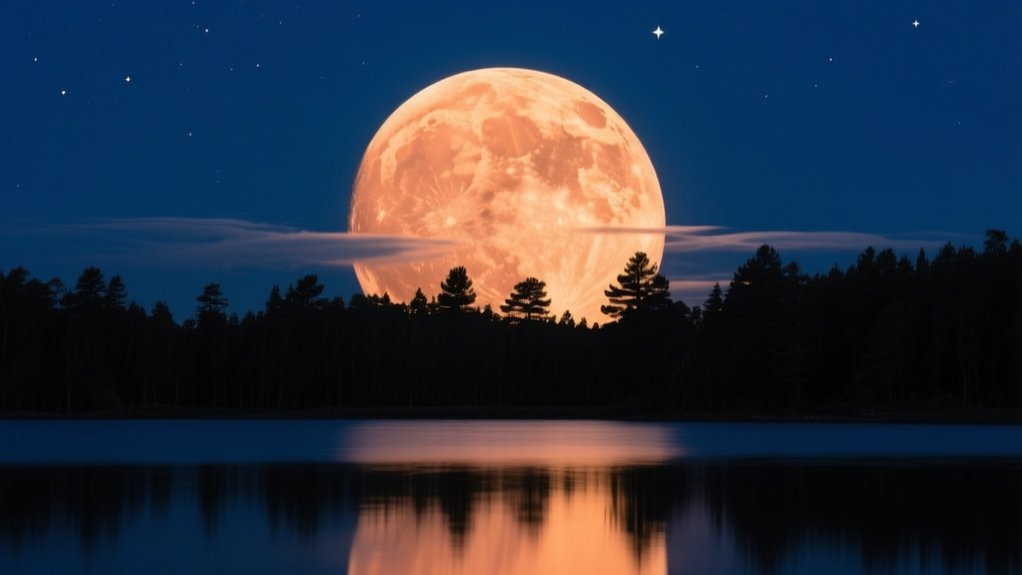
The last Strawberry Moon happened on June 11, 2025, shining brighter and larger because it aligned with a rare lunar standstill. You’d have seen it glowing amber low in the sky just after sunset, marked by Native American tribes as the time to harvest strawberries.
This moon signals summer’s start and abundance, standing out with its unique glow and cultural meaning. If you want to uncover how this moon fits into the lunar calendar and the best ways to enjoy it, keep exploring.
When Was the Last Strawberry Moon?
Although you might’ve missed it, the last Strawberry Moon occurred on June 11, 2025, at 3:44 A.M. Eastern Time.
This last Full Moon of spring marked a special moment in the lunar calendar.
The Strawberry Moon name comes from Native American tribes who linked it to the wild strawberry harvesting season.
It’s a tradition that ties the moon’s timing to nature’s cycles.
In 2025, this Full Moon was particularly notable because it coincided with a major lunar standstill, causing the moon to appear unusually low in the sky.
If you caught it the evening before, you’d have seen it rise in the southeast with a warm amber glow, enhancing its connection to both the season and the culture behind its name.
What Is the Strawberry Moon and Why Is It Called That?
The last Strawberry Moon, which you may have seen on June 11, 2025, carries a name rich in meaning. This Full Moon in June marks the time for harvesting June-bearing strawberries.
The name comes from the Algonquian tribes, who named Full Moon names based on seasonal events. It’s not about the Moon’s color but the abundance of ripe strawberries signaling summer’s arrival.
| Full Moon Name | Month | Meaning |
|---|---|---|
| Strawberry Moon | June | Harvesting ripe berries |
| Blooming Moon | June | Flowers in full bloom |
| Green Corn Moon | August | Corn ripening season |
These names reflect cultural ties to nature’s cycles and the importance of agricultural practices.
How Did the Last Strawberry Moon’s Low Position Affect Its Look?
You probably noticed the last Strawberry Moon sat unusually low in the sky because of a rare lunar standstill.
When the Moon hangs that low on the horizon, it actually looks bigger than usual — that’s thanks to something called the Moon illusion.
Plus, its warm amber glow came from atmospheric light scattering, which gives it that beautiful, soft color.
So, when you put these two things together, you get a really striking view that’s hard to forget.
Pretty cool, right?
Lunar Standstill Impact
When you saw the last Strawberry Moon on June 11, 2025, its unusually low position in the sky made it look larger and more striking than usual. This was due to a rare lunar standstill, a phenomenon that happens every 18.6 years, causing the Moon’s path to shift notably.
Because of this, the low full moon rose closer to the horizon than normal, enhancing its apparent size and making your viewing experience truly unique.
The Moon’s brightness peaked early morning on June 11, but the best views were available during its rise the evening before.
This extraordinary alignment meant the next time you could witness such a low full moon won’t be until 2043, highlighting how special the 2025 Strawberry Moon was.
Moon Illusion Effect
Experiencing the last Strawberry Moon near the horizon gave you a striking visual trick known as the Moon illusion effect.
Because the 2025 Strawberry Moon appeared at its lowest full moon position during a major lunar standstill, your eyes perceived it as larger and more impressive than usual.
This low angle, combined with the moon’s rise just above the southeastern horizon, amplified its presence dramatically.
The lunar standstill, occurring every 18.6 years, made this event especially rare. It’s one you won’t see again until 2043.
As you admired the moon’s warm amber hue, the illusion made it seem even closer and more vivid, enhancing your overall experience.
This Moon illusion effect is a fascinating reminder of how perspective shapes what we see in the night sky.
Atmospheric Color Influence
Because the last Strawberry Moon hung so low on June 11, 2025, atmospheric conditions played a key role in shaping its striking appearance. As you watched the Full Strawberry Moon rise near the horizon, the Moon illusion effect made it seem larger. At the same time, atmospheric conditions scattered shorter wavelengths, giving the Moon a warm, reddish hue during moonrise. This blend of size and color made the view unforgettable.
| Aspect | Effect | Cause |
|---|---|---|
| Low Position | Looks larger | Moon illusion effect |
| Near Horizon | Reddish or amber color | Light scattering in atmosphere |
| Atmospheric Conditions | Enhanced visual appeal | Particles and moisture |
| Moonrise Timing | Unique viewing opportunity | Lunar standstill event |
Cultural and Seasonal Significance of the Strawberry Moon
Although the Strawberry Moon doesn’t actually appear red, it holds deep cultural and seasonal meaning you can appreciate. This full moon, named after the seasonal ripening of strawberries, signals the start of summer and the harvest period for this fruit.
Native American tribes, especially the Algonquin, called it the Strawberry Moon to mark the ideal time for gathering berries, showing their strong connection to nature and agricultural practices.
You’ll find that many cultures recognize June’s full moon with names like Blooming Moon or Green Corn Moon, each tied to seasonal changes and farming rhythms.
For you, understanding the Strawberry Moon’s cultural significance highlights how closely human life has historically aligned with natural cycles and crop timing.
How Did the Last Strawberry Moon Fit Into the June 2026 Lunar Calendar?
Three key lunar events shaped June 2026’s moon phases, with the last Strawberry Moon shining brightest on June 29 at 7:56 P.M.
In the June 2026 lunar calendar, this full moon symbolized the peak of ripening and the abundance tied to the season.
Here’s how it fit into the month’s cycle:
- The Last Quarter on June 8 marked the gradual shift toward fullness.
- The New Moon on June 14 set the stage for new lunar energy.
- The Strawberry Moon on June 29 celebrated the height of summer’s arrival, just after the summer solstice around June 20-22.
You’ll see the Strawberry Moon perfectly bridges the time of growth and change in the lunar calendar, marking June as a month of ripening and seasonal change.
How to View and Photograph the Last Strawberry Moon
When you want to catch the last Strawberry Moon, timing and location play crucial roles in your viewing experience. For the best view, look toward the southeast horizon with minimal light pollution, especially in the northeast United States.
The moonrise and moonset times vary, so use moonrise calculators to pinpoint exact moments. Photographing the Strawberry Moon right after sunset can capture its larger, orange-hued appearance.
| Aspect | Tips |
|---|---|
| Viewing Location | Clear southeast horizon, low light |
| Timing | Just after sunset or early morning |
| Equipment | Binoculars, small telescope, or naked eye |
What Makes the Strawberry Moon Different From Other Full Moons?
Since the Strawberry Moon occurs in June, it stands out because it signals the shift from spring to summer and carries cultural significance tied to agriculture and native traditions.
Unlike other full moons, the Strawberry Moon is deeply connected to the ripening of strawberries in the Northern Hemisphere, marking an essential agricultural milestone.
Here’s what makes it unique:
- It’s named for the peak ripening of strawberries, not the Moon’s color.
- It’s often called the last full moon of spring, bridging seasons.
- It’s also known by other names like Blooming Moon, reflecting diverse agricultural activities.
When you watch the Strawberry Moon, you’re witnessing a celestial event that’s intertwined with farming cycles and native heritage, setting it apart from other full moons.
Frequently Asked Questions
Can the Strawberry Moon Influence Ocean Tides?
Yes, the Strawberry Moon definitely influences ocean tides.
You’ll notice changes in tide patterns because its gravitational pull, combined with the Sun’s position, enhances lunar influence on ocean currents.
This causes higher high tides and lower low tides, known as spring tides.
These tidal shifts affect marine life, making this period vital for fishing and coastal activities.
Are There Any Myths Associated With the Strawberry Moon?
Like a story woven into the night sky, strawberry moon myths capture your imagination with their lunar folklore.
You’ll find celestial symbolism reflecting nature’s cycles and cultural significance across many tribes.
These historical interpretations often link the moon to fertility, growth, and abundance, reminding you of your deep connection to the environment.
Does the Strawberry Moon Affect Animal Behavior?
Yes, the Strawberry Moon affects animal behavior in several ways.
You’ll notice animal migration patterns often shift around this time, as some species adjust their routes.
Nocturnal activity changes become apparent, with predators and prey altering their interactions under brighter moonlight.
Mating behavior shifts occur too, especially in marine life like corals.
Feeding habits also change as animals take advantage of increased visibility and tidal changes, influencing their daily routines.
How Long Does the Strawberry Moon Stay Fully Visible?
You can expect the moon visibility duration of the Strawberry Moon to last about three nights, with its peak brightness on the exact full lunar phase.
Understanding lunar phase characteristics helps you know when to catch this celestial event timing.
For the best experience, use astronomy observation tips like checking local times and weather.
Can the Strawberry Moon Be Seen From Both Hemispheres?
Yes, you can see the Strawberry Moon from both hemispheres, though moon visibility varies with hemispheric differences.
As lunar phases progress, your experience changes—summer in the Northern Hemisphere, winter down south.
This coincidence connects you globally through astronomical observations, even if the cultural significance shifts.
While you admire the glowing orb, remember that each place interprets this full moon uniquely, blending science and tradition in your shared cosmic dance.
Conclusion
As you look up at the last Strawberry Moon, remember it’s more than just a glowing orb. It’s a timeless symbol, like the ripening berries that inspired its name.
Just as ancient cultures marked seasons by its light, you’re part of a long story connecting earth and sky. Don’t miss your chance to witness this celestial moment.
It’s a fleeting reminder that some wonders, like summer’s sweetest fruit, are meant to be savored before they fade away.