

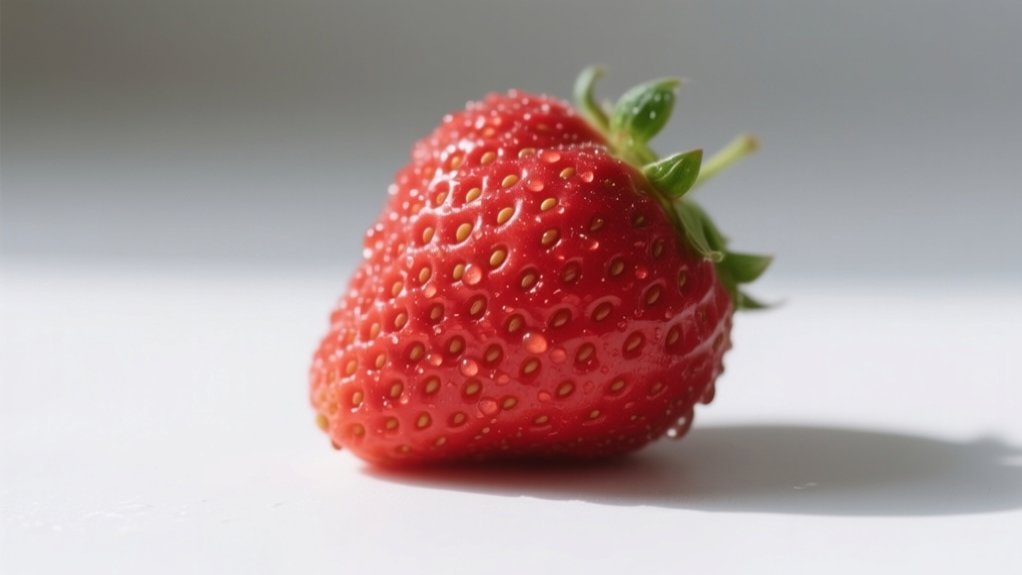
How Many Calories Are in One Large Strawberry?
You’ll find about 6 calories in one large strawberry, making it a sweet, low-calorie treat you can enjoy guilt-free. Because strawberries are mostly water and fiber, they keep calories low while helping you feel full.
The size affects calories slightly, with medium berries having fewer calories. Whether fresh or frozen without added sugar, strawberries remain a healthy choice.
Keep exploring, and you’ll discover even more ways strawberries can support your nutrition and snacking habits.
How Many Calories Are in One Large Strawberry?
Although strawberries are naturally sweet, one large strawberry contains only about 6 calories, making it an excellent low-calorie snack choice. You can enjoy these juicy fruits guilt-free since their high water content, about 91%, keeps the calorie count low.
If you eat a whole cup, or around eight large strawberries, you’ll consume roughly 48 calories, which fits well into most diets.
Besides being low in calories, strawberries offer valuable nutrients like vitamin C, boosting your immune system. Their low glycemic index means they won’t spike your blood sugar, despite their natural sugars.
How Does Strawberry Size Affect Its Calorie Count?
Since strawberries vary in size, their calorie content changes accordingly. Larger strawberries contain more calories due to higher water and sugar content.
Strawberry calories differ by size, with larger berries having more due to increased water and sugar.
For example, a medium strawberry has about 4 calories, while a large one can have 6 to 8 calories. This difference happens because bigger strawberries weigh more and often taste sweeter, indicating a slightly higher sugar level.
When you eat multiple large strawberries, the calories add up, so it’s useful to weigh them for accuracy.
Despite the calorie variation, strawberries remain a low-calorie snack and an excellent source of vitamin C.
How Do Natural Sugars Contribute to Strawberry Calories?
You might wonder why a large strawberry packs about 6 calories. Those calories mainly come from natural sugars, specifically fructose, which is a carbohydrate that supplies your body with energy.
Strawberries contain roughly 4.66 grams of sugar per 100 grams, so even though they taste sweet, their calorie content stays low. The natural sugars in strawberries are balanced by dietary fiber, which reduces the net digestible carbohydrates you absorb.
This fiber helps keep the glycemic index low, around 40, meaning strawberries have minimal impact on your blood sugar levels.
What Are the Calorie Differences Between Fresh and Frozen Strawberries?
While fresh and frozen strawberries both offer low-calorie options, you’ll find that their calorie counts stay quite similar when no sweeteners are added.
Here’s what you need to know about the calorie differences:
- Fresh strawberries have about 32 calories per 100 grams, and a large fresh strawberry contains roughly 6 calories.
- Frozen strawberries usually keep the same calorie count since they’re flash-frozen soon after harvesting.
- Calories can increase in frozen strawberries if added sugars or syrups are included, so always check labels.
Both forms are great low-calorie choices, but fresh strawberries may taste better and have slightly higher vitamin C.
When counting calories, fresh and plain frozen strawberries are nearly interchangeable.
Does Cooking or Processing Change Strawberry Calories?
When you cook strawberries, their water content goes down. This means the calories get a bit more concentrated in each serving, but the total number of calories doesn’t change all that much.
Now, when you process strawberries, like turning them into jam, there’s usually added sugar involved. That extra sugar bumps up the calorie count compared to fresh strawberries.
Calorie Changes With Cooking
Although cooking or processing strawberries can alter their texture and flavor, it doesn’t greatly change their calorie content since strawberries are mostly water and carbohydrates.
When you consider calorie changes with cooking, here’s what you should know about a serving of strawberries:
- A large raw strawberry has about 6-7 calories, and cooking it keeps this number fairly stable.
- Cooking can break down some sugars, making strawberries taste sweeter without adding calories.
- The calorie density only increases when water is removed, like in dried or freeze-dried forms, not with normal cooking.
Effects Of Processing
Since strawberries are mostly water and natural sugars, cooking or processing them doesn’t greatly change their calorie count. You’ll still get about 6 calories from one large strawberry.
However, some processing methods can affect calories differently. Freeze-drying strawberries concentrates their sugars, increasing calories per serving compared to fresh fruit.
Juicing removes fiber, which can alter the calorie density of the juice even though total calories remain similar. Also, preserved or canned strawberries often contain added sugars, boosting their calories beyond fresh strawberries.
Keep in mind, while calories stay fairly stable, excessive heat can reduce vitamins and antioxidants.
How Do Strawberry Calories Fit Into a Balanced Diet?
Because one large strawberry has only about 6 calories, you can easily include them in your daily meals without worrying about excess calories.
A single large strawberry contains just 6 calories, perfect for guilt-free snacking.
Strawberries fit perfectly into a balanced diet by offering nutrition without adding significant calories. Here’s how you can benefit:
- Meet fruit intake goals: Adding strawberries helps you reach the USDA’s recommended 1.5 to 2 cups of fruit daily without many calories.
- Manage blood sugar: With a low glycemic index of 40, strawberries won’t spike your blood sugar, making them a smart choice.
- Boost nutrition: Their high vitamin C content supports your immune system and enhances overall diet quality.
Why Are Strawberries a Great Low-Calorie Snack?
If you’re looking for a snack that satisfies your hunger without piling on calories, strawberries fit the bill perfectly. Each large strawberry has just 6-7 calories, making them a smart choice when you want something light.
Their high water content, about 91%, keeps you hydrated while keeping calories low. Plus, strawberries are a good source of vitamin C, offering more per cup than oranges, which supports your health as you snack.
With only 4.9 grams of sugar per 100 grams, they provide natural sweetness without excess calories. The fiber in strawberries also helps you feel full longer and aids digestion.
How Can Strawberries Help With Weight Management?
You can use strawberries to help manage your weight because they’re low in calories but high in fiber.
So, you get to enjoy a satisfying portion without worrying about consuming too many calories.
Plus, the fiber in strawberries helps you feel full longer, which makes it easier to control your appetite.
Pretty handy, right?
Low Calorie Density
Although managing your weight can be challenging, choosing snacks like strawberries makes it easier since they pack only about 6 to 8 calories per large berry. Their low calorie density means you can enjoy more volume without overeating, helping you stay satisfied while controlling calorie intake.
Here’s how strawberries support weight management through low calorie density:
- With just 32 calories per 100 grams, strawberries let you snack guilt-free.
- Their high water content (about 91%) fills you up, reducing hunger.
- You can add strawberries to meals for flavor without notably increasing calories.
High Fiber Content
Because strawberries are rich in dietary fiber, they help you feel full longer, which can reduce your overall calorie intake. This fullness supports weight loss by curbing hunger and preventing overeating.
Plus, strawberries are low in calories, so you can enjoy a satisfying snack without derailing your diet. Their fiber also slows digestion, stabilizing blood sugar and making it easier to control cravings.
| Nutrient | Amount per 100g |
|---|---|
| Calories | 32 |
| Dietary Fiber | 2 grams |
| Glycemic Index (GI) | 40 |
| Water Content | 91% |
| Weight Management | Supports fullness |
Including strawberries in your diet can help you manage calories effectively and promote sustainable weight loss.
What’s the Best Way to Choose and Store Fresh Strawberries?
How can you tell if strawberries are fresh and ripe? Look for shiny, firm berries with a bright red color and fresh, intact green caps. Avoid any that are mushy or show mold.
Choose shiny, firm strawberries with bright red color and fresh green caps; avoid mushy or moldy ones.
To choose and store fresh strawberries effectively, follow these steps:
- Pick berries that feel firm and vibrant, indicating ripeness and sweetness.
- Store them in the refrigerator inside a breathable container to keep them fresh longer.
- Rinse strawberries in cold water only just before eating to prevent faster spoilage.
Remember to discard any damaged or overripe strawberries immediately to protect the rest.
How to Enjoy Strawberries While Keeping Calories in Check?
If you want to enjoy strawberries without worrying about calories, you’ll find they’re an excellent choice. One large strawberry contains just 6-7 calories, making it a perfect low-calorie snack.
To keep calories in check, add strawberries to salads or smoothies. They boost flavor and sweetness naturally without adding many calories.
Pairing strawberries with low-calorie toppings like yogurt or cottage cheese creates satisfying snacks that stay within a healthy calorie range.
You can also use strawberries as a garnish for desserts or breakfast dishes to add a burst of flavor and nutrition with minimal calories.
Always opt for fresh or frozen strawberries instead of sugary syrups or preserves to enjoy their natural taste while controlling calories effectively.
Frequently Asked Questions
Are Strawberries Safe for People With Allergies?
Strawberries aren’t always safe if you have strawberry allergies. You might experience itching, hives, or swelling after eating them because of the allergy-causing proteins linked to their anthocyanins.
If you’re sensitive, you could try colorless or white strawberries, which usually cause fewer reactions. Always wash them well to reduce pesticide residue.
If you notice any symptoms, it’s best to avoid strawberries and consult your doctor for advice.
Can Strawberries Improve Skin Health?
Yes, strawberries can improve your skin health thanks to their strawberry benefits. They’re packed with vitamin C, which helps boost collagen production, keeping your skin firm and youthful.
Their antioxidants fight oxidative stress, reducing signs of aging.
Plus, the salicylic acid in strawberries can help clear acne, and their high water content keeps your skin hydrated.
Eating strawberries regularly supports a glowing, healthy complexion you’ll love.
Do Strawberries Interact With Any Medications?
Like a hidden twist in your favorite novel, strawberry interactions with medications can surprise you.
You should know that strawberries, rich in vitamin C and K, may affect how some drugs work, especially blood thinners like warfarin or diabetes medications.
These interactions might alter your medication’s effectiveness or blood sugar levels.
What Nutrients Are Most Abundant in Strawberries?
You’ll find that vitamin C, dietary fiber, and potassium are the most abundant nutrients in strawberries.
These nutrient benefits support your immune system, aid digestion, and help regulate blood pressure.
Plus, strawberries are packed with antioxidants like anthocyanins, which fight inflammation and promote overall health.
Including them in your diet not only boosts nutrient intake but also offers delicious, low-calorie enjoyment.
How Do Strawberries Compare to Other Berries Nutritionally?
When you do a berry comparison, strawberries stand out with fewer calories and high vitamin C levels compared to blueberries and raspberries.
They’ve about 32 calories per 100 grams, less sugar than some berries, and offer around 2 grams of fiber.
Plus, their unique antioxidants, like pelargonidin, give them vibrant color and health benefits.
Conclusion
Now that you know how many calories are in one large strawberry, you can enjoy them guilt-free, snack smart, and stay healthy. Whether fresh, frozen, or cooked, strawberries offer natural sweetness without the calorie overload.
You can choose wisely, store properly, and savor every bite while managing your weight. So grab a strawberry, boost your energy, and treat yourself to a delicious, low-calorie delight anytime you want!