

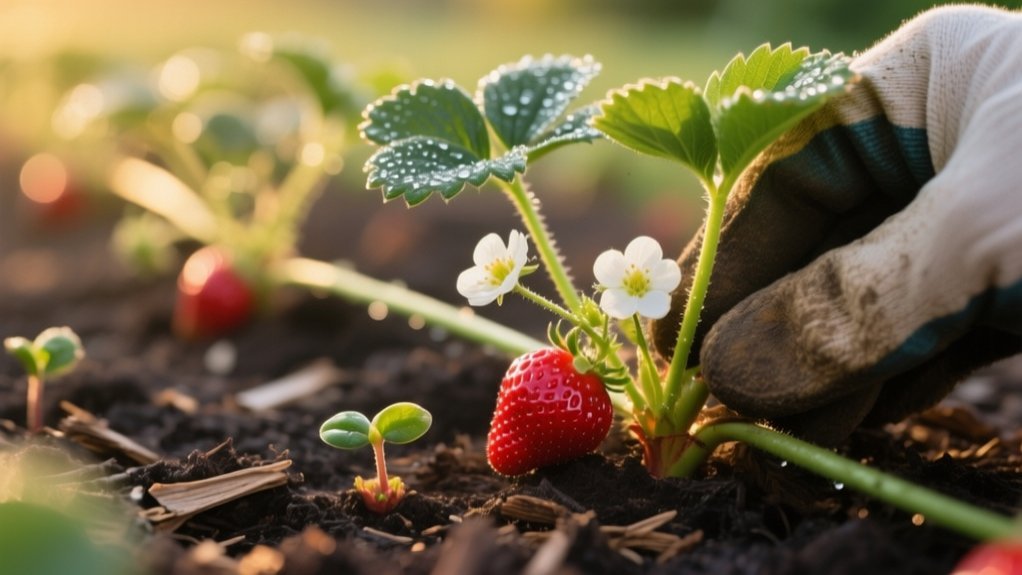
Do Strawberries Vine and How to Manage Runners
Yes, strawberries do vine by sending out runners, which are long stems that root new plants nearby. You’ll want to manage these runners by trimming excess ones to prevent overcrowding and encourage bigger, juicier berries.
Only let a few healthy runners root to expand your patch without sacrificing fruit quality. Use sharp tools for clean cuts, and keep soil moist for strong roots.
If you want to grow a productive, thriving patch, there’s more to take into account about timing, soil, and care.
Do Strawberry Plants Really Send Out Runners?
Have you ever noticed long, slender stems stretching out from your strawberry plants? These are strawberry runners, essential for plant growth and expansion.
Each runner acts as a horizontal extension that can develop into a new strawberry plant when pinned or potted into soil. This natural method allows you to expand your strawberry bed without buying new plants, rejuvenating older patches effectively.
However, the number and strength of runners depend on factors like soil moisture, environmental conditions, and the strawberry variety.
Managing these runners is key. You can pin, pot, or trim them to keep your plants healthy.
Too many runners cause overcrowding and smaller berries, so careful control guarantees your strawberry patch thrives and produces bountiful fruit.
Why Do Strawberry Plants Produce Runners?
Because strawberry plants rely on runners to propagate themselves, they naturally send out these horizontal stems to create new plants nearby. This form of vegetative propagation helps guarantee the plant’s survival by expanding its presence without relying on seeds.
When runners touch the soil, they can develop roots and grow into independent strawberry plants. This allows you to increase your strawberry patch efficiently.
The production of runners depends on factors like plant health, environmental conditions, and the cultivar you’re growing. By managing runners wisely, either letting some root to boost future harvests or trimming excess, you can maintain your patch’s health and productivity.
Understanding why strawberry plants produce runners helps you optimize propagation and enjoy a thriving garden.
How to Identify Healthy Strawberry Runners
To successfully manage your strawberry patch, you need to recognize which runners are healthy and ready for propagation. Look for runner plants that show vigorous growth with at least one or more green, firm leaves. These leaves indicate the runner is prepared to root.
Make certain the runners are free from disease, as selecting healthy ones helps guarantee your new strawberry plants thrive and produce well. Also, check that the runner maintains a strong connection to the mother plant, which supplies nutrients until the runner’s roots develop.
Choose disease-free runners with a strong link to the mother plant for healthy, productive strawberries.
Avoid runners with wilting or discolored leaves, as these signs point to weakness.
The best time to identify healthy runners is during the growing season when your strawberry plants actively produce new growth. This gives you the prime opportunity to select viable runner plants.
When and How to Trim Strawberry Runners
Although strawberry runners play a vital role in propagating new plants, you need to trim them at the right time to keep your patch productive.
Timing matters. Cut runners too early, and they won’t root. Wait too long, and overcrowding reduces berry size. Here’s how to trim effectively:
- Wait until runners have established roots before trimming to allow new plants to grow independently.
- Regularly remove excess runners to prevent nutrient competition and improve air circulation.
- Leave a few runners to propagate new plants, balancing growth and fruit production.
- Use clean, sharp tools when you trim to minimize plant stress and disease risk.
Rooting Strawberry Runners: Best Soil and Conditions
When you root strawberry runners, choosing the right soil and maintaining proper conditions can make all the difference in their success. Use a well-draining mix of three parts compost to one part perlite to keep the soil moist and promote strong roots. Keep runners attached to the mother plant until roots form, securing them with U-shaped staples to guarantee good soil contact. Consistent moisture is key. Avoid waterlogging to prevent rot.
| Aspect | Recommendation | Reason |
|---|---|---|
| Soil Mix | 3 compost : 1 perlite | Well-draining for root health |
| Moisture Level | Keep soil moist, not wet | Prevents rot, supports growth |
| Runner Support | Use U-shaped staples | Guarantees runner stays in place |
How to Transplant Rooted Strawberry Runners
You’ll know it’s time to transplant rooted strawberry runners once they’ve developed a healthy root system and have at least one or two leaves.
To guarantee their successful establishment, follow these steps:
- Choose spring or fall for transplanting, as cooler temperatures and moisture support survival.
- Gently sever the runners from the mother plant without damaging roots.
- Plant runners in well-draining soil, mixing three parts compost with one part perlite for ideal root growth.
- Water thoroughly after transplanting and maintain consistent moisture to help the new plants settle.
Deciding Whether to Let Strawberry Runners Spread or Prune Them
You’ll want to weigh the benefits of letting runners spread against when it’s best to prune them.
Allowing some runners helps expand your patch, but too many can overcrowd plants and reduce fruit quality.
Finding the right balance guarantees healthy growth and a better yield.
So, it’s really about keeping an eye on your plants and deciding what works best for your garden.
That way, you get the most out of your strawberries without any hassle.
Benefits Of Allowing Runners
Allowing strawberry runners to spread offers a cost-effective way to expand your garden by producing new plants without buying more.
This natural growth method can rejuvenate your strawberry patch and guarantee a steady supply of fruit.
Here are four benefits of letting runners take hold:
- Increase plant numbers easily without extra cost.
- Rejuvenate aging beds with vigorous new plants.
- Create independent plants by rooting selected runners.
- Maintain a continuous harvest by expanding your patch.
When To Prune Runners
While letting strawberry runners spread can boost your garden’s growth, knowing when to prune them is just as significant. After the second year, start pruning runners to help the parent plant focus energy on fruit production instead of spreading.
If runners overcrowd your planting area, trimming them prevents smaller berries and reduced yields. Before cutting runners from the parent, allow them to root in soil for a few weeks to guarantee successful propagation.
Timing is essential. Prune too early, and you risk hindering new growth and root development.
Regularly assess your runners’ health to decide whether to let them spread or prune them back. This balance helps maintain healthy plants and supports a productive strawberry patch.
Balancing Growth And Yield
Deciding whether to let strawberry runners spread or to prune them depends on your goals for plant growth and fruit yield.
You need to balance runner growth with maximizing berry production.
Here’s how to manage this balance:
- Allow a few strong runners early in the season to root, ensuring new plants without overcrowding.
- Prune excess runners to focus the plant’s energy on producing larger, juicier strawberries.
- Avoid letting too many runners spread as overcrowding can reduce berry size and overall yield.
- Monitor your strawberry beds regularly to maintain healthy spacing and optimize harvests.
Managing Strawberry Runners to Boost Fruit Production
You’ll want to prune strawberry runners carefully to help your plants focus energy on producing fruit instead of spreading too much.
When you trim those extra runners, it really helps balance growth and fruit development. This way, you end up with bigger, juicier berries.
Managing this energy trade-off is key—it keeps your patch healthy and productive.
Pruning Runners Effectively
Because strawberry plants send out runners to propagate, managing these runners is key to boosting fruit production.
Pruning runners helps your strawberry plants focus energy on producing larger, juicier berries instead of spreading excessively.
Here’s how to prune runners effectively:
- Wait until runners develop roots before trimming to avoid stressing the mother plant.
- Cut off excess runners, especially after the second year, to maintain plant health.
- Keep a few well-rooted runners as future stock but avoid overcrowding that reduces berry size.
- Regularly trim unruly growth to give your strawberry plants enough space and resources to thrive.
Balancing Plant Energy
Pruning runners not only keeps your strawberry plants tidy but also helps balance their energy between spreading and fruit production. When you clip unruly runners, you redirect the plant’s resources to develop larger, juicier strawberries instead of numerous smaller plants.
However, allowing some runners to root gives you new plants for future harvests. Striking the right balance maintains plant vigor and improves yield.
| Runner Management | Plant Energy Outcome |
|---|---|
| Excessive runners allowed | Energy spreads, smaller fruit |
| Moderate runners trimmed | Balanced growth, larger fruit |
| No runners trimmed | Overcrowding, reduced yield |
Seasonal Care for Strawberry Runners
When growing strawberries, monitoring soil moisture and nutrient levels throughout the seasons guarantees your runners thrive under perfect conditions.
Proper seasonal care helps you maximize runner health and fruit quality. Here’s what you should focus on:
Seasonal care is key to boosting runner vitality and enhancing the quality of your strawberries.
- Keep soil consistently moist but not waterlogged to support runner growth.
- Prune runners after the second year to redirect energy toward producing bigger, juicier strawberries.
- Remove dead leaves and debris regularly to prevent disease and encourage healthy runner development.
- Apply straw mulch to retain moisture, suppress weeds, and create a favorable environment for both parent plants and runners.
Adjust your care routine with weather changes to maintain ideal growing conditions.
Following these steps guarantees your strawberry patch produces healthy runners and abundant fruit year after year.
Tips to Keep Your Strawberry Patch Healthy and Productive
Maintaining a healthy strawberry patch means balancing runner growth with the overall vigor of your plants. Regularly trim excess runners to prevent overcrowding. This helps your plants direct energy toward producing larger, juicier strawberries.
Use well-draining soil enriched with compost to promote healthy growth and root establishment for new plants from runners. Keep soil consistently moist with regular watering and mulch with straw to suppress weeds and encourage robust growth.
Monitor your patch closely, removing any dead or diseased leaves to improve air circulation and reduce pest risks.
After harvest, fertilize with a high nitrogen lawn fertilizer to stimulate runner production, supporting continuous growth and future yields.
Following these tips guarantees your strawberry patch stays healthy, productive, and full of flavorful fruit season after season.
Frequently Asked Questions
Can Strawberry Runners Survive Winter Outdoors Without Protection?
Strawberry runners can survive winter outdoors without protection, but their chances drop considerably without it.
If you live in a mild climate, some runners might make it through, but harsh frost can easily damage them.
To boost runner survival, mulch with straw or leaves. This insulates and shields them from freeze damage.
Keep an eye on your runners early in spring to make sure they’re healthy and ready to grow.
Do All Strawberry Varieties Produce Runners Equally?
No, not all strawberry varieties produce runners equally.
You’ll find that June-bearing varieties have higher runner production, spreading more aggressively.
Everbearing types produce some runners but focus more on fruit throughout the season.
Alpine strawberries don’t produce runners at all, relying on seeds instead.
How Long Do Strawberry Runners Take to Develop Roots?
You might think runner root development takes forever, but it usually takes just 2 to 3 weeks for strawberry runners to establish roots.
By using proper propagation techniques, like pinning runners down and keeping them connected to the mother plant, you’ll speed up rooting.
Make sure you keep the soil moist and nutrient-rich, and focus on healthy runners with leaves.
This care helps your new plants thrive and grow faster than you expect.
Can Strawberry Runners Spread Diseases to New Plants?
Yes, strawberry runners can spread diseases to new plants through disease transmission.
You’ll want to practice careful runner management to minimize risks. Always select healthy runners without any signs of disease or damage, and keep your tools clean to avoid spreading pathogens.
Regularly monitor both parent plants and runners to catch issues early. By staying vigilant, you’ll help guarantee your new plants stay healthy and productive.
Is It Possible to Grow Strawberries Hydroponically Using Runners?
Yes, you can grow strawberries hydroponically using runner propagation, and you’ll be amazed that hydroponic systems often yield up to 30% more fruit!
By placing healthy runners with leaves and crowns into nutrient-rich solutions, you encourage strong root development.
You’ll want to keep the moisture consistent and monitor pH levels carefully to guarantee success.
This method lets you manage runner propagation efficiently, producing larger, high-quality strawberries without soil.
Conclusion
Strawberries do vine through runners, and managing them well means knowing when to trim, root, or let them spread. You’ll encourage healthy growth, boost fruit production, and keep your patch thriving.
You’ll nurture new plants, control overcrowding, and balance energy between runners and fruit. By understanding runners, you’ll grow stronger plants, harvest sweeter berries, and enjoy a more bountiful garden season after season.