
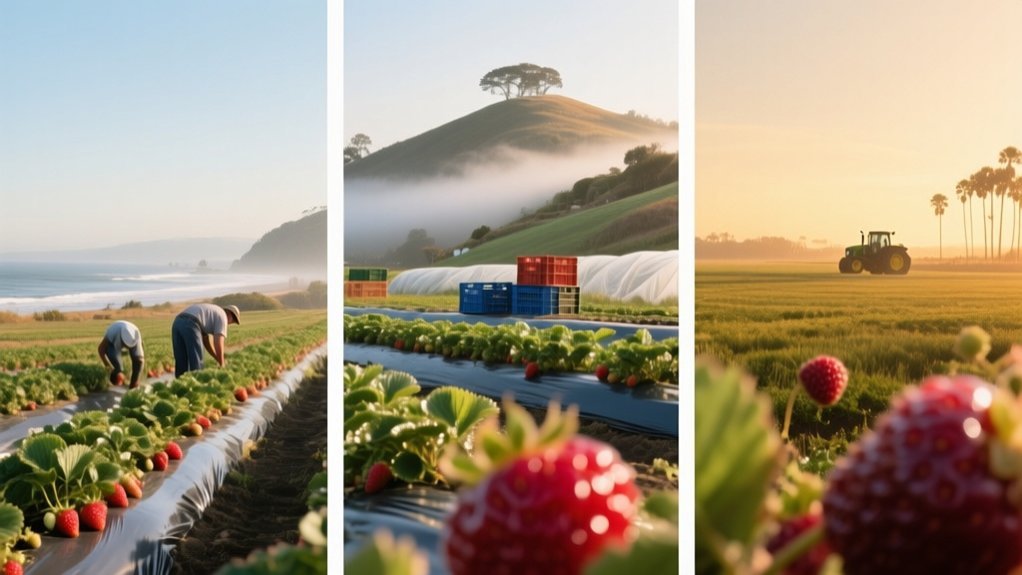
3 Key States Where Strawberries Are Grown in the US
You’ll find California leads U.S. strawberry production year-round, growing over 90% of the crop across 34,000 acres. Florida grows strawberries mainly between March and November but faces competition from imports.
Oregon’s cooler climate supports quality, organic, and disease-resistant strawberries, focusing on sustainability and local varieties. Each state plays a unique role in the strawberry market, and if you want to understand how their production styles shape what reaches your table, keep exploring the details.
How California Leads U.S. Strawberry Production Year-Round
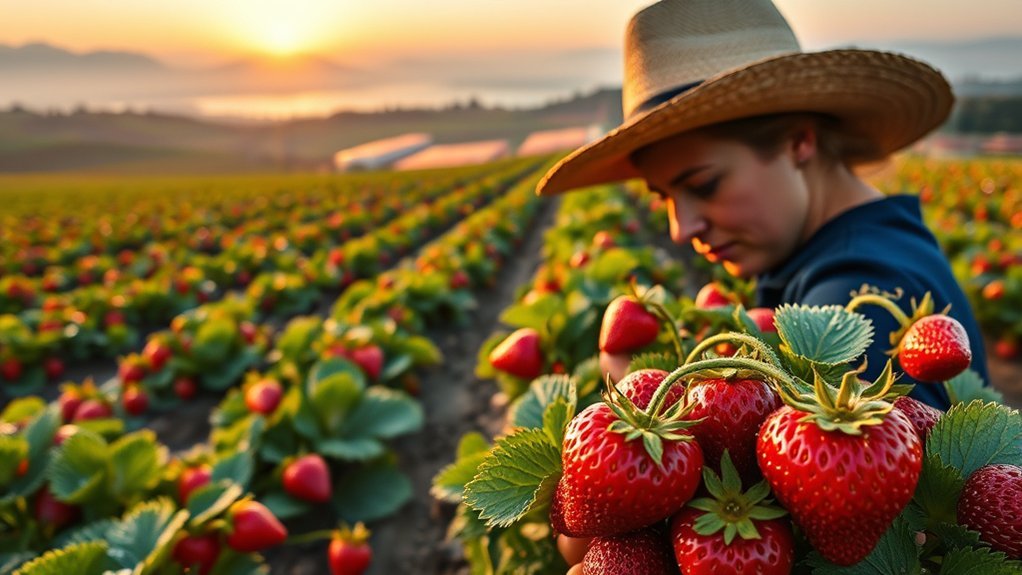
Although strawberries grow in many parts of the U.S., California leads production year-round by supplying over 91% of the national crop.
You’ll find California’s strawberry production spans roughly 34,000 acres, yielding an impressive 50,000 pounds per acre annually.
The USDA highlights the state’s strawberry industry as a $2.7 billion powerhouse, ranking sixth among California’s top crops.
Fresh strawberries flood the market especially during the peak strawberry season from April through August, when weekly production hits 6 to 7 million trays.
Even outside this window, California’s southern regions like Oxnard and San Diego keep strawberries coming in winter.
Thanks to this consistent supply and high strawberry yield, California remains the go-to source if you want fresh, abundant strawberries all year long.
Why Florida’s Strawberry Production Is Seasonal and Faces Market Challenges
Because Florida’s climate restricts strawberry growth to certain months, its production is seasonal, mainly from March to November. You’ll see Florida’s strawberry growers face market challenges, especially from imports from Mexico, leading to tough price competition.
Compared to California’s massive output, Florida’s production remains limited, as reported by the National Agricultural Statistics Service. Here’s a quick look at Florida’s recent production and market context:
| Year | Florida Production (CWT) |
|---|---|
| 2022 | 2,820,000 |
| 2023 | 2,960,000 |
| 2024* | 3,320,000 |
| California (2024) | 29,000,000 |
| Market Challenge | Imports & Price Competition |
Florida’s strawberry production is seasonal and must navigate these ongoing market challenges to stay competitive.
Oregon’s Strawberry Production: Emerging Trends and Regional Impact
While Florida grapples with seasonal limits and market pressures, Oregon is quietly carving out its own niche in the strawberry industry.
You’ll find Oregon’s strawberry production centered in the Willamette Valley, where fertile soil and ample rainfall boost fruit quality.
The state’s cooler climate extends the growing season, benefiting both fresh markets and processed markets.
Oregon focuses on enhancing disease resistance to reduce crop losses and improving fruit quality to meet consumer preferences.
Oregon prioritizes disease-resistant strawberries and superior fruit quality to satisfy consumer demands.
It’s also expanding organic strawberry farming for health-conscious buyers and promoting local varieties through the Oregon Strawberry Commission.
If you’re interested in sustainable farming and premium berries, Oregon’s emerging trends show promise in shaping the regional strawberry market, balancing quality with growing demand for organic and fresh products.
Frequently Asked Questions
What Soil Types Are Best for Growing Strawberries in the US?
You’ll want sandy loam soil with good drainage capacity to grow strawberries successfully.
Maintaining a soil pH between 5.5 and 6.5 helps meet their nutrient requirements.
Make sure the soil has plenty of organic matter to improve moisture retention and boost microbial activity.
Keep an eye on soil temperature for ideal growth.
Don’t forget to do soil testing regularly to monitor nutrient levels and adjust as needed for healthy, productive plants.
How Do Strawberry Farmers Manage Pest Control Sustainably?
You know what they say, “An ounce of prevention is worth a pound of cure.”
You can manage pests sustainably by using integrated pest management, combining pest monitoring techniques with organic pest control and biological pest solutions.
Employ crop rotation benefits and companion planting strategies to naturally deter pests.
Rely on pesticide alternatives and maintain soil health practices.
These sustainable farming methods keep your strawberries healthy and the environment safe.
What Are the Main Varieties of Strawberries Grown in These States?
You’ll find June Bearing, Ever Bearing, and Day Neutral strawberries are the main varieties grown.
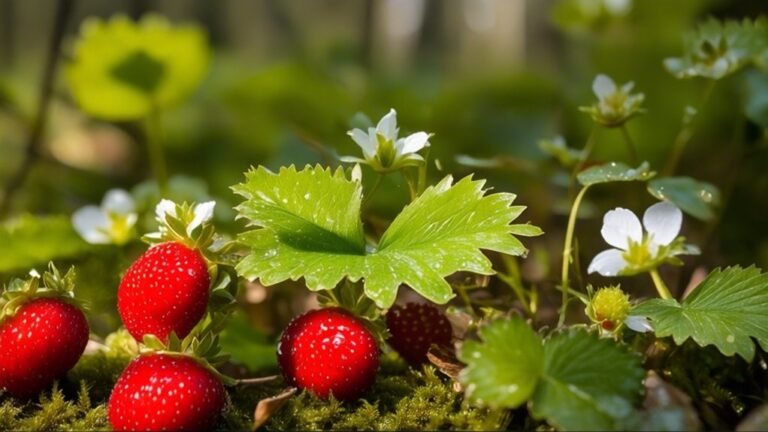
Alpine Strawberries, known as Fragaria Vesca, also pop up, especially in organic strawberries and heirloom varieties.
Hybrid varieties have become popular for their disease resistance and yield.
If you’re into container gardening, day neutrals work well since they fruit continuously.
These choices help farmers meet different market demands while supporting sustainable practices.
How Does Irrigation Impact Strawberry Yield and Quality?
Irrigation methods directly influence strawberry yield and quality by maintaining ideal soil moisture and supporting nutrient management.
Using drip irrigation helps you deliver precise water amounts, preventing overwatering and disease.
Good water quality is essential to avoid contamination.
Proper irrigation timing, combined with crop rotation, improves yield and aids disease prevention.
Managing harvest timing after adequate irrigation guarantees fruit quality, making your strawberries sweeter and more marketable.
What Are Common Harvesting Methods Used in Strawberry Farming?
Swift, selective picking shapes strawberry success.
You’ll mostly use hand harvesting for delicate berries, ensuring quality assessment and careful post harvest handling.
Machine harvesting speeds things up but suits only specific field layouts and can impact environmental factors.
Timing factors and labor considerations heavily influence your harvesting techniques.
Balancing these methods helps you maintain berry brilliance while managing costs and minimizing damage during the essential picking period.
Conclusion
Think of U.S. strawberry production as a vibrant garden where California is the sun, shining year-round to keep the fruits growing strong. Florida is the seasonal rain, brief but essential, facing storms that test its resilience.
Oregon is the fresh breeze, quietly shaping new growth and flavor. Together, these states create a balanced ecosystem, showing you how diversity and persistence cultivate the sweetest harvests in America.