
5 Tips on When to Cover Strawberry Plants for Winter
You should cover your strawberry plants after the first frost, when soil temperatures drop below 40°F and leaves start wilting or browning. Remove all dead foliage to avoid fungal issues before mulching.
Use 3 to 6 inches of lightweight straw mulch to keep plants insulated, especially if you’re in colder USDA zones. Check your mulch regularly and add more if it shifts or thins.
Knowing when and how to apply and remove mulch guarantees your strawberries thrive all winter. And there’s more to learn about mastering this process.
How To Tell If Your Strawberry Plants Are Ready To Be Mulched
You’ll know your strawberry plants are ready to be mulched when soil temperatures consistently drop below 40°F, usually after a few frosts. At this point, your strawberries enter dormancy, showing signs like wilting and browning leaves.
Strawberry plants are ready for mulch when soil temps dip below 40°F and leaves wilt and brown.
Before you apply mulch, remove any dead or wilted vegetation to prevent harmful fungi growth over winter.
In colder climates, especially USDA Zones 4 and 5, you’ll want to mulch about 6 inches deep to shield the crowns from freezing temperatures effectively.
After one or two light frosts, your plants will have hardened off enough to handle mulch without risk.
Following these steps guarantees your strawberries stay protected through the cold months, ready to thrive come spring.
When To Mulch Strawberry Plants Based On Weather And Plant Readiness
Although mulching strawberry plants is essential for winter protection, timing it correctly depends on both weather conditions and the plants’ readiness. You want to cover the strawberry plants after the first frost, usually when soil temperatures dip below 40°F and the plants show dormancy signs like wilting leaves. This helps protect your strawberries from extreme cold and soil heaving.
Before mulching, remove any dead leaves to prevent fungal issues. Remember, the mulch layer varies by USDA zone: about 6 inches in Zones 4 and 5, less in warmer zones.
Wait for the ground to freeze before mulching. Look for browning or wilting leaves as readiness signs. Remove dead foliage to avoid diseases. Adjust mulch thickness based on your USDA zone.
Gradually remove mulch in spring when new growth appears. Knowing when to mulch strawberry plants is key to keeping them healthy all winter.
Picking The Best Mulch To Protect Your Strawberries
Once you’ve determined the right time to mulch your strawberry plants, selecting the proper mulch material becomes the next step to guarantee effective winter protection.
Choose lightweight, natural mulches like straw, pine needles, or salt marsh hay to protect your strawberries. These materials insulate well while allowing airflow, preventing moisture buildup and fungal issues.
Avoid leaves, as they mat and trap moisture, risking plant health. Make sure your mulch is clean, pesticide-free, and weed-free to protect your strawberries from harmful substances and competition.
For colder zones, apply 4 to 6 inches of mulch, and in milder zones, 2 inches of straw usually suffices.
Check your mulch throughout winter and replenish it if it thins or shifts to maintain consistent protection against freezing temperatures.
How To Apply Mulch To Prevent Winter Damage
Applying mulch at the right time is essential to shield your strawberry plants from winter damage. When temperatures are consistently below 40°F, usually after the first frost, you’ll want to apply straw mulch to protect the plants.
Apply straw mulch after the first frost when temperatures stay below 40°F to protect strawberry plants.
Follow these tips for best results:
Remove dead leaves and weeds to prevent fungal issues. Use 3 to 6 inches of clean, pesticide-free straw mulch. Cover the plants evenly to maintain insulation.
Check mulch regularly and add more if it thins or shifts. Wait until new growth appears in spring before removing mulch.
When And How To Remove Spring Mulch
After protecting your strawberry plants with mulch through the winter months, you’ll want to know the right time to start removing it in spring. Begin when about 25% of your plants in the spring show visible new growth.
Remove the mulch gradually to shield young shoots from unexpected freezing and thawing cycles. Keep an eye on weather forecasts; delay removal if frost risk persists.
Once temperatures stabilize and plants actively grow, you can fully clear the mulch around them.
| Stage | Indicator | Action |
|---|---|---|
| Early Spring | No new growth | Keep mulch in place |
| Growth Begins | ~25% plants showing leaves | Start gradual mulch removal |
| Frost Risk Decreases | Stable temperatures | Continue removing mulch |
| Active Growth | Full leaf development | Remove all mulch |
Frequently Asked Questions
Can I Use Plastic Instead of Mulch for Winter Protection?
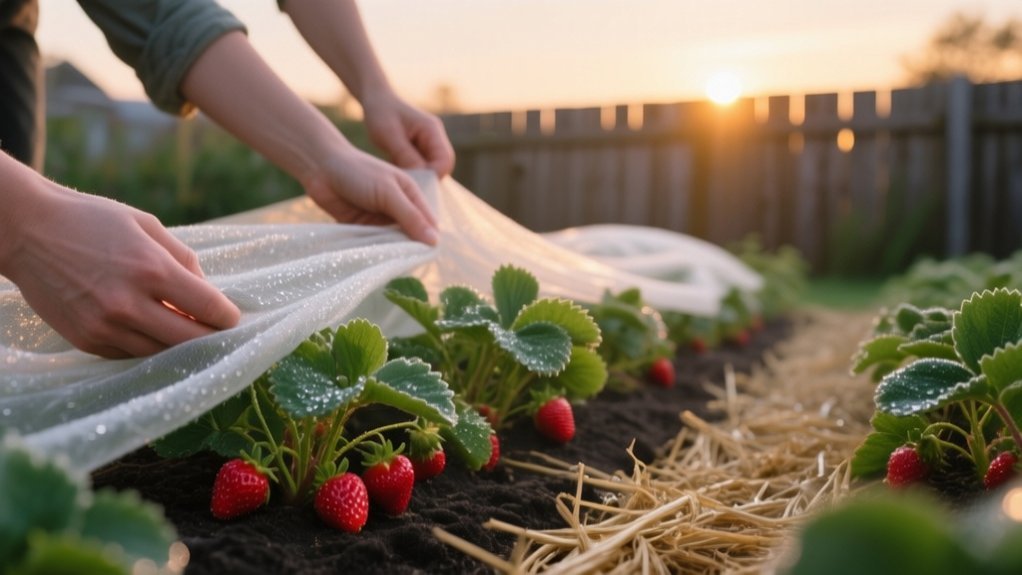
Yes, you can use plastic as an alternative covering for winter insulation, but you should know its effects.
Plastic provides good warmth and blocks cold, yet it doesn’t break down like mulch, so it won’t enrich your soil.
You’ll need to secure it well to avoid wind damage and remove it once frost danger passes to prevent mold.
For best results, combine plastic with traditional mulch to balance moisture and protection.
Should I Prune Strawberry Plants Before Winter Mulching?
Before winter care, you should prune your strawberry plants.
Think of it like tuning a Model T before a long drive. Using proper pruning techniques, you’ll remove damaged leaves and thin out crowded areas, boosting plant health.
This tidying up prevents fungal issues and helps your plants conserve energy through dormancy.
How Deep Should the Mulch Layer Be on Strawberry Plants?
You should apply a mulch layer about 2 to 3 inches deep in milder zones, but up to 6 inches or more in colder areas to maximize mulch benefits like insulation and moisture retention.
Use ideal materials such as clean straw or pine needles, avoiding heavy mulches that block airflow.
Spread the mulch evenly to cover the crowns without smothering, and check it regularly, adding more as needed to protect your strawberry plants effectively.
Can Strawberries Survive Winter Without Any Covering?
Strawberries can survive winter without any covering, but their survival depends heavily on strawberry hardiness and your local climate.
If you live in USDA Zones 4 or warmer, your plants might manage winter survival.
However, frost protection is essential when temperatures drop below 15°F. Without covering, frost can damage buds and crowns, reducing fruit yield.
Will Covering Strawberries Attract Pests During Winter?
Funny enough, when you cover strawberries for warmth, you might invite some unplanned guests: winter pests like aphids or spider mites.
But don’t worry; effective pest management is possible.
Choose clean, pesticide-free covering materials and avoid damp, organic mulches that attract bugs.
Regularly inspect your plants to catch any pest activity early.
Conclusion
By covering your strawberry plants at just the right time, you’re giving them a superhero’s shield against winter’s harshest blows. Don’t wait until the frost bites too hard. Mulch when your plants show signs of readiness and the weather turns chilly.
Choosing the best mulch and applying it properly means your strawberries will bounce back stronger than ever in spring. Just remember to remove that mulch gently, so your plants can wake up fresh and ready to thrive!