

What Is the Serving Size for Strawberries?
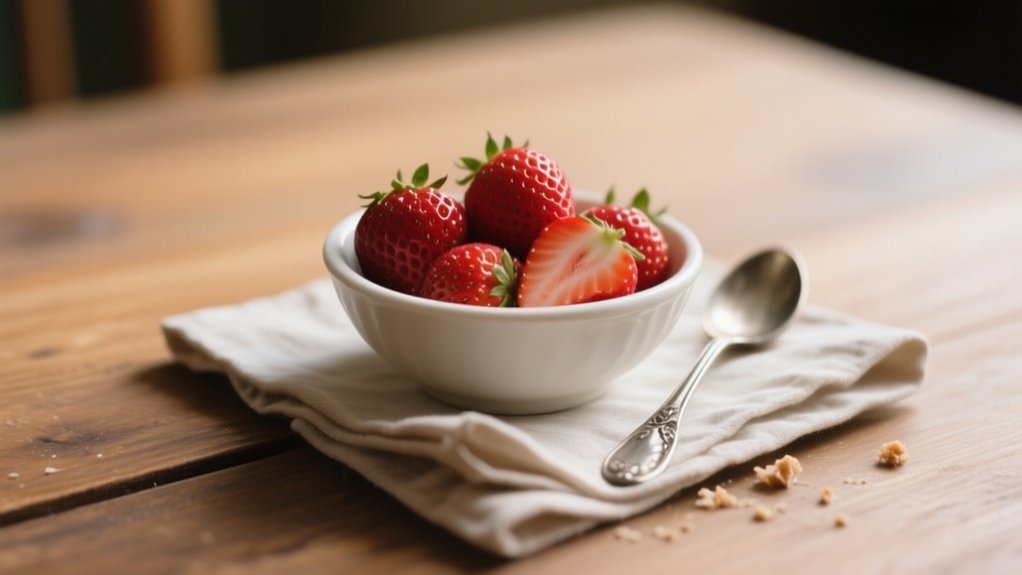
You should plan on eating about one cup of strawberries, which is roughly eight medium berries, as a standard serving size. This portion contains about 45 calories, 3 grams of fiber, and packs a powerful 160% of your daily vitamin C needs.
It also provides potassium that helps manage blood pressure. Including this serving helps you meet daily fruit goals while enjoying a tasty, nutritious snack. Keep exploring to find easy ways to add strawberries to your meals and boost your health.
What Is the Standard Serving Size for Strawberries?
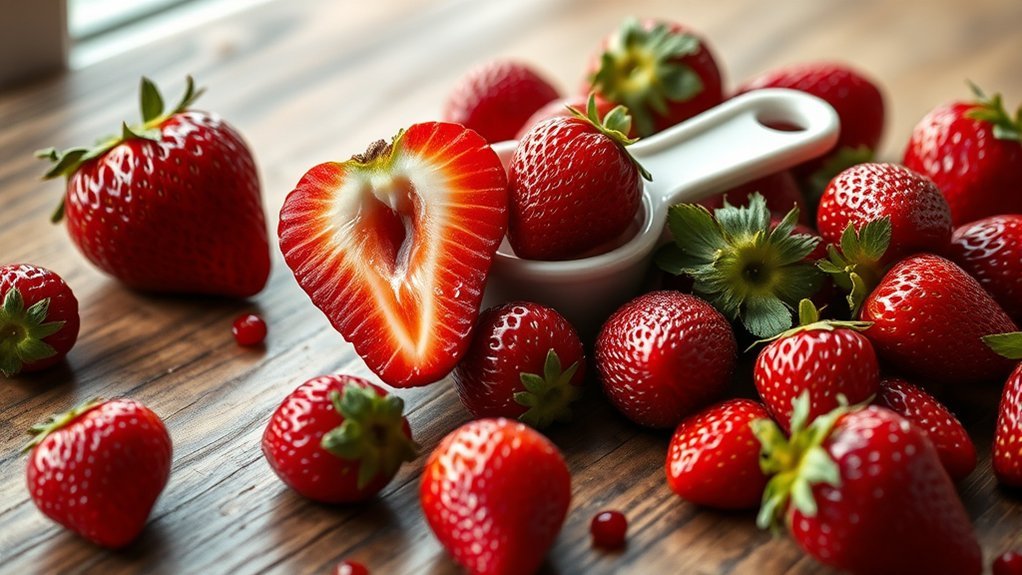
A standard serving size for strawberries is about one cup, or roughly eight medium berries. When you stick to this serving size, you get a perfect balance of nutrients without going overboard.
This portion provides you with a healthy amount of dietary fiber, around 3 grams, which supports digestion. You’ll also get a significant boost of vitamin C, about 160% of your daily recommended value, helping your immune system stay strong.
Plus, the serving size delivers approximately 220mg of potassium, which plays a role in maintaining heart health and managing blood pressure.
Knowing the standard serving size guarantees you enjoy strawberries as a nutritious part of your diet while keeping your intake balanced and effective.
How Many Calories Are in One Serving of Strawberries?
You might be surprised to learn that one serving of strawberries — about a cup — has only 45 calories. That’s pretty low, right?
Not only are they low in calories, but they also pack a punch with fiber and vitamin C. When you compare strawberries to other fruits, their calorie count really stands out as a healthy choice.
Calorie Count Per Serving
One cup of strawberries, which usually includes about eight medium-sized berries, contains fewer than 50 calories. This low-calorie count makes strawberries a smart choice when you want a sweet treat without overloading on calories.
Because one cup is considered a standard serving size, you can easily track your calorie intake while enjoying their natural sweetness.
Besides being low in calories, one cup of strawberries offers other benefits like 3 grams of dietary fiber, which supports digestion. You’ll also get 85mg of vitamin C and 220mg of potassium, but those don’t add much to the calorie count.
Nutrient Density Overview
Although strawberries pack a sweet punch, they won’t weigh down your calorie count, with fewer than 50 calories per cup. One serving, which is about one cup or eight medium berries, is nutrient-dense and can help improve heart health.
This serving provides a hefty dose of vitamin C, dietary fiber, and potassium, essential for maintaining overall well-being.
| Nutrient | Amount per Serving (1 cup) | % Daily Value |
|---|---|---|
| Calories | < 50 | – |
| Vitamin C | 85 mg | 160% |
| Dietary Fiber | 3 g | – |
| Potassium | 220 mg | – |
Enjoying one cup of strawberries delivers valuable nutrients without excess calories, making it a smart, heart-healthy choice.
Comparing Fruit Calories
Strawberries offer a nutrient-packed option with fewer than 50 calories per serving, making them stand out among many fruits.
When you compare one serving of strawberries, which is about one cup or eight medium berries, to other fruits, you’ll notice they’re quite low in calories, around 45 per serving.
This makes them an excellent choice if you want a sweet snack without a calorie overload.
Plus, one serving of strawberries provides 3 grams of dietary fiber and 85mg of vitamin C, boosting your nutrition while keeping calories low.
Their natural sugar content is only about 7 grams, which is less than many fruits.
What Nutrients Are in a Serving of Strawberries?
When you enjoy a cup of strawberries, you get a powerful boost of nutrients packed into a low-calorie snack. One serving provides 85mg of vitamin C, which covers 160% of your Recommended Daily Value. This essential nutrient supports your immune system and skin health.
Alongside vitamin C, strawberries offer 220mg of potassium, helping to lower blood pressure and maintain heart health. You’ll also get about 0.6mg of other nutrients that contribute to your overall well-being.
All of these benefits come in under 50 calories per serving, making strawberries a smart choice when you’re looking for a nutritious, delicious snack.
Including this vibrant fruit in your diet gives you an efficient way to fuel your body with key vitamins and minerals.
How Does One Serving Fit Into Your Daily Fruit Intake?

Getting a serving of strawberries not only boosts your vitamin and mineral intake but also helps you meet your daily fruit goals. One cup of strawberries, about eight medium berries, counts as a full serving and provides 160% of your daily vitamin C needs.
Since adults should aim for 1.5 to 2 cups of fruit daily, including strawberries makes it easier to hit that target. Because strawberries are low in calories, less than 50 per serving, they’re a smart choice for anyone wanting a healthy diet without extra calories.
Beyond vitamin C, they offer potassium and dietary fiber, adding nutrient variety to your meals.
Easy Ways to Measure a Strawberry Serving Without Tools
You can easily measure a serving of strawberries by counting about eight medium berries.
Or, just imagine a handful that fits comfortably in your palm—that’s usually about one serving.
Another handy tip is to picture filling a coffee mug or a bowl halfway; that can help you estimate roughly one cup of strawberries without any tools.
These simple tricks make it easy to keep your portions on track without needing a scale or measuring cup.
Counting Individual Strawberries
Although measuring strawberries without tools might seem tricky, you can easily estimate a serving by counting individual berries. A standard serving is about one cup, which usually equals eight medium strawberries.
If your strawberries are larger, you might only need around eight to make a serving, while smaller berries might require about 21.
Counting eight medium strawberries is a quick and reliable way to track your intake without needing a scale or measuring cup. This method helps guarantee you get the right amount of nutrients and enjoy your strawberries without over- or underestimating.
Visual Portion Estimation
One quick way to estimate a serving of strawberries without any tools is to visualize filling a standard coffee mug or a cup with the berries. A serving is about one cup, which is roughly eight medium-sized strawberries.
When you picture a cup filled with bright red, firm, and shiny strawberries, you’re close to the right amount. This visual method helps you avoid guessing or overestimating portions.
Remember, each serving contains about 45 calories and plenty of vitamin C, making it a healthy choice.
By using this simple mental image, you can easily enjoy the benefits of strawberries without needing a scale or measuring cup.
It’s an effortless way to keep track of how much you’re eating.
Using Hand Measurements
When estimating a serving of strawberries without tools, your hand offers a convenient and reliable guide. As part of the Foundation for Fresh Produce, using hand measurements helps you quickly gauge portions on the go.
Here’s how you can measure a serving of strawberries easily:
- Make a fist: One cup of strawberries is roughly the size of your clenched fist, about eight medium berries.
- Adjust for size: If your strawberries are large, fewer than eight will fill that fist-sized volume.
- Use your palm: Your open palm can also approximate the space a one-cup serving occupies.
Relying on these simple hand cues guarantees you enjoy the right serving size, keeping your diet fresh, balanced, and low in calories without needing any measuring tools.
When Are Strawberries in Season?
Since strawberries are the first fruit to ripen in spring, you can start enjoying fresh berries as early as April in many parts of the U.S. Typically, strawberries are in season from late spring to early summer, with peak harvest times varying by region.
Strawberries start ripening in spring, offering fresh berries from April through early summer across many U.S. regions.
In most areas, you’ll find ripe strawberries through June, characterized by their bright red color, firm texture, and sweet fragrance, which are signs of freshness you can look for.
California, the largest producer, often offers strawberries year-round thanks to its favorable climate, so you might find them even outside the usual season.
Knowing when strawberries are in season helps you pick the freshest berries, ensuring you enjoy their best flavor and nutritional benefits while they’re at their peak.
How Strawberries Boost Heart Health and Immunity
Though you might simply enjoy strawberries for their sweet taste, they also play a powerful role in boosting your heart health and immunity.
Here’s how these vibrant berries support your body:
They deliver 160% of your daily vitamin C needs per serving, strengthening your immune system to fight infections more effectively.
With 220mg of potassium per serving, strawberries help manage blood pressure, an essential factor in maintaining a healthy heart.
Their fiber content aids in lowering cholesterol, while antioxidants and anti-inflammatory properties reduce heart disease risks.
Can Strawberries Help Lower Blood Pressure?
You can help manage your blood pressure by adding strawberries to your diet. That’s because they’re packed with potassium, which helps counteract the effects of sodium.
Plus, strawberries contain phytonutrients that support heart health and might even lower your risk of hypertension. Just eating about eight berries a day can give you a nice boost of these good-for-you nutrients.
Potassium Content Benefits
If you’re looking to manage your blood pressure, incorporating strawberries into your diet can be a smart choice. Strawberries offer 220mg of potassium per serving (about one cup or eight medium berries), making them a valuable fruit and veggie option for heart health.
Here’s how their potassium content benefits you:
- Potassium helps balance sodium levels, reducing blood pressure.
- Regular intake of potassium-rich fruits like strawberries lowers hypertension risk.
- Higher potassium supports better cardiovascular function and overall heart health.
Phytonutrients And Blood Pressure
Because strawberries are rich in phytonutrients and antioxidants, they can play a significant role in lowering blood pressure. When you eat a cup of strawberries, you’re not just enjoying a sweet snack; you’re also getting a healthy dose of potassium, which helps counteract sodium’s effects in your body.
Studies show that people who regularly consume strawberries tend to have lower blood pressure readings. The vitamin C and other antioxidants in strawberries improve your vascular health, supporting better blood pressure regulation.
Including about a cup of strawberries in your daily diet can boost your potassium intake and promote heart health naturally.
How to Add Strawberries to Breakfast and Snacks
Incorporating a cup of strawberries into your breakfast or snacks can instantly boost flavor and nutrition.
Strawberries are a tasty part of a healthy diet, offering vitamin C and fiber. Here are three easy ways to enjoy them:
- Add sliced strawberries to your oatmeal or breakfast cereal for a sweet, nutrient-rich start.
- Top pancakes or waffles with strawberries to enhance both taste and heart-healthy benefits.
- Pair strawberries with yogurt or cottage cheese for a revitalizing, protein-rich snack.
Creative Ways to Add Strawberries to Smoothies and Salads
When you add a cup of strawberries to your smoothies or salads, you not only enhance the flavor but also boost the nutritional value with vitamin C and fiber.
For smoothies, blend strawberries with yogurt and spinach to create a nutrient-packed green drink that balances sweetness with iron-rich greens.
Blend strawberries, yogurt, and spinach for a delicious, nutrient-rich smoothie that balances sweet and savory flavors.
In salads, sliced strawberries make a delightful addition; try pairing them with nuts and a light vinaigrette to highlight their natural sweetness alongside savory notes.
Strawberry pairings shine in fruit salads as well. Combine them with berries, bananas, or oranges for a colorful, vitamin-rich side.
You can also top oatmeal or yogurt bowls with strawberries for a low-calorie burst of flavor.
These creative ideas make it easy to enjoy strawberries in diverse and delicious ways.
Fresh vs. Frozen vs. Dried Strawberries: What’s the Difference?
Although fresh, frozen, and dried strawberries all offer unique benefits, choosing the right form depends on how you plan to use them. Each type varies not only in texture and taste but also in serving size and nutritional content, influenced by strawberry varieties.
Fresh strawberries offer about 45 calories per cup, are rich in vitamin C and fiber, and work well in salads or as a snack.
Frozen strawberries keep their nutrients and are great for smoothies or desserts, with a similar serving size of one cup.
Dried strawberries are calorie-dense, typically served in one-quarter cup portions due to their concentrated sugars and reduced volume.
Understanding these differences helps you pick the best strawberry varieties for your needs.
Buying, Storing, and Preparing Strawberries for Best Nutrition
To get the most nutrition from strawberries, choose shiny, firm berries with bright-red color and fresh green caps. Different strawberry varieties offer unique flavors, so pick your favorite.
Store them in the refrigerator and eat within a few days to keep nutrients intact. Rinse strawberries in cold water just before eating to preserve texture and vitamins.
Slice and add them to cereals or salads for a tasty vitamin C boost.
| Step | Action | Tip |
|---|---|---|
| Buying | Select firm, shiny berries | Check fresh green caps |
| Storing | Refrigerate promptly | Use within a few days |
| Washing | Rinse before eating | Use cold water |
| Preparing | Slice for meals | Add to cereal or salads |
| Serving Size | About 1 cup (8 berries) | Approx. 45 calories |
Frequently Asked Questions
Can Strawberries Cause Allergic Reactions?
Yes, strawberries can cause allergic reactions, especially if you’re sensitive. You might experience allergy symptoms like itching, hives, or swelling after eating them.
If you have oral allergy syndrome, you could feel tingling or itching in your mouth because of cross-reactivity with certain pollens.
In rare cases, strawberries can trigger severe reactions like anaphylaxis, so you should avoid them if you know you’re allergic. Consult an allergist for proper advice.
Are Strawberries Safe to Eat During Pregnancy?
Yes, strawberries are safe to eat during pregnancy and can be a great part of your pregnancy nutrition.
They’re packed with vitamin C, fiber, and potassium, which support both your health and your baby’s development.
Just make sure you wash them thoroughly to avoid any foodborne illnesses.
Including strawberries as a healthy snack can help with digestion and keep your immune system strong throughout your pregnancy.
How Do Pesticides Affect Strawberry Safety?
Pesticide residue can affect strawberry safety because traces of chemicals used in farming might remain on the fruit’s surface.
When you eat strawberries with pesticide residue, you risk ingesting these substances, which could impact your health if consumed in large amounts.
To stay safe, you should always wash strawberries thoroughly under running water or choose organic options to reduce your exposure to harmful pesticides and enjoy your fruit with peace of mind.
Do Strawberries Interact With Any Medications?
Strawberries, like bright red signals, can subtly influence your body’s chemistry.
Yes, they’ve medication interactions you should watch for.
If you’re on blood thinners like warfarin, their vitamin K might affect clotting.
Their potassium content could also interfere with drugs like ACE inhibitors.
Plus, their vitamin C can boost iron absorption but may impact some cancer treatments.
Always check with your healthcare provider to keep your health in harmony.
Can Strawberries Help With Weight Loss?
Yes, strawberries can definitely help with weight management. When you include them in your diet, you’re getting a low-calorie, high-fiber fruit that keeps you feeling full longer, which helps reduce overeating.
Their natural sweetness satisfies cravings without added sugars, making it easier for you to stick to a healthy eating plan.
Conclusion
A standard serving of strawberries is about one cup, which is roughly 8 large berries. That serving packs just 50 calories but delivers over 100% of your daily vitamin C needs. Pretty impressive for such a sweet treat!
Including strawberries in your daily fruit intake is an easy way to boost nutrition without extra calories. So next time you snack or make a smoothie, toss in a cup of strawberries and enjoy their delicious benefits.