

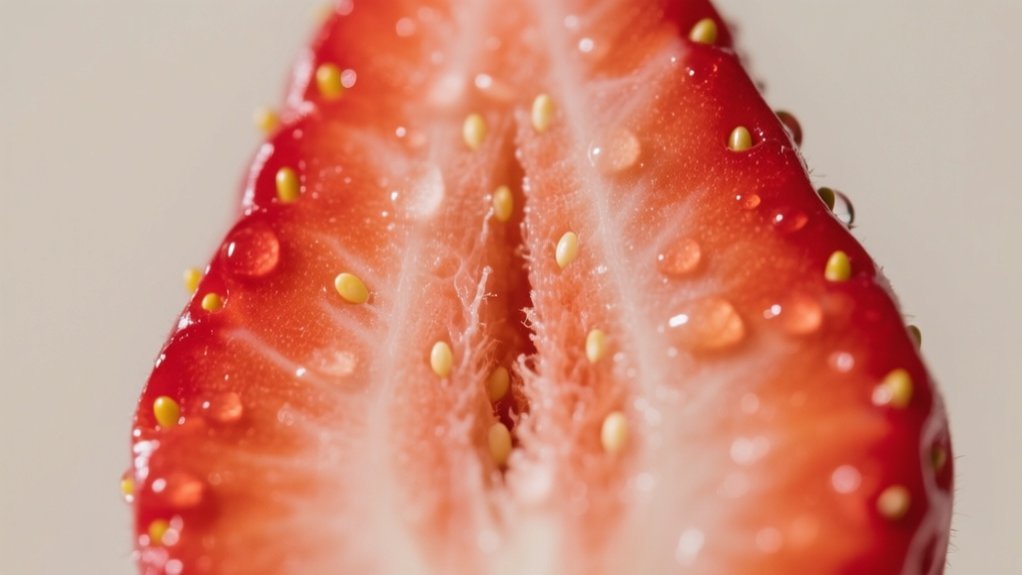
What Is Inside Strawberries Nutrients and Seeds
Strawberries aren’t just sweet. They’re packed with vitamin C to boost your immune system, manganese for metabolism and bones, and fiber to aid digestion.
Their tiny seeds add healthy omega fats and extra fiber, too. Plus, the red color comes from anthocyanins, powerful antioxidants that support your heart and reduce inflammation.
These nutrients work together to promote overall health and keep disease risk lower. Keep exploring to uncover even more ways strawberries benefit you.
Key Nutrients That Make Strawberries Healthy
Strawberries pack a powerful nutritional punch that supports your overall health. When you eat strawberries, you’re fueling your body with essential vitamins and minerals.
Strawberries are packed with vitamin C, offering about 65% of your daily needs per 100 grams, which boosts your immune system and keeps your skin glowing. They also provide manganese, vital for metabolism and bone strength, covering 17% of your daily value.
Strawberries deliver 65% of daily vitamin C and 17% manganese to support immunity and bone health.
Plus, strawberries are packed with antioxidants like ellagic acid and procyanidins that help reduce oxidative stress and may lower cancer risk.
With only 32 calories per 100 grams, they’re a smart choice for managing weight while keeping your body nourished.
Including strawberries in your diet is an easy way to enhance your well-being.
Fiber and Carbohydrates in Strawberries: What You Need to Know
You’ll find about 7.7 grams of carbohydrates in every 100 grams of strawberries.
And guess what? Fiber makes up a solid part of that. In fact, there’s around 2 grams of fiber per 100 grams.
This fiber is great because it helps support your digestion and keeps blood sugar levels steady.
Strawberry Fiber Content
A serving of this vibrant fruit packs about 2 grams of dietary fiber per 100 grams, making up roughly 26% of its carbohydrate content.
Strawberries contain fiber that supports your digestive health by promoting regular bowel movements.
With a total carbohydrate content of 7.7 grams per 100 grams and only around 32 calories per serving, strawberries provide a low-calorie way to boost your fiber intake.
The fiber also helps keep strawberries’ glycemic index at a low 40, which means they won’t cause sharp blood sugar spikes or insulin surges.
Carbohydrate Impact
Although often enjoyed for their sweetness, the carbohydrates in strawberries offer more than just flavor. They provide essential fiber that supports digestive health and helps manage blood sugar levels.
With about 7.7 grams of carbohydrates per 100 grams, strawberries are a low-carb fruit option that fits well into many diets. Of this, roughly 2 grams is dietary fiber, making up 26% of the total carbohydrate content.
This fiber not only aids digestion but also contributes to the carbohydrate impact by regulating blood sugar and promoting satiety. The natural sugars, around 4.9 grams, give strawberries their sweet taste without causing significant blood sugar spikes, thanks to their low glycemic index of 40.
Including strawberries can positively influence your carbohydrate impact for overall health.
How Vitamin C and Manganese Boost Strawberry Benefits
You’ll find that the vitamin C in strawberries really gives your immune system a boost and helps your body absorb iron more efficiently.
Plus, manganese is there doing its part by supporting your metabolism and helping build strong, healthy bones.
When these two nutrients team up, they create a powerful antioxidant defense that can protect your heart and lower inflammation.
Vitamin C Immunity Support
Since strawberries pack about 65% of your daily vitamin C needs per 100 grams, they play a key role in boosting your immune system and skin health.
Vitamin C acts as a powerful antioxidant, protecting your cells from oxidative stress and inflammation, which helps lower the risk of chronic diseases.
This essential nutrient supports collagen production, crucial for wound healing and maintaining skin elasticity. By regularly eating strawberries, you enhance your body’s antioxidant defenses, strengthening your immune response.
The vitamin C in strawberries also helps your body fight infections more efficiently.
Including strawberries in your diet is a delicious way to guarantee you get enough vitamin C, supporting both your immunity and overall well-being every day.
Manganese Metabolic Role
When you eat strawberries, you get more than just vitamin C; they also provide manganese, a mineral essential for your metabolism and bone health. Manganese activates enzymes that support bone formation, collagen synthesis, and antioxidant defense.
Vitamin C enhances manganese absorption, making these nutrients work together to boost your health. Just 100 grams of strawberries give you about 17% of your daily manganese needs, promoting skin health and wound healing.
| Nutrient | Function | Daily % in 100g Strawberries |
|---|---|---|
| Manganese | Bone formation, metabolism | 17% |
| Vitamin C | Immune support, absorption | 59% |
| Collagen | Skin health, wound healing | Supported by Mn + Vit C |
Together, manganese and vitamin C maximize strawberry benefits for your metabolism and skin.
Antioxidant Synergy Effects
Building on how manganese supports metabolism and collagen synthesis, its partnership with vitamin C in strawberries creates a powerful antioxidant duo.
Vitamin C provides about 65% of your daily value per 100 grams, shielding your cells from oxidative stress and boosting your immune system.
Manganese adds 17% of the daily value, playing a crucial role in antioxidant defenses and bone health. Together, vitamin C and manganese amplify strawberries’ antioxidant power, helping reduce inflammation and lowering chronic disease risks.
This synergy also promotes collagen production, essential for skin health and wound healing.
Plus, their combined antioxidants support cardiovascular health by minimizing oxidative damage and aiding healthy cholesterol levels.
Why Strawberry Seeds Matter for Nutrition and Health
Although often overlooked, strawberry seeds play an essential role in boosting the fruit’s nutritional value and health benefits. While strawberries are well-known as a source of vitamin C, their seeds, or achenes, add even more to the mix.
Those tiny seeds provide dietary fiber, improving digestion and making up about 26% of the fruit’s carbohydrates. They also contain healthy fats like omega-3 and omega-6, which support heart health and reduce inflammation.
Inside the seeds are ellagitannins, which your gut converts to ellagic acid, enhancing antioxidant effects and potentially lowering cancer risk.
Eating whole strawberries, seeds included, guarantees you get the full range of vitamins, minerals, and phytochemicals, maximizing the fruit’s nutritional power and health benefits.
Anthocyanins: The Pigments Giving Strawberries Their Color
You’ll notice strawberries get their bright red color mainly from anthocyanins like pelargonidin. These pigments don’t just make the fruit look good—they also bring antioxidant benefits that support your health.
Plus, they enhance the strawberry’s flavor and aroma, making it even more delicious.
On top of that, anthocyanins may help reduce inflammation and lower the risk of certain diseases.
But, if you have allergies, it’s good to be aware that these pigments can sometimes trigger reactions in sensitive individuals. So, it’s always best to listen to your body!
Anthocyanin Types Explained
How do strawberries get their vibrant red color? It all comes down to anthocyanins, water-soluble pigments that give the fruit its signature hue. Pelargonidin is the primary anthocyanin responsible for that bright red, but strawberries also contain cyanidin and peonidin, which add depth to their color.
These anthocyanins don’t just affect appearance. They vary based on ripeness, growing conditions, and variety, influencing both color intensity and nutritional value.
Here’s what you should know about the anthocyanin types in strawberries:
- Pelargonidin: Main pigment for bright red color
- Cyanidin: Adds a deeper red tint
- Peonidin: Contributes to subtle color variations
- Concentration varies with ripeness and growth factors
Understanding these anthocyanins helps you appreciate why strawberries look and benefit you the way they do.
Color and Health Benefits
Because anthocyanins give strawberries their vibrant red color, they also provide powerful antioxidant benefits that can support your health. These pigments, mainly pelargonidin, not only make strawberries look appealing but also help reduce oxidative stress and inflammation in your body.
Eating strawberries can improve heart health by promoting better cholesterol levels and vascular function.
Here’s a quick look at what anthocyanins do for you:
| Benefit | Effect |
|---|---|
| Antioxidant Power | Fights oxidative stress |
| Heart Health | Improves cholesterol |
| Inflammation Reduction | Lowers inflammation |
| Cognitive Support | Enhances brain function |
Anthocyanins And Allergies
Although anthocyanins give strawberries their vibrant red color and antioxidant benefits, they can also trigger allergic reactions in some people. These pigments, particularly pelargonidin and the Fra a1 protein associated with red pigmentation, are linked to allergic responses.
If you’re sensitive to strawberries, anthocyanins might be the cause of symptoms like itching or swelling.
Curiously, white-fruited strawberry varieties lack these pigments and may be easier for you to tolerate. Knowing this can help you enjoy strawberries without discomfort.
- Anthocyanins are responsible for the red color in strawberries
- Fra a1 protein may cause allergic reactions in sensitive individuals
- White strawberries lack anthocyanins and might reduce allergy risk
- Anthocyanins also provide antioxidant and anti-inflammatory benefits
Ellagitannins and Ellagic Acid: Antioxidants That Protect You
When you eat strawberries, your body converts their ellagitannins into ellagic acid, a powerful antioxidant that helps reduce oxidative stress and inflammation.
Ellagitannins are polyphenolic compounds abundant in strawberries, making them one of the richest fruit sources of these antioxidants.
Strawberries are packed with ellagitannins, powerful polyphenols that offer potent antioxidant benefits.
Once converted, ellagic acid protects your cells from damage caused by free radicals, supporting your overall health. This protection may lower your risk of chronic diseases, including certain types of cancer.
By consuming strawberries regularly, you tap into these benefits, helping your body combat harmful oxidative processes.
Ellagic acid’s antioxidant effects are a key reason why strawberries aren’t just delicious; they’re a smart choice for maintaining your body’s defense against cellular damage.
How Strawberries Support Heart Health
If you want to boost your heart health, adding strawberries to your diet can be a delicious and effective way to do it.
These vibrant berries are packed with antioxidants like pelargonidin, which reduce inflammation and lower your risk of heart disease.
Including strawberries regularly helps improve your HDL cholesterol, which is key for heart health. Their potassium content supports healthy blood pressure levels too.
Studies show that eating strawberries can enhance arterial function and decrease blood pressure, promoting a healthier cardiovascular system.
Here’s how strawberries support your heart health:
- Fight inflammation with powerful antioxidants
- Raise beneficial HDL cholesterol levels
- Regulate blood pressure through high potassium
- Improve arterial function and reduce heart disease risk
Enjoy strawberries to keep your heart strong and healthy.
Can Strawberries Help Regulate Blood Sugar?
How well do strawberries help regulate blood sugar? Strawberries have a low glycemic index of 40, so they minimize blood sugar spikes after you eat them.
With just 7.7 grams of carbohydrates per 100 grams and 4.9 grams of natural sugars, they’re less likely to cause rapid increases in blood sugar.
The fiber in strawberries slows glucose absorption, helping keep your blood sugar levels steady.
Studies also show that antioxidants and phytochemicals in strawberries improve insulin sensitivity, reducing insulin spikes, which is great if you’re managing blood sugar.
Plus, managing blood sugar effectively can support healthy blood pressure levels, making strawberries a smart choice for overall metabolic health.
Including strawberries in your diet can be a tasty way to help regulate blood sugar naturally.
Do Strawberries Help Prevent Cancer? What Research Shows
Beyond supporting blood sugar control, strawberries offer powerful benefits that may help lower your cancer risk. These low-calorie fruits are packed with antioxidants like ellagic acid and anthocyanins. These compounds reduce oxidative stress and inflammation, which are key factors in cancer development.
Research shows that eating strawberries regularly can inhibit tumor growth and promote cancer cell death, especially in breast, colon, and esophageal cancers. Studies also reveal that daily strawberry intake lowers inflammation markers linked to cancer risk.
- Rich in ellagitannins converted to ellagic acid in your gut
- Linked to reduced cancer mortality rates
- Help decrease oxidative stress and inflammation
- Support your body’s natural defenses against tumor growth
Including strawberries in your diet is a tasty, low-calorie way to support cancer prevention.
How to Enjoy Strawberries for Maximum Health Benefits
When you choose fresh strawberries, you get the most vitamin C and antioxidants. These help boost your immune system and overall health.
Enjoy them raw or add sliced strawberries to whole-grain cereal or oatmeal. You’ll benefit from their 3 grams of dietary fiber per cup, which supports digestion while keeping your total carb intake balanced.
Add sliced strawberries to cereal or oatmeal for fiber-rich digestion and balanced carbs.
Blend strawberries into smoothies with low-fat yogurt for a nutrient-packed treat. This enhances flavor and offers antioxidants.
Toss them into spinach salads to increase your intake of vitamins, minerals, and phytochemicals. These may lower your risk of chronic disease.
Use strawberries as a natural sweetener in desserts or snacks since they contain only 7 grams of natural sugar per cup. They’re a healthier alternative to processed sugars.
Frequently Asked Questions
How Should Strawberries Be Stored to Maintain Nutrient Quality?
To maintain nutrient quality, you should use proper storage techniques by keeping strawberries in the refrigerator.
Store them unwashed in their original or a breathable container to prevent moisture buildup, which can cause mold and nutrient loss.
Don’t wash them until you’re ready to eat.
Also, remove any spoiled berries promptly to stop decay from spreading.
Following these steps helps preserve their vitamins and freshness for up to a week.
Are There Differences in Nutrient Content Between Wild and Cultivated Strawberries?
You might think wild and cultivated strawberries have the same nutrients, but the nutrient comparison is like night and day!
Wild strawberries pack a punch with higher antioxidants, fiber, and lower sugar, giving you a richer, more balanced nutrient profile.
Cultivated ones, though sweeter and bigger, often contain fewer vitamins like vitamin C.
Can Strawberry Seeds Cause Allergic Reactions in Some People?
Yes, strawberry seeds can cause allergic reactions in some people due to seed sensitivity.
These tiny seeds, called achenes, contain proteins that might trigger symptoms like itching or swelling.
If you notice discomfort after eating strawberries, it could be linked to this sensitivity.
Luckily, some colorless strawberry varieties lack these allergenic proteins, offering a safer choice if you have trouble with regular strawberries.
Always consult a doctor if symptoms persist.
Do Strawberries Interact With Any Medications or Supplements?
Imagine your medications and strawberries dancing in a delicate ballet. One wrong step, and the routine falters.
Strawberry interactions can affect blood sugar control if you’re on diabetes meds, or alter how anticoagulants work by tweaking liver enzymes.
Their vitamin C even boosts iron absorption, which can be a plus or a risk if you’re supplementing.
What Are the Best Methods to Wash Strawberries Without Losing Nutrients?
To preserve nutrients while washing strawberries, use gentle washing techniques. Rinse them under cold running water without soaking to avoid nutrient loss.
Use a colander or fine mesh strainer so water drains quickly, preventing sogginess.
For extra cleanliness, try a vinegar solution: mix one part vinegar with three parts water and rinse thoroughly afterward.
Always wash strawberries just before eating to keep them fresh and nutrient-rich.
Conclusion
Think of strawberries as tiny treasure chests bursting with nutrients: fiber, vitamin C, manganese, and powerful pigments like anthocyanins. Their seeds aren’t just decoration; they add crunch and health benefits too.
Eating strawberries is like planting seeds of heart health, blood sugar balance, and cancer prevention in your body’s garden. So, grab a handful and let these ruby-red gems nourish you, turning everyday moments into vibrant bursts of wellness.