


What Good Nutrients Do You Get From Eating Strawberries Everyday?
When you eat strawberries every day, you get a powerful mix of nutrients like vitamin C, manganese, folate, potassium, and fiber. These nutrients support your immune system, keep your digestion regular, and help manage blood sugar.
Strawberries’ antioxidants fight inflammation and protect your heart. Their fiber and low glycemic index help stabilize energy levels.
They also promote brain health and may reduce cognitive decline. Keep exploring to discover how to get the most from these vibrant fruits.
Which Key Vitamins Do Strawberries Provide?

Although you might already know strawberries taste great, they also pack a powerful nutritional punch, especially when it comes to key vitamins. Just one cup of sliced strawberries gives you about 160% of your daily vitamin C needs, which supports your immune system and skin health.
Strawberries: delicious and rich in vitamin C, boosting your immune system and skin health.
You’ll also get manganese, important for bone health and metabolism, with roughly 28% of the daily value in a single cup.
Strawberries offer folate, an essential B vitamin that helps with DNA repair and cell growth, providing around 10% of your daily requirement.
Plus, they contain potassium, which helps regulate blood pressure, along with smaller amounts of vitamin K, vitamin E, and other B vitamins.
These nutrients combined make strawberries a smart choice for boosting your overall vitamin intake.
Which Important Minerals Are in Strawberries?
You’ll find several essential minerals in strawberries that support your body’s functions.
These minerals help regulate blood pressure, boost metabolism, and strengthen your bones.
Essential Minerals Overview
When you eat strawberries, you get a valuable mix of essential minerals that support your body’s functions. Strawberries provide potassium, about 254 mg per cup, which helps regulate blood pressure and maintain proper muscle function.
You also get manganese, roughly 0.4 mg per cup, essential for bone formation, metabolism, and antioxidant defense. Folate (vitamin B9), present at 40 mcg per cup, supports tissue growth and cellular function.
Moreover, strawberries contain small amounts of iron and magnesium, contributing to your overall mineral intake needed for energy production and muscle health.
Copper is also found in minimal amounts, aiding iron absorption and red blood cell formation.
Including strawberries in your diet can boost your intake of these important minerals efficiently and deliciously.
Health Benefits Of Minerals
The minerals found in strawberries play key roles in keeping your body running smoothly.
Potassium in strawberries helps regulate blood pressure and supports proper heart function, reducing cardiovascular risks.
Manganese boosts bone health and aids metabolism while acting as an antioxidant. Folate is crucial for DNA synthesis and cell division, promoting overall metabolic health.
Magnesium contributes to muscle and nerve function and helps produce energy, keeping you active throughout the day.
Strawberries also provide trace amounts of iron and copper, essential for oxygen transport in your blood and efficient energy metabolism.
How Fiber in Strawberries Supports Digestion
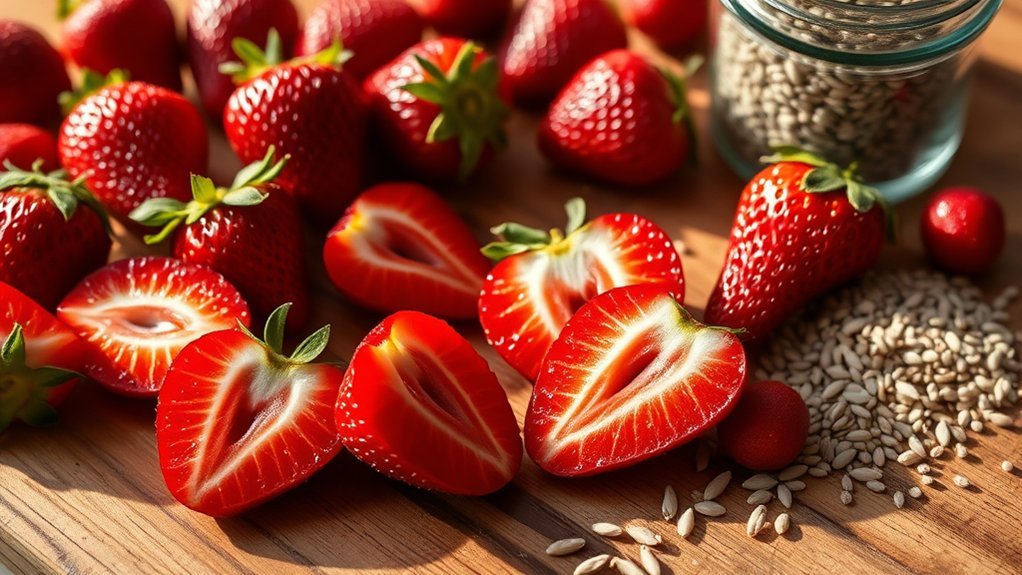
Because strawberries are packed with about 3 grams of dietary fiber per cup, they play a key role in supporting your digestive health. The fiber helps promote regular bowel movements by adding bulk to your stool, preventing constipation.
Strawberries contain soluble fiber, which not only aids digestion but also helps regulate blood sugar levels and lower cholesterol. Their high water content, around 91%, works with fiber to enhance hydration and digestion efficiency.
Furthermore, the fiber in strawberries acts as a prebiotic, supporting a healthy gut microbiome by encouraging the growth of beneficial bacteria.
How Antioxidants in Strawberries Fight Inflammation
Although inflammation plays a natural role in your body’s defense, excessive inflammation can lead to chronic health issues. Strawberries are packed with antioxidants, especially anthocyanins, that combat inflammation by neutralizing harmful free radicals.
By reducing oxidative stress, these antioxidants help protect your cardiovascular health and lower the risk of heart disease. Regularly eating strawberries also supports your immune function, thanks to their high vitamin C content, which further helps decrease inflammation and promote healing.
Studies show that strawberries can lower inflammatory markers like C-reactive protein, signaling reduced systemic inflammation. Furthermore, their antioxidants improve endothelial function, keeping your blood vessels healthy and less prone to inflammation.
Including strawberries in your diet is a tasty way to fight inflammation and support overall wellness.
How Do Polyphenols in Strawberries Benefit Your Health?

You’ll find that polyphenols in strawberries act as powerful antioxidants.
They help protect your cells from damage caused by oxidative stress. Plus, these compounds work to reduce inflammation throughout your body.
This supports overall health and lowers the risk of chronic diseases. So, by including strawberries in your diet, you’re giving your body a natural boost against inflammation and oxidative harm.
Antioxidant Effects
Three key polyphenols in strawberries, anthocyanins, ellagic acid, and other antioxidants, work together to protect your body from oxidative stress and inflammation.
The antioxidants in strawberries help reduce oxidative stress, which is linked to aging and chronic diseases.
By regularly eating strawberries, you support your immune system because these polyphenols boost immune cell production and enhance your body’s defenses.
Anthocyanins and ellagic acid also contribute to improved heart health by lowering cholesterol and blood pressure, reducing your risk for cardiovascular problems.
Furthermore, these powerful compounds help protect your cells from damage, which may lower the chance of developing certain cancers.
Inflammation Reduction
When you eat strawberries regularly, their polyphenols, especially anthocyanins, actively reduce inflammation throughout your body. These antioxidants lower inflammatory markers like C-reactive protein (CRP), helping fight oxidative stress and reduce the risk of chronic diseases.
The synergy between ellagic acid, quercetin, and anthocyanins enhances your immune function while decreasing systemic inflammation. Studies show daily strawberry intake considerably cuts inflammation in just weeks, offering clear health benefits.
| Polyphenols | Role in Inflammation | Health Benefits |
|---|---|---|
| Anthocyanins | Reduce inflammatory markers | Lower chronic disease risk |
| Ellagic Acid | Neutralizes free radicals | Combats oxidative stress |
| Quercetin | Anti-inflammatory effects | Boosts immune function |
| C-Reactive Protein | Indicator of inflammation | Decreased with strawberry intake |
| Oxidative Stress | Causes inflammation | Reduced by strawberry antioxidants |
How Strawberries Support Heart Health Naturally
Because strawberries are packed with antioxidants and essential nutrients, they naturally support your heart health by lowering cholesterol, triglycerides, and blood pressure. Eating strawberries regularly can reduce total cholesterol by up to 5%, and freeze-dried strawberry powder can boost that effect to 10%.
They also lower LDL cholesterol, the “bad” cholesterol linked to heart disease, helping reduce the risk of cardiovascular problems. Consuming about a pound daily can cut triglyceride levels by 20%, improving heart health further.
The antioxidants, especially anthocyanins, strengthen your blood vessels and decrease inflammation, which is crucial for cardiovascular function.
Plus, strawberries’ potassium content helps maintain healthy blood pressure, keeping your heart in good shape naturally.
Incorporating strawberries into your diet is a tasty way to boost your heart health.
How Strawberries Help Manage Blood Sugar Levels
Although managing blood sugar can be challenging, incorporating strawberries into your diet can make it easier.
Strawberries have a low glycemic index of 40, meaning they cause a slower and steadier rise in blood sugar compared to high-GI foods. Their fiber content, which makes up about 26% of their carbohydrate content, helps slow sugar absorption into your bloodstream, supporting better blood sugar management.
Moreover, strawberries’ natural sugar content is relatively low, so they won’t cause large sugar spikes. Studies show eating strawberries reduces insulin response. One found a 26% drop in insulin release when strawberries were consumed with bread.
Do Strawberries Boost Your Immune System?
You get a powerful immune boost from the high vitamin C content in strawberries, which supports your body’s defense cells.
Plus, their anti-inflammatory effects help reduce oxidative stress, keeping your immune system strong.
Vitamin C Power
When you include strawberries in your diet, you get a powerful boost of vitamin C, 160 mg per serving of eight medium berries. This covers 160% of your daily needs.
This nutrient is essential for a strong immune system because it helps increase the production of T-cells and B-cells, which defend your body against infections. Eating strawberries regularly may reduce your risk of respiratory infections thanks to these immune-boosting effects.
Beyond immunity, vitamin C also plays a crucial role in wound healing, supporting your body’s recovery processes.
Furthermore, its anti-inflammatory properties contribute to your overall health by helping lower stress responses.
Anti-Inflammatory Effects
Because strawberries are packed with antioxidants like anthocyanins and polyphenols, they help reduce inflammation that can weaken your immune system.
Their high polyphenol content delivers strong anti-inflammatory effects, lowering systemic inflammation linked to chronic diseases.
When you eat strawberries regularly, the antioxidants boost your immune system by increasing the production of T-cells and B-cells, key players in fighting infections.
This enhanced immune response helps protect you from respiratory infections and other illnesses.
By reducing inflammation, strawberries support overall immune health and resilience.
What Brain Benefits Come From Eating Strawberries?
Although many foods support brain health, strawberries stand out for their impressive cognitive benefits. Their high antioxidant content, especially anthocyanins, enhances communication between neurons, boosting your memory and overall cognitive function.
By including strawberries in your daily intake, you can reduce systemic inflammation, a key factor in cognitive decline. Research shows that people who eat strawberries regularly may lower their risk of developing Alzheimer’s disease by 34%.
Plus, a diet rich in strawberries can slow cognitive aging, making your brain function resemble that of someone 2.5 years younger.
You’ll also notice improvements in spatial learning and word recognition.
Incorporating strawberries into your routine is a simple yet powerful way to support brain health and keep your mind sharp.
Tips to Maximize Nutrient Absorption From Strawberries
Strawberries offer impressive brain benefits thanks to their rich nutrient profile, but getting the most from these nutrients requires some simple strategies.
First, always thoroughly wash your strawberries, fresh or frozen, to remove pesticide residues and improve nutrient absorption.
Eating them raw preserves vitamin C and antioxidants, which cooking can diminish. Pair strawberries with a healthy fat source like nuts or yogurt to boost the absorption of fat-soluble antioxidants.
Adding a splash of lemon juice enhances mineral absorption, including iron.
For consistent benefits, include strawberries regularly in your meals or snacks. This steady consumption helps maintain ideal levels of vitamins and antioxidants in your body, ensuring you get the full nutritional advantage from these delicious fruits every day.
Frequently Asked Questions
Can Eating Strawberries Daily Cause Any Allergies or Side Effects?
Yes, eating strawberries daily can cause strawberry allergies or food intolerances in some people.
You might experience common symptoms like skin reactions, itchy bumps, or digestive problems such as stomach pain or bloating.
If you have risk factors like birch pollen allergies, you could face allergic reactions due to cross-reactivity issues.
Always watch for signs of allergic reactions and consult a doctor if symptoms worsen or anaphylaxis occurs.
How Do Strawberries Compare Nutritionally to Other Berries?
You’ll find that strawberries offer lower calorie comparison, higher vitamin C, moderate berry fiber, and lower sugar levels compared to other berries.
Their strawberry antioxidants and flavonoid content stand out, giving you potent mineral benefits and unique taste differences.
While raspberries boast more fiber and blackberries pack more carbs, strawberries balance nutrients and flavor.
This makes them a smart choice if you want a tasty, nutrient-rich berry with fewer sugars and calories.
Are Organic Strawberries More Nutritious Than Conventionally Grown Ones?
Yes, organic strawberries are generally more nutritious than conventionally grown ones.
Thanks to organic farming, they retain more nutrients and have fewer pesticide residues, boosting health benefits.
You’ll also notice flavor differences. Organic berries often taste sweeter.
While they might cost more, many consumers prefer them for better nutrient retention and lower environmental impact.
Your choice supports both your health and sustainable farming practices.
Can Strawberries Help With Weight Loss or Management?
Yes, strawberries can help with weight loss or management. Their low caloric content lets you enjoy a sweet snack without overdoing calories.
The fiber benefits promote satiety factors, keeping you full longer and aiding portion control.
Strawberries’ low sugar levels prevent blood sugar spikes, supporting stable metabolism and reducing cravings.
Incorporate them as snack alternatives or in meal planning to boost metabolism and maintain a healthy weight effectively.
What Is the Best Way to Store Strawberries to Preserve Nutrients?
For the best strawberry storage methods, keep them refrigerated at an ideal temperature below 35°F. This helps slow spoilage and maximize nutrient retention.
Use an airtight container lined with a paper towel to absorb moisture and prevent mold.
Only wash strawberries gently under running water right before eating to avoid excess moisture.
Check ripeness indicators like bright red color and firmness.
To extend shelf life, you can freeze strawberries, but fresh ones offer the best nutrients.
Conclusion
Eating strawberries daily sprinkles your body with a vibrant rainbow of nutrients, like tiny jewels fueling your health. Their vitamins and minerals dance together, boosting your immune system and sharpening your mind.
Fiber and antioxidants act like gentle gardeners, nurturing digestion and calming inflammation. With each juicy bite, you’re planting seeds of wellness that bloom into balanced blood sugar and vibrant energy.
So, savor strawberries; they’re nature’s sweet gift, nourishing you from the inside out.