
How to Remove Pesticides From Strawberries
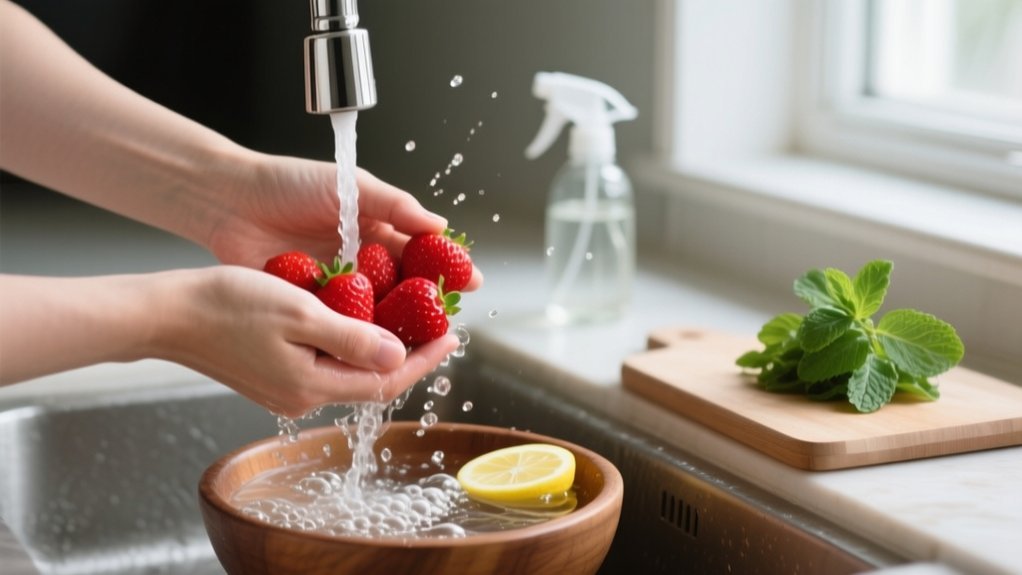
To remove pesticides from strawberries, soak them in a baking soda solution (1 teaspoon baking soda to 4 cups warm water) for about 5 minutes. Then rinse under cool running water for at least 30 seconds.
Alternatively, a vinegar soak (1 cup distilled white vinegar to 3 cups water) works well too. Avoid washing too early to keep them fresh and dry thoroughly afterward.
For more tips on preparation, rinsing, and storage, there’s plenty more to explore.
Why You Should Remove Pesticides From Strawberries
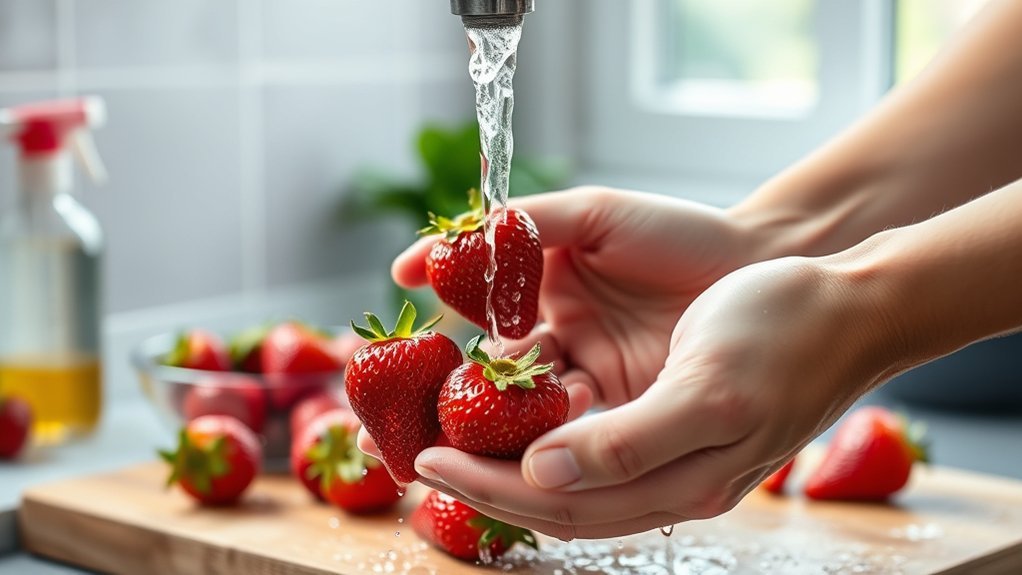
Because strawberries have thin skins and grow close to the ground, they often carry high levels of pesticide residue. This makes it crucial for you to remove these chemicals before eating.
Pesticide residues on strawberries pose a food safety concern. Consuming them without proper cleaning can expose you to harmful substances.
To protect your health, you should always wash strawberries thoroughly. Simple rinsing under tap water helps, but more effective methods like soaking in baking soda or vinegar solutions can break down pesticide compounds better.
Using ozonated water also greatly reduces pesticide residues compared to regular washing. By taking these steps to wash strawberries properly, you minimize your pesticide intake and guarantee safer fruit consumption.
Prioritizing food safety by removing these residues keeps you and your family healthier.
Why Pesticides Cling to Strawberries (And How to Get Them Off)
Since strawberries have thin skins and grow close to the ground, pesticides easily cling to their surface and penetrate the fruit.
Because of their delicate skin and repeated pesticide applications during multiple harvests, strawberries often carry more residue than other fruits.
Strawberries tend to hold more pesticide residue due to their fragile skin and frequent pesticide use.
This makes washing strawberries essential before eating. You can’t just rinse with water and expect all pesticides to wash away.
Research shows that washing strawberries with a baking soda solution can break down pesticide compounds effectively, reducing residues by over 90%.
Using ozonated water also helps, removing between 36% and 75% of pesticides.
How to Prepare Strawberries Before Washing
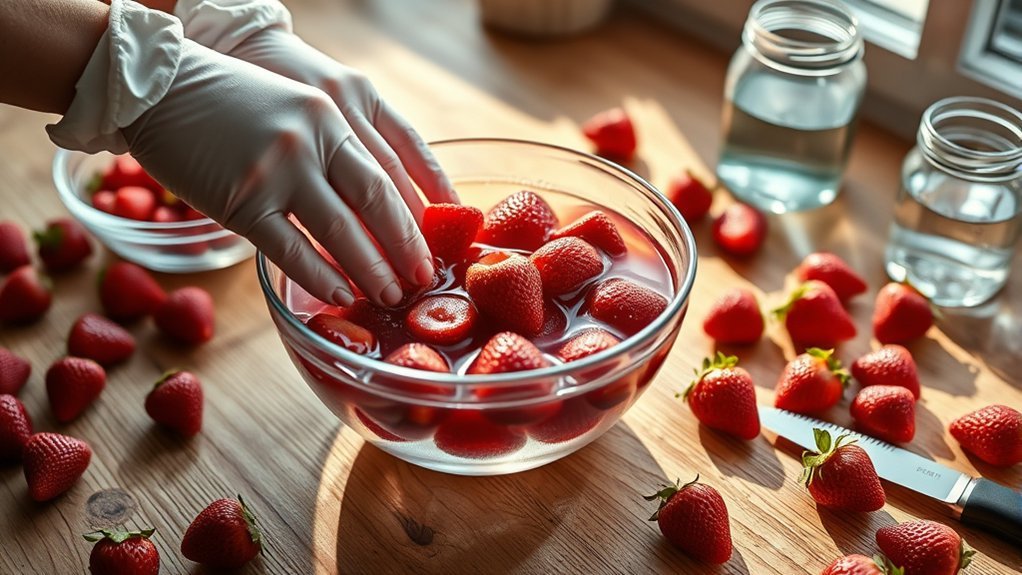
Before you wash strawberries, take a close look for any signs of mold or damage. If you spot any, go ahead and remove those berries to keep the rest fresh longer. It’s a simple step, but it really makes a difference.
Also, keep the green stems intact while you’re doing this. That way, when you wash them later, water won’t soak into the fruit and make them mushy.
This little bit of care helps make sure you get the best flavor and quality when you’re ready to enjoy them.
Inspect Strawberries Carefully
When you inspect strawberries carefully, you can catch any signs of mold, damage, or overripeness that might spoil the rest of the batch.
Before you wash the berries, take time to examine each one closely. Look for spots that are overly soft, mushy, or discolored, and discard those berries immediately.
Also, check for unripe green areas, which could affect flavor. Removing damaged strawberries helps prevent bacteria buildup and keeps the rest fresh longer.
Carefully inspecting your berries is an essential step to remove pesticides effectively because compromised fruit can trap dirt and chemicals.
Once you’ve sorted the good strawberries, you’re ready to wash them properly, ensuring they’re clean and safe to eat.
Keep Stems Intact
Although it might be tempting to remove the stems before washing, keeping them intact helps protect the strawberries from absorbing excess water. This water can dilute their flavor and cause spoilage.
By keeping stems intact, you reduce the chance of moisture seeping into the fruit, which preserves their texture and firmness.
When you wash your strawberries, do so gently under running water or briefly soak them without submerging the stems. This method effectively removes pesticides from strawberries while minimizing damage.
Remember to wash your berries only right before eating or using them to maintain freshness. Leaving the stems on until just before consumption guarantees your strawberries stay flavorful and last longer.
This makes your efforts to remove pesticides from strawberries more successful.
Remove Damaged Berries
Start by carefully inspecting your strawberries and removing any damaged, moldy, or overripe berries.
Before washing, inspect the container thoroughly to identify any fruit that shows soft spots or signs of decay.
These damaged berries can spoil the rest and introduce bacteria, so it’s important to remove damaged berries right away.
Discard any strawberries that look compromised to prevent pests and pathogens from spreading.
Handle the fruit gently to avoid bruising, which could allow contaminants to enter.
Keep the stems intact during this process to reduce water absorption and spoilage.
Store the removed damaged berries separately to avoid affecting the quality of the good strawberries.
Following these steps helps guarantee you start with the freshest fruit before washing and removing pesticides.
Why Wait to Wash Strawberries Until Eating
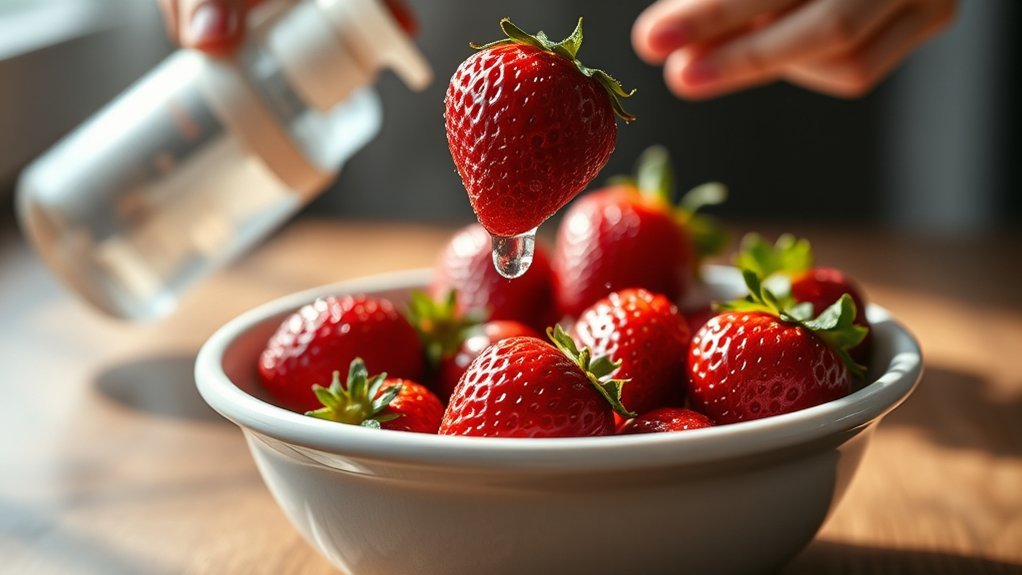
You’ll want to wait to wash your strawberries until right before you eat them.
Why? Because moisture speeds up spoilage, and washing them too early can actually encourage mold growth. Keeping your berries dry helps maintain their freshness longer.
So, by holding off on washing until the last minute, you’re giving your strawberries a better chance to stay fresh and tasty.
It’s a simple step that can really extend their shelf life and keep them delicious.
Mold Prevention Benefits
Two key reasons to wait until right before eating to wash strawberries are to prevent mold growth and preserve their flavor.
Washing produce like strawberries immediately after purchase increases moisture on their delicate skin, which speeds up mold development and spoilage.
Since strawberries absorb water easily, washing them too early can dilute their natural taste and create an environment where bacteria thrive. This defeats the purpose of pesticide removal if mold forms quickly afterward.
By holding off on washing until you’re ready to eat, you keep the berries dry during storage, supporting mold prevention and extending freshness.
When you do wash strawberries, make sure to dry them thoroughly to minimize moisture and protect their quality.
This simple step helps you enjoy pesticide-free, flavorful strawberries longer.
Maintain Strawberry Freshness
Because strawberries are so delicate and absorb moisture quickly, washing them right after purchase can speed up mold growth and reduce their freshness. To help your strawberries stay fresh longer, wait to wash them until just before eating. This practice preserves their texture and flavor by preventing excess moisture from accelerating spoilage.
Since pesticide applications often leave residues, rinsing with clean water right before consumption effectively removes them without compromising freshness. In the meantime, store your unwashed strawberries in the refrigerator to minimize moisture exposure.
When you do wash them, use clean water and dry them thoroughly to avoid mold. By delaying washing until needed, you balance removing pesticides with maintaining the strawberries’ natural quality and shelf life.
How to Remove Pesticides From Strawberries With Baking Soda
Although washing strawberries with water helps, soaking them in a baking soda solution removes pesticide residues more effectively. To do this, mix 1 teaspoon of baking soda with 4 cups of warm water and let your strawberries soak for about 5 minutes.
Soaking strawberries in a baking soda solution removes pesticide residues more effectively than washing with water alone.
This baking soda soak changes the alkaline pH, breaking down pesticide compounds on the surface. After soaking, you should rinse your produce under running water thoroughly for at least 30 seconds to remove pesticides completely.
This method considerably reduces residues and is proven more effective than washing with water alone.
Keep in mind, while this process cleans the surface well, it may not eliminate pesticides absorbed inside the fruit or those applied to the roots.
Still, it’s a simple, safe way to clean your strawberries better.
How to Soak Strawberries in Vinegar for Cleaning
To clean your strawberries with vinegar, start by mixing one cup of distilled white vinegar with three cups of water.
Then, soak the strawberries in this mixture for about five minutes. After they’ve soaked, go ahead and drain the berries.
Next, rinse them thoroughly under cool running water to wash away any vinegar taste.
Finally, make sure to dry the strawberries completely before storing them—this helps prevent mold growth. Easy and effective!
Vinegar Solution Preparation
Start by mixing one cup of distilled white vinegar with three cups of water in a large bowl. This vinegar solution harnesses the natural cleaning power of vinegar to remove pesticide residues and bacteria from your strawberries effectively.
Make sure you use distilled white vinegar because it’s safe and won’t alter the fruit’s flavor when diluted properly. By soaking your strawberries in this solution, you tap into a simple yet powerful method to clean them thoroughly.
After soaking, you’ll want to rinse the strawberries under cool running water to wash away any lingering vinegar taste.
This vinegar solution not only helps remove unwanted chemicals but also extends the freshness of your strawberries, ensuring they stay delicious longer while keeping you safe.
Soaking Duration Guidelines
Once you’ve prepared the vinegar solution, knowing how long to soak your strawberries makes a big difference in removing pesticides effectively. Use 1 cup of vinegar mixed with 3 cups of water to remove residues safely.
Soak the strawberries for about 5 minutes, ensuring they’re fully submerged. This soaking duration balances thorough cleaning without compromising the berries’ texture, which is essential in food processing.
| Step | Details |
|---|---|
| Solution | 1 cup vinegar + 3 cups water |
| Soaking Time | 5 minutes |
| Submersion | Fully submerged |
| Purpose | Remove pesticides & bacteria |
| Post-Soak Action | Drain before rinsing |
Avoid over-soaking to preserve freshness. This vinegar soak method is more effective than baking soda or water alone for cleaning strawberries.
Post-Soak Rinsing
How should you handle strawberries after soaking them in vinegar?
Once you’ve soaked your berries in a solution of distilled white vinegar and water for 5 minutes, start by draining them to remove leftover vinegar.
Next, rinse the berries thoroughly under cool running water for at least 30 seconds. This step is essential for getting rid of any residual vinegar taste and washing away contaminants.
After rinsing, gently pat the strawberries dry with a clean paper towel to prevent excess moisture, which can lead to mold and spoilage.
Remember, using distilled white vinegar not only helps reduce pesticide residues but also extends the strawberries’ shelf life.
For best results, rinse the berries and clean them just before eating to keep them fresh and flavorful.
Comparing Salt Water and Tap Water for Washing Strawberries
Why choose salt water over tap water when washing strawberries?
Salt water is more effective at reducing pesticide residues because salt breaks down pesticide compounds on the fruit’s surface. While tap water can remove some pesticides, it doesn’t penetrate or dissolve pesticide residues as well as salt water does.
Using salt water also helps eliminate certain bacteria, adding extra safety.
Salt water not only reduces pesticides but also helps eliminate harmful bacteria for safer strawberries.
Here’s why salt water stands out compared to tap water:
- Salt water solution (1 tsp salt in 2 cups warm water) soaks strawberries for 5 minutes, loosening pesticides
- Tap water rinses off surface dirt but leaves more pesticide residues behind
- Salt water offers both pesticide reduction and bacterial removal
For a thorough clean and safer strawberries, salt water is the better choice.
Ultrasonic and Ozone Cleaning for Strawberries
Beyond salt water, advanced cleaning methods like ultrasonic and ozone treatments offer powerful ways to reduce pesticide residues on strawberries.
Ultrasonic waves create tiny cavitation bubbles that implode, effectively dislodging pesticides from the strawberry’s surface and pores.
Meanwhile, ozonated water, rich in dissolved ozone, can cut pesticide residues by 36.1% to 75.1%, outperforming regular tap water.
Combining ultrasonic cleaning with ozone treatment boosts pesticide removal even further, with ultrasonic methods alone removing up to 91.2% of these harmful chemicals.
These techniques penetrate the porous skin of strawberries, ensuring a deeper clean than traditional washing.
How to Rinse and Dry Strawberries Properly
When you rinse strawberries under cool running water for at least 30 seconds, you effectively remove dirt, pesticides, and bacteria from their surface.
To guarantee thorough cleaning, place the berries in a colander and gently agitate them while rinsing.
For better pesticide removal, soak the berries in a mixture of one cup distilled white vinegar and three cups water for five minutes before rinsing.
After washing, dry the strawberries carefully by patting them with a clean paper towel to keep moisture at bay and prevent mold.
Remember to rinse your berries just before eating to preserve freshness and flavor.
- Use cool running water to rinse strawberries thoroughly
- Agitate berries gently in a colander for even cleaning
- Pat berries dry with a paper towel to avoid moisture buildup
How to Store Strawberries to Keep Them Fresh
To keep your strawberries fresh longer, store them in a single layer with their stems intact inside the refrigerator. Avoid stacking the berries to minimize bruising and damage.
Line an airtight container with paper towels to absorb excess moisture, which helps prevent mold growth. Make sure your strawberries are completely dry before storing, since moisture accelerates spoilage and mold.
Don’t wash the berries before putting them away; rinse them right before you eat. Store your strawberries in the coldest part of the fridge and consume them within 3-5 days for the best flavor and quality.
Frequently Asked Questions
Can Washing Strawberries Remove All Types of Pesticides Completely?
You can’t remove all pesticide types completely by washing strawberries.
Different washing methods, like rinsing with tap water, ozonated water, or baking soda solutions, reduce residues but don’t eliminate every pesticide.
Some pesticides absorb into the fruit or roots, making them harder to remove.
As a consumer, it’s important to stay aware of these limits and choose washing methods that balance effectiveness and safety for your health.
Are Organic Strawberries Free From Pesticide Residues?
No, organic strawberries aren’t completely free from pesticide residues.
Even though organic farming practices limit synthetic chemicals and follow strict pesticide regulations, some natural pesticides are still used.
These can leave residues, though generally at lower levels than conventional strawberries.
You’ll enjoy health benefits by choosing organic, but it’s smart to wash them properly to reduce any leftover residues and dirt, ensuring you get the safest, most nutritious fruit possible.
Does Peeling Strawberries Help Reduce Pesticide Intake?
Peeling benefits? Not really worth it when it comes to strawberries. You’d lose more than just pesticides. You’d lose the nutritional impact and the sweet, juicy flavor differences that make strawberries so delightful.
Their delicate skin holds key antioxidants and nutrients, so peeling strips away the very essence you want.
Instead, focus on washing them well. You’ll keep their charm intact without sacrificing health or taste.
How Long Do Pesticide Residues Remain on Strawberries After Washing?
Pesticide residues can linger on strawberries even after washing, but their pesticide degradation time varies. Washing effectiveness comparison shows methods like baking soda or ozonated water remove more residues than water alone, improving fruit safety standards.
However, pesticide degradation continues over time, so residues gradually break down.
To guarantee safety, wash strawberries just before eating, since washing too early reduces effectiveness and leaves more pesticides on the fruit when you consume it.
Is It Safe to Eat Strawberries Without Washing if Bought From Trusted Sources?
Even if strawberries come from trusted sources, skipping washing is like jumping into a pool without checking the water first. You’re still risking pesticide exposure because trusted sources can’t guarantee zero residues.
Washing effectiveness is key. It helps remove dirt, bacteria, and pesticide traces that might cling to the fruit’s surface.
To keep yourself safe, always wash strawberries thoroughly, no matter where you buy them from.
It’s a simple step with big benefits.
Conclusion
When it comes to strawberries, remember that “an ounce of prevention is worth a pound of cure.” By prepping them right and using methods like baking soda washes or salt water rinses, you can effectively remove pesticides and enjoy cleaner, safer fruit.
Don’t wash them too early; wait until you’re ready to eat. Proper rinsing, drying, and storage keep your strawberries fresh and pesticide-free, so you get the best taste and nutrition every time.