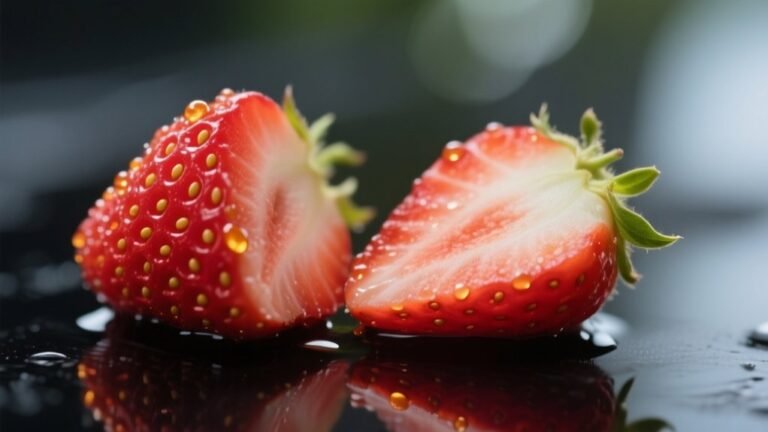


10 Steps to Pick Strawberries From the Plant
To pick strawberries perfectly, look for deep red, fragrant berries and leave any partly red ones to ripen. Check under leaves and mulch to find hidden ripe fruit.
Harvest every one to two days, ideally in the cool morning. Gently pinch and pull the berry with the stem attached to avoid bruising.
Keep berries cool and dry after picking for freshness. Picking all ripe ones, big or small, helps plants keep producing.
Keep going to discover more tips for a fruitful harvest.
How To Identify Ripe Strawberries On The Plant

How can you tell when strawberries are perfectly ripe on the plant? Look for red strawberries that boast a vibrant, deep red color. This signals they’re ready for harvest season. Avoid berries that are still white or mostly green, as they won’t have developed their full sweetness.
During your U-pick Strawberries outing, make sure to inspect under leaves and near mulch since ripe berries often hide from plain sight. Ripe strawberries should feel firm to the touch and emit a sweet fragrance, confirming their peak flavor.
When picking, always leave the green stem attached to keep the berries fresh longer. By focusing on these signs, you’ll enjoy the best, juiciest strawberries throughout the harvest season.
What To Do With Partially Red Or Unripe Berries
Partially red or unripe strawberries should be left on the plant to ripen fully, as they won’t get sweeter once picked. When you spot partially red strawberries, it’s best to pick only those that are fully red, avoiding berries with white or green patches.
Leave partially red strawberries to ripen fully; pick only those that are completely red for the best sweetness.
If you find half-red berries, check back in a few days—they’ll likely be ready then. Unripe strawberries aren’t suitable for immediate eating, so leave them for later harvests.
This approach not only guarantees you pick the sweetest berries but also encourages your plants to keep producing ripe fruit.
In short, it’s best to pick only fully red strawberries and let the unripe ones mature on the plant for the best flavor and yield.
How Often You Should Pick To Maximize Your Harvest
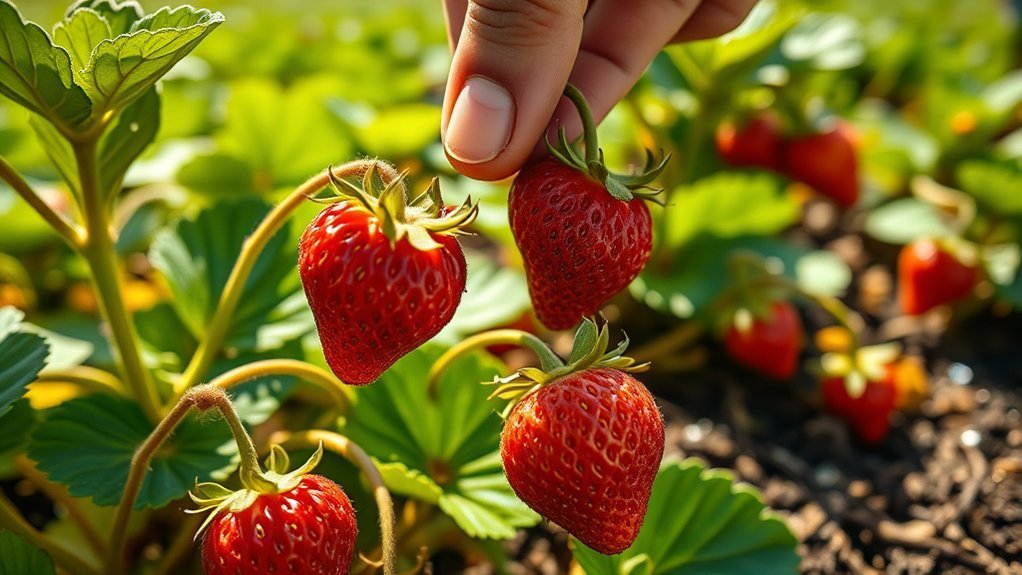
When should you pick your strawberries to get the best yield? For June-bearing varieties, make sure to harvest every one to two days during their mid-June to mid-July season.
Day-neutral types need picking every one to three days from early July until frost.
Frequent harvesting encourages the plants to produce more fruit and reduces the risk of Spotted Wing Drosophila infection.
Next time you pick, consider these tips to maximize your harvest:
- Aim for picking intervals of three to five times per week depending on the variety.
- Regularly check your plants to catch ripe berries early.
- Avoid letting ripe fruit sit too long on the plant to increase marketable yield.
Best Time Of Day To Pick Strawberries
To get the freshest, firmest strawberries, pick them in the morning when the berries are cool.
Strawberry picking during these cooler hours reduces spoilage and keeps the fruit firm, making your harvest last longer.
Picking strawberries in the cool morning hours helps reduce spoilage and keeps them firm for longer freshness.
When you pick early, you’ll spot ripe berries hidden beneath leaves and avoid accidentally grabbing little green or pre-picked strawberries.
Morning picking also helps prevent damage, as warm temperatures can soften the berries quickly.
For the best results, harvest every couple of days during peak season, usually mid-June to mid-July.
This routine prevents overripe fruit from developing mold and keeps your strawberry patch productive.
How To Gently Remove Strawberries Without Damage
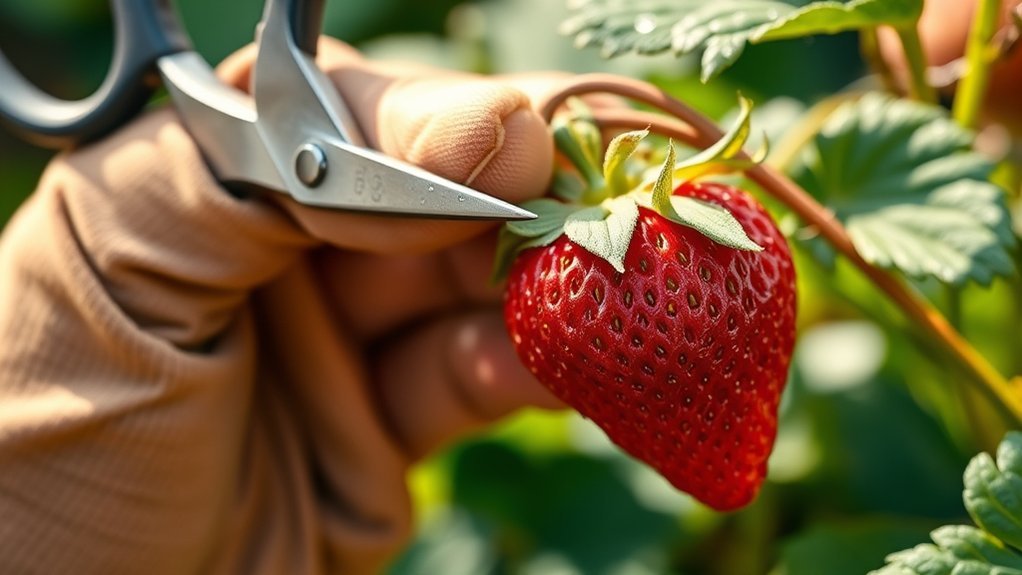
When you’re picking strawberries, try to gently pinch the berry and pull the stem instead of tugging hard. This way, you avoid bruising the fruit.
Plus, keeping that little green stem attached helps the berry stay fresh longer.
Just take a careful touch — it’s good for both the strawberry and the plant.
Doing this can actually lead to a better harvest next time around. So, go slow and be gentle!
Proper Pinching Technique
Handle each strawberry with care by using both hands to pinch the stem just above the berry.
Mastering proper pinching techniques guarantees you don’t crush the fruit or damage the plant.
Focus on stem handling by gently grasping the green stem attached to the berry, which helps maintain freshness after picking.
When it comes to berry selection, always choose fully red berries for ideal ripeness and flavor, avoiding any that are white or green.
Keep these tips in mind:
- Use your thumb and forefinger to pinch the stem firmly but gently.
- Support the berry with your other hand to prevent squeezing.
- Avoid pulling or twisting, which can harm the plant and reduce future yields.
Following these techniques preserves the quality of your harvest.
Stem Preservation Importance
Although picking strawberries might seem straightforward, you need to gently pinch or pull the stem to keep the green cap intact and protect the fruit’s freshness.
Preserving the stem offers stem health benefits by preventing damage that can lead to quick rot and spoilage.
When you carefully remove the berry with its stem, you maintain the berry shelf life, ensuring it stays fresh longer after harvest. This careful handling directly impacts harvest quality, allowing you to enjoy ripe, unbruised strawberries.
Avoid pulling the berry off without the stem, as this can bruise the fruit and reduce its longevity.
Why Keep The Stem On Strawberries When You Pick Them
Because keeping the green stem on strawberries preserves their freshness, you should always pick them with the stem intact. This simple step offers several stem benefits that enhance freshness retention and spoilage prevention.
Always pick strawberries with the green stem to preserve freshness and prevent spoilage.
When you leave the stem on, the berry retains moisture better, reducing the risk of drying out or bruising. The stem also helps maintain nutrient flow, preserving flavor and quality longer. Removing it exposes the fruit to air, which speeds up mold and decay.
Here’s why keeping the stem matters:
- Minimizes bruising and damage during picking
- Slows moisture loss, extending shelf life
- Protects against mold and premature spoilage
Look Under Leaves For Hidden Ripe Berries
When you’re picking strawberries, don’t forget to peek under the leaves.
That’s where the ripe berries like to hide out.
Keep an eye out for those bright red berries—they can be easy to miss if you’re not looking closely.
Check Beneath Leaf Canopies
As you pick strawberries, make certain to lift the leaf canopies gently. Ripe berries often hide beneath the foliage and mulch, waiting to be discovered.
These leaf hiding spots use natural berry camouflage techniques, so you’ll need to be thorough to maximize berry visibility and increase your harvest.
Use one hand to steady the plant while the other carefully lifts leaves to spot firm, bright red strawberries. Avoid picking unripe green or white berries to let them mature fully.
- Scan beneath the leaves and mulch for hidden fruits
- Handle plants carefully to avoid damage and spread of rot
- Focus on fully red berries for the best flavor and shelf life
Checking beneath leaf canopies guarantees you don’t miss these concealed treasures.
Spot Hidden Red Berries
Where exactly should you look to find the best strawberries? Start by using hidden berry techniques. Carefully inspect beneath the leaves where ripe berries often hide.
Employ foliage inspection methods to gently lift the leaf canopies and scan for vibrant red berries, which signal ripeness. Remember, ripe strawberries aren’t just red; they’re firm and emit a sweet fragrance, making strawberry spotting tips easier to follow.
Taking your time with each plant guarantees you don’t miss these hidden gems and prevents rot from spreading by removing overripe fruit.
Being thorough during this step boosts your yield and keeps your harvest fresh.
Avoid Overlooked Berry Clusters
You’ve likely spotted many ripe strawberries by checking under the leaves, but don’t stop there. Overlooked berry clusters often hide deeper among mulch or leaf litter, making thorough inspection key to yield maximization.
Use effective picking techniques to uncover these berry hiding spots, ensuring you gather every bright red, firm strawberry at peak ripeness. Missing hidden berries can reduce future production and promote rot that spreads quickly.
To avoid missing clusters, try this approach: use one hand to gently hold back leaves while the other picks hidden berries. Scan beneath foliage carefully to spot berries blending with shadows.
Remove all ripe berries promptly to prevent mold and support plant health. These steps help you maximize your harvest and keep your strawberry patch thriving.
How To Handle And Store Strawberries After You Pick Them
Once you’ve picked your strawberries, place them in a cool, shady spot right away to keep them from spoiling.
Use gentle handling techniques to avoid bruising these delicate berries, as damage speeds up spoilage.
Handle strawberries gently to prevent bruising, which accelerates spoilage and shortens their freshness.
When it comes to strawberry storage tips, keep the berries refrigerated between 32°F and 35°F with high humidity (90%-95%) to maintain freshness.
Don’t rinse strawberries until you’re ready to eat them because moisture encourages mold growth.
For freshness maintenance, leave the green stems attached; they help extend shelf life.
By following these simple steps, you’ll preserve the vibrant flavor and texture of your strawberries, making sure they stay delicious longer after picking.
Proper handling and storage are key to enjoying your harvest at its best.
Why Pick All Red Strawberries, Big Or Small
Although some may overlook smaller berries, picking all red strawberries, big or small, ensures you get the most from your plants and prevents overripe fruit from spoiling.
When practicing proper strawberry plant care, you’ll find that berry size comparison isn’t about sweetness; even small berries can be bursting with flavor.
Employing effective harvesting techniques means removing every ripe strawberry encourages your plants to keep producing, extending your harvest season.
Remember these key points:
- All red strawberries indicate peak ripeness and best flavor.
- Leaving ripe berries on the plant can halt further fruit production.
- Harvesting all sizes reduces mold risk from overripe, forgotten berries.
How To Enjoy Strawberries Fresh From The Patch
Picking every ripe strawberry sets you up to enjoy their fresh, sweet flavor straight from the patch. During your berry picking, take time for strawberry tasting. Sample a few as you go to appreciate their natural sweetness.
Choose fully ripe, bright red berries with green stems still attached; this helps with flavor preservation and extends freshness. Eat your strawberries soon after picking, ideally within 36 hours, to enjoy the best taste. They lose flavor quickly once off the plant.
Avoid storing them wet or bruised to keep that fresh-picked quality.
Frequently Asked Questions
Can I Eat Strawberry Leaves or Flowers?
Yes, you can eat strawberry leaves and flowers! The strawberry leaf benefits include vitamins A and C plus antioxidants, making them a healthy addition to salads or teas.
Edible flower uses range from decorating desserts to adding a sweet, delicate flavor to dishes.
When harvesting, follow tips like choosing pesticide-free plants and picking younger leaves and fully bloomed flowers to enjoy their best taste and nutritional value.
How Do I Prevent Birds From Eating My Strawberries?
Think of your strawberry patch like a treasure chest; you wouldn’t leave it wide open, right?
To keep birds away, use bird deterrent methods like garden netting options tightly secured over your plants and reflective tape to scare them off.
Adding companion plants that birds dislike can boost protection too.
These strategies work together like a shield, ensuring you enjoy every sweet berry without sharing with feathered thieves.
What Soil Conditions Are Best for Growing Strawberries?
You want to grow strawberries in soil with an ideal pH between 5.5 and 6.8 to guarantee nutrient availability.
Make sure the soil has excellent drainage because strawberries hate waterlogged roots.
Incorporate plenty of organic matter like compost or well-rotted manure to boost fertility and moisture retention.
Avoid heavy, compacted soils since they hinder root growth.
Keeping these drainage requirements and organic matter levels balanced will help your strawberries thrive.
How Long Do Strawberry Plants Typically Produce Fruit?
You can expect strawberry plants to produce fruit for about 3 to 5 years, which is their typical lifespan.
During peak strawberry season, which varies by variety, you’ll use different strawberry harvesting techniques to maximize your yield.
For instance, June-bearing strawberries produce fruit for 3 to 6 weeks, while day-neutral types keep going from early July until the first frost.
Knowing your plant’s lifespan helps you plan for replanting and continuous harvests.
Can Strawberries Be Frozen Directly After Picking?
You can’t freeze strawberries directly after picking if you want to keep their freshness.
Use proper freezing techniques: first, rinse them gently with cool water and hull them to remove leaves and stems.
Dry them thoroughly to prevent ice crystals. These harvesting tips help maintain strawberry freshness during freezing.
Then, freeze them in a single layer before storing in airtight containers, ensuring they stay delicious and nutritious for months.
Conclusion
Don’t worry if you think picking strawberries takes too much time. It’s actually quick and rewarding. By checking your plants regularly and gently picking every ripe berry, you’ll enjoy a bigger, fresher harvest.
Plus, those sweet, sun-warmed strawberries taste way better than store-bought ones. So, take a few minutes each day to pick your strawberries properly. You’ll be glad you did when you bite into that juicy, homegrown goodness straight from your own patch.