
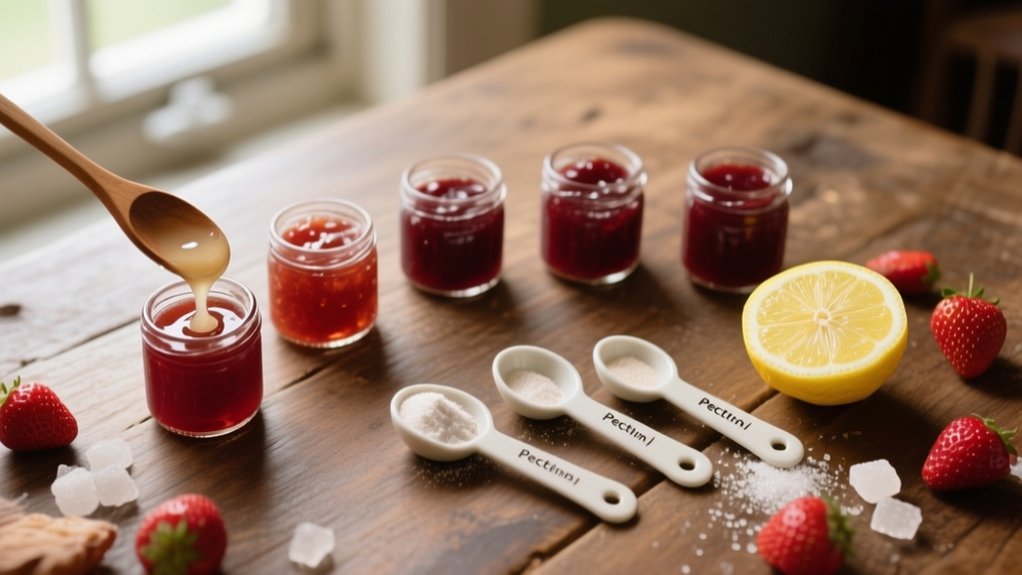
How Much Pectin to Use for Perfect Strawberry Jam – 5 Essential Steps
To make perfect strawberry jam, start by measuring five cups of crushed ripe strawberries, not whole berries, for accurate pectin balance. Use 1.75 ounces of low-sugar pectin per 4 pounds of crushed fruit and adjust amounts if your batch is smaller or berries are very ripe.
Heat fruit to medium-high, stir in pectin with some sugar, then boil hard for a minute before adding the rest. Don’t forget about lemon juice to boost gel. Keep following these steps to master your jam’s texture and flavor.
Measure Strawberries Accurately for Strawberry Jam
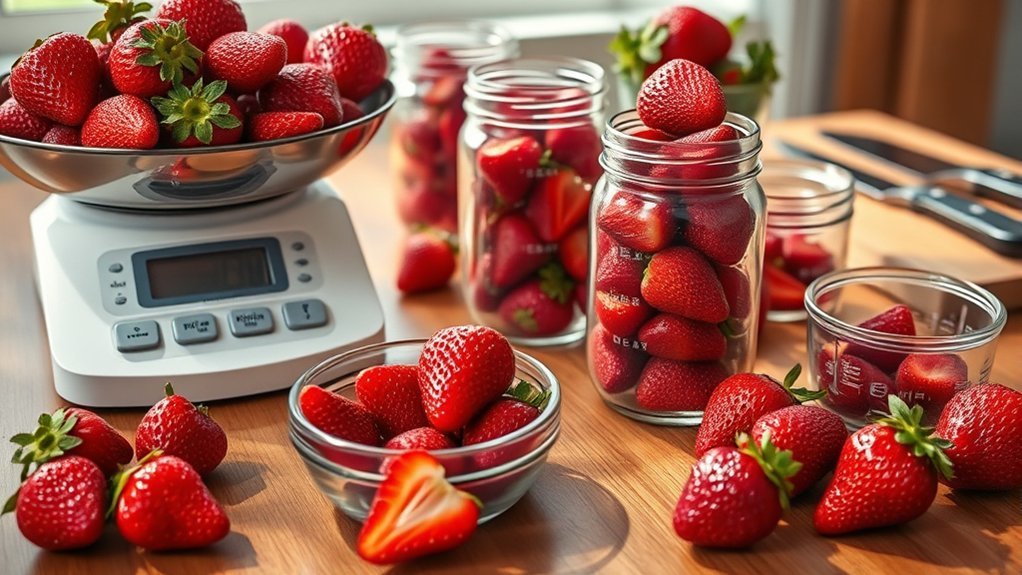
When you make strawberry jam, measuring five cups of crushed strawberries accurately is essential to get the right balance of fruit, sugar, and pectin for the perfect gel.
To measure strawberries accurately, start by crushing ripe strawberries with a potato masher. Don’t measure whole berries, as volume varies.
Use a liquid measuring cup to verify the precise volume of crushed berries, which is critical for maintaining the ideal fruit to sugar ratio.
Combining ripe and slightly overripe strawberries enhances flavor and helps achieve the jam’s ideal texture.
Proper measurements directly influence how well the pectin sets the jam, so check your crushed berries carefully.
Sticking to these steps guarantees your strawberry jam will have the perfect sweetness and gel every time.
Choose the Right Pectin Type and Amount
Accurately measuring your crushed strawberries sets the stage for selecting the right pectin type and amount to achieve the perfect jam consistency.
For traditional strawberry jam, you’ll want about 1 package (1.75 ounces) of low sugar or no-sugar-needed powdered pectin per 4 pounds of crushed strawberries.
If you prefer classic pectin, use roughly 28 grams (4 tablespoons) for every 3 cups of crushed strawberries.
Since strawberry season affects fruit flavor and pectin effectiveness, mixing just ripe and very ripe berries helps.
Remember to follow your pectin recipe closely, especially regarding sugar and boiling water ratios, as brands differ.
Low sugar pectin lets you reduce sweetness, using up to 2 cups of sugar per 4 cups of fruit, maintaining a balanced fruit flavor and ideal gel.
How Much Pectin to Use for Your Batch Size?
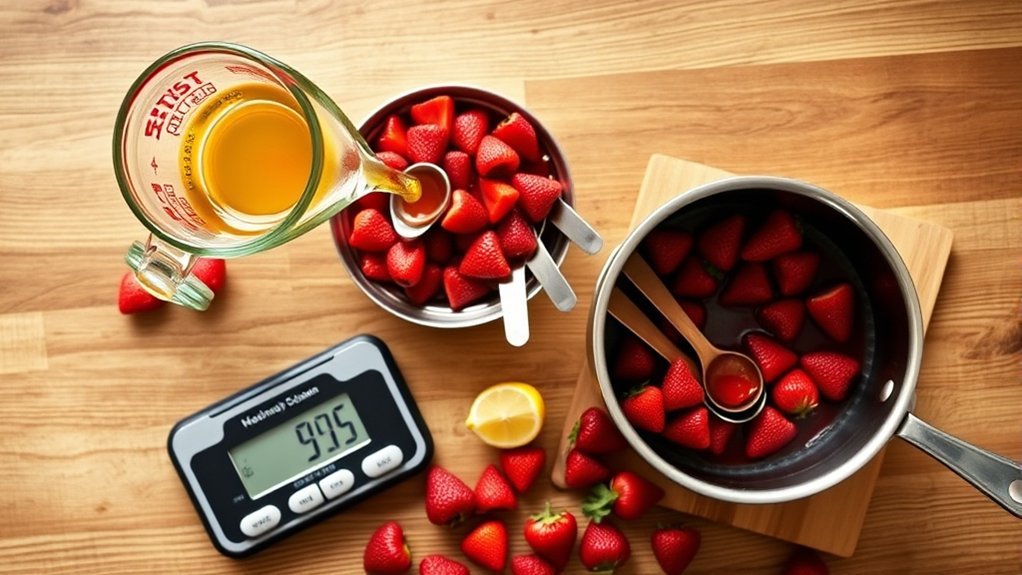
Determining the right amount of pectin for your batch size guarantees your strawberry jam sets perfectly every time. Typically, one 1.75-ounce package of powdered pectin works for every 4 pounds of crushed strawberries in regular recipes.
If you’re using low-sugar pectin, that same package can handle up to 8 cups of fruit, giving you flexibility with batch size and amount of sugar.
For smaller batches, like half a recipe, use about 2 cups of crushed strawberries per 1/4 package of pectin.
Always consult the pectin package for specific pectin guidelines since brands differ. Following these directions guarantees ideal gelling results, so your strawberry jam thickens just right without being too runny or too stiff.
When and How to Add Pectin During Cooking
Getting the amount of pectin right sets the stage, but knowing exactly when and how to add it during cooking makes all the difference in your jam’s texture.
For classic strawberry jam, heat your crushed strawberries to a medium-high temperature first.
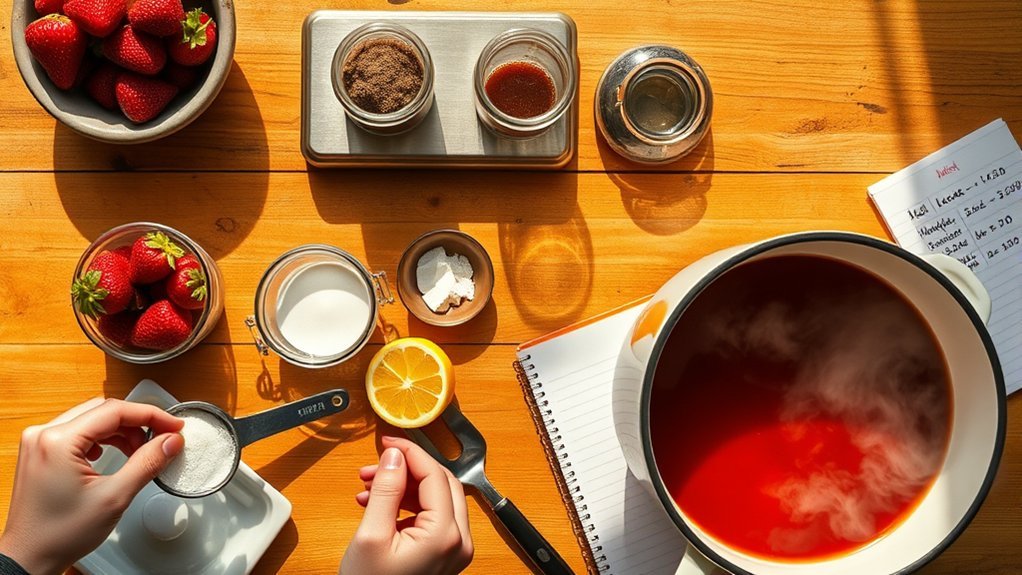
Then, stir the pectin into the fruit along with about 1/4 cup of sugar in jams to help dissolve it evenly. Keep stirring constantly as you bring the mixture to a full boil.
Once boiling, add additional sugar all at once and boil hard for exactly 1 minute to activate the pectin fully.
If you’re using low or no-sugar pectin, follow the package instructions carefully, as sugar ratios and cooking times can differ during cooking the jam.
Adjust Pectin and Lemon Juice for Ripeness and Batch Size
Since the ripeness of your strawberries affects how well your jam sets, you’ll want to adjust the amount of pectin accordingly. Very ripe strawberries have more natural sugars, so you can slightly reduce pectin to achieve the perfect gel consistency.
Also, lemon juice plays a key role; adding about 2 tablespoons of fresh lemon per batch balances acidity and aids gelling.
When working with different batch sizes, scale the pectin and lemon juice proportionally.
For example, 4 cups of crushed strawberries need 1 full package of low sugar pectin, but a smaller batch of 1 pound requires about ¼ of that package.
- Adjust pectin based on strawberry ripeness and natural sugars
- Use fresh lemon juice to enhance gel consistency and flavor
- Scale ingredients precisely for your batch size to avoid runny jam
Frequently Asked Questions
Can I Use Homemade Pectin Instead of Store-Bought?
Yes, you can use homemade pectin instead of store-bought, but keep in mind the benefits and challenges.
Homemade pectin extraction methods vary depending on fruit variety, which impacts pectin measurement accuracy.
Adjusting recipes is vital to preserve flavor integrity and avoid common pectin mistakes.
Test gelling consistency carefully, as homemade pectin behaves differently.
Also, follow proper pectin storage tips to maintain its strength.
Store-bought alternatives offer precision, but homemade pectin adds natural charm.
How Does Sugar Type Affect Pectin’s Gelling Power?
Sugar types directly impact pectin’s gelling power and jam consistency. Granulated sugar activates natural pectin best, while high fructose sweeteners or honey dilute gelling strength, requiring adjustments.
Different sweeteners affect acid levels and flavor profiles, so you need to balance fruit ratios carefully.
Cooking methods also matter, as longer cooking can compensate for weaker gelling.
Understanding sweeteners’ effects helps you achieve the perfect jam consistency every time.
Is It Necessary to Sterilize Jars Before Jamming?
You absolutely should embrace jar sterilization methods before jamming to guarantee your strawberry jam shines in quality.
The benefits of sterilization include preventing common jar mistakes like contamination and spoilage, which can drastically impact shelf life.
While boiling jars is classic, alternative sterilization techniques like dishwasher cycles work well too.
Remember, the importance of cleanliness and proper jar sealing tips are key.
Following best practices for jarring safeguards your jam’s flavor and safety.
Can Frozen Strawberries Be Used Without Altering Pectin Amounts?
Yes, you can use frozen strawberries without changing pectin amounts if you prepare the thawed fruit properly.
Drain excess juice to avoid altering jam consistency, since frozen strawberry flavor and texture differ from fresh ones.
Note jam texture differences and slightly softer fruit may affect cooking time adjustments.
Consider fruit ripeness importance and pectin absorption rates; if needed, explore pectin alternatives.
Follow preserving quality methods and jam consistency tips to maintain frozen fruit sweetness.
How Do Altitude and Humidity Impact Jam Setting Times?
You mightn’t realize how altitude effects and humidity levels can sabotage your jam’s perfect set.
As altitude rises, lower boiling points force you to tweak cooking time and pressure adjustments to hit that ideal temperature, preserving flavor and ensuring proper gelling.
High humidity throws off jam consistency, demanding recipe modifications like adjusting ingredient ratios or extending cooking time.
Watch temperature variations closely, or your jam risks turning out too soft or undercooked.
Conclusion
Now that you’ve mastered the art of measuring strawberries and adding just the right amount of pectin, your jam is ready to shine like a ruby treasure. Think of pectin as the magic thread weaving your fruit into a luscious tapestry of sweetness and texture.
With these steps, you’ll capture the vibrant essence of summer in every jar. So, grab your spoon and get ready to spread a little sunshine on your toast!