


How Many Net Carbs in a Strawberry?
You’ll find that each medium strawberry has about 0.4 grams of net carbs, thanks to its fiber content. This makes strawberries a smart choice if you want a sweet, low-carb treat without worrying about blood sugar spikes.
Whether fresh or frozen, they fit nicely into low-carb or keto diets. If you want to discover how berries stack up, ways to enjoy them, and common carb counting mistakes, there’s plenty more to explore.
What Are Net Carbs and Why Do They Matter?

Although carbohydrates are an essential energy source, you need to focus on net carbs, which are the total carbs minus fiber, because fiber doesn’t affect your blood sugar.
Net carbs give you a clearer picture of the carbs that actually impact your body, especially if you’re following low-carb diets.
Since fiber passes through your digestive system without being absorbed, it won’t raise your blood sugar levels.
By tracking net carbs, you can better manage your daily carbohydrate intake and avoid spikes in blood sugar and insulin.
This approach is especially important if you’re aiming for weight management or metabolic health.
Understanding net carbs helps you make smarter food choices that align with your health goals and keeps your blood sugar stable throughout the day.
How Many Net Carbs Are in Strawberries?
You’ll find that one cup of strawberries contains about 7.9 grams of net carbs.
That’s actually pretty low compared to a lot of other fruits.
So, if you’re keeping an eye on your carb intake or sticking to a low-carb diet, strawberries can be a great option.
Let’s take a look at how they compare to other fruits and what that means when you’re planning your meals.
Net Carb Content
Strawberries offer around 6 grams of net carbs per 100 grams, making them a smart choice if you’re watching your carb intake.
When tracking your net carbs per day, remember that net carbs equal total carbs minus fiber, which is why strawberries stand out.
A typical cup of strawberries contains about 7.9 grams of net carbs after subtracting fiber from total carbs. This means you can enjoy a decent portion without exceeding your carb limits.
Because strawberries have a relatively low sugar content and fiber helps reduce the net carb impact, they fit well within low-carb and ketogenic diets.
Keeping an eye on grams of net carbs helps you stay on track while still enjoying tasty, nutrient-rich strawberries.
Carb Comparison With Fruits
How do strawberries stack up against other fruits when it comes to net carbs? If you’re watching your carb intake, strawberries are a great choice among low-carb fruits.
Here’s a quick comparison to help you decide:
- Strawberries: About 6 grams of net carbs per 100 grams.
- Raspberries and blackberries: Slightly lower, around 5 grams of net carbs per 100 grams.
- Blueberries: Higher at approximately 12 grams of net carbs per 100 grams.
- Bananas: Much higher, with about 20 grams of net carbs per 100 grams.
One cup of strawberries (150 grams) has roughly 7.9 grams of net carbs, making them a tasty, low-carb option that fits well into many diets.
Impact On Low-Carb Diet
Although many fruits are high in carbs, you can enjoy strawberries without worrying too much about your daily net carb limit. A cup of strawberries contains only 6-8 grams of net carbs, making them an excellent choice for your low-carb diet.
Their fiber content helps lower net carbs by 2.9 grams per cup, which means you get more nutrition with fewer carbs affecting your intake.
Plus, strawberries have a glycemic index of 40, so they won’t cause sharp blood sugar spikes.
Compared to other fruits, strawberries stand out as a low-carb option that fits well within ketogenic or other low-carb plans.
Including strawberries in your diet lets you enjoy essential vitamins and antioxidants without compromising your carb goals.
Comparing Net Carbs in Strawberries and Other Fruits
When you compare net carbs across popular fruits, you’ll find strawberries stand out as a low-carb option with about 6 to 8 grams per cup.
If you’re watching your carb intake, here’s how strawberries stack up against other fruits:
- Raspberries and blackberries contain about 5 grams of net carbs per 100 grams, making them equally good low-carb fruits.
- Blueberries have roughly 12 grams of net carbs per 100 grams, which is higher and less ideal for strict low-carb diets.
- Watermelon offers about 7 grams of net carbs per 100 grams, placing it in a moderate range.
- Peaches contain around 8 grams of net carbs per 100 grams, slightly above strawberries.
Choosing strawberries helps you enjoy a sweet treat while keeping net carbs low.
How Fiber Affects Net Carb Count in Strawberries
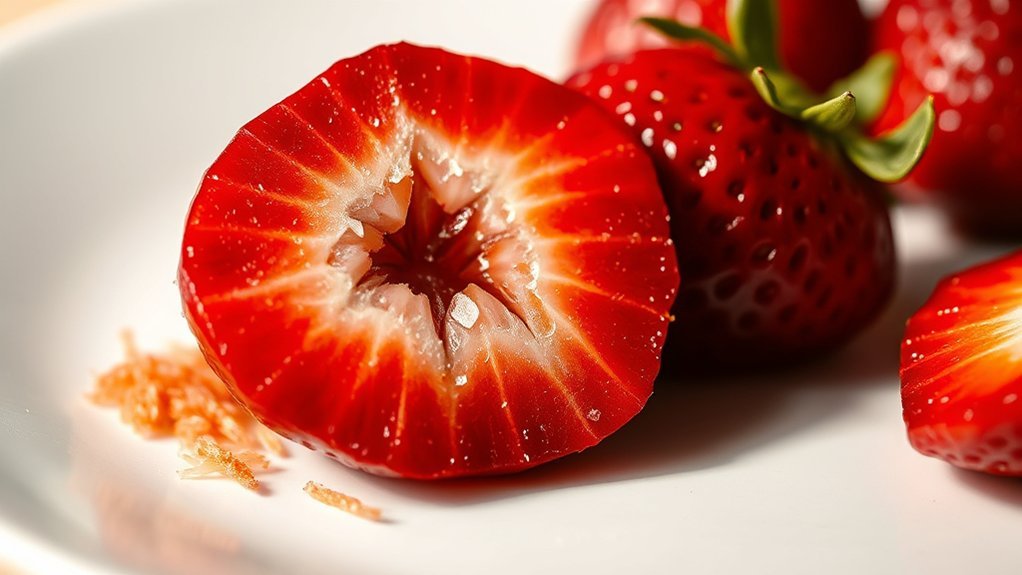
Since fiber lowers the total amount of carbohydrates your body absorbs, it plays a key role in calculating the net carbs in strawberries. When you look at a cup of strawberries, it contains about 7.9 grams of net carbs. This number comes from subtracting the 2.9 grams of fiber from the total carbohydrates.
The grams of fiber in strawberries not only reduce the net carb count but also slow digestion, helping to stabilize your blood sugar levels.
Because of this fiber content, strawberries remain a smart choice when you want to enjoy a tasty fruit while sticking to a low carb plan.
Are Strawberries Suitable for Low-Carb and Keto Diets?
How do strawberries fit into your low-carb or keto lifestyle? They’re a great choice thanks to their moderate net carbs and nutritional benefits. Here’s why you can include them:
- Strawberries contain about 6 to 8 grams of net carbs per cup, making them compatible with low-carb diets.
- Their low glycemic index of 40 helps prevent blood sugar spikes, supporting keto diet goals.
- With nearly 3 grams of fiber per 100 grams, strawberries lower the effective carb load.
- Their rich vitamin C and antioxidant content boosts overall health on a keto diet.
How Different Serving Sizes Change Strawberry Net Carbs
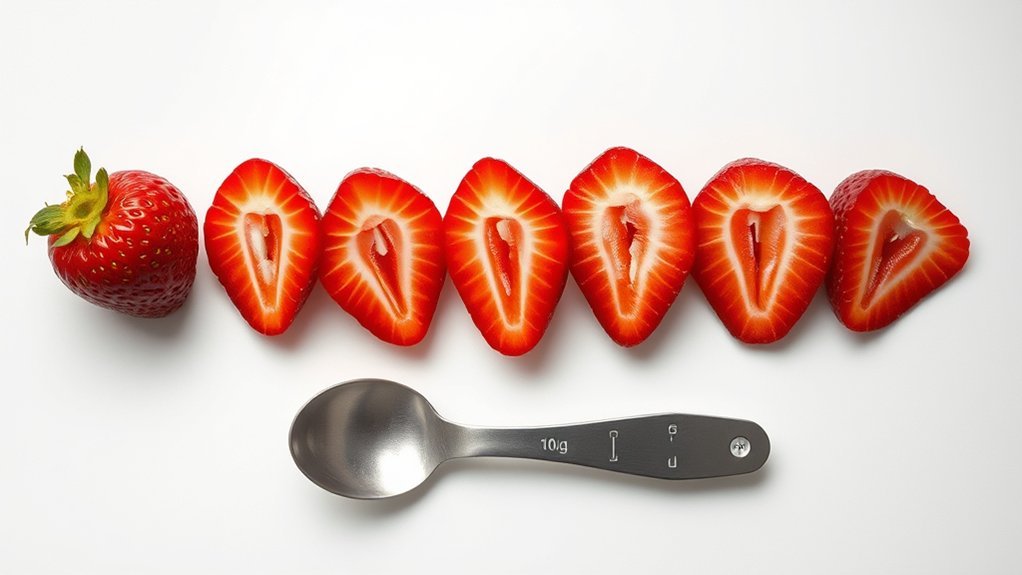
Although strawberries are generally low in net carbs, the amount you consume directly affects your carb intake. For example, a serving size of 100 grams contains about 7.9 grams of net carbs, making it easy to track if you’re counting carbs.
If you prefer smaller portions, 50 grams of strawberries will give you roughly 4 grams of net carbs, while five medium strawberries (around 75 grams) provide about 5.9 grams of net carbs.
One cup of fresh strawberries varies between 6 to 8 grams of net carbs, depending on ripeness and variety.
Knowing grams per serving size helps you manage your carb consumption effectively, especially if you’re following a low-carb or keto diet.
Just remember, preparation and added ingredients can slightly change the net carbs.
Fresh vs. Frozen vs. Canned Strawberries: Carb Differences
When you’re picking out strawberries, you’ll find that fresh and frozen ones usually have about the same amount of net carbs—typically around 6 to 7 grams per 100 grams.
On the other hand, canned strawberries tend to have more carbs because they often come with added sugars. So, it’s really important to check the labels before buying.
Also, keep in mind that the nutrients in strawberries can change depending on whether they’re fresh, frozen, or canned.
This can affect how much of those good vitamins and minerals you actually get when you eat them.
Carb Content Comparison
If you’re tracking your carb intake, it’s important to know that fresh and frozen strawberries offer similar net carbs, around 7.9 and 7.6 grams per cup, respectively. They both make solid low-carb options.
When comparing their carb content, consider these points:
- Fresh strawberries are naturally low-carb with no added sugars, which makes them ideal for clean eating.
- Frozen strawberries maintain a similar net carb profile, though slight variations may occur because of processing.
- Canned strawberries often contain added sugars or syrups, increasing their net carbs considerably.
- Always check labels on canned varieties to avoid unexpected carb spikes.
Impact Of Added Sugars
Understanding the carb content differences between fresh, frozen, and canned strawberries means paying close attention to added sugars.
Fresh strawberries typically have about 7.9 grams of net carbs per cup, making them a great low-carb choice with maximum health benefits.
Frozen strawberries usually keep similar carb levels, around 7.4 grams per cup, since they’re often flash-frozen without added sugars.
Canned strawberries can contain considerably more carbs due to syrups or sweeteners added during processing.
To keep added sugars and thus carbs low, choose canned strawberries packed in 100% juice or water, and consider rinsing them before eating.
Nutrient Retention Differences
Although fresh, frozen, and canned strawberries all offer carbs, the way they retain nutrients varies greatly and affects their overall health impact.
When comparing nutrient retention and net carbs:
- Fresh strawberries provide about 7.9 grams of net carbs per cup and retain the highest levels of vitamin C and antioxidants.
- Frozen strawberries maintain similar net carbs and nutrient levels but may differ slightly in texture and taste.
- Canned strawberries often contain added sugars, increasing net carbs and reducing their suitability for low-carb diets.
- To minimize extra carbs, choose canned strawberries packed in water or their own juice instead of syrup.
Understanding these differences helps you pick the best strawberry form to meet your nutritional goals and maintain healthy net carb intake.
How Natural Sugars in Strawberries Affect Blood Sugar
Because strawberries contain natural sugars alongside fiber, they impact your blood sugar more gently than many other fruits. The fiber helps slow sugar absorption, so the natural sugars don’t cause sharp spikes in your blood sugar.
With about 7 grams of net carbs per cup, strawberries fit well into carb-conscious diets without overwhelming your glucose levels.
| Component | Amount per Cup | Effect on Blood Sugar |
|---|---|---|
| Net Carbs | 7 g | Moderate impact |
| Natural Sugars | ~5 g | Provides sweetness, mild rise |
| Fiber | 2.9 g | Slows sugar absorption |
This balance makes strawberries a smart choice if you want to enjoy sweetness without compromising blood sugar control.
Health Benefits of Strawberries With Low Net Carbs
You’ll love how strawberries pack antioxidants that fight inflammation and support your immune system.
Plus, they’ve low net carbs, so you can enjoy a sweet treat without worrying about your blood sugar spiking.
Including them in your diet is a smart way to boost your health without adding extra carbs.
It’s a win-win!
Antioxidant Rich Profile
Many health-conscious individuals turn to strawberries for their impressive antioxidant content and low net carbs. When you include strawberries in your low-carb diet, you benefit from:
- Antioxidants like anthocyanins that reduce oxidative stress and support heart health.
- High vitamin C levels, about 84.7 mg per cup, that boost your immune system and keep your skin healthy.
- A low net carb count (6-8 grams per cup), making them ideal for maintaining your carb goals.
- Dietary fiber (around 2.9 grams per cup) that promotes digestion and helps you feel full.
Blood Sugar Regulation
Strawberries not only offer antioxidants and fiber but also support healthy blood sugar levels thanks to their low net carb content. With just 6 to 8 grams of net carbs per cup and a glycemic index of 40, strawberries have a minimal impact on blood sugar regulation.
Their fiber slows sugar absorption, helping you maintain stable blood glucose levels throughout the day. Regularly including strawberries in your diet may improve insulin sensitivity, which is essential in preventing and managing type 2 diabetes.
Immune System Support
Because they contain just 6 to 8 grams of net carbs per cup, strawberries fit well into diets aimed at boosting your immune health.
Here’s how they support your immune system:
- Vitamin C Powerhouse: One cup packs about 84.7 mg of vitamin C, over 94% of your daily value. This is essential for fighting infections.
- Antioxidant Defense: Anthocyanins reduce oxidative stress and inflammation, which enhances immune efficiency.
- Hydration Boost: With 91% water content, strawberries keep you hydrated. Staying hydrated supports your immune functions.
- Gut Health Support: The 2.9 grams of fiber per cup promote a healthy gut. A healthy gut is vital for a strong immune system.
Common Mistakes to Avoid When Counting Strawberry Carbs
When counting carbs in strawberries, you’ll want to pay close attention to serving sizes since one cup contains about 8 grams of net carbs. This can add up quickly if you eat more.
A common mistake is confusing total carbs with net carbs. Strawberries are high in water, which affects carb density.
Also, don’t overlook added sugars in processed strawberry products or other high-carb foods eaten alongside them.
| Mistake | Explanation | Impact |
|---|---|---|
| Ignoring serving size | One cup = ~8g net carbs | Overconsumption of carbs |
| Confusing carb types | Total carbs vs. net carbs | Miscalculating carb intake |
| Overlooking added sugar | Processed products have extra sugars | Unexpected carb increase |
Tips to Enjoy Strawberries Without Exceeding Net Carbs
If you want to enjoy the sweet taste of strawberries without going over your net carb limit, focus on portion control and smart pairings. Strawberries fit well into low-carb diets when you manage portion sizes carefully.
Here are some tips:
- Measure servings. About eight medium strawberries keep net carbs manageable.
- Pair with high-fiber foods like Greek yogurt or nuts to lower net carb impact.
- Add strawberries to leafy green salads for flavor without adding many carbs.
- Use strawberries as a topping on low-carb desserts such as almond flour cakes.
Best Low-Carb Strawberry Recipes and Snack Ideas
While strawberries naturally contain around 6 grams of net carbs per cup, you can easily enjoy them in a variety of low-carb recipes and snacks that keep your carb intake in check.
Try adding strawberries to salads with leafy greens and nuts for a fresh, flavorful, low-carb meal.
Enhance your salad with strawberries, leafy greens, and nuts for a refreshing low-carb delight.
For a creamy, healthy snack, blend strawberries with Greek yogurt and a splash of vanilla extract.
You can also whip up a nutritious low-carb smoothie by combining strawberries, spinach, and unsweetened almond milk.
If you want a quick dessert, dip fresh strawberries in dark chocolate with at least 85% cocoa for a satisfying low-carb treat.
These options let you enjoy strawberries as tasty, healthy snacks without worrying about exceeding your net carbs.
Frequently Asked Questions
Can Strawberry Seeds Cause Digestive Issues?
Yes, strawberry seeds can cause digestive issues, especially if you have sensitive digestive health.
Their fiber content is beneficial, but the small, hard seeds might be tough for your digestion, potentially leading to discomfort like bloating or irritation.
If you notice trouble, try cooking or pureeing strawberries to break down the seeds and make them easier to digest.
This way, you can still enjoy strawberries without upsetting your stomach.
How Should Strawberries Be Stored for Maximum Freshness?
Think of your strawberries like precious gems; they need the right care to shine.
For maximum freshness, follow refrigeration tips: keep them unwashed in a breathable container lined with paper towels to absorb moisture.
Avoid stacking to prevent bruising. Their shelf life can stretch 5-7 days this way.
If you want to keep them longer, try freezing methods like flash freezing on a tray before storing in a bag, preserving flavor and texture.
Do Strawberries Cause Allergic Reactions in Some People?
Yes, strawberries can cause allergic reactions in some people. You might experience symptoms like itching, tingling in your mouth, hives, or swelling of your lips and throat.
If you suspect an allergy, consider strawberry allergy testing to confirm it. Managing strawberry allergies often means avoiding red strawberries and washing them thoroughly.
If you have a history of fruit allergies, be extra cautious, as cross-reactivity can increase your risk.
What Are the Best Varieties of Strawberries for Taste?
If you’re chasing the holy grail of flavor profiles, you’ll love June-bearing and Chandler strawberries. They’re the sweet varieties that shine in late spring and early summer.
Albion offers a rich, firm texture perfect for desserts, while ever-bearing types give you consistent sweetness throughout the season.
Seascape balances flavor and adaptability, making it a great pick no matter when you’re picking.
Seasonal differences matter, so try them all to find your favorite!
Can Strawberry Leaves Be Used in Cooking or Tea?
Yes, you can definitely use strawberry leaves in cooking or tea.
You’ll enjoy strawberry leaf benefits like vitamins A and C, plus antioxidants that support your immune system.
Try cooking with leaves by adding them to salads or as a garnish for a unique texture.
For herbal tea recipes, steep fresh or dried strawberry leaves in hot water for 5-10 minutes to extract their subtle, astringent flavor and nutrients.
Conclusion
Think of strawberries as little red boats sailing smoothly on the sea of your low-carb journey. Their net carbs are like gentle waves, small enough not to rock your dietary boat but enough to keep your taste buds excited.
By understanding their net carb count, you steer clear of hidden pitfalls and enjoy the sweet voyage without capsizing your goals. So, savor strawberries wisely, and let them be your delicious allies on your path to health.