

How Big Do Strawberry Plants Get at Maturity?
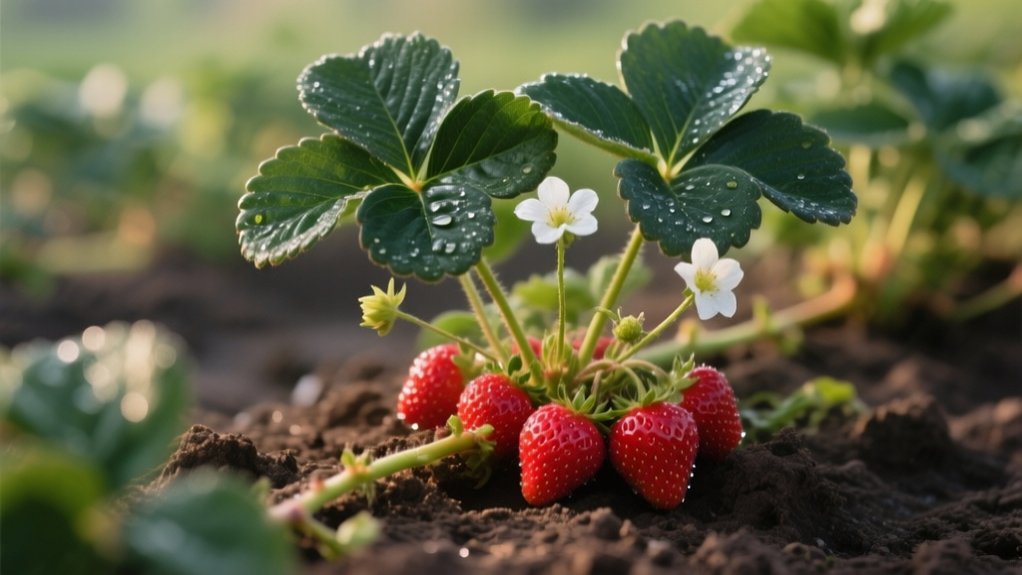
You’ll find that mature strawberry plants typically grow about 12 inches tall and spread 12 to 18 inches wide, depending on the variety and growing conditions. June-bearing types tend to be more compact, around 8 inches tall, while everbearing and day-neutral varieties can reach up to 18 inches.
Runners help your plants spread, boosting fruit production and coverage. With proper care and the right environment, you can maximize their size and yield. Keep going to discover how to do just that.
How Big Do Strawberry Plants Get at Maturity?
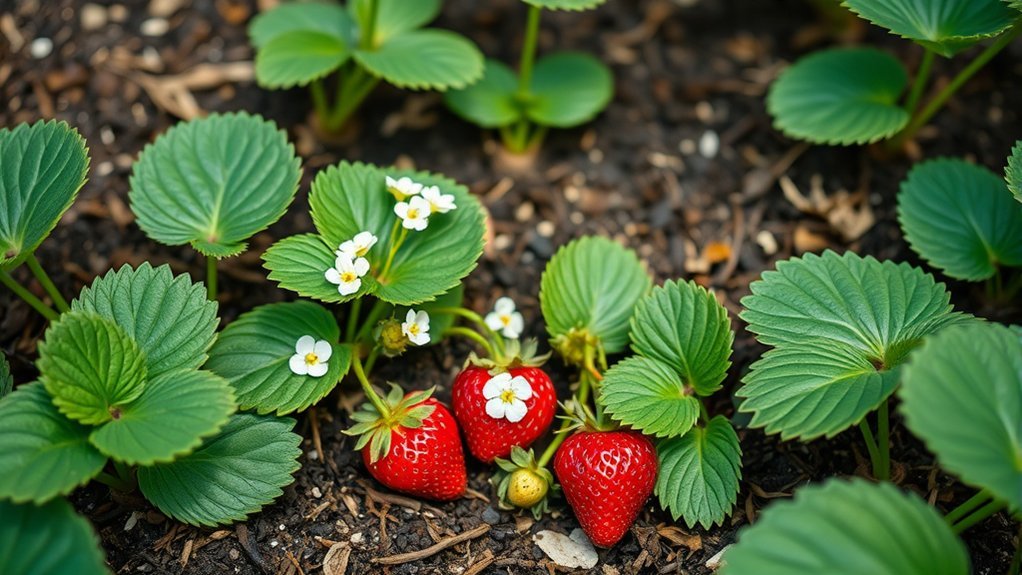
Although strawberry plants stay relatively compact, their mature size varies by type and care. You’ll notice that June-bearing varieties typically reach about 20 cm (8 inches) in height, while everbearing strawberries can grow between 1 to 1.5 feet under the right growing conditions.
Strawberry plant height varies—June-bearing grow around 8 inches, everbearing up to 1.5 feet with proper care.
The average height hovers around 12 inches, but this depends on factors like soil quality and nutrient availability. Different varieties adapt differently, so some may grow taller or stay smaller based on their genetics and environment.
When you provide proper care, such as maintaining adequate nitrogen levels, good soil quality, and consistent watering, you’ll help your strawberry plants reach their full potential.
Their compact nature makes them versatile for various gardening setups, from raised beds to containers.
Typical Height and Spread of Mature Strawberry Plants
You’ll find mature strawberry plants usually stand about 8 to 18 inches tall, depending on the variety.
They typically spread 12 to 18 inches wide to make room for runners.
And remember, soil quality and care play a big role in how tall and wide your plants grow.
Average Plant Height
Strawberry plants typically grow to an average height of about 12 inches, though this can vary depending on the variety and growing conditions.
Mature strawberry plants’ height is influenced by soil quality, nutrient levels, and proper care.
When considering the average height, keep these points in mind:
- June-bearing varieties usually reach around 8 inches tall, making them more compact.
- Everbearing types tend to grow taller, often between 12 to 18 inches, especially with ideal sunlight and nutrients.
- Maintaining good soil quality and providing proper care can help your plants reach their full height potential.
Typical Plant Spread
Mature plants typically spread about 12 to 18 inches wide to accommodate their runners and guarantee good air circulation. This spread varies slightly among strawberry varieties, with everbearing types often reaching the upper end due to their vigorous growth.
When planning your garden, consider that mature strawberry plants generally stand between 12 to 18 inches tall, but their horizontal spread plays an equally important role for healthy development. Proper air circulation prevents disease and helps maintain plant vigor, so spacing is key.
Keep in mind that height and spread depend greatly on environmental conditions and soil quality. By ensuring nutrient-rich soil and ideal growing conditions, you’ll support both the height and spread of your strawberry plants, leading to a fruitful harvest and robust plant health.
Factors Influencing Size
Understanding what affects the size of your strawberry plants helps you create the best growing environment.
Mature strawberry plants’ overall height and spread depend largely on these factors:
1. Soil quality and nitrogen availability
Rich, well-drained soil with adequate nitrogen boosts healthy growth, influencing both height and runner spread.
2. Sunlight exposure
Strawberry plants need full sun for at least 6-8 hours daily to reach their growth potential.
3. Proper care and nutrient management
Regular watering, fertilizing, and pest control guarantee your plants grow vigorously without stress.
June-bearing varieties typically reach about 8 inches tall, while everbearing types can grow up to 18 inches under ideal conditions.
Variety Impact on Strawberry Plant Size
You’ll notice that strawberry plant size changes depending on the variety you choose.
June-bearing types tend to stay shorter. On the other hand, everbearing and day-neutral plants can grow taller and show different growth patterns.
Plus, factors like soil quality and nutrients also play a big role in how tall they get.
Size Differences By Variety
Although strawberry plants vary in size, their height largely depends on the variety you choose to grow. Here’s a quick look at size differences among popular strawberry varieties:
- June-bearing strawberries usually stay compact, reaching about 20 cm (8 inches) in height.
- Everbearing strawberries grow taller, typically between 30 to 46 cm (1 to 1.5 feet), especially with good care.
- Day-neutral varieties share similar growth heights with everbearing strawberries, benefiting from consistent soil quality and nitrogen availability.
Keep in mind, soil quality and nitrogen availability greatly affect growth height.
Even the same strawberry varieties can show different sizes depending on how well you manage these factors.
Growth Patterns Variation
Variety plays a significant role in how strawberry plants grow and develop.
June-bearing varieties typically stay shorter, averaging around 8 inches in growth height, while everbearing strawberries can reach 12 to 18 inches when given proper care.
You’ll notice that environmental conditions like sunlight and soil quality greatly affect these heights.
Nitrogen availability in the soil also impacts how tall your strawberry plants get; more nitrogen usually means taller plants.
Everbearing strawberries tend to grow larger because they produce fruit over a longer season and adapt better to varying conditions.
To maximize growth, you need to provide consistent watering and nutrient management.
Understanding these growth patterns lets you tailor your care to the type of strawberry plant you’re cultivating for the best results.
Height Range Factors
When you consider how tall strawberry plants grow, the type you choose makes a big difference. The height range at maturity varies with the variety, affecting your garden’s fruit production. Here’s what you should know:
- June-bearing strawberries usually reach about 20 cm (8 inches), making them more compact.
- Everbearing varieties grow taller, between 30 to 46 cm (1 to 1.5 feet), benefiting from ideal soil quality and nutrients.
- Day-neutral strawberries match everbearing heights, thriving in various environmental factors for continuous fruit production.
Differences Between June-Bearing and Day-Neutral Varieties
Because June-bearing and day-neutral strawberries grow differently, you’ll notice distinct differences in their size and fruiting patterns.
June-bearing plants typically reach about 8 inches tall, producing a single, concentrated fruiting period in mid-June to early July.
June-bearing strawberries grow to about 8 inches tall with a single, concentrated fruiting period in early summer.
In contrast, day-neutral varieties grow taller, between 1 to 1.5 feet, allowing extended fruiting from spring through fall.
Both types require full sun to maximize growth and yield potential, but day-neutral strawberries are less sensitive to day length, supporting continuous fruiting.
June-bearing strawberries have a shorter growth habit due to their seasonal fruiting, while day-neutral plants adapt better to varying soil conditions, contributing to their taller heights and longer fruiting periods.
Understanding these differences helps you choose the right variety for your garden’s needs and harvest goals.
How Strawberry Runners Help Plants Spread
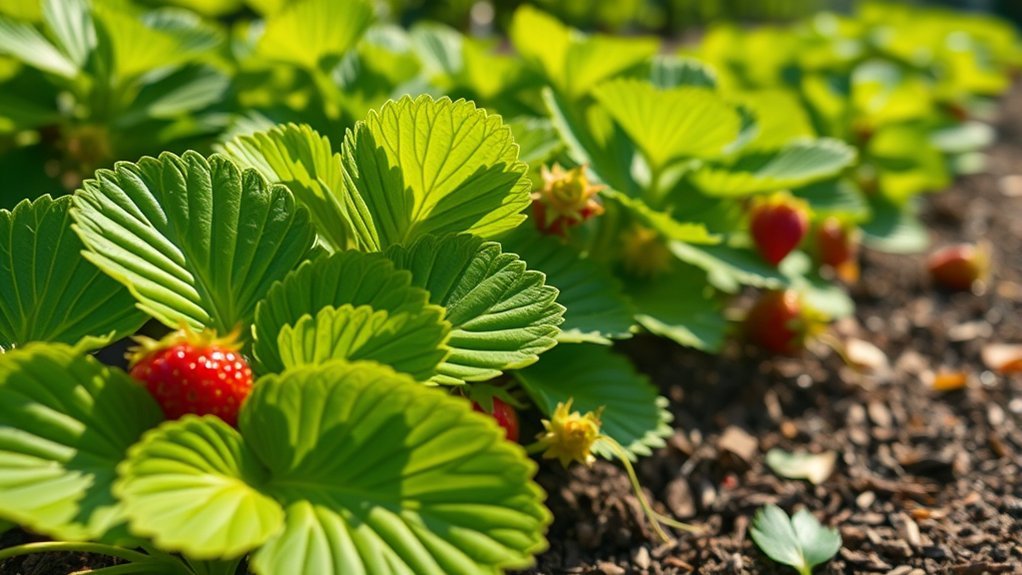
You’ll notice strawberry runners stretch out about 8 to 18 inches, reaching new spots to grow.
When these runners touch the soil, they root and form new plants, basically cloning the parent.
This process helps your strawberries spread quickly, creating a dense, thriving patch that grabs more sunlight and nutrients.
It’s a neat way for the plants to expand without you having to do much!
Runner Growth Process
Although strawberry plants start from a single crown, they spread rapidly by sending out runners.
These are horizontal stems that stretch 8 to 18 inches depending on the variety. You can watch these runners extend from the main plant, searching for soil to root in.
Once they touch the soil, they establish a new root zone, producing a clone of the parent strawberry plant. This process helps strawberry plants expand efficiently, increasing their fruit yield and ground coverage.
Here’s how the runner growth process works:
- Runners extend outward, seeking favorable soil conditions.
- Upon contact, they produce roots, anchoring the new plant.
- The new plant grows alongside the parent, boosting overall fruit production.
Managing runners guarantees healthy, productive strawberry patches.
Root Formation Mechanism
Runners don’t just spread the strawberry plant horizontally; they also trigger root formation that helps new plants take hold. When a runner from the parent plant touches moist soil, it initiates the development of a root system.
This rooting process creates a clone of the parent plant, ensuring genetic consistency while supporting healthy growth. You’ll notice that these runners typically stretch 8 to 18 inches, reaching areas with ideal conditions for multiplication.
As the roots establish themselves, the new plant gains access to nutrients and water, promoting rapid growth. This natural mechanism allows strawberry plants to expand efficiently during warmer temperatures, multiplying their presence without seeds.
Expansion Benefits
Since strawberry plants send out runners that root and grow new clones, they can rapidly expand their territory. This expansion benefits you by enabling mature plants to increase fruit production and overall yield.
When strawberry plants produce runners, they:
- Root in areas with ideal soil moisture, ensuring clone plants establish strong, nutrient-rich connections.
- Maximize sunlight exposure by spreading out, which boosts photosynthesis and fruit development.
- Form dense mats that, if managed well, create a robust strawberry patch with higher yield potential.
The Role of Soil Quality in Strawberry Growth
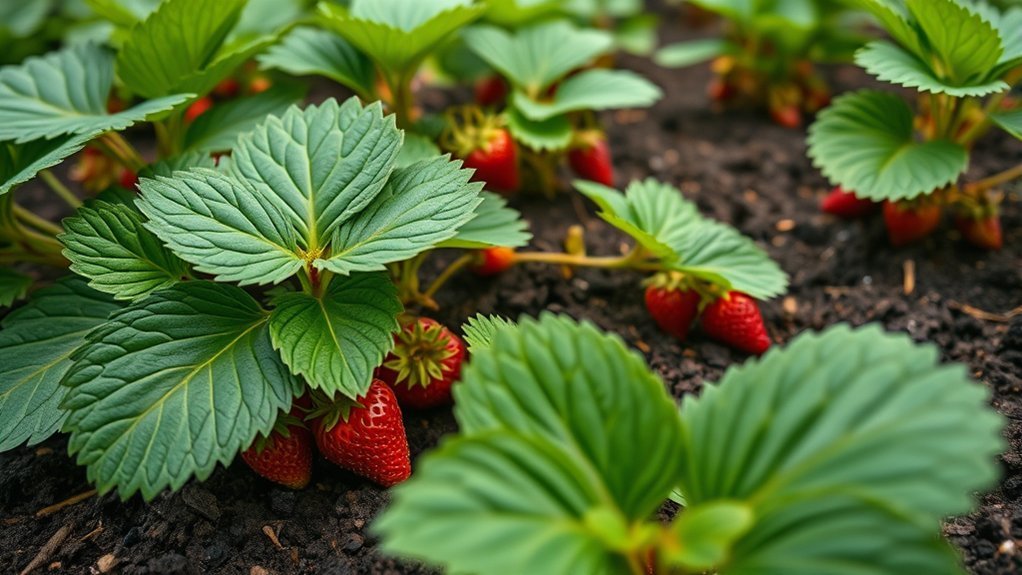
When you want your strawberry plants to reach their full potential, soil quality plays a key role in their growth.
Strawberries thrive best in well-drained soil with a pH between 5.5 and 6.8, which supports ideal nutrient uptake.
Adding organic matter like aged compost improves soil fertility and drainage, promoting healthy plants and boosting fruit yields.
You’ll want to avoid heavy clay or compacted soil since it restricts root growth, leading to smaller berries.
Maintaining consistent moisture levels, about 1 to 1.5 inches of water per week, is essential, especially during dry periods, to keep plants vigorous.
Regular soil testing helps guarantee your soil stays balanced, so your strawberries get the nutrients they need to grow strong and produce abundant fruit.
Key Nutrients That Affect Strawberry Plant Size
Although many factors influence how big your strawberry plants grow, the key nutrients in your soil have the most direct impact on their size.
To guarantee peak growth, focus on these essential elements:
- Nitrogen levels – Nitrogen promotes vigorous leaf and stem growth, directly affecting plant height and overall size.
- Phosphorus – This nutrient supports strong root development and fruit production, boosting plant health and maturity size.
- Balanced fertilization – Regularly applying organic compost or balanced fertilizers maintains soil quality and nutrient availability.
How Water and Sunlight Influence Strawberry Size
If you want your strawberry plants to reach their full size, you need to provide them with plenty of sunlight and consistent watering. These plants require 8-10 hours of full sunlight daily for ideal growth. Without it, berry size diminishes.
Water plays an equally crucial role. About 1 to 1.5 inches per week keeps soil moisture steady, which supports healthy root development and overall plant health. Overcast days can reduce sunlight exposure, leading to smaller fruits.
Maintaining proper soil moisture through regular watering and mulching guarantees your strawberry plants thrive and produce larger berries.
Neglecting either sunlight or water during critical growth phases directly impacts berry size and yield. Balancing both is necessary for achieving the best results in your strawberry patch.
Why Plant Age Changes Strawberry Size and Vigor
Sunlight and water set the stage for your strawberry plants to grow strong, but the age of the plant plays a big role in how well they perform over time.
As plant age increases, you’ll notice changes in fruit production, vigor, and berry sizes. Here’s why:
Younger strawberry plants, typically 2-3 years old, develop a healthy root system that supports vigorous growth and larger berries.
After 3 years, plants often experience declining vigor due to reduced nutrient uptake, leading to smaller, fewer fruits.
Older plants may show signs of stress like dead roots and lower fruit yield, signaling it’s time to replace them for continued productivity.
Understanding plant age helps you maintain healthy plants and optimize your strawberry harvest.
Optimal Environment for Big Strawberry Plants
To grow big strawberry plants, you need to provide at least 8 to 10 hours of direct sunlight daily and maintain well-drained, loamy soil with a pH between 5.5 and 6.8. This full sun exposure creates the best environment for vigorous growth and fruit development.
Strawberry plants thrive with 8 to 10 hours of sunlight and well-drained, loamy soil at pH 5.5 to 6.8
Keep soil moisture consistent by watering about 1 to 1.5 inches weekly, ensuring water reaches the roots at the proper depth.
Applying mulch, like straw, helps retain soil moisture, keeps the plants clean, and protects roots from temperature extremes.
This combination supports a healthy plant capable of reaching its full size.
Maintaining Plant Health to Support Maximum Size
Although providing the right environment sets the stage, maintaining your strawberry plants’ health is essential to help them reach their peak size.
Focus on these three key practices:
- Maintaining soil quality by regularly adding compost improves nutrient availability and supports healthy growth.
- Guarantee consistent watering, delivering about 1 to 1.5 inches weekly to prevent stress and encourage vigorous development.
- Monitor and adjust nitrogen levels carefully, as too much or too little can stunt growth or cause imbalances.
Additionally, pruning runners prevents overcrowding, allowing your main plants to channel energy toward growth and fruit production.
Care Tips to Promote Larger Strawberry Plants
When you provide your strawberry plants with at least 8 to 10 hours of sunlight daily, you greatly boost their growth potential and fruit size.
To promote larger plants, focus on key care tips like planting them in well-drained soil enriched with compost to support healthy plant growth.
Maintain consistent moisture by watering about 1 to 1.5 inches weekly, especially during dry spells.
In the first year, remove flower buds to help the plants focus energy on developing strong leaves and roots.
Don’t forget to prune and manage runners regularly to avoid overcrowding, ensuring each main plant gets enough sunlight and nutrients.
Following these steps encourages robust, larger strawberry plants that produce abundant, quality fruit.
Frequently Asked Questions
Can Strawberry Plants Survive Freezing Winter Temperatures?
Yes, strawberry plants can survive freezing winter temperatures if you use proper frost protection methods like winter mulching techniques.
Applying 4-6 inches of straw mulch helps protect the crowns, especially in cold hardiness zones prone to harsh frost.
Focus on dormant plant care by monitoring plant health and avoiding excess moisture.
Understanding seasonal growth patterns and using freeze recovery strategies guarantees your strawberries bounce back strong each spring.
How Long Does It Take for Strawberry Plants to Start Producing Fruit?
You’ll see fruit production start about three months after planting, depending on the variety and your strawberry plant care.
Day-neutral types fruit within the same season, while June-bearing and everbearing typically take until the next year.
To speed growth, maintain ideal growing conditions, guarantee good pollination, and practice proper harvest techniques.
Understanding seasonal growth patterns helps you choose the best strawberry varieties for your climate and maximize your yield.
Are Strawberry Plants Safe for Pets or Children?
Yes, strawberry plants are generally safe for pets and children since they’re non-toxic and edible plants.
You’ll want to practice child supervision and be mindful of pet safety, especially regarding pesticides or fertilizers used in garden care.
Strawberry varieties vary, but all are accessible and fun for kids to explore.
Just keep an eye on how much they’re eating to avoid any digestive upset, and you’ll enjoy a safe, thriving garden.
Can Strawberry Plants Grow Indoors or Only Outdoors?
You can totally turn your home into a strawberry jungle with indoor gardening!
Using container planting, you’ll keep soil requirements simple, while grow lights mimic the sun’s power.
Just manage humidity levels and temperature control between 65°F to 75°F to keep your plants happy.
Don’t forget pest management, since indoor spaces can invite trouble.
With these tips, you’ll enjoy fresh strawberries all year round, right inside your cozy space!
What Pests Commonly Affect Strawberry Plants?
You’ll commonly face pests like strawberry bud weevils, tarnished plant bugs, spotted wing drosophila, and aphids on your strawberry plants.
For effective pest control, consider organic methods like introducing beneficial bugs and using traps.
Regular inspection helps with early disease prevention and maintaining plant health.
Explore treatment options that suit your garden’s needs, ensuring you protect your strawberries while keeping the ecosystem balanced and thriving.
Conclusion
By balancing bright sunlight, bountiful water, and balanced nutrients, you’ll boost your berry beauties to their best size. Remember, runner management and regular rooting routines really revitalize your plants’ reach and robustness.
Whether you’re growing June-bearers or day-neutrals, understanding their unique growth guides your garden to greatness. With careful care and consistent cultivation, your strawberry plants will stretch and spread spectacularly, supplying sweet, succulent strawberries season after season.