
How Do Rabbits Eat Strawberries Safely?
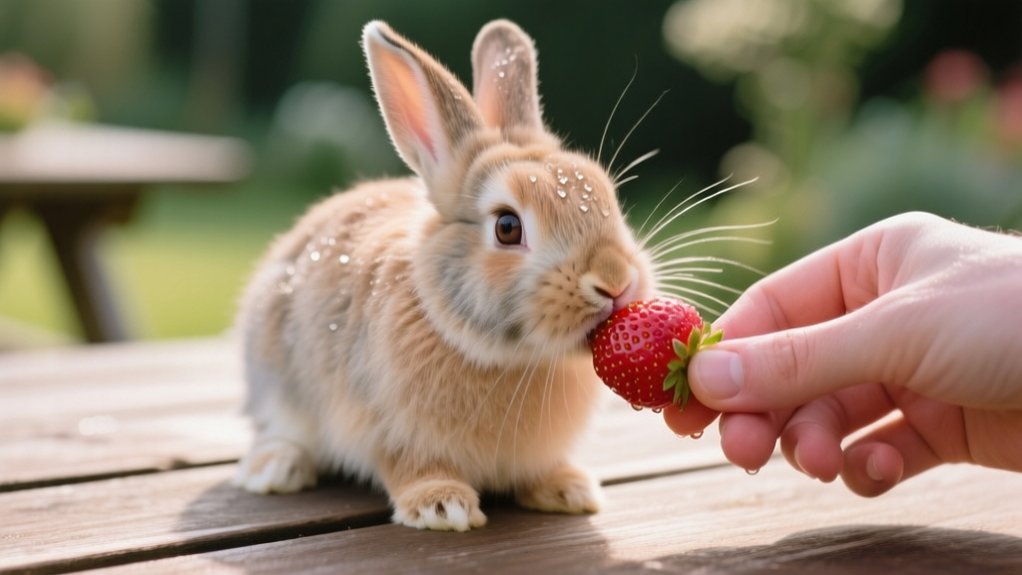
You can safely feed your rabbit strawberries by offering one to three small, washed, bite-sized pieces at a time to avoid choking and digestive upset. Make sure fresh strawberries are used, not frozen or canned, and balance them with plenty of hay and leafy greens for ideal health.
Limit treats like strawberries to once or twice a week to prevent obesity and dental issues. Keep an eye on your rabbit’s response to new foods, and discover tips to keep their diet perfectly balanced.
Can Rabbits Eat Strawberries Safely?

Although strawberries are sweet treats, you can safely feed them to your rabbit in moderation. Rabbits eat strawberries well because these fruits are low in calcium and packed with vitamin C and manganese, which support their health.
However, you shouldn’t give your rabbit too much sugar, as it can cause obesity and dental problems. Always offer a small amount, about one to three berries, cut into bite-sized pieces to prevent choking.
Fresh strawberries are best; avoid frozen or canned ones that may contain harmful additives.
Remember to balance strawberry treats with your rabbit’s regular diet of hay and leafy greens to keep their digestion and overall health in check.
Feeding strawberries once or twice a week is enough to keep your bunny happy and healthy.
Are Strawberry Leaves Safe for Rabbits to Eat?
If you’re wondering whether strawberry leaves are safe for your rabbit, they’re indeed edible and can be a healthy addition to their diet.
Strawberry leaves are safe for rabbits and provide dietary fiber that supports digestive health.
Strawberry leaves offer rabbits beneficial dietary fiber to help maintain healthy digestion.
You’ll find that wild rabbits often consume the entire strawberry plant, including the leaves, as part of their natural diet. While these leaves are low in calcium and nutritious, you can remove them if you prefer.
Just remember, moderation is key. Strawberry leaves should complement a balanced diet with plenty of hay and other vegetables.
Offering strawberry leaves occasionally guarantees your rabbit enjoys variety without upsetting its digestive system or nutritional balance.
How Much Strawberry Can Rabbits Eat at Once?
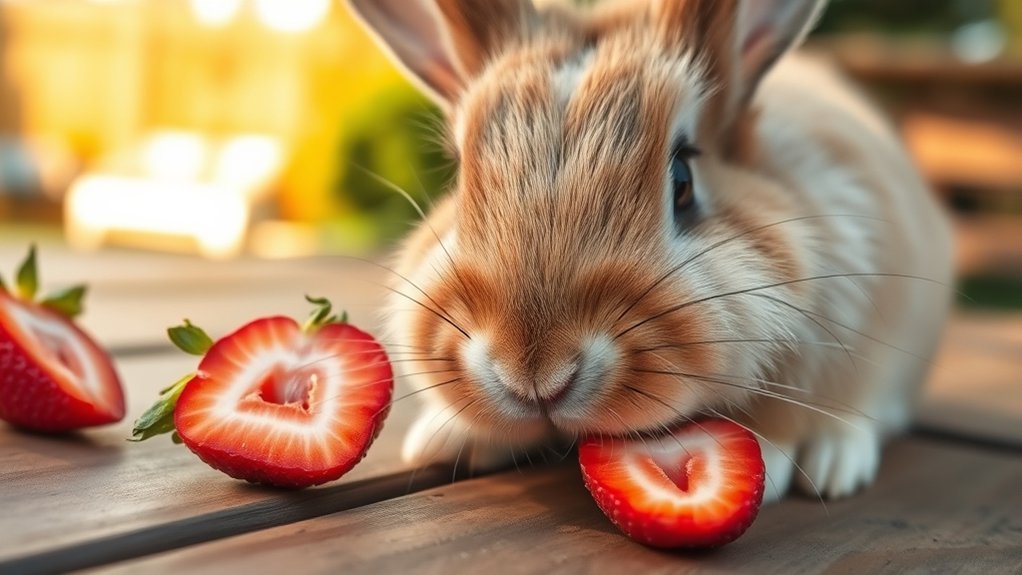
Since strawberries are a sweet treat, you should limit your rabbit to one to three small pieces at a time, depending on its size.
Larger rabbits can usually handle up to three strawberries safely, while smaller ones do better with just one.
Always cut strawberries into small, bite-sized pieces to make them easier and safer to eat.
Feeding strawberries in moderation is essential because too much sugar can cause obesity and upset your rabbit’s digestive system.
Remember, fresh strawberries are the safest option; avoid frozen or canned versions.
How Often Should You Give Strawberries to Rabbits?
You should give your rabbit strawberries just once or twice a week to keep their sugar intake in check.
It’s best to stick to one to three small berries per treat, depending on your rabbit’s size.
That way, you’ll avoid any health issues while still letting them enjoy a tasty snack.
Recommended Treat Frequency
Rabbits should only get strawberries once or twice a week to keep their diet balanced and healthy. This recommended treat frequency guarantees you provide a tasty snack without risking their well-being.
Moderation is essential because strawberries contain sugar, and too much can cause obesity and dental issues in rabbits. By sticking to this schedule, you help keep their digestive system stable and avoid gastrointestinal upset.
When you give strawberries in moderation, you make the treat completely safe and enjoyable for your bunny.
Remember, their main diet should still focus on hay, leafy greens, and vegetables.
Portion Control Guidelines
Offering strawberries once or twice a week in small portions keeps your rabbit safe from excessive sugar intake. Since strawberries are high in sugar, controlling portion sizes is crucial for safe consumption.
Limit treats to one to three berries per session, depending on your rabbit’s size. Cut the berries into small, bite-sized pieces to prevent choking and make eating easier.
Overfeeding can cause health problems like obesity, dental issues, and soft stools. Remember, strawberries should only complement your rabbit’s main diet of hay, leafy greens, and vegetables.
By sticking to these portion control guidelines, you guarantee your rabbit enjoys strawberries safely without risking their health.
Always monitor your pet’s response and adjust portions as needed to maintain their wellbeing.
What Are the Risks of Feeding Too Many Strawberries?

You shouldn’t feed your rabbit too many strawberries because their high sugar content can cause serious health problems.
Eating too many can lead to digestive upset, like diarrhea, which is never fun for your little friend. Plus, it can mess with your rabbit’s metabolism if they get too much sugar at once.
So, it’s really best to keep the portions small. That way, you’re helping protect your pet’s digestive health and overall well-being.
A little treat now and then is great, but moderation is definitely key!
Sugar Content Concerns
Feeding more than one or two strawberries a week can quickly lead to health problems due to their high sugar content. Excessive sugar intake poses several health risks for your rabbit, including obesity and dental issues.
The sugar in strawberries can contribute to weight gain if given too often, which puts extra strain on your rabbit’s heart and joints. Moreover, too much sugar can cause dental decay, leading to painful oral problems that affect eating.
To keep your rabbit healthy, limit strawberries to a small treat no more than twice a week. This helps avoid excessive sugar consumption and reduces the risk of long-term complications.
Digestive Health Risks
While strawberries can be a tasty treat for your rabbit, giving too many poses risks beyond just sugar-related concerns. Overfeeding strawberries can upset your rabbit’s digestive health, leading to soft stools or diarrhea.
Rabbits have sensitive digestive systems, so too much sugar from strawberries disrupts their gut balance. This can cause discomfort and long-term health issues.
Furthermore, a sugary diet may contribute to dental problems, as rabbits’ teeth need proper wear and a balanced diet to stay healthy.
To keep your rabbit safe, offer strawberries only in moderation, ideally once or twice a week. Guarantee they’re a small part of an overall diet rich in hay, leafy greens, and vegetables.
This balance supports peak digestive health and keeps your rabbits happy.
How to Prepare Strawberries Safely for Your Rabbit
Preparing strawberries safely for your rabbit starts with washing them thoroughly to remove any pesticides or chemicals. Next, cut strawberries into small pieces to prevent choking and make eating easier.
Offer only one to three berries at a time, based on your rabbit’s size, to keep sugar intake moderate. You can remove the green leaves if you prefer, though they’re safe to eat.
Introduce strawberries gradually to watch for any digestive issues.
| Step | Details |
|---|---|
| Wash | Wash fresh strawberries thoroughly |
| Cut | Cut strawberries into small pieces |
| Portion Size | Offer only one to three berries |
| Monitor | Introduce gradually, observe health |
Should You Wash Strawberries Before Feeding Them to Rabbits?
You should always wash strawberries before feeding them to your rabbit. This helps get rid of pesticides, dirt, and any other contaminants that might be on the fruit.
Just rinse them gently under cool, running water. That way, you clean them without damaging the strawberries.
And don’t forget to dry them really well. If they stay wet, mold and spoilage can happen, which you definitely want to avoid.
Importance Of Washing
Because strawberries often carry pesticides, dirt, and bacteria, washing them before feeding your rabbit is crucial.
Washing strawberries thoroughly helps remove pesticides and other harmful residues that could upset your rabbit’s sensitive digestive system.
Even organic strawberries aren’t exempt; they might still have bacteria or dirt from handling or transport.
To keep your rabbit safe, rinse the strawberries under running water for at least 30 seconds.
After washing, cut off any green tops or leaves to avoid choking hazards.
Always serve fresh, clean strawberries to promote your rabbit’s overall health and prevent gastrointestinal issues.
Safe Cleaning Methods
Washing strawberries before feeding them to your rabbit goes beyond just rinsing off dirt and pesticides. It guarantees you provide a clean treat for your rabbit, free from harmful residues.
To wash strawberries thoroughly and safely, follow these steps:
- Rinse the strawberries under running water, removing dirt and pesticides.
- Use a gentle brush to scrub the surface if they seem especially dirty.
- Rinse again to guarantee no cleaning residues remain.
Once clean, slice strawberries into small pieces to make them easier and safer for your rabbit to eat.
Serve immediately to maintain freshness and nutrition. Taking these simple steps helps protect your furry friend’s health while letting them enjoy a delicious, safe treat.
Can Rabbits Eat Frozen or Processed Strawberries?
Although frozen and processed strawberries might seem convenient, they aren’t safe for rabbits to eat.
Frozen strawberries often contain additives and preservatives that can harm your rabbit’s health. Plus, freezing and processing strip away crucial nutrients found in fresh strawberries, which your rabbit truly needs.
Processed strawberries, like those in jams or syrups, are loaded with sugar, making them especially dangerous. High sugar content in frozen strawberries can also lead to obesity and dental problems in rabbits.
To keep your pet healthy, always choose fresh strawberries over any frozen or processed varieties.
Fresh strawberries deliver essential nutrients without the risks associated with additives or excessive sugar, ensuring your rabbit enjoys a safe and nutritious treat every time.
How to Tell If Strawberries Upset Your Rabbit
How can you tell if strawberries are upsetting your rabbit? When you give your rabbit strawberries, it’s important to watch closely for any signs of gastrointestinal upset.
Here are three key things to look for:
- Check your rabbit’s stool. Soft stools or diarrhea often signal digestive trouble from too much sugar.
- Observe behavior. If your rabbit seems lethargic or uncomfortable, the fruit mightn’t agree with them.
- Track weight changes. Excessive fruit can lead to obesity, so sudden weight gain is a red flag.
How to Balance Strawberries With Your Rabbit’s Regular Diet
Since strawberries are high in sugar, you’ll want to limit them to just a small portion of your rabbit’s diet. Rabbits love these sweet treats, but since they’re sugary, make sure they only get strawberries once or twice a week.
Keep treats to about 10-15% of their overall diet, with the majority coming from high-fiber hay and fresh leafy greens. You should give your rabbit one to three small, bite-sized pieces at a time to prevent choking and avoid overfeeding sugar.
Always pick fresh strawberries and avoid frozen or canned varieties with additives.
Tips for Introducing Strawberries Gradually to Your Rabbit
Introducing strawberries to your rabbit’s diet requires patience and careful observation. Start by offering a small piece, about a quarter of a berry, to gauge your rabbit’s preferences and digestive tolerance.
Use these tips to introduce different strawberry varieties safely:
- Monitor your rabbit’s behavior and health for 24 hours after the first taste. Check for any adverse reactions.
- Gradually increase the portion to one berry, sliced into small pieces for easy chewing and digestion.
- Limit strawberry treats to once or twice a week. Adjust based on your feeding observations and your rabbit’s size.
Safe Strawberry Alternatives for Rabbits
While strawberries can be a tasty treat, you’ll want to offer your rabbit safe alternatives that provide essential nutrients without too much sugar. Leafy greens like romaine lettuce, kale, and parsley are excellent choices that support your rabbit’s health.
For fruit variety, consider blueberries, raspberries, and blackberries, which have less sugar than strawberries. Herb alternatives such as basil, cilantro, and dill add diversity and flavor safely.
| Safe Alternatives | Benefits |
|---|---|
| Leafy Greens | Nutrient-rich, low sugar |
| Fruit Variety | Lower sugar, antioxidants |
| Herb Alternatives | Flavorful, digestive support |
Introduce these gradually and in small amounts to keep your rabbit healthy and happy.
Frequently Asked Questions
Can Baby Rabbits Eat Strawberries Safely?
Yes, baby rabbits can eat strawberries safely once they’re at least 12 weeks old.
You should focus on baby rabbit nutrition by offering small strawberry portion sizes to avoid digestive issues.
Remember to give strawberries only as an occasional treat, no more than every two weeks.
If you want to vary their diet, try safe fruit alternatives like blueberries or apples.
But always introduce new foods gradually and watch for any adverse reactions.
Do Strawberries Affect Rabbit Fur or Skin Health?
Oh sure, feed your rabbit a strawberry buffet and watch it turn into a fluffy disco ball overnight!
But seriously, strawberries can boost your rabbit’s fur and skin health thanks to vitamin C and manganese, key players in their diet.
Just remember, fruit benefits come with a catch.
Strawberry moderation is essential. Too many sugary treats can wreck that luscious coat you’re aiming for, so keep it balanced for the best rabbit diet results.
Are Strawberry Seeds Harmful to Rabbits?
No, strawberry seeds aren’t harmful to rabbits. They pose no seed toxicity risk and are safe for your bunny to eat.
While strawberry nutrition mainly comes from the fruit itself, the tiny seeds don’t affect rabbit digestion negatively.
You just need to feed strawberries in moderation to avoid too much sugar.
Can Rabbits Develop Allergies to Strawberries?
Yes, rabbits can develop allergies to strawberries, even though these fruits offer benefits like vitamins and antioxidants.
You should watch for allergic reactions such as digestive upset or skin irritation.
Following feeding guidelines is key. Introduce strawberries slowly and in moderation.
Keep a food diary to track any symptoms.
If you spot any allergic signs, stop feeding strawberries and consult your vet to keep your rabbit safe and healthy.
Is It Safe to Mix Strawberries With Other Fruits for Rabbits?
Yes, you can mix strawberries with other fruits, but you need to follow feeding guidelines to protect your rabbit’s digestive health.
Keep fruit combinations small, just a few berries or tiny pieces, to avoid too much sugar.
Introduce new fruits slowly to watch for any issues. Avoid frequent high-sugar mixes like bananas and grapes.
Always balance treats with plenty of hay and greens, making fruits an occasional reward, not a daily staple.
Conclusion
Feeding strawberries to your rabbit can be a sweet treat, but remember, moderation is key. Like a delicate dance, you need to balance these juicy fruits with their regular diet to keep your bunny happy and healthy.
Introduce strawberries slowly and watch for any signs of tummy trouble. With the right care, strawberries can be a safe and tasty addition. Just don’t let your rabbit binge like it’s a strawberry festival!