
Identifying and Removing Bugs in Strawberries
You can identify strawberry bugs by looking for clipped buds, holes in leaves or fruit, curled leaves, or discolored berries. Common signs include “cat face” deformities from tarnished plant bugs and sticky residue from aphids.
Remove them by hand-picking during cooler times, setting bait or sticky traps, and encouraging beneficial insects like ladybugs nearby. Use row covers to block pests and keep your patch clean.
Keep at it, and you’ll soon master pest control for healthier strawberries.
How to Identify Common Bugs in Strawberries
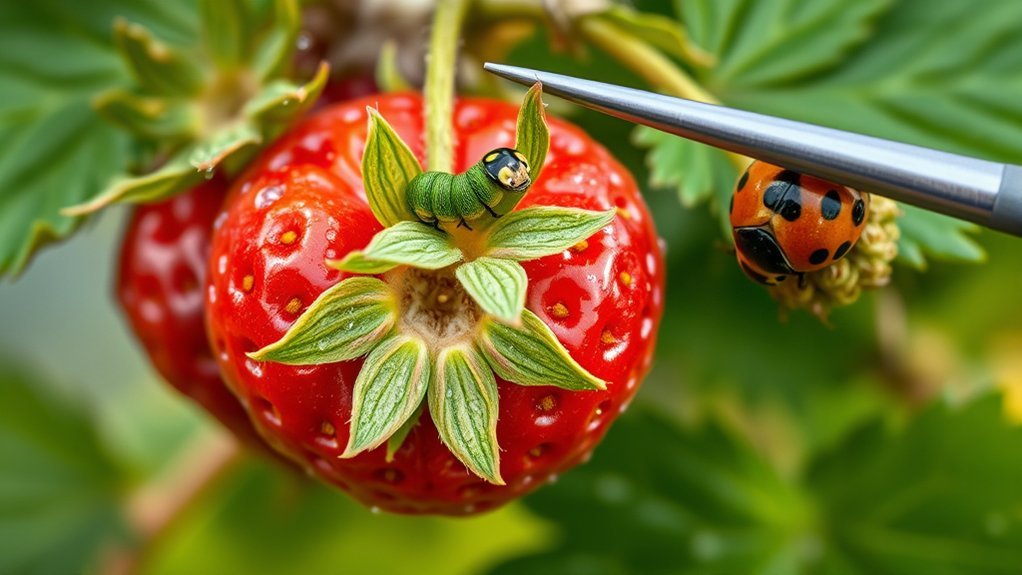
When you’re inspecting your strawberry plants, watch for specific signs that reveal common pests. Tarnished plant bugs are greenish-brown with a pale yellow triangle on their backs. You’ll often find them feeding on developing fruits, which can cause deformities and reduced yields.
Another pest to spot is the strawberry bud weevil, also known as the strawberry clipper. These insects have a noticeable snout and are infamous for clipping flower buds, preventing blooms and affecting fruit production.
To identify them, look for buds that have been neatly cut off at the base.
Recognizing Bug Damage on Strawberry Plants
You’ll notice common bug symptoms like holes in leaves and misshapen or discolored fruit when pests attack your strawberries.
Also, keep an eye out for sticky residue or curling leaves.
These early signs can really help you catch infestations before they get worse.
Spotting damage quickly lets you act fast to protect your plants and preserve your harvest.
Common Bug Symptoms
Identifying bug damage on strawberry plants helps you take timely action to protect your crop. You might notice curled leaves and stunted growth caused by aphids, often hiding under leaves.
Small holes in ripe strawberries usually indicate sap beetles or slugs feeding, which can lead to damaged fruits and decay.
Tarnished plant bugs create “cat face” deformations, with darkened, misshapen berries that lower market value.
Cyclamen mites cause dark streaks and curled leaves, producing smaller, distorted berries.
While meadow spittlebugs leave foamy spittle on stems, they rarely harm the fruit.
Spotting these common bug symptoms is key to effective pest management. It helps you address infestations early before they cause extensive damage and reduce your strawberry yield.
Leaf and Fruit Damage
Many types of bugs cause distinct leaf and fruit damage on strawberry plants that you can spot early.
Leaf damage often shows as curling, yellowing, or notched edges, typically from aphids or root weevils feeding on the foliage.
Spider mites leave pale spots and stippling on leaves, stressing the plant and lowering fruit yield.
For fruit damage, watch for the “cat face” symptom caused by tarnished plant bugs, where berries develop irregular shapes and scars.
Holes and deep indentations point to slug or snail activity, severely harming fruit integrity.
Sap beetles create holes in ripe or damaged fruit, risking disease introduction.
Recognizing these specific leaf damage and fruit damage signs helps you address pest issues before they worsen.
Early Signs Detection
Spotting the early signs of bug damage can save your strawberry plants from severe harm.
Look closely for small holes in leaves. These often signal feeding by pests like slugs or aphids.
Discolored or curling leaves usually point to aphid infestations. Aphids stunt growth by sucking sap.
Keep an eye on your strawberry blossoms too. Distorted or deformed fruit with “cat face” symptoms indicates tarnished plant bugs injecting toxins.
Foamy spittle on stems reveals meadow spittlebugs. These bugs reduce fruit size by feeding on sap.
Also, check the undersides of leaves for dark spots or webbing. These are signs of spider mite activity that cause yellowing.
Catching these early signs helps you act quickly and protect your crop from lasting damage.
Common Nighttime Pests Damaging Strawberries
While strawberries rest under the moonlight, pests like slugs, earwigs, and pill bugs come out to feed, causing noticeable damage.
Slugs leave deep holes in your fruits, especially in moist conditions during the evening, resulting in significant slug damage.
Earwigs hide during the day but emerge at night to feed on both fruits and leaves, adding to the harm.
Though pill bugs aren’t major threats, they occasionally nibble on strawberries while seeking moisture.
You should monitor your garden regularly at night to detect these pests early.
Catching their activity promptly helps you protect your strawberry plants before the damage worsens.
Understanding the behavior of these nighttime feeders is key to maintaining healthy and productive strawberry crops.
Hand-Picking and Trapping Bugs From Strawberry Plants
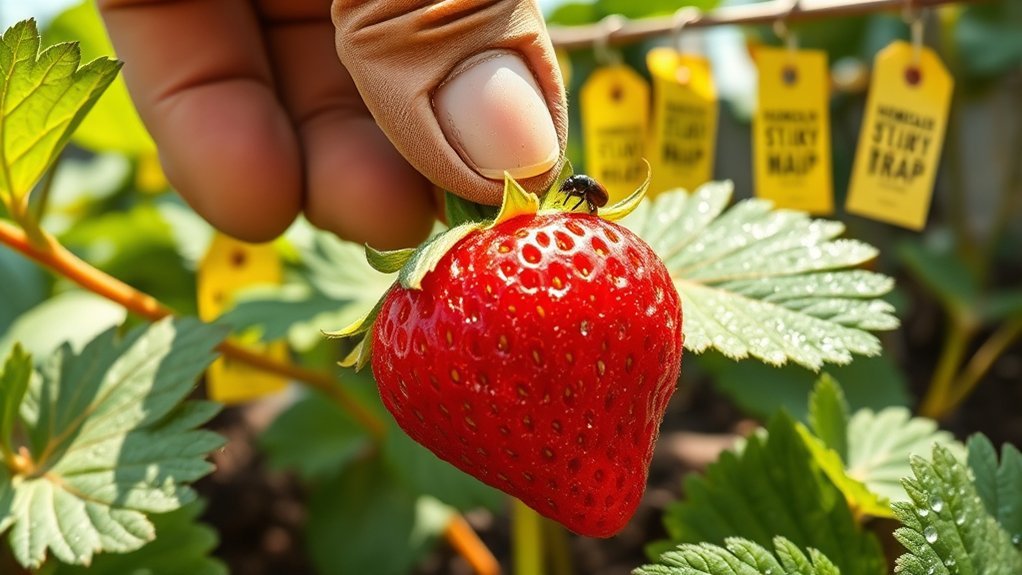
You’ll want to hand-pick bugs like slugs and snails during early morning or late evening since that’s when they’re most active.
It’s easier to find them then, and you can get a good head start on keeping your strawberry plants healthy. Setting bait traps using beer or soda works really well to catch these pests. Just place the traps around your plants, and they’ll be attracted to the bait.
Sticky traps are another great tool—they help you keep an eye on flying insects around your strawberries.
This way, you can spot any problems early on. The key is to time your removal efforts right. Catching infestations before they get out of control makes a big difference in protecting your crop.
Effective Hand-Picking Techniques
Early mornings and late evenings offer the best chances to hand-pick bugs from your strawberry plants. Pests like slugs and beetles are more active and easier to find then. Wear gloves and inspect leaf undersides and fruit clusters carefully to catch aphids and spider mites.
Gently shake plants over a white cloth to dislodge hidden bugs for easy removal.
| Bug Type | Active Time | Hand-Picking Tip |
|---|---|---|
| Slugs | Early morning | Check soil level, use gloves |
| Tarnished Plant Bugs | After bloom | Look for greenish-brown bodies |
| Aphids & Spider Mites | Any time | Inspect leaf undersides |
This approach guarantees you catch bugs effectively without harming your plants.
Best Trapping Methods
If you want to keep your strawberry plants healthy, combining hand-picking with effective trapping methods offers the best pest control.
Hand-picking pests like slugs and snails during the evening lets you remove them when they’re most active and easy to spot.
To further reduce slug populations, place traps filled with beer or soda at soil level; these attract and capture them efficiently.
For smaller pests such as aphids and spider mites, sticky traps help you monitor infestations early and decide when to act.
Regularly checking traps and manually removing pests guarantees you catch problems before they damage your strawberries.
Using both hand-picking and traps together strengthens your pest management strategy, promoting healthier plants and better fruit quality.
Timing For Bug Removal
The best times to hand-pick and trap bugs on your strawberry plants are during the early morning or late evening when pests like slugs and snails are most active. Use a strong stream of water during early mornings to dislodge aphids and spider mites from leaves.
Conduct regular scouting at least once a week to catch pests early and prevent damage. Set bait traps at soil level in the evenings to attract slugs and snails. Also, clear debris and overripe fruit frequently to minimize hiding spots and egg-laying areas.
| Time of Day | Bug Removal Activity |
|---|---|
| Early Morning | Hand-pick bugs, use strong water jet |
| Late Evening | Set bait traps, hand-pick slugs |
| Weekly | Conduct regular scouting |
Attracting Natural Predators to Protect Your Strawberries
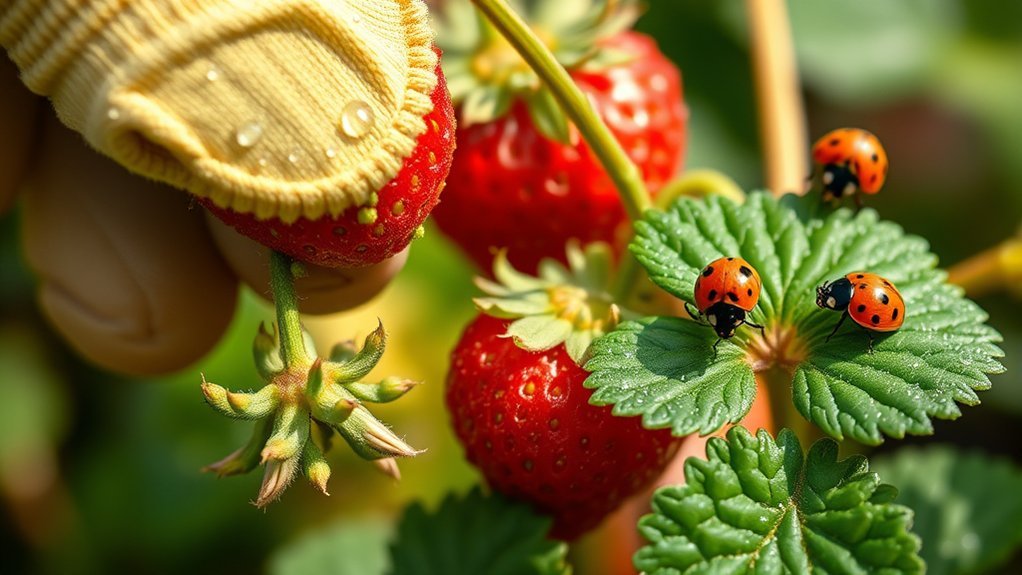
When you plant a variety of flowering species like marigolds and cosmos, you attract beneficial insects such as ladybugs and lacewings that naturally control pests in your strawberry garden.
Planting marigolds and cosmos invites ladybugs and lacewings to naturally protect your strawberries from pests.
To further encourage natural pest control, include plants that provide nectar and pollen, which parasitic wasps need to thrive. These wasps help regulate aphids and tarnished plant bugs, reducing damage to your strawberries.
Incorporate native plants to create a supportive habitat for these predators, enhancing your garden’s ecological balance.
Avoid broad-spectrum insecticides, as they harm beneficial insects and disrupt this natural defense system.
Regularly check your strawberry plants for signs of these helpful predators to assess and improve your pest management strategy effectively.
Using Row Covers and Barriers to Keep Bugs Away
Although natural predators play a key role in pest control, you can boost protection by using row covers and barriers to keep bugs away from your strawberries. Row covers create a barrier that lets sunlight and moisture through while blocking pests from reaching your strawberry patch.
To maximize their effectiveness:
- Secure row covers tightly to the ground to prevent bugs from sneaking in.
- Regularly check beneath covers for trapped insects and remove them promptly.
- Use netting barriers to deter birds and larger pests without harming beneficial insects.
Combining these methods with routine garden maintenance, like weeding and clearing debris, strengthens your pest management.
This approach protects your strawberry patch during vulnerable growth stages, ensuring healthier, bug-free fruit.
Managing Slugs and Snails in Strawberry Beds
Since slugs and snails come out mostly in the evening, you’ll want to check your strawberry beds early in the morning or late at night to catch them.
These pests often leave deep holes in fruit that are hard to spot during the day, so regular monitoring is key.
To manage slugs effectively, try bait traps filled with beer or soda placed at soil level; these attract and drown them.
Bait traps with beer or soda placed at soil level attract and drown slugs effectively.
Removing mulch around your strawberry beds also helps by cutting down on their hiding spots.
In addition, switching to drip irrigation reduces surface moisture, creating a less inviting environment for slugs and snails.
Preventing Tarnished Plant Bug Damage Early in the Season
You’ll want to start monitoring for tarnished plant bugs early in the season, especially right after petal drop.
That way, you can catch infestations before they cause any damage to your fruit.
Plus, keeping your strawberry patch free of flowering weeds helps reduce their favorite spots to lay eggs.
And here’s another tip: planting nectar-rich flowers nearby encourages natural predators, which can help keep those bug numbers down naturally.
Early Season Monitoring
When petals drop, tarnished plant bugs (TPB) become active and start targeting your developing strawberries. They inject toxins that can stunt fruit growth.
Early season monitoring is key to catching TPB before they cause serious damage. Here’s how you can stay ahead:
- Regularly inspect flowers and young fruits, especially around recently cut weeds where TPB tend to gather.
- Use floating row covers on young plants to physically block TPB during their spring activity.
- Plant nectar-rich flowers nearby to attract natural predators like parasitic wasps that help control TPB populations.
Weed Management Strategies
Although tarnished plant bugs pose a serious threat to your strawberries, you can reduce their impact by managing weeds effectively.
Implementing strong weed management strategies helps limit egg-laying sites since these bugs overwinter in leaf debris and become active after petals drop.
By regularly cutting back weeds in early spring, you reduce tarnished plant bug populations and protect your young plants from early damage.
Furthermore, keeping your berry patch tidy by removing debris after harvest minimizes overwintering spots, lowering bug numbers the next season.
These simple steps create an environment less favorable to tarnished plant bugs, giving your young strawberry plants a better chance to thrive.
Prioritizing weed control early on is essential for preventing pest damage before it starts.
Natural Predator Encouragement
Since tarnished plant bugs can quickly damage your strawberries early in the season, encouraging natural predators is a smart way to keep their numbers in check.
These natural pests can be controlled effectively by fostering beneficial insects. Here’s how you can do it:
- Plant nectar-rich flowers like dill, fennel, and yarrow to attract ladybugs, lacewings, and parasitic wasps that prey on tarnished plant bug eggs and nymphs.
- Keep your strawberry patch weed-free to reduce hiding spots where tarnished plant bugs can overwinter and lay eggs.
- Use floating row covers on young plants to block pests while still allowing natural predators to access your strawberries.
Maintaining a Clean Strawberry Patch to Prevent Pests
Keeping your strawberry patch clean plays an essential role in preventing pest infestations. You should regularly clear leaf debris and weeds, as they provide hiding spots for pests like tarnished plant bugs and root weevils.
Maintaining a clean strawberry patch reduces these overwintering sites, cutting pest numbers considerably. Use floating row covers on young plants to shield them while allowing airflow and moisture.
Consistent watering promotes healthy growth, boosting your plants’ natural defenses. Hand-pick visible pests, especially slugs and snails, during cooler parts of the day.
To further protect your patch, encourage beneficial insects by planting diverse flowering plants nearby. They act as natural predators that keep harmful bugs in check.
These steps help you maintain a healthy, pest-free strawberry patch throughout the growing season.
Washing Strawberries to Remove Hidden Bugs
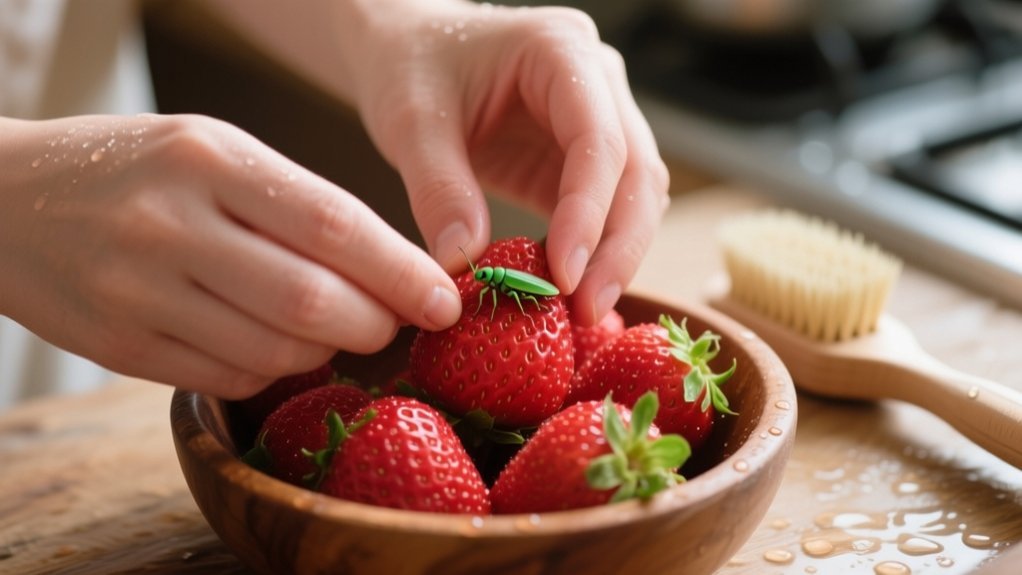
When you wash strawberries, simply rinsing them under running water mightn’t remove all hidden bugs clinging to the fruit.
To guarantee your strawberries are bug-free, start by inspecting strawberries carefully for visible pests or damage.
Then, follow these steps for effective washing strawberries:
- Soak the strawberries in a saltwater solution for 5-10 minutes. This method helps dislodge bugs hiding in crevices.
- Gently brush the surface of each strawberry while rinsing under running water to remove stubborn insects.
- Rinse thoroughly with clean water to wash away salt and any remaining bugs.
Frequently Asked Questions
What Are the Best Organic Pesticides for Strawberry Pests?
The best organic solutions for strawberry pests include natural insecticides like neem oil and insecticidal soap.
Neem oil disrupts pest life cycles, while insecticidal soap suffocates soft-bodied insects.
You can also use diatomaceous earth to deter crawling pests naturally.
Introducing beneficial insects like ladybugs helps keep aphids in check.
Combining these methods with healthy garden practices gives you effective, eco-friendly pest control without synthetic chemicals.
How Often Should I Inspect My Strawberry Plants for Bugs?
You should set your inspection frequency to at least once a week, since studies show early pest detection can reduce crop damage by up to 50%.
Regular inspections help with timely pest identification, especially during flowering and fruiting stages when bugs are most active.
Check leaves’ undersides and plant crowns carefully.
Doing this in early morning or late evening increases your chances of spotting pests like aphids or slugs before they ruin your strawberries.
Can Companion Planting Help Reduce Bugs on Strawberries?
Yes, companion plants can greatly help with pest control on your strawberries.
By planting herbs like basil and mint, or flowers such as marigolds and nasturtiums nearby, you’ll attract beneficial insects and repel harmful bugs.
This natural pest control method creates a balanced ecosystem, reducing pest outbreaks and cutting down your need for chemical pesticides.
Incorporating companion plants not only protects your strawberries but also promotes a healthier, more sustainable garden overall.
What Temperature Conditions Increase Bug Activity on Strawberries?
When the mercury climbs above 70°F, it’s like opening the gates to a bug festival on your strawberries.
These temperature thresholds awaken pests, stirring bug behavior into a frenzy.
Between 80°F and 90°F, bugs multiply rapidly, turning your patch into a bustling metropolis.
You’ll notice aphids and spider mites thriving in warm, humid air, while cooler temps below 50°F slow them down, giving you a breather from their assault.
Are There Any Beneficial Insects That Harm Strawberry Plants?
No, beneficial insects don’t harm strawberry plants; instead, they help with pest control.
You’ll find ladybugs, lacewings, and parasitic wasps targeting harmful pests like aphids and tarnished plant bugs, protecting your strawberries naturally.
Minute pirate bugs also reduce harmful pest populations.
Conclusion
By staying vigilant and acting quickly, you can keep your strawberry patch bug-free and bursting with sweetness. Think of your garden as a small kingdom. You’re the guardian, protecting your juicy treasures from unwelcome invaders.
Hand-pick pests, attract helpful predators, and keep your patch clean to nip problems in the bud. With these simple steps, you’ll enjoy strawberries that are as delicious as they are bug-free, season after season.