
Why Is It Called the Strawberry Moon?
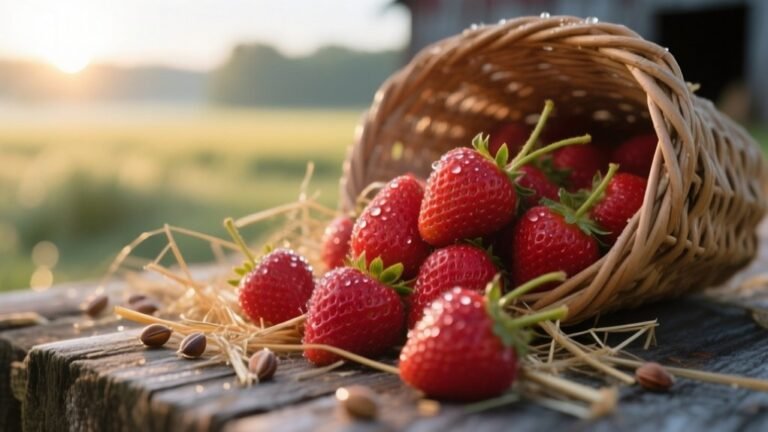
You call it the Strawberry Moon because Native American tribes named June’s full moon after the brief season when wild strawberries ripen. This marks a key time in nature’s cycle.
This name honors the importance of harvesting strawberries for food and symbolizes the arrival of summer. While the moon doesn’t actually turn red, its low position may give it a reddish glow.
If you want to discover the rich cultural meanings and special moments tied to this moon, there’s more to explore.
What Is the Strawberry Moon? When Does It Happen?
Although you might simply see it as the full moon in June, the Strawberry Moon carries a special significance tied to the ripening of strawberries. This full moon marks a key moment in the agricultural calendar, signaling the time when wild strawberries are ready to be harvested.
The Strawberry Moon typically appears in June, but its exact timing varies each year. For example, in 2026, it will reach its peak on June 29 at 7:56 P.M. Eastern Time.
What makes the Strawberry Moon stand out is its position in the sky. It’s often seen at its lowest point, which can give it a striking reddish hue near the horizon.
When you spot a Strawberry Moon, you’re witnessing a natural event closely linked to the rhythms of the seasons.
How Did the Name “Strawberry Moon” Originate? Which Tribes Named It?
Several Native American tribes, especially the Algonquin in the northeastern U.S., named the full moon in June the “Strawberry Moon” to mark the time when strawberries ripen. This name reflects the important role strawberries played in their seasonal harvests.
Besides the Algonquin, tribes like the Ojibwe, Dakota, and Lakota also recognized this full moon with similar significance tied to the strawberry season. The Haida tribe called it the “Berries Ripen Moon,” showing a shared cultural link between lunar phases and agriculture.
When you hear “Strawberry Moon,” remember it’s not about the moon’s color but about Native American agricultural cycles and the natural world’s rhythm.
It highlights how indigenous peoples closely observed and named natural events essential to their survival.
Other Traditional Names for the June Strawberry Moon
You might be surprised to learn that the June moon goes by many names across cultures.
For example, the Anishinaabe call it the Blooming Moon, celebrating the time when flowers are in full bloom.
Then there’s the Cherokee, who refer to it as the Green Corn Moon, marking the period when corn begins to ripen.
Even European cultures had their own names for the June moon.
One popular name was the Honey Moon, which is linked to special customs and celebrations.
It’s pretty fascinating how one moon can have so many different meanings depending on where you’re in the world.
Alternative June Moon Names
When you explore different cultures, you’ll find that the June moon carries a variety of meaningful names beyond “Strawberry Moon.”
The Anishinaabe call it the “Blooming Moon,” reflecting the vibrant flowering season, while the Cherokee name it the “Green Corn Moon” to signify tending crops.
Other communities have their own unique titles, each highlighting natural events tied to this time of year.
Tlingit tribes refer to it as the “Birth Moon,” marking animal births. Cree tribes use “Egg Laying Moon” to emphasize new life.
European traditions call it the “Honey Moon” or “Mead Moon,” linked to celebrations and marriage. The “Strawberry Moon” itself points to the strawberry harvest.
These alternative names deepen your appreciation for the June moon’s significance across cultures.
Cultural Moon Naming Traditions
The variety of names given to the June full moon showcases how different cultures connect the lunar cycle to their environment and traditions. While you might know it as the Strawberry Moon, other communities have unique names reflecting seasonal events and nature’s rhythms.
Here’s a quick look:
| Name | Culture | Meaning |
|---|---|---|
| Strawberry Moon | Algonquian | Marks strawberry ripening |
| Blooming Moon | Anishinaabe | Indicates flowering season |
| Green Corn Moon | Cherokee | Related to crop tending |
| Birth Moon | Tlingit | Time of animal births |
| Egg Laying Moon | Cree | Arrival of new life |
These names show how the Strawberry Moon ties deeply into agricultural cycles and life’s renewal across cultures.
European Moon Name Variations
Although many recognize the June full moon as the Strawberry Moon, Europeans have called it by other names that reflect seasonal customs and traditions.
These names highlight important activities and celebrations tied to the time of year. When you hear “Strawberry Moon,” remember it’s just one of many names for this bright, summer full moon.
Here are some traditional European variations:
- Honey Moon: Linked to marriage customs celebrated in June.
- Mead Moon: Marks the honey harvest for making mead, a honey-based drink.
- Blooming Moon: Represents the flowering season around June.
- Green Corn Moon: Signifies the growing corn crops.
- Birth Moon: Symbolizes animal births occurring during this period.
These names show how the Strawberry Moon connects deeply with nature and culture.
What Does the Strawberry Moon Symbolize in Agriculture and Nature?
Since June’s full moon marks the ripening of wild strawberries, you can see why Native American tribes, especially the Algonquians, named it the Strawberry Moon. This lunar phase signals a significant time for harvesting berries, highlighting nature’s bounty.
Beyond strawberries, the Strawberry Moon symbolizes the flourishing of summer crops and serves as a natural guide for agricultural activities. You’ll find many believe this full moon is a favorable time for planting, as the growing moon encourages crop growth.
How Does the Strawberry Moon Reflect Seasonal Changes?
When you notice the Strawberry Moon rising, you’re witnessing a clear signal of seasonal change from spring to summer. This full moon marks the peak time for harvesting wild strawberries, a sign that warmer days have arrived.
The Strawberry Moon also highlights nature’s cycle of growth and abundance. It aligns with traditional farming and fishing activities, showing you that it’s a period rich with resources.
Various cultures name this moon to reflect similar seasonal shifts, reinforcing its importance in marking summer’s start.
- Signals the ripening of wild strawberries
- Marks the shift from spring to summer
- Indicates peak harvesting and farming season
- Aligns with traditional fishing activities
- Known by other names like Blooming Moon and Green Corn Moon
The Strawberry Moon truly mirrors nature’s seasonal rhythm.
Why Doesn’t the Strawberry Moon Actually Look Pink or Red?
You might expect the Strawberry Moon to glow pink or red because of its name, but it usually looks like any other full moon. The name “Strawberry Moon” comes from Native American Algonquin tribes and marks the strawberry harvest season, not the moon’s color.
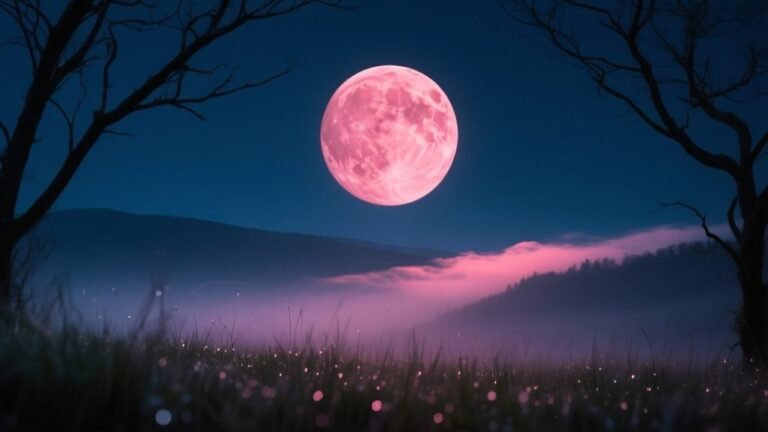
Typically, the moon appears bright white or pale yellow. However, when the Strawberry Moon sits low on the horizon, it can take on a reddish hue. This happens because the atmosphere scatters shorter blue wavelengths of light, letting longer red and orange wavelengths shine through.
Even though the moon’s path is lower during this time, enhancing these effects, its actual color doesn’t change.
How Do Different Cultures Interpret the Strawberry Moon?
You might be surprised to learn that many cultures have their own special names for the June full moon.
For example, Native American tribes often tie it to nature’s rhythms, like the time when strawberries are ripe or when animals give birth.
On the other hand, European traditions associate this moon with marriage customs and something called honey mead.
It’s pretty interesting to see how differently people interpret the same moon!
Native American Traditions
Although many cultures have their own names for the June full moon, Native American tribes particularly connect it to the natural rhythms of berry and crop harvesting.
You’ll find the name “Strawberry Moon” comes from the Algonquin, marking the time when wild strawberries ripen.
Other tribes also reflect this seasonal change in their names, tying the moon to nature’s cycles.
- Algonquin: Strawberry Moon, signaling wild strawberry harvest
- Ojibwe & Dakota: Names echoing berry gathering
- Haida: Berries Ripen Moon, highlighting fruit maturation
- Anishinaabe: Blooming Moon, marking flowering season
- Cherokee: Green Corn Moon, linked to crop tending
Understanding these names helps you appreciate how deeply connected Native American cultures are to the environment.
European Lunar Names
While many Native American cultures name the June full moon after berry harvests, European traditions often link it to marriage and celebration. You’ll find names like “Honey Moon” and “Mead Moon” tied to this time of year, reflecting the sweetness of newlywed life and the brewing of honey-based drinks.
Unlike the Strawberry Moon, which highlights the ripe berries native to certain regions, these European names focus on social rituals and seasonal customs. Different cultures interpret the June full moon based on local activities, whether it’s agriculture or festivities.
What Makes the Strawberry Moon Special in June 2026?
The June 2026 Strawberry Moon stands out because it peaks on June 29 at 7:56 P.M. Eastern Time, marking the first full moon of summer.
This Strawberry Moon is special due to its timing and unique appearance. When you look up, you’ll notice it appears lower in the sky than usual, making it a rare sight since 2006. Its reddish tint, caused by atmospheric effects near the horizon, adds to the magic.
Plus, it honors Native American traditions linked to wild strawberry harvests.
Here’s what makes this Strawberry Moon special:
- Occurs during the first full moon of summer
- Peaks precisely on June 29 at 7:56 P.M. ET
- Appears unusually low in the sky
- Exhibits a deeper red hue near the horizon
- Connects to cultural celebrations and natural cycles
How Can You Best Observe the Strawberry Moon This Year?
Wondering how to get the best view of the Strawberry Moon this year? Mark your calendar for the evening of June 29, 2026, when the full moon rises, offering a breathtaking spectacle as it climbs the horizon.
The Strawberry Moon peaks at 7:56 P.M. Eastern Time, but for the brightest view, plan to observe around 3:44 A.M. EST on June 30.
To maximize your experience, check local weather forecasts ahead of time to guarantee clear skies.
Checking the weather beforehand ensures you won’t miss a clear view of the Strawberry Moon.
Since this Strawberry Moon appears at its lowest angle since 2006, you’ll enjoy a rare, shallow arc across the sky.
Timing your observation during moonrise or peak illumination will help you fully appreciate this unique lunar event.
Tips for Enjoying the Strawberry Moon and Related Events
You’ll want to catch the Strawberry Moon at its peak on June 29, 2026, around 7:56 P.M. Eastern Time for the best view.
Make sure to check the weather beforehand so you know if the skies will be clear.
Also, don’t miss out on local events celebrating the moon—you’ll enjoy the experience even more when you’re surrounded by community activities.
Best Viewing Times
Although the Strawberry Moon reaches full illumination on June 29, 2026, at 7:56 P.M., your best viewing experience depends on timing and location.
The moonrise will vary, like in Cincinnati, where it appears around 6:13 P.M. Watching the moon near the horizon offers a stunning reddish hue caused by atmospheric effects.
To make the most of this celestial event, keep these tips in mind:
- Note the exact full illumination time: 7:56 P.M. Eastern Time
- Check your local moonrise time for ideal viewing
- Find a spot with an unobstructed view of the horizon
- Plan to watch just before and after full illumination
- Explore cultural events tied to the Strawberry Moon for added enjoyment
Ideal Weather Conditions
To fully enjoy the Strawberry Moon, paying attention to weather conditions can make a big difference. Clear skies are essential since clouds can easily block the moon’s brightness and beauty.
Check local weather forecasts ahead of time, especially in June when summer storms might appear, to avoid disappointment. Aim to watch the Strawberry Moon during moonrise or just after sunset, when it looks larger and more colorful near the horizon.
Find an open spot away from city lights to reduce light pollution and get the best view. Bringing binoculars or a telescope will also help you see the moon’s details and any nearby celestial events more clearly.
Planning with these weather tips in mind guarantees a memorable Strawberry Moon experience.
Community Events and Activities
When the Strawberry Moon rises, communities often come together to celebrate with festivals, markets, and gatherings that highlight the season’s strawberry harvest.
You can fully enjoy this special time by joining local events or creating your own memorable experiences.
Here are some great ways to celebrate the Strawberry Moon:
- Attend strawberry-themed festivals or markets with food and crafts
- Organize a nighttime picnic to enjoy the moon’s peak brightness
- Join moonlit hikes or stargazing sessions to connect with nature
- Pick berries or make strawberry-based dishes honoring the season
- Participate in astronomy club viewings or online Strawberry Moon discussions
Embracing these activities helps you appreciate the cultural and natural significance of the Strawberry Moon while making lasting memories.
Frequently Asked Questions
Can the Strawberry Moon Affect Tides or Weather Patterns?
Yes, the Strawberry Moon does have a tidal influence.
When you see a full moon like the Strawberry Moon, the alignment of the Earth, Moon, and Sun causes a stronger gravitational pull, leading to higher high tides and lower low tides, called spring tides.
While it doesn’t directly change weather patterns, these tidal shifts can impact local weather near coasts.
Sometimes, they increase the chance of storms or coastal flooding during certain conditions.
Are There Any Myths or Legends Linked to the Strawberry Moon?
You’ll find the Strawberry Moon wrapped in a tapestry of myths and legends, each thread rich with cultural significance.
It’s often seen as a symbol of fertility and abundance, like nature’s own promise of plenty.
Many cultures believe this moon boosts growth and good fortune in farming.
Others link it to romantic celebrations or the birth of young animals, making it a beacon of life’s cycles and seasonal renewal you can almost feel in the air.
How Does the Strawberry Moon Compare to Other Full Moons in Brightness?
You’ll notice the Strawberry Moon often appears brighter than other full moons because of its low position in the sky during Moon Phases.
This low arc means it shines through more of Earth’s atmosphere, enhancing its visibility.
Unlike many full moons, its brightness stands out, especially compared to the Harvest Moon or others.
Is the Strawberry Moon Visible Worldwide or Only in Certain Regions?
You can enjoy the Strawberry Moon’s global visibility since it’s visible worldwide.
However, your local weather and geographic location affect how well you see it.
If you’re near the equator, the moon appears higher in the sky, while in the Northern Hemisphere, it looks lower.
Time zones also shift the peak illumination time, so the full moon might show up on different dates depending on where you are.
What Are Some Popular Foods or Recipes Inspired by the Strawberry Moon?
Imagine a vibrant garden bursting with sweetness under the Strawberry Moon.
You can immerse yourself in strawberry desserts like luscious strawberry shortcake, creamy strawberry ice cream, and tangy strawberry tarts that capture summer’s essence.
Don’t forget invigorating strawberry smoothies and homemade strawberry jam, perfect for picnics or gatherings.
These treats celebrate the peak freshness of strawberries, letting you savor the season’s bounty in every bite.
Conclusion
Now that you know why it’s called the Strawberry Moon and its rich history, you might wonder what secrets the next one holds. Will it reveal more about nature’s cycles or connect you to ancient traditions in unexpected ways?
Don’t miss your chance to witness this glowing symbol of summer’s arrival. Keep your eyes on the sky this June. You never know what magic the Strawberry Moon might bring your way.