
What Does It Mean for Strawberries to Have Seeds Outside?
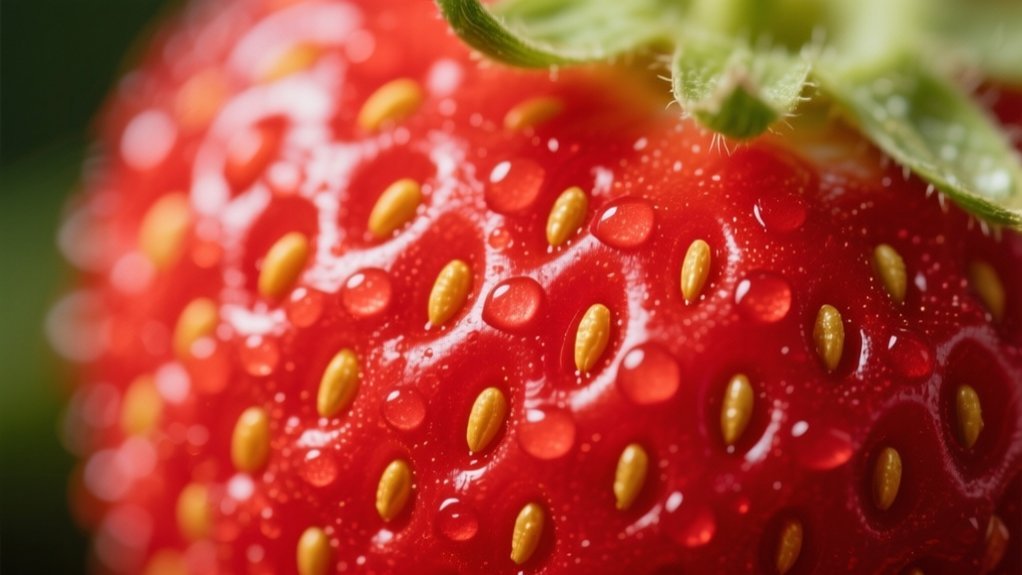
When you notice the tiny seeds on the outside of strawberries, you’re actually looking at achenes, small dry fruits each holding a seed. The red part isn’t the true fruit but swollen stem tissue called the receptacle.
Having seeds outside helps strawberries spread more effectively. Animals are attracted to the juicy part, and the achenes easily cling or fall off to new spots. This clever design boosts survival and genetic diversity.
If you keep exploring, you’ll uncover even more fascinating details about this unique fruit.
What Are Strawberry “Seeds” Really Made Of?
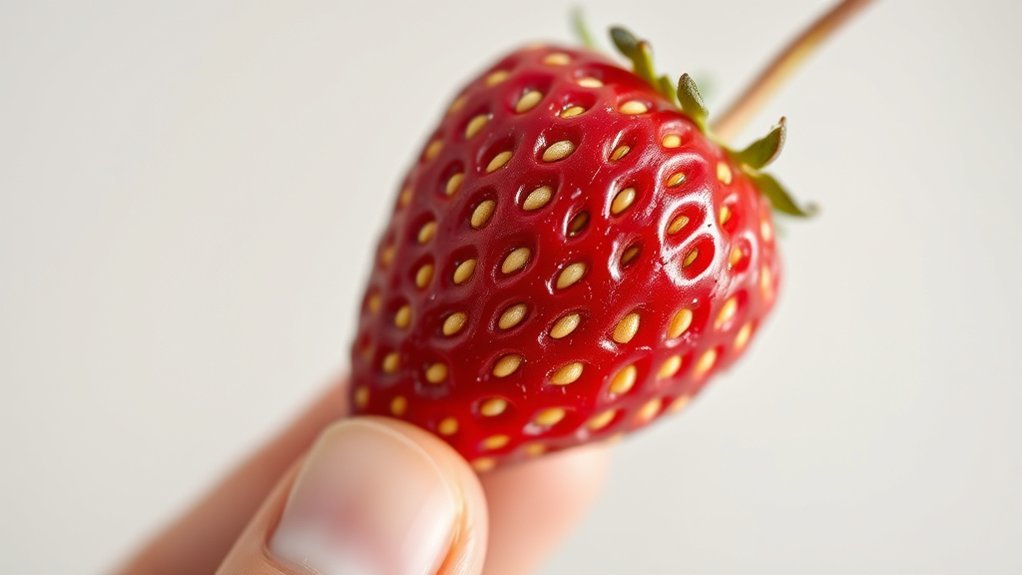
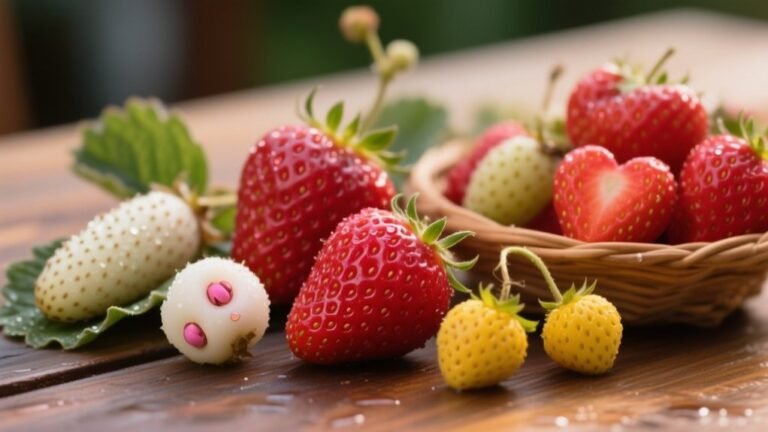
You might think the tiny yellow “seeds” on strawberries are just seeds, but they’re actually called achenes. Each one is a dry fruit containing a single seed. These achenes make up the seeds on the outside of the strawberry, sticking firmly to its surface.
A typical strawberry carries around 200 of these achenes, which don’t grow in size as the fruit ripens. Curiously, the juicy red part you enjoy isn’t the true fruit; it’s swollen receptacle tissue, making strawberries false fruits botanically.
The achenes’ placement on the outside helps them latch onto animals when eaten, aiding seed dispersal.
Why Are Strawberry Seeds on the Outside?
Why do strawberries wear their seeds on the outside rather than hiding them inside like most fruits? The answer lies in their unique evolutionary strategy.
Those tiny “seeds” you see aren’t true seeds but achenes—small fruits that each contain a single seed.
The strawberry’s tiny “seeds” are actually achenes—small fruits each housing a single seed inside.
Having seeds on the outside helps strawberries stick to animals easily, which then carry these achenes to new locations. This external placement boosts the chances of seed dispersal through animal movement.
Plus, the bright, fleshy part you eat isn’t a true fruit but swollen flower tissue designed to attract animals.
By flaunting their seeds on the outside, strawberries cleverly increase their spread and survival.
How Does Strawberry Anatomy Differ From Other Fruits?

Strawberries stand out in the fruit world not just because their seeds sit on the outside, but also due to their unique structure. Unlike many fruits that develop from the ovary alone and house seeds on the inside, strawberries are false fruits.
Their fleshy part grows from the thickened stem tissue, called the receptacle, rather than the ovary. The tiny “seeds” you see on the outside are actually achenes, each containing a single seed.
This contrasts sharply with fruits like apples or peaches, where seeds are enclosed within the flesh. This distinctive anatomy helps strawberries maximize seed dispersal by attracting animals to eat the receptacle and spread the achenes, making them a fascinating example of nature’s diversity in fruit formation.
What Role Does the Receptacle Play in Strawberry Fruit?
Although many fruits develop from the ovary, the fleshy part you enjoy in a strawberry actually comes from the receptacle. This part swells and softens after pollination. The receptacle tissue plays an essential role by holding the flower’s parts together and becoming the juicy, edible portion you eat.
Genes that make fruits fleshy and sweet are active specifically in this receptacle tissue, enhancing its appeal to animals. The receptacle’s structure also arranges the achenes, those tiny seeds you see on the outside, allowing them to be displayed prominently.
This unique adaptation not only supports the strawberry’s development but also helps attract animals, encouraging seed dispersal and ensuring the plant’s evolutionary success.
How Do Strawberry Seeds Develop and Disperse?
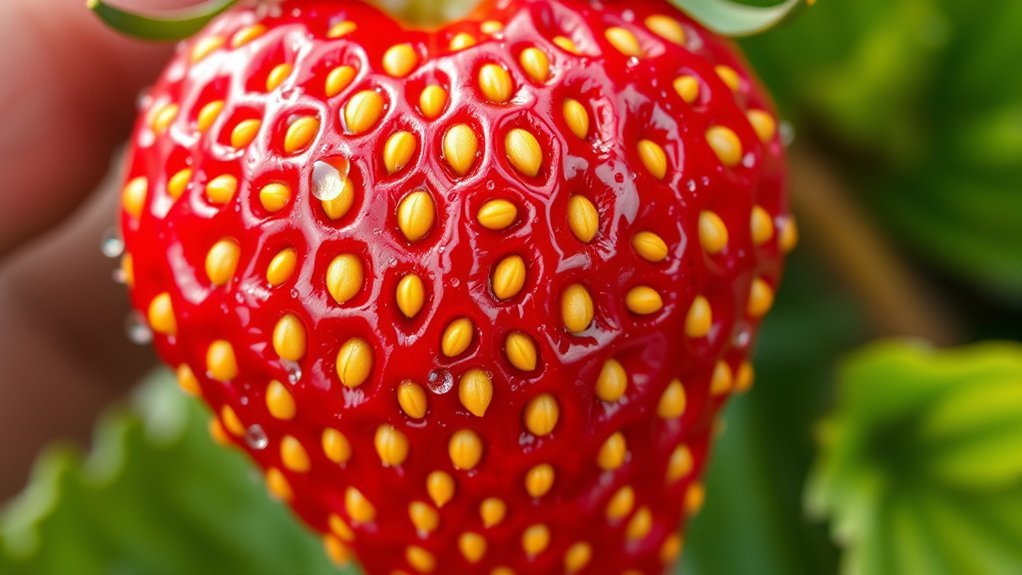
You know those tiny seeds you see on a strawberry? They’re actually called achenes. Each one has a single seed inside a dry little fruit.
What’s interesting is that these achenes develop right on the outside of the strawberry, which makes it super easy for animals to carry them away when they munch on the fruit.
This clever setup helps strawberries spread their seeds far and wide as animals move around.
Achene Formation Explained
Around 200 tiny achenes develop on the surface of each strawberry, each housing a single seed inside. These achenes aren’t true seeds exposed directly; instead, they’re dry fruits that protect the seed within.
As the strawberry grows, the fleshy part you enjoy swells from the flower’s receptacle, while the achenes form on top. You’ll notice each achene is only weakly attached, so they easily detach when animals brush against the fruit.
This clever design helps spread the seeds when animals eat the fleshy part and carry the achenes away. By placing achenes on the outside, strawberries guarantee their seeds have a better chance to disperse efficiently, relying on animals attracted to the juicy, swollen tissue rather than the seeds themselves.
Animal-Mediated Seed Dispersal
Because strawberry seeds, called achenes, sit on the fruit’s surface, they easily cling to animals that eat or brush against the berries. Each achene contains a single seed and is attached to the juicy part you enjoy.
This external placement helps seeds detach and spread as animals move around. Strawberries evolved this feature to boost their chances of growing in new places through animal-mediated seed dispersal.
When animals eat or carry strawberries, they unknowingly help distribute seeds far and wide.
Key points about strawberry seed dispersal:
- Seeds sit on the outside as achenes
- Achenes detach easily from the fruit
- Animals eat or brush against berries
- Seeds hitch a ride on animals or pass through digestion
- This boosts strawberry propagation in diverse environments
This clever adaptation makes strawberries successful seed spreaders.
How Strawberry Seed Placement Affects Animal Dispersal
How exactly does the placement of strawberry seeds influence the way animals help spread them? The seeds, called achenes, sit on the outside of a strawberry, making them highly visible and easy for animals to access.
When you see a strawberry, you’re actually looking at many tiny seeds attached externally, which encourages animals to eat the fruit for its sweet flesh. As animals consume the strawberry, the weak attachment of these seeds allows them to detach easily, either by brushing off or passing through the digestive system.
This means animals inadvertently carry and disperse the seeds over distances, increasing the plant’s chances of germination.
What Evolutionary Advantages Come From External Seeds?
While many plants protect their seeds inside fruits, strawberries take a different approach by placing their seeds externally. This unique feature offers several evolutionary advantages that boost their chances of survival and spread.
The achenes on the outside of strawberries easily attach to animals or fall off to new locations, maximizing dispersal. Plus, having seeds visible encourages animals to eat the fruit, increasing the odds of seeds being spread over wider areas.
This strategy prevents overcrowding around the parent plant and promotes genetic diversity.
Here’s what external seeds do for strawberries:
- Facilitate seed attachment to animals for transport
- Enhance broader seed dispersal across environments
- Encourage animals to eat the fruit by making seeds visible
- Allow seeds to detach easily from the fruit surface
- Increase the likelihood of successful germination and growth
How Strawberry Propagation Complements Seed Dispersal
Although strawberries rely on external seeds for spreading, they also use runners to propagate, giving them a powerful advantage. You’ll find that strawberries have their seeds on the outside, but they don’t depend solely on those achenes to reproduce.
Instead, they send out runners, which are horizontal stems that root and grow new plants nearby. This method guarantees survival even in tough environments where seed germination might fail. When seeds do disperse, animals help spread them far and wide.
But runners let the plant quickly colonize an area, creating a dense patch of strawberries. By combining seed dispersal and vegetative propagation, strawberries maximize their chances of thriving.
What Common Misconceptions Surround Strawberry Seeds?
You might think the tiny seeds on strawberries are just regular seeds, but actually, they’re called achenes. Each achene holds a seed inside it. It’s pretty interesting when you think about it!
And here’s something else that trips people up: strawberries aren’t true berries like blueberries or grapes. Instead, they’re considered “false fruits.” Kind of surprising, right?
Also, a lot of folks assume strawberries are the only fruit with seeds on the outside, but that’s not the case. Other fruits have this too, so strawberries aren’t as unique in that way as people often believe.
True Nature Of Seeds
Many people mistakenly think that the tiny specks on the outside of strawberries are seeds, but they’re actually achenes. These are small, dry fruits each containing a single seed inside. When you look closely, the visible part isn’t the seed itself but a protective casing.
The strawberry plant produces these achenes on the swollen fleshy part, which is actually the receptacle tissue, not the fruit. This unique arrangement helps the strawberry spread its seeds effectively.
- Each achene houses one seed inside
- The red flesh isn’t a true fruit
- A medium strawberry has about 200 achenes
- Seeds aren’t visible externally
- Achenes attach to animals for dispersal
Understanding this helps you appreciate the strawberry plant’s clever reproductive strategy.
Fruit Classification Confusion
Why do strawberries confuse so many when it comes to seed placement and fruit classification? You might think those tiny “seeds” on the surface are just that, seeds. But they’re actually achenes, each a small fruit containing a true seed inside.
Unlike true berries, strawberries don’t develop solely from the ovary of the strawberry flower. Instead, the juicy part you eat grows from the flower’s receptacle tissue, making strawberries false fruits.
This difference trips people up, especially since strawberries look and taste like berries. You’re not alone if you’ve mistaken them for typical berries.
Even fruits like apples and figs share this false fruit classification, which complicates things further. Understanding the strawberry flower’s role helps clear up these common misconceptions about strawberry seeds.
Seed Placement Misunderstandings
Understanding the true nature of strawberry seeds clears up a lot of confusion about the fruit itself. Many people think the seeds on the outside of strawberries are just seeds, but they’re actually called achenes—tiny dry fruits each containing one seed.
You might assume the fleshy part is the real fruit, but it’s swollen tissue, not a true fruit. Here’s what you should know about seed placement misunderstandings:
- The outside seeds are achenes, not just simple seeds.
- Strawberries aren’t true berries because their flesh comes from the receptacle.
- A medium strawberry can have about 200 achenes on its surface.
- Seed placement on the outside helps with animal dispersal.
- This unique structure leads to many misconceptions about strawberries.
Knowing this helps you appreciate how strawberries evolved and function.
What Strawberry Seeds Reveal About Plant Evolution
Although strawberry seeds, known as achenes, might seem small and insignificant, they reveal a lot about how plants have evolved to survive and spread. You’ll notice these achenes sit on the outside of the fleshy part, a clever adaptation that sets strawberries apart from many fruits.
This placement isn’t random. It helps the seeds latch onto animals as they eat the fleshy receptacle, allowing the achenes to disperse over wide areas. Their weak attachment to the fleshy part means they detach easily, increasing the chances of spreading.
Frequently Asked Questions
Can Strawberry Seeds Cause Allergies in Some People?
Yes, strawberry seeds can cause allergies in some people. Those tiny achenes contain proteins that trigger strawberry allergies, leading to symptoms like itching, swelling, or hives.
If you’re allergic to birch pollen or related fruits, you might experience cross-reactivity with strawberry seeds.
You should consult an allergist before eating strawberries if you suspect a sensitivity. Being cautious helps you avoid mild to severe allergic reactions and stay safe.
How Do Strawberry Seeds Affect the Fruit’s Texture When Eaten?
When you bite into a strawberry, the seeds create a unique texture perception by adding a slight crunch to the soft, juicy flesh.
This contrast between the smooth receptacle and the tiny achenes enhances your sensory experience, making each bite enjoyable.
The seeds’ arrangement and number influence how you perceive the fruit’s texture.
They combine both crispness and softness, keeping the strawberry interesting and flavorful as you eat it.
Are Strawberry Seeds Edible and Nutritious?
Yes, strawberry seeds are edible and offer nutritional benefits. When you eat strawberries, you’re consuming achenes that provide dietary fiber, which supports your digestive health.
These tiny seeds also contain small amounts of healthy fats, protein, and minerals, boosting the fruit’s overall nutrition.
While you might focus on the juicy flesh, don’t overlook the seeds. They contribute to the strawberry’s texture and add valuable nutrients you can enjoy with every bite.
Do Strawberry Seeds Impact the Fruit’s Shelf Life?
If you leave strawberries in your fridge for a week, you’ll notice their shelf life is more about storage than the seeds outside.
Those tiny seeds, or achenes, don’t drastically shorten shelf life, but they can make the fruit more delicate.
For example, when you wash strawberries before storing, moisture clings around seeds, hastening spoilage.
Can Strawberry Seeds Be Used for Planting New Plants at Home?
Yes, you can use strawberry seeds for planting new plants at home, but seed viability depends on several factors.
Make sure you collect achenes from ripe strawberries to boost germination chances.
Prepare well-drained soil, provide enough light, and keep the soil consistently moist.
Remember, seeds from hybrids mightn’t produce identical fruit, so opt for heirloom seeds if you want reliable results.
Patience is key, as germination can take longer than with established plants.
Conclusion
Now that you know strawberry “seeds” are actually achenes on the fruit’s surface, doesn’t it make you look at strawberries differently? Their unique anatomy, with seeds outside on the fleshy receptacle, gives them evolutionary advantages in seed dispersal and reproduction.
This unusual design challenges what we think about fruits and shows how plants adapt in surprising ways. So next time you enjoy strawberries, remember, they’re more than just sweet treats; they’re nature’s clever innovation.