
Where Are Strawberry Seeds Found?
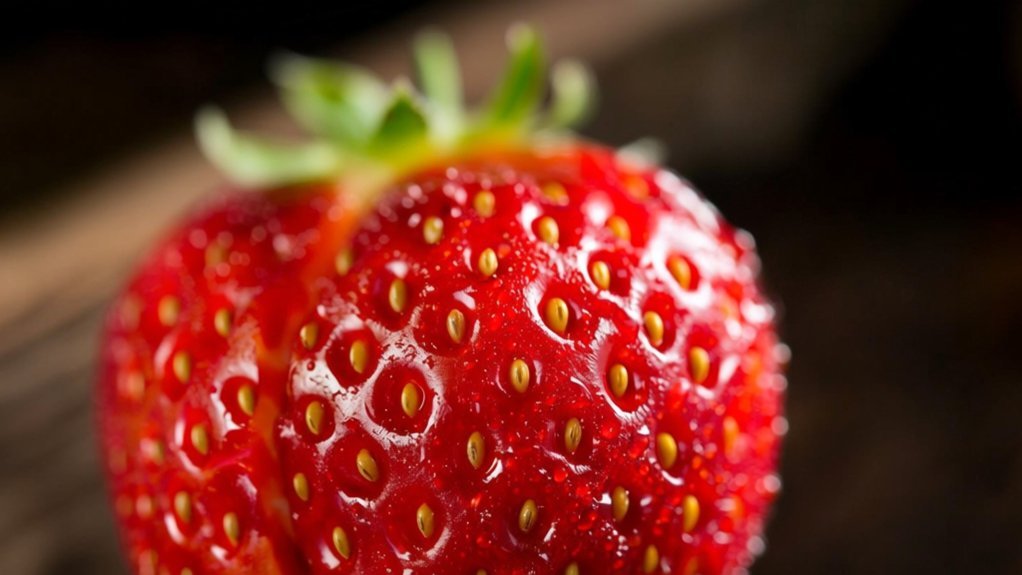
You’ll find strawberry seeds not inside but on the outside of the berry, scattered as tiny yellow or brown dots called achenes. Each achene holds a single seed, attached to the fleshy red part, which is actually an enlarged receptacle, not the true fruit.
This outside placement helps with seed dispersal by animals eating the berry. If you want to understand how these seeds develop and learn tips for planting them successfully, keep exploring this topic.
Where Are Strawberry Seeds Located?
Have you ever wondered where strawberry seeds actually are? Unlike many fruits, strawberry seeds aren’t hidden inside; they’re right on the outside. Those tiny yellow or brown dots you see on a strawberry’s surface are called achenes.
Each achene is actually a true fruit containing a single seed inside. So, when you look at a strawberry, you’re seeing hundreds of these achenes scattered across its fleshy surface.
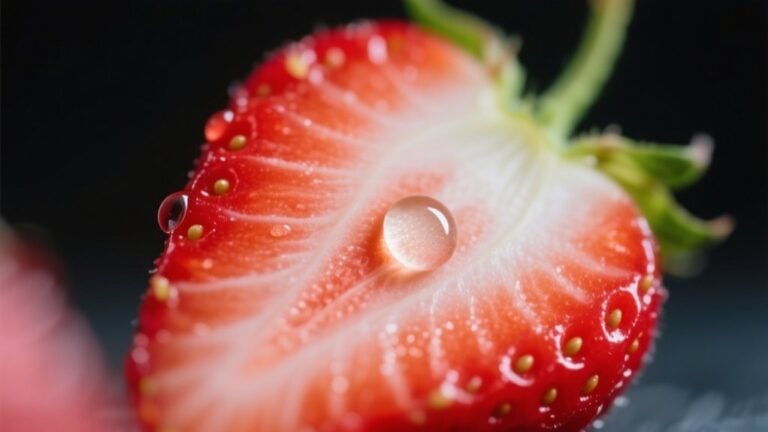
The juicy red part you enjoy isn’t the real fruit but an enlarged receptacle that holds all those achenes. This means every bite you take includes numerous individual fruits, each with its own seed inside an achene.
The strawberry’s red flesh is an enlarged receptacle holding many tiny fruits, each with its own seed inside.
Understanding this unique structure helps you appreciate how strawberries grow and reproduce.
What Are Strawberry Seeds Actually?
Strawberry seeds, called achenes, aren’t seeds in the typical sense but tiny fruits perched on the strawberry’s surface. When you look closely, you’ll see these small, dry structures scattered across the red flesh.
Each achene actually contains a single seed inside. So, the seeds from a strawberry aren’t hidden inside the juicy part you eat; instead, they’re encased within these achenes on the outside.
Notably, the fleshy part of the strawberry isn’t a true fruit; it’s a swollen receptacle that supports the achenes.
Since strawberries are called achenes, every time you bite into one, you’re eating hundreds of tiny fruits, each with its own seed.
This unique structure makes strawberry seeds quite different from those of most fruits.
How Do Strawberry Seeds Develop?
Although you might expect seeds to develop inside the fruit, strawberry seeds actually form on the outer surface as tiny achenes. It all begins when strawberry flowers get pollinated.
Strawberry seeds uniquely develop on the fruit’s outer surface as tiny achenes after pollination.
After pollination, each flower develops numerous small, dry fruits called achenes, and each achene contains a single seed. The fleshy part you see and eat isn’t the real fruit; it’s a swollen receptacle that supports these achenes.
Here’s how strawberry seeds develop:
Strawberry flowers receive pollen, triggering seed formation.
Each flower produces many tiny achenes on its surface.
Each achene encases one strawberry seed inside.
The fleshy receptacle grows, holding all achenes on the exterior.
This process guarantees the strawberry seeds develop externally, making the strawberry unique among fruits.
Why Are Strawberry Seeds on the Outside?
You might be curious why strawberry seeds are on the outside instead of inside like most fruits.
Well, this unique setup comes down to how strawberries are built and their clever way of spreading seeds.
Basically, the strawberry’s anatomy and its evolutionary strategy work together to get seeds out there efficiently.
When you think about it, nature really designed strawberries to survive and reproduce in a smart way.
Strawberry Seed Anatomy
Seeds called achenes cover the outside of the fruit, which is unusual compared to most fruits where seeds sit inside. Each achene on a strawberry’s surface contains a single seed, making the strawberry unique in seed placement.
The red, fleshy part you enjoy isn’t technically the fruit but a swollen receptacle that supports the flower. This anatomy plays a vital role in seed dispersal by attracting animals.
Here’s what you should know about strawberry seed anatomy:
- A medium-sized strawberry can have about 200 achenes on its surface.
- Each achene is a tiny fruit enclosing one seed.
- The fleshy receptacle is nutritious and appealing to animals.
- Seeds on the outside make them more accessible for dispersal through consumption.
Evolutionary Seed Placement
While it might seem unusual, the external placement of strawberry seeds actually plays an essential role in their survival strategy.
On strawberry fruit, the seeds, called achenes, sit on the outside of the fleshy receptacle, which isn’t a true fruit but swollen tissue connecting the flower to the stem.
This unique design likely evolved to attract animals. When animals eat the sweet, juicy strawberry fruit, they also pick up the loosely attached achenes. This helps strawberry plants spread their seeds over a wide area, boosting their chances of growing in diverse environments.
Why Is the Strawberry’s Flesh Important?
You know that juicy, red part of the strawberry? That’s called the receptacle, and it’s actually super important.
It’s what makes strawberries so appealing to animals who want to eat them.
Here’s the cool part: when animals munch on the strawberry, they help spread the seeds around.
This gives strawberries a big advantage when it comes to growing and thriving in the wild.
So, by understanding this fleshy part, you can see why strawberries are so good at spreading and doing well in nature.
Pretty neat, right?
Role Of Fleshy Receptacle
The fleshy part of a strawberry, called the receptacle, plays an essential role in the fruit’s life cycle. Unlike typical fruits, the fleshy receptacle isn’t the true fruit but is important for protecting and spreading strawberry seeds.
This swollen tissue develops from the flower, becoming large and sweet to attract animals. When animals eat the strawberry, they help disperse the seeds attached to the surface.
Here’s why the fleshy receptacle matters:
- It develops from floral tissue, not the ovary like most fruits
- The sweetness encourages animals to eat the strawberry
- It protects the tiny strawberry seeds (achenes) on its surface
- It boosts seed dispersal, aiding strawberry growth in new areas
You can see how significant the fleshy receptacle is for strawberry reproduction and survival.
Attraction For Seed Dispersers
Animals play a key role in spreading strawberry seeds, largely because the fruit’s fleshy receptacle appeals directly to them. This juicy, sweet part acts as a strong attraction for seed dispersers like birds and mammals.
Since the seeds on the outside of the strawberry are housed in tiny dry fruits called achenes, animals consume the entire fruit, including those seeds. As they move around, they effectively distribute the seeds to new locations, helping strawberries thrive in various environments.
The receptacle’s flavor and size have evolved specifically to attract these animals, ensuring successful seed dispersal. By eating the fleshy part, animals unwittingly assist in spreading the seeds on the outside, which is essential for the strawberry’s reproduction and survival.
Evolutionary Advantage Of Flesh
Because the fleshy part of a strawberry acts as a swollen receptacle rather than true fruit flesh, it plays an essential role in attracting animals that disperse seeds. This fleshy receptacle provides a nutrient-rich, sweet food source, encouraging animals to eat the strawberry and carry the seeds, called achenes, away.
Unlike typical fruits, strawberry seeds are on the surface, increasing visibility and making seed dispersal more efficient. This evolutionary adaptation boosts the plant’s chance of reproduction by spreading seeds over a wide area.
You’ll find these key advantages:
- The fleshy receptacle appeals to seed-eating animals
- External achenes maximize seed accessibility
- Animals help transport seeds to new locations
- Enhanced seed dispersal promotes genetic diversity and survival
How to Identify Viable Strawberry Seeds
When you examine a strawberry closely, you’ll notice its tiny seeds, called achenes, dotting the surface. These achenes, each holding a single seed, are where you’ll find viable strawberry seeds. To identify viability, look for intact achenes on ripe fruit, as damaged ones won’t grow healthy plants.
The seeds develop from the strawberry flower, so well-formed achenes indicate proper pollination and seed maturity.
| Feature | Indicator of Viability |
|---|---|
| Achene color | Yellow or brown, not green |
| Achene integrity | Whole, not cracked or broken |
| Fruit ripeness | Fully ripe strawberry |
| Seed origin | Derived from strawberry flower |
How to Harvest Seeds From Strawberries
You can harvest strawberry seeds by blending fresh berries and then straining the mixture to separate the seeds from the pulp. It’s pretty straightforward!
If you’re working with frozen strawberries, just carefully scrape the seeds off with a knife instead.
Once you’ve collected the seeds, be sure to dry them thoroughly on a paper towel before storing them for future use.
That way, they’ll be ready when you want to plant them!
Extracting Seeds Techniques
Achenes, the tiny seeds on the outside of strawberries, are surprisingly easy to harvest if you know the right techniques. Extracting seeds from strawberries can be done efficiently with a few simple methods.
You can blend fresh strawberries and strain the mixture to separate seeds from pulp, skimming floating seeds for viability. Alternatively, scraping seeds off frozen strawberries with a knife offers more precision without harming them.
Here are key techniques for extracting seeds from strawberries:
Blend fresh strawberries and strain to separate seeds and pulp.
Skim floating seeds from the mixture to select viable ones.
Scrape seeds carefully off frozen strawberries using a knife.
Place collected seeds on a paper towel to remove excess moisture before storage.
Seed Drying Methods
Two essential steps follow seed extraction to guarantee your strawberry seeds stay viable: proper drying and storage.
Once you’ve collected the seeds, whether by blending and straining or scraping them off, you need to dry them thoroughly.
Lay the seeds out on a clean piece of paper towel in a single layer. This prevents clumping and helps air circulate around each seed. Seeds need to dry completely to avoid mold growth, which can ruin your harvest.
Depending on humidity, drying can take several days. Check daily to confirm the seeds remain dry and free-flowing.
Once dry, store them in a cool, dry place inside an airtight container.
Proper drying on a piece of paper towel is vital to keeping your strawberry seeds healthy for future planting.
How to Prepare Strawberry Seeds for Planting
Preparing strawberry seeds for planting starts with carefully scraping them from the surface of fresh strawberries using a toothpick or knife.
Once you’ve collected the seeds, dry them thoroughly on a paper towel.
To improve germination, freeze the seeds for three to four weeks to mimic winter conditions.
When you’re ready to plant, follow these steps:
Sprinkle seeds over damp, slightly acidic soil in seed trays. Cover seeds with a thin layer of soil or peat moss to maintain humidity.
Keep the soil warm and moist during germination, which takes 1–6 weeks.
Transplant strawberry seedlings when they’re strong and ready to plant outdoors.
Common Misconceptions About Strawberry Seeds
Although it may seem like the tiny seeds are inside the strawberry, what you see on the surface are actually achenes. Each one houses a single seed.
Many people mistakenly think the red, fleshy part is the fruit, but it’s actually swollen receptacle tissue supporting the achenes.
This unique structure often causes confusion about strawberry reproduction. Unlike most fruits, which develop from the ovary of a flower, strawberries don’t follow that pattern.
When you eat a strawberry, you’re actually eating hundreds of tiny true fruits (achenes) attached to the outside.
Understanding this clears up common misconceptions and helps you appreciate how strawberries differ from typical fruit classifications.
Tips for Growing Strawberries From Seeds
If you want to grow strawberries from seeds, start by carefully scraping the tiny achenes from fresh berries and drying them on a paper towel.
To successfully grow strawberries, keep the seeds warm and provide the right conditions for germination.
Use biodegradable pots with drainage holes to plant the seeds. Sow seeds on moist soil’s surface; don’t bury them since they need light.
Seal pots in a plastic container to keep humidity and warmth until germination.
Remove the cover once seedlings emerge to avoid overheating and transplant outdoors after hardening off.
Frequently Asked Questions
Can Strawberry Seeds Be Eaten Safely?
Yes, you can safely eat strawberry seeds, and they actually offer some great strawberry seed benefits like added dietary fiber and a bit of crunch.
If you enjoy experimenting, try incorporating them into strawberry seed recipes like smoothies or baked goods to boost nutrition and texture.
Just keep in mind that eating too many might cause mild digestive discomfort for some, but for most people, strawberry seeds are a tasty and healthy addition to your diet.
How Long Do Strawberry Seeds Take to Germinate?
They say, “Good things come to those who wait,” and strawberry seeds prove it. The germination process usually takes one to six weeks, depending on seed viability and conditions.
To speed things up, you’ll want to chill the seeds for three to four weeks to mimic winter, then plant them in warm, moist soil.
Keep an eye on moisture and temperature to guarantee successful sprouting.
Do All Strawberry Varieties Have the Same Seed Appearance?
No, you won’t find the same seed appearance across all strawberry varieties.
Seed morphology varies, meaning the size, shape, and color of the seeds differ depending on the type.
However, the seed distribution is generally consistent, with achenes spread across the strawberry’s exterior.
These variations in seed morphology contribute to each variety’s unique characteristics, so when you look closely, you’ll notice subtle differences in their seeds.
Can Strawberry Seeds Cause Allergies?
Think of strawberry seeds as tiny messengers.
While they rarely carry the main trouble, they can still stir up seed reactions in sensitive individuals.
If you’re prone to allergy symptoms like itching or swelling, those little seeds might play a part.
Though the fruit’s proteins are often the bigger culprits.
So, if you notice discomfort after eating strawberries, be cautious.
Even the seeds might contribute to your allergic response.
Are Genetically Modified Strawberry Seeds Available?
You won’t find many genetically modified strawberry seeds available right now because genetic engineering in strawberries is still limited.
Most strawberries you buy come from traditional breeding, not GM crops.
However, researchers are exploring genetic engineering to boost crop sustainability by improving pest resistance and shelf life.
While these advancements show promise, commercial GM strawberry seeds aren’t widely sold yet, so you’re more likely to encounter conventional or organic varieties in stores.
Conclusion
Now that you know strawberry seeds are the tiny treasures dotting the fruit’s surface, you’re ready to grow your own patch of sweetness. Remember, those little seeds hold the promise of juicy berries, so treat them like gold dust.
With patience and care, you’ll watch your garden bloom into a strawberry wonderland. So, grab your seeds, get planting, and let nature’s magic turn your efforts into a berrylicious reward!