
How Strawberry Shortcake Was Made and Its Origins
You’ll find strawberry shortcake traces back to English shortcakes from the 16th century, which used rich, crumbly biscuits. By the 17th century, French bakers paired these cakes with fresh strawberries.
American bakers later added baking powder, making the biscuits lighter and fluffier. Today, you enjoy it layered with macerated strawberries and whipped cream.
It’s a simple yet iconic summer treat with a rich history that reveals more about regional twists and seasonal traditions.
What Is Strawberry Shortcake?
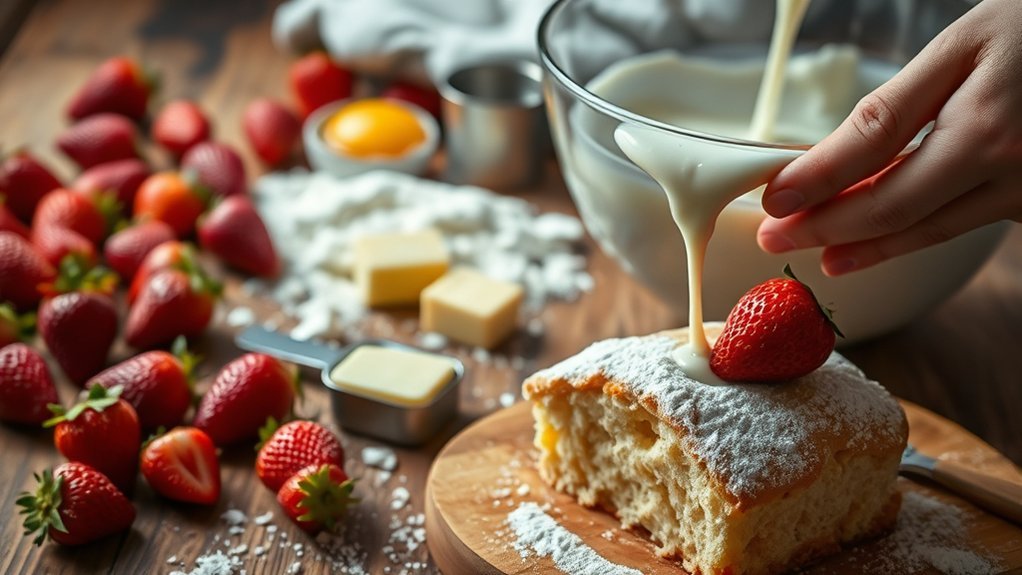
Strawberry shortcake is a dessert made of sweetened biscuits or sponge cake layered with fresh strawberries and whipped cream, offering a delicious mix of textures and flavors.
You’ll find that the biscuits provide a crumbly base, contrasting perfectly with the juiciness of fresh strawberries and the smoothness of whipped cream.
This classic combination has a fascinating history, with the earliest shortcake recipe dating back to 1588 in England.
The specific pairing of strawberries with shortcake appeared in the 17th and 18th centuries as garden strawberries became popular in France.
The delightful combination of strawberries and shortcake emerged as garden strawberries gained popularity in 17th- and 18th-century France.
By the 19th century, strawberry shortcake had become a beloved treat in America, even inspiring seasonal traditions.
Why Is It Called “Shortcake”?
You might be wondering why it’s called “shortcake.”
Well, the word “short” actually comes from the fat in the recipe. This fat makes the biscuit crumbly by shortening the gluten strands.
Knowing this can help you appreciate the texture and the traditional baking techniques behind this classic dessert.
Meaning Of “Short”
The word “short” in shortcake comes from the baking process where fat like butter “shortens” gluten strands in the dough, creating a crumbly texture.
When you bake shortcake, fat interferes with gluten development, making the final product tender and crisp rather than chewy.
Here’s what you should know about the meaning of “short”:
- “Short” refers to the dough’s crumbly texture
- Fat like butter is key in shortening gluten strands
- This technique dates back to 15th-century British baking
- The term highlights the contrast between crumbly and elastic dough
- Early recipes and Shakespeare’s works show its long cultural history
Historical Baking Techniques
Understanding why shortcake is called “short” leads us to explore its historical baking techniques. Originally, “short” referred to the crumbly texture achieved by mixing fat like butter or lard into flour, a method dating back to 15th-century British baking.
Early shortcakes were rich, lightly sweetened biscuits, often served with cream or fruit preserves.
By the mid-19th century, baking powder revolutionized shortcake by making it lighter and fluffier, changing how you’d experience its texture.
This American innovation set the stage for the strawberry shortcake that’s recognized today.
Combining fresh strawberries with this leavened shortcake became a popular summer treat in the United States, marrying tradition with new baking science to create a beloved dessert still enjoyed worldwide.
Texture And Ingredients
Crumbly texture defines shortcake, and that’s why it’s called “short.” The term “short” comes from the fat, usually butter, that bakers mix into the flour to shorten gluten strands. This creates that tender, flaky crumb you enjoy.
The classic shortcake combines simple ingredients to form a biscuit-like base that perfectly complements fresh strawberries. Over time, variations have introduced lighter textures, but the core remains the same.
- Flour, sugar, baking powder, salt, and butter create the foundation
- Butter’s fat content guarantees the distinctive crumbly texture
- Early recipes date back to 1588, highlighting its rich history
- American versions often use baking powder for a softer biscuit
- Modern takes sometimes swap biscuit for sponge or pound cake
This blend of texture and ingredients makes strawberry shortcake a timeless treat.
How British Shortcakes Inspired Strawberry Shortcake
You mightn’t realize it, but shortcake’s roots go all the way back to a 1588 English recipe. The word “short” actually refers to its crumbly texture, which comes from the added fat.
British shortcakes were basically simple biscuits served with cream or preserves. This set the stage for what eventually became strawberry shortcake. Knowing this makes it easier to see how the British tradition shaped the dessert you enjoy today.
Early Shortcake Origins
Although you may associate strawberry shortcake with American tradition, its roots trace back to British shortcakes from the late 16th century.
The earliest known shortcake recipe from 1588 reveals a crumbly, fat-rich biscuit that set the stage for what you’d later enjoy with strawberries.
Shakespeare even mentioned “Alice Shortcake” in the early 1600s, showing how popular this dessert was.
By the mid-1800s, American cooks adapted the recipe, making it sweeter and more biscuit-like.
The late 19th century brought baking powder, softening the texture and boosting its appeal.
Key points include:
- Shortcake originated as a crumbly British biscuit
- Early recipes combined fat for a “short” texture
- Served traditionally with cream or fruit preserves
- American versions added sweetness and paired perfectly with strawberry
- Baking powder transformed shortcake into a softer, cake-like treat
“Short” Texture Meaning
Understanding the “short” in shortcake helps explain why British bakers prized this biscuit’s texture. The term “short” refers to the fat, like butter, that shortens gluten strands in the dough. This action creates a crumbly, tender texture that’s both crisp and buttery.
British shortcakes, dating back to the 15th century, showcased this distinct texture, making them a perfect base for sweet toppings. When American bakers adopted the recipe, they kept the essence of that crumbly texture but introduced leavening agents to make the shortcake softer and fluffier.
Still, the influence of butter-rich, short-textured British biscuits remains essential in American strawberry shortcake, highlighting how the original crumbly, buttery qualities shaped the beloved dessert you enjoy today.
British Recipe Influence
Since British bakers perfected the crumbly, buttery shortcake as early as 1588, their recipes laid the foundation for the strawberry shortcake you know today.
You’ll find that British usage of “short” refers to the crumbly texture created by fat shortening gluten strands.
This traditional biscuit was crispy and lightly sweetened, often served with cream or preserves.
Shakespeare’s mention of shortcake underscores its cultural presence.
When you look at the American adaptation, baking powder enters the scene, making the shortcake softer and perfect for layering with strawberries and cream.
- Originated as a rich, crumbly biscuit in Britain
- “Short” means crumbly due to fat, a British baking term
- Shakespeare referenced shortcake, showing early popularity
- American version uses baking powder for softness
- Evolved into a layered dessert with fruit and cream
When Did Strawberries Become Part of Shortcake?
The addition of strawberries to shortcake dates back to the 17th and 18th centuries, when gardeners in France started cultivating the larger, juicier hybrid strawberries we enjoy today.
Before that, strawberries were smaller and less sweet. This development paved the way for strawberry shortcake to emerge as a delicious treat.
The history of strawberry shortcake in America began with the first known recipe published in 1845, introducing strawberries formally to the dessert.
Strawberry shortcake’s American history starts with the first recipe in 1845, marking strawberries’ sweet debut.
By the 1850s, American strawberry cakes featuring biscuit-like shortcakes layered with sweetened strawberries and cream became popular.
Summer parties soon embraced strawberry shortcake as a seasonal highlight, solidifying strawberries as an essential ingredient in the dish.
How American Baking Innovations Shaped Strawberry Shortcake
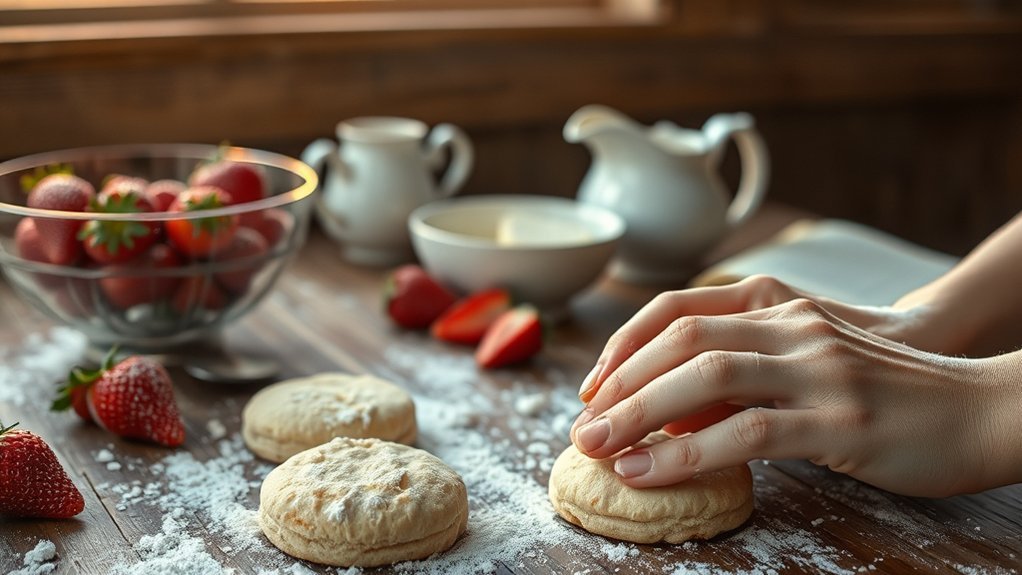
You’ll notice that when chemical leavening agents like baking powder were introduced, they really changed strawberry shortcake.
Suddenly, the base became softer and lighter. Early American recipes moved away from those dense, biscuit-like bases and started using fluffier cakes instead.
This shift transformed the dessert’s texture in a big way. Thanks to this innovation, strawberry shortcake turned into the beloved treat we enjoy today.
Chemical Leavening Impact
When you explore American baking in the 19th century, you’ll see how chemical leavening agents like baking powder and baking soda transformed strawberry shortcake from a dense biscuit into a light, fluffy dessert.
This innovation in American baking introduced leavened shortcakes, making the dessert more appealing and easier to prepare.
Here’s how chemical leavening impacted strawberry shortcake:
Baking powder replaced traditional methods, creating airy, tender shortcakes.
Early recipes in “The Ohio Cultivator” embraced these leavening agents.
Strawberry shortcake became a summer staple as baking powder gained popularity.
The light texture balanced perfectly with the sweetness of fresh strawberries.
Chemical leavening innovations paved the way for sponge cake variations later on.
Chemical leavening truly reshaped the strawberry shortcake you enjoy today.
Biscuit Transformation
Although early American shortcakes started as dense, biscuit-like treats, innovations in baking quickly transformed them into lighter, airier desserts you’ll recognize today.
Originally, bakers shaped thick unleavened cookies with a biscuit cutter, producing a firm base for sugared strawberries and cream.
But with the late 19th-century introduction of baking powder, leavened shortcakes replaced these heavy biscuits, making the strawberry shortcake recipe softer and fluffier.
This shift from dense to airy desserts marked a pivotal moment in American baking.
As you follow the evolution, you’ll see how chemical leavening agents allowed shortcakes to rise beautifully, creating the tender texture that defines modern strawberry shortcake.
This transformation not only improved taste but also elevated the dessert’s appeal, making it a classic favorite you still enjoy today.
The Traditional Ingredients in Classic Strawberry Shortcake
Three key ingredients define the classic strawberry shortcake: sweetened biscuits or sponge cake, fresh strawberries, and whipped cream. When you make this dessert, you’ll notice how these elements create a perfect balance of flavors and textures.
The sweetened biscuits provide a crumbly base, while sponge cake offers a lighter alternative. Fresh strawberries, often macerated with sugar, bring juicy sweetness. Whipped cream tops it all off with airy richness.
Sweetened biscuits or sponge cake combine with macerated strawberries and airy whipped cream for a perfect dessert balance.
Here’s what you should keep in mind:
- Sweetened biscuits made from flour, sugar, butter, and cream
- Light, fluffy sponge cake as an optional base
- Fresh strawberries, macerated to release juices
- Whipped cream beaten with powdered sugar and vanilla
- A timeless combination rooted in culinary tradition
These ingredients make the classic strawberry shortcake truly unforgettable.
How to Make Perfect Shortcake Biscuits
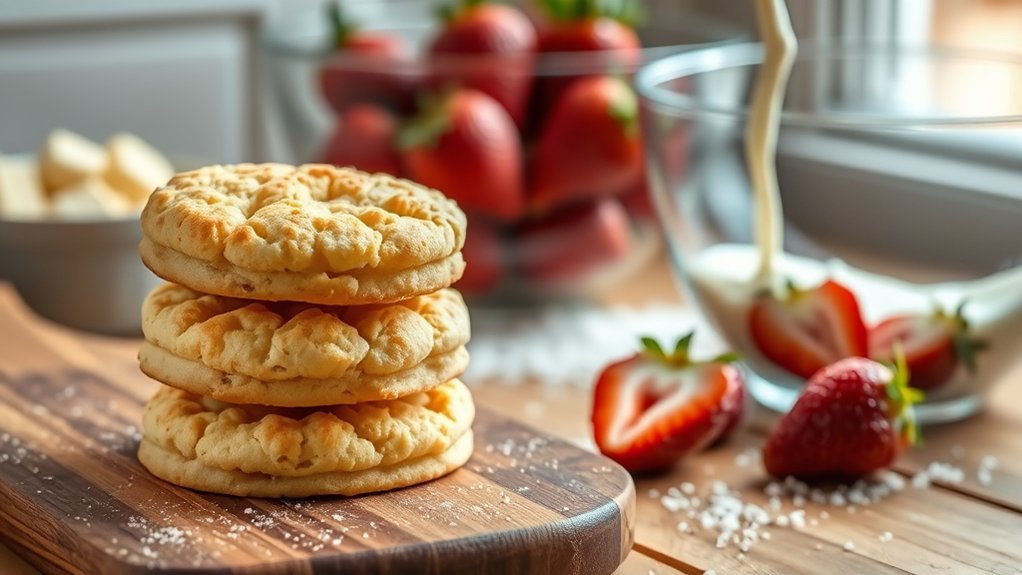
To make perfect shortcake biscuits, start by combining flour, sugar, baking powder, and salt.
Then cut in cold butter until the mixture looks like coarse crumbs.
Next, gently stir in milk and vanilla extract until just combined. Be careful not to overmix or your biscuits will be tough.
Shape the dough into a rectangle and cut out even shortcakes so they bake consistently.
Bake at 425°F (220°C) for 12-15 minutes until golden brown and risen.
Once cooled slightly, slice the biscuits horizontally and fill them with fresh strawberries and whipped cream for the classic shortcake experience.
These tender, flaky biscuits provide the ideal base to showcase the sweetness of strawberries and the lightness of whipped cream, making your homemade strawberry shortcake truly unforgettable.
How to Macerate Strawberries for Best Flavor
Once you’ve baked your perfect shortcake biscuits, the next step is preparing the strawberries to complement them beautifully.
To macerate strawberries for the best flavor, slice them and sprinkle with sugar, allowing the mixture to sit for 15-30 minutes. This process enhances sweetness and creates a syrupy texture that elevates your dessert.
Use strawberries and sugar to draw out natural juices. Let the mixture rest to soften berries and boost flavor.
Add a splash of lemon juice or vanilla for extra depth. Refrigerate for a few hours or overnight to meld flavors. Serve macerated strawberries atop your shortcake for a delightful dessert.
Macerating strawberries is key to enhancing sweetness and flavor, making your strawberry shortcake truly memorable.
Making the Perfect Whipped Cream for Strawberry Shortcake
Although macerated strawberries bring sweetness and juiciness to your shortcake, the perfect whipped cream adds the light, creamy balance that makes the dessert unforgettable.
Start by chilling your mixing bowl and beaters for about 15 minutes to keep the heavy cream cold. This helps it whip faster and more efficiently.
Pour in cold heavy cream, then add powdered sugar. This dissolves smoothly and sweetens without graininess. A splash of vanilla extract, about a teaspoon per cup, elevates the flavor.
Whip the cream until it forms soft peaks. It should hold its shape yet remain smooth and glossy.
Stop here to avoid over-whipping, which can turn your whipped cream grainy or buttery.
This careful process guarantees your whipped cream perfectly complements the strawberries and shortcake.
Regional Strawberry Shortcake Variations Around the World
While strawberry shortcake remains beloved worldwide, you’ll find unique regional twists that highlight local tastes and ingredients. These regional variations keep the classic dessert fresh and exciting, especially during summer when strawberries are at their best. Here’s what you’ll discover:
In Japan, light sponge cake layered with whipped cream and fresh strawberries creates a fluffy, festive treat.
French fraisier cake uses almond sponge, pastry cream, and marzipan for a sophisticated take on strawberry shortcake.
Mexico blends strawberries into tres leches cake, soaking it in three types of milk for rich texture.
In the U.S., sponge or pound cakes often replace biscuits, reflecting diverse preferences.
Despite differences, every version celebrates the harmony of strawberries, cream, and cake, making each bite a summer delight.
How Strawberry Shortcake Became a Summer Tradition in the U.S
Across different regions, strawberry shortcake adapts to local flavors, but in the U.S., it holds a special place as a summer favorite. You’ll find it closely tied to the summer fruit harvest, especially as strawberries ripen.
Since the mid-19th century, strawberry shortcake has become a popular pastry for American celebrations of the summer, with communities in states like Ohio and Kentucky hosting strawberry festivals and shortcake parties.
These gatherings highlight the joy of fresh strawberries paired with sweet cream and biscuit or cake layers.
The tradition grew so much that June 14 is now recognized as National Strawberry Shortcake Day, encouraging you to savor this classic dessert at the height of strawberry season.
This connection to seasonal fruit and festive moments cements strawberry shortcake as a true summer staple in the U.S.
Why Is June 14 National Strawberry Shortcake Day?
Because strawberries reach their peak ripeness in early summer, June 14 was chosen as National Strawberry Shortcake Day. This day celebrates this seasonal fruit and the classic dessert it inspires.
June 14 marks National Strawberry Shortcake Day, celebrating ripe early summer strawberries and the beloved dessert they inspire.
You’ll find that this day highlights the seasonal harvest and encourages you to enjoy fresh berries at their best.
On this special day, communities across the U.S. host strawberry shortcake parties, bringing people together to savor the dessert. National Strawberry Shortcake Day also promotes supporting local farms, emphasizing American culinary traditions tied to summer.
Here’s why you’ll want to celebrate:
- Celebrate the seasonal harvest of juicy strawberries
- Savor fresh berries in traditional strawberry shortcake
- Join strawberry shortcake parties nationwide
- Support local farms with fresh, local produce
- Honor American culinary traditions and summer festivities
Frequently Asked Questions
Can Strawberry Shortcake Be Made Gluten-Free?
Yes, you can make strawberry shortcake gluten-free by using gluten-free ingredients like almond flour, coconut flour, or gluten-free baking mixes as alternative flours.
Expect some texture differences, so balance wet and dry ingredients carefully and add binding agents like eggs or xanthan gum.
Enhance flavor with vanilla or almond extract.
For best results, follow baking tips like avoiding cross-contamination and using separate utensils to keep your dessert safe and delicious.
What Are the Best Strawberries for Shortcake?
You might find the best strawberry varieties for your shortcake just as the sun hits the fields, ripe, juicy, and bursting with flavor.
When picking, choose firm, bright red berries free of blemishes for top freshness.
These seasonal strawberry recipes shine with garden strawberries or heirloom types like Banner.
Not only do they enhance your strawberry dessert ideas, but they also pack strawberry health benefits, making your treat both delicious and nourishing.
How Long Can Strawberry Shortcake Be Stored?
You can store strawberry shortcake for up to 2-3 days, but to keep freshness duration ideal, separate the components before refrigeration.
Store shortcake biscuits at room temperature in an airtight container for up to 2 days.
Refrigerate macerated strawberries for 3-5 days, and keep whipped cream refrigerated for 1-2 days.
For longer storage, freezing biscuits works well.
When serving, assemble just before eating to avoid sogginess and enjoy the best texture.
Are There Vegan Strawberry Shortcake Recipes?
Of course, vegan strawberry shortcake recipes exist. You’re not doomed to a life of plain fruit!
You’ll swap traditional ingredients for clever vegan substitutes: plant-based options like almond or coconut milk, egg replacements such as flaxseed meal or aquafaba, and dairy-free creams made from coconut.
Top it off with nut-based toppings for crunch.
What Wine Pairs Well With Strawberry Shortcake?
You’ll love pairing strawberry shortcake with a sweet wine that highlights its fruit flavors.
Sparkling options like Prosecco or Moscato d’Asti create a delightful dessert pairing, adding an invigorating fizz that balances the creaminess.
During wine tasting, look for wines with soft, fruity notes rather than heavy tannins to complement the shortcake’s light, sweet nature.
Rosé and fruity Riesling are also fantastic choices to enhance the berry sweetness beautifully.
Conclusion
Now that you know how strawberry shortcake came to be, you can appreciate every bite even more. It’s not just a dessert; it’s a summer celebration wrapped in fluffy cake, juicy strawberries, and cloud-like whipped cream.
Whether you’re in the U.S. or abroad, strawberry shortcake feels like a warm hug on the hottest day of the year. So go ahead, indulge—you deserve a slice of this timeless, mouthwatering tradition!