
7 Best Times to Plant Strawberries for a Bountiful Harvest
You should plant strawberries either in early spring after the last frost or in fall about 6-8 weeks before the first frost, depending on your climate zone.
In cooler zones (3-6), spring planting gives roots time to establish before winter, while in warmer zones (7-10), fall planting promotes steady root growth without stress. Proper timing helps you build strong roots and boosts fruit yield.
Keep following for tips on avoiding common planting mistakes and maximizing your harvest.
Best Strawberry Planting Times for Different Climate Zones

Although planting times vary by region, you should plant strawberries in mid-spring (March to May) if you live in USDA zones 3-6.
Wait until after the last frost to confirm strong roots before winter. This timing guarantees ideal fruit production by letting your plants establish well.
Ensure your strawberry plants develop strong roots by planting after the last frost for the best fruit yield.
In USDA zones 7-10, the best time for planting strawberries is in fall, around October.
Cooler temperatures then promote root growth without stressing the plants with immediate fruiting demands.
Whether you plant in spring or fall depends on your zone, but both seasons offer excellent chances for healthy plants and fruitful harvests.
Remember to time planting strawberries about 4-6 weeks before the last frost in spring or 6-8 weeks before the first frost in fall to maximize your crop’s success.
Why Early Spring Is the Best Time to Plant Strawberries
Choosing the right time to plant strawberries can vary by climate, but early spring stands out as the best option for most gardeners.
Early spring strawberry planting, typically from March to May, guarantees the soil is workable and frost risk is low.
This timing allows your plants a full growing season to establish strong roots before winter dormancy.
Here’s why early spring works best:
- Cooler temperatures promote vigorous root growth, helping strawberries produce healthier plants.
- Avoiding frost damage protects young plants during their critical first year.
- A full growing season boosts root development, leading to a robust fruiting cycle the following year.
Why Fall Planting Helps Build Strong Strawberry Roots

When you plant strawberries in the fall, the cooler temperatures actually give their roots a chance to grow steadily without stress.
It’s like the plants have more time to settle in and get comfortable. This longer root development period means your strawberries build a strong foundation before winter arrives.
Cooler Temperatures Encourage Growth
Since cooler temperatures in the fall encourage strawberries to focus on root growth, planting during this season gives your plants a strong foundation before winter dormancy.
Cooler temperatures reduce stress on your strawberry plants, allowing energy to concentrate on root development rather than fruit production.
This focus sets the stage for long-term success and vigorous growth when spring arrives.
Here’s why fall planting works best:
- Cooler temperatures create ideal conditions for steady root development without heat stress.
- Plants establish a robust root system that supports vigorous growth in spring.
- Energy is allocated to root building, increasing your plants’ resilience and productivity.
Extended Root Development Period
Although you might be enthusiastic to see fruit, planting strawberries in late summer to early fall lets your plants focus on building strong roots first.
Fall planting gives your strawberries an extended root development period during cooler months, allowing them to establish a robust root system without the immediate demand for fruit production.
This foundation is essential for healthy plants that thrive in their first growing season.
Furthermore, fall planting benefits from improved moisture retention and reduced weed competition, both of which support steady root growth.
During winter dormancy, your plants adapt and strengthen, preparing them for vigorous spring growth.
Reduced Plant Stress
Because fall offers cooler temperatures and reduced environmental stress, planting strawberries during this season lets your plants focus energy on root growth rather than fruit production.
Strawberries need this focused energy to build strong, healthy root development that supports vigorous growth come spring.
By planting in fall, you minimize transplant shock and help the plants acclimate before winter dormancy.
Here’s why fall planting reduces plant stress:
- Cooler weather eases environmental pressure, letting roots expand without strain.
- Transplant shock lessens as plants settle in during milder conditions.
- Planting 6-8 weeks before frost guarantees roots develop fully under full sun exposure.
This approach gives your strawberries a solid foundation for a bountiful harvest next season.
When to Plant Strawberries in Warm vs. Cool Regions?
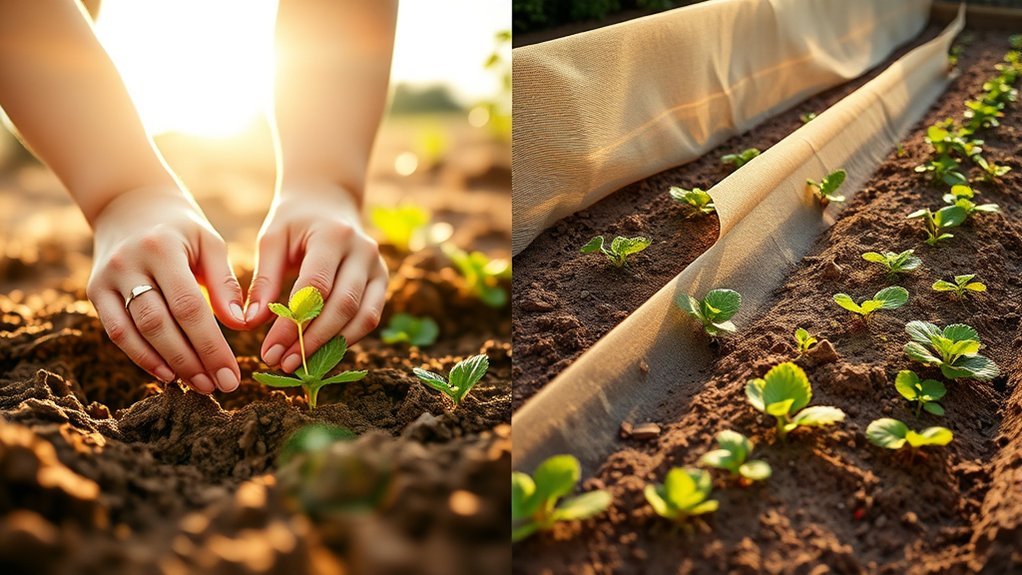
You’ll want to adjust your planting schedule based on your climate to give strawberries the best start.
So, if you’re in a cool region, it’s best to plant in spring, right after the last frost. This timing helps the plants get established before winter sets in.
Now, if you’re in a warmer area, fall planting is the way to go. That’s because it encourages strong root growth when the temperatures are milder.
Knowing these seasonal differences makes sure you pick the right time to plant, setting you up for a healthy, productive strawberry patch.
Planting Seasons Compared
Choosing the right planting season can make all the difference in your strawberry harvest. For the best results, you’ll want to match your planting time to your region and strawberry varieties. Here’s a quick comparison:
- Warm Regions (USDA zones 7-10): Plant strawberries in fall, around October. This lets roots develop during the cooler months, setting you up for a strong spring harvest.
- Cool Regions (zone 6 and north): Spring planting between March and May is ideal, after frost risk fades, maximizing your growing season.
- Variety Matters: June-bearing strawberries thrive when planted in early spring, while everbearing and day-neutral types can be planted in spring or fall for continuous yields.
Climate-Specific Planting Tips
When planting strawberries, aligning your schedule with your region’s climate maximizes growth and fruit production. In cool USDA zones 6 and north, plant strawberry plants in spring (March-May) after the last frost.
In warmer zones 7-10, fall planting (October) helps roots develop in cooler months. Choose June-bearing for cool climates or everbearing and day-neutral varieties for continuous harvests.
| Climate Zone | Best Planting Time | Strawberry Type |
|---|---|---|
| Cool (Zones 6+) | Spring (Mar-May) | June-bearing, Everbearing |
| Warm (Zones 7-10) | Fall (Oct) | Everbearing, Day-neutral |
| Warm (Containers) | Year-round | Everbearing, Day-neutral |
Remember to provide 8+ hours of sun for ideal growth.
How Container Strawberry Planting Extends Your Growing Season
Although strawberries have shallow roots that limit their long-term growth in containers, planting them this way lets you extend your growing season considerably.
Container gardening gives you flexibility, allowing you to grow strawberries almost year-round by controlling temperature and placement.
To maximize success with growing strawberries in pots, focus on these key tips:
- Choose everbearing strawberry varieties for continuous fruit production from late spring through fall.
- Use quality potting soil to guarantee proper drainage and nutrient availability, and fertilize regularly.
- Place containers strategically. Move them to shaded areas during intense heat to protect your plants and maintain growth.
Common Strawberry Planting Mistakes to Avoid
Growing strawberries in containers offers great flexibility, but it’s easy to make mistakes that can stunt your plants or reduce your harvest.
One common planting mistake is burying strawberry crowns too deep. Keep them just above the soil line to avoid suffocation or disease.
Also, avoid overcrowding; space June-bearing varieties about 18 inches apart to guarantee proper growth and runner development.
Make certain your plants get full sun exposure, at least eight hours daily, to prevent diseases like powdery mildew.
Don’t plant in poorly drained soil because it can cause root rot.
Finally, apply nitrogen-based organic fertilizer at planting and again in early August, but avoid fertilizing while fruiting in spring to maintain fruit quality.
Avoiding these pitfalls helps you grow healthy, productive strawberries.
How to Schedule Strawberry Planting for the Biggest Harvest
How can you time your strawberry planting to maximize your harvest? To get the biggest yield, plan your planting carefully based on your zone and the type of strawberry plants you choose.
Timing your strawberry planting by zone and plant type is key to maximizing your harvest.
- In most U.S. zones, plant strawberries mid-spring (March-May) when soil temps exceed 50°F. This helps them establish well in containers or garden beds during the first season.
- If you’re in USDA zones 7-10, consider fall planting around October to let roots develop in cooler months before winter dormancy.
- Choose your variety wisely: June-bearing fruit once in late spring, everbearing produce two harvests, and day-neutral types produce runners and fruit continuously.
Frequently Asked Questions
What Soil Type Is Best for Planting Strawberries?
You want soil with well-balanced soil composition that drains well but still holds moisture.
Strawberries need excellent drainage to avoid root rot, so sandy loam or loamy soil works best.
Make sure the pH levels stay between 5.5 and 6.8, slightly acidic, to help nutrient uptake.
Adding plenty of organic matter boosts fertility and soil structure.
Don’t forget regular soil testing; it helps you adjust nutrients and keep the soil ideal for strawberries.
How Often Should I Water Newly Planted Strawberries?
Think of your newly planted strawberries like a thirsty traveler. They need water frequently but not too much. You should water them about once a week, ensuring consistent moisture retention without waterlogging.
Use drip irrigation or water at the base to prevent leaf diseases.
Also, consider good drainage to avoid root rot. Adjust your watering frequency based on the weather, keeping soil moist to boost plant health and support strong roots for a fruitful harvest.
Can Strawberries Be Planted From Seeds or Only Seedlings?
You can plant strawberries from seeds or seedlings, but seed propagation techniques require patience. Germination success rates vary, so following seedling care tips like proper light and temperature boosts growth.
Compared to seedlings, seeds take longer before you can transplant outdoors. Choosing the right plant variety, like everbearing or day-neutral, helps with fruiting timing.
Outdoor planting methods differ, so starting with seedlings often guarantees quicker, more reliable results.
What Pests Commonly Affect Strawberry Plants After Planting?
Don’t let aphid infestation and spider mites throw a wrench in your strawberry plans.
You’ll also want to watch out for root weevils nibbling at the roots and the sneaky whitefly damage that weakens your plants.
Slug control is essential since these pests love tender leaves and ripe fruit.
Stay vigilant and tackle these common pests early to keep your strawberries thriving and guarantee a delicious harvest.
How Do I Prepare the Soil Before Planting Strawberries?
You should start by soil testing to check pH levels, aiming for 5.5 to 6.8 for strawberries.
Next, improve drainage by loosening compacted areas using proper tilling techniques.
Mix organic amendments like aged compost into the soil to boost fertility and structure.
Clear weeds and debris to reduce competition.
These steps guarantee a healthy environment that supports strong strawberry growth and helps you get the best harvest possible.
Conclusion
By planting strawberries at the right time, you can boost your harvest markedly. Did you know that strawberries planted in early spring can produce up to 25% more fruit than those planted later?
Whether you choose spring or fall, adjusting your timing to your climate and using containers can extend your growing season. Avoid common mistakes, and you’ll enjoy sweeter, juicier berries all season long.
Start planning now for your biggest, most delicious strawberry crop yet!