
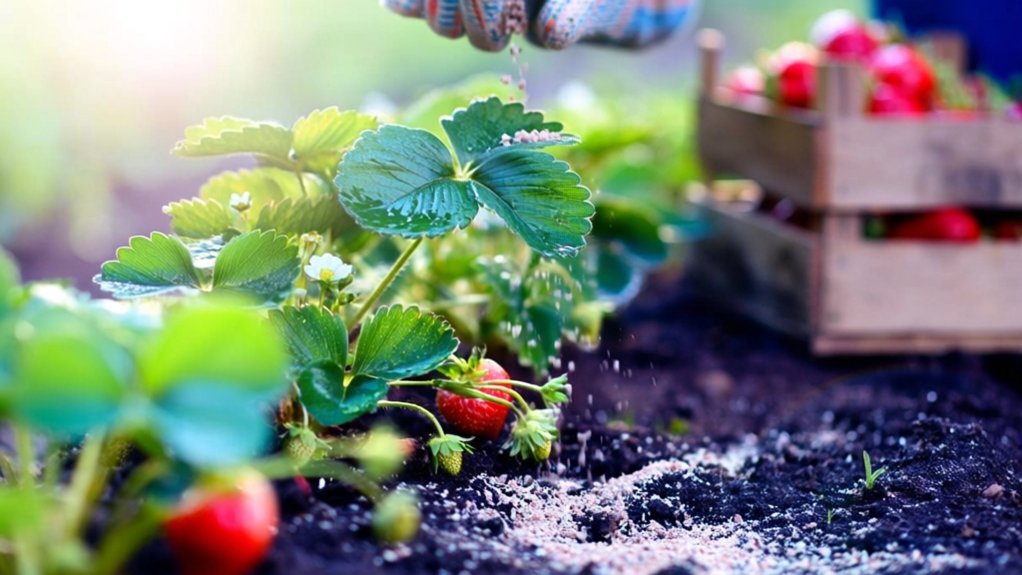
When to Fertilize Strawberry Plants
You should start fertilizing strawberry plants about two weeks before planting using a balanced fertilizer. For June-bearing varieties, apply fertilizer once after harvest in late summer to boost recovery and encourage bud growth.
Day-neutral strawberries need feeding every six weeks once fruiting begins. Avoid fertilizing June-bearers in spring to prevent soft berries and disease.
Potted strawberries require more frequent feeding, about every two weeks. Watch for signs of nutrient needs to keep plants healthy.
Keep exploring to discover tailored tips for your strawberries’ success.
Using Soil Tests to Plan Fertilizer Timing and Type
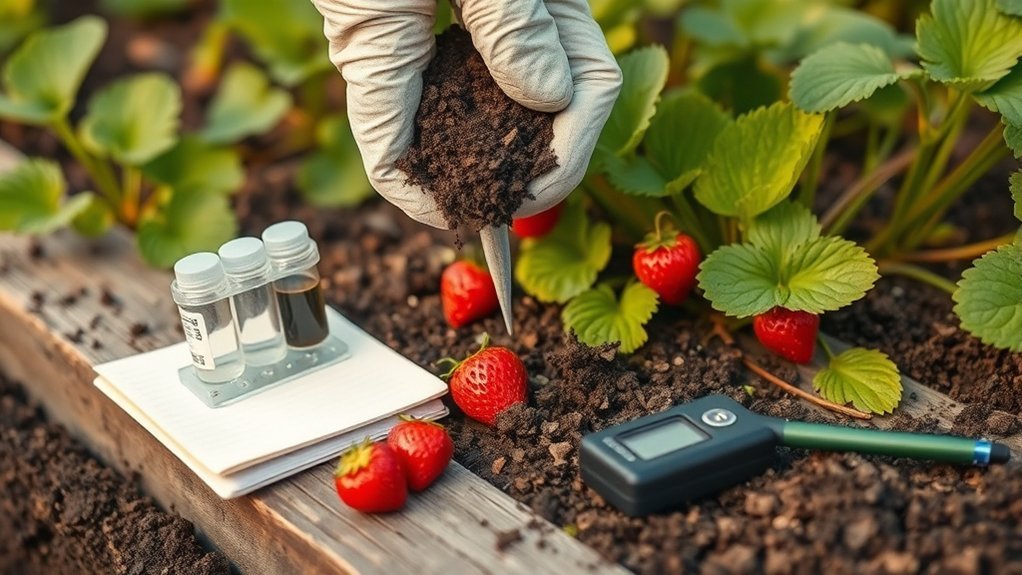
A soil test is your best tool for planning when and how to fertilize strawberry plants. By checking nutrient levels and pH, you can tailor your approach to meet your plants’ exact needs. Aim for a pH between 5.3 and 6.5 to guarantee peak growth.
After getting your soil test results, choose fertilizers that address any deficiencies. Balanced options like 10-10-10 work well, or you might opt for organic choices such as blood meal.
Select fertilizers based on soil test results—balanced mixes or organic options like blood meal ensure optimal strawberry growth.
Regular soil testing every few years helps you track nutrient depletion or salt buildup, keeping your soil healthy throughout the growing season.
Using these insights lets you fertilize strawberries effectively, improving their health and yield without wasting resources or risking damage.
When to Start Fertilizing Strawberry Plants
You should start fertilizing strawberry plants before planting by mixing a balanced, slow-release fertilizer into the topsoil about two weeks ahead. This gives the soil a nice nutrient boost right from the start.
For first-year plants, the timing depends on the type of strawberry you’re growing. June-bearing varieties get their first feeding in late summer.
On the other hand, day-neutral types usually begin after the second flower set in mid-summer.
Getting this timing right really helps your plants establish strong roots and supports healthy growth throughout the season.
Pre-Planting Soil Preparation
Since soil quality directly affects strawberry growth, you should start preparing your soil well before planting.
Begin by performing a soil test 6 to 12 months in advance to check nutrient levels and pH, aiming for a range between 5.3 and 6.5.
To amend your soil, add organic matter like compost or aged manure, which boosts fertility and moisture retention.
About two weeks before planting, incorporate 20 pounds of a balanced fertilizer, such as 5-10-10, per 1,000 square feet to supply essential nutrients.
After amending, re-test the soil to confirm ideal conditions for your strawberries.
This careful preparation guarantees your soil is nutrient-rich and well-balanced, setting the stage for healthy plant growth when you finally start planting.
First-Year Fertilization Timing
Preparing nutrient-rich soil sets the foundation, but knowing when to start fertilizing your strawberry plants in their first year makes a big difference in their growth.
For first-year fertilization timing, begin fertilizer application two weeks before planting by mixing balanced fertilizers into the soil.
For June-bearing strawberries, avoid fertilizing in spring to prevent soft berries. Instead, apply a balanced slow-release fertilizer like 10-10-10 in mid to late summer after the first harvest.
Then, fertilize again in late summer post-harvest to promote healthy bud development for next year.
With day-neutral strawberries, start fertilizing after the second flower set appears, typically mid-summer, using the same balanced fertilizer.
When to Fertilize June-Bearing Strawberries
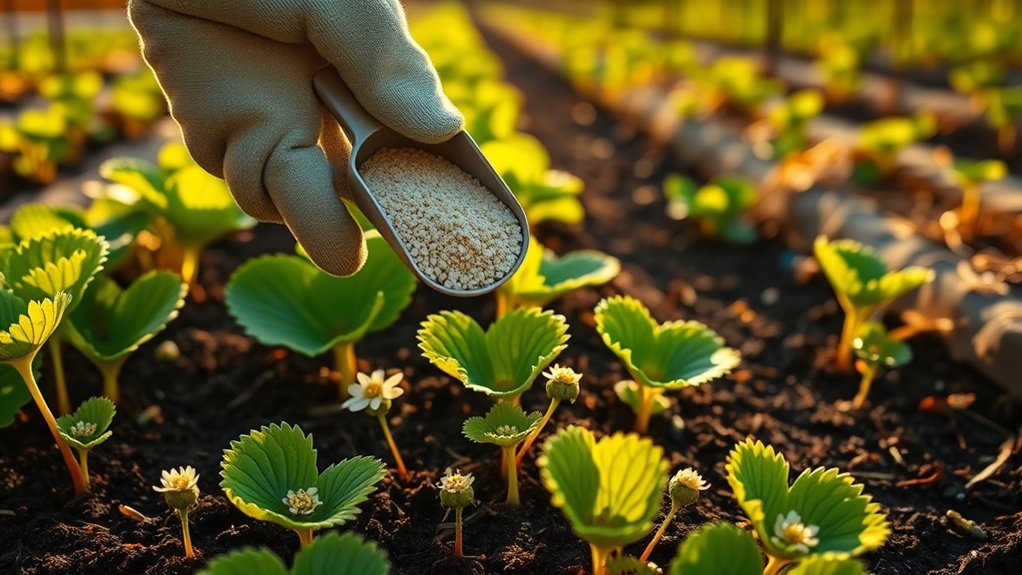
Fertilizing June-bearing strawberries once a year in late summer, preferably August, sets the stage for healthy bud production next season.
Fertilize June-bearing strawberries in late summer, ideally August, to ensure robust bud development for next year.
You should avoid fertilizing in spring since it can cause soft berries and increase disease risks.
After planting in spring, remove all flowers during the first year to help roots establish before your first fertilization.
Post-harvest, applying a nitrogen fertilizer like 10-10-10 around mid to late July during renovation supports plant recovery and encourages bud formation.
Use about 5 to 10 pounds per 1,000 square feet for best results.
Knowing when to fertilize June-bearing strawberries guarantees strong plants and a bountiful crop the following year.
Stick to late summer for fertilizing to promote healthy bud production effectively.
Fertilizing Day-Neutral and Everbearing Strawberries
While June-bearing strawberries benefit from a late summer fertilization, day-neutral and everbearing varieties need a different approach to support their extended fruiting periods.
For day-neutral strawberries, start fertilization after the second flush of flowers appears, usually mid-summer.
Apply a balanced fertilizer, like 10-10-10 or organic blood meal, every six weeks until the season ends to maintain steady fruit production.
Everbearing strawberries require fertilization after the initial June harvest, with additional applications in mid-June, mid-July, and late August.
This schedule helps sustain fruit production throughout the growing season.
Be sure to avoid fertilizing after August 31 to prevent vulnerable new growth.
Regularly monitor your plants and adjust fertilization based on their health to maximize yields for both day-neutral strawberries and everbearing strawberries.
When to Avoid Fertilizing Strawberries in Spring
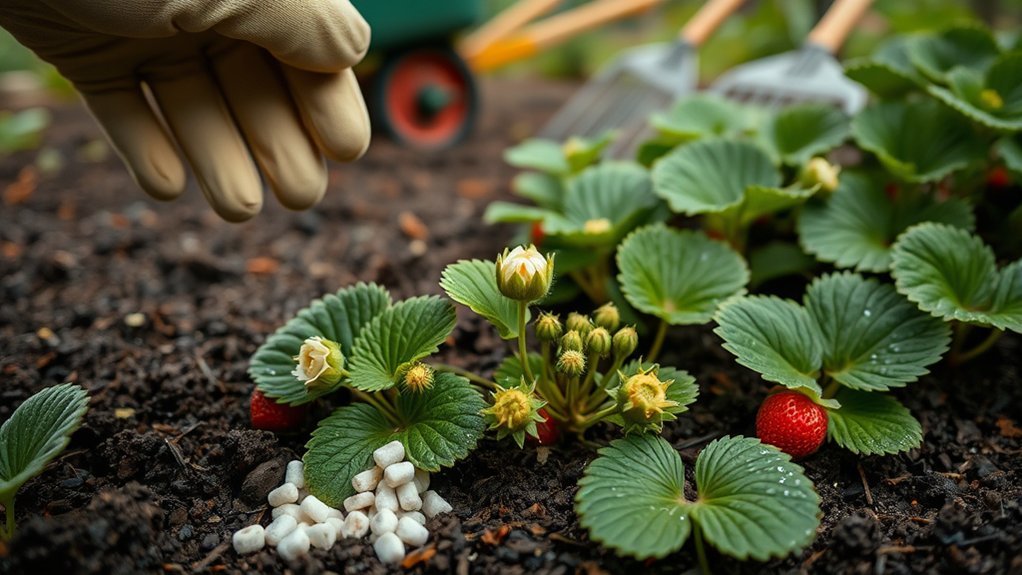
You should avoid fertilizing June-bearing strawberries in spring because too much nitrogen can make the berries soft and more likely to rot.
Plus, if you apply fertilizer too early, it encourages the plants to grow too much, which cuts down on air circulation and can lead to disease.
Risks Of Spring Fertilizing
If you apply fertilizer to your strawberry plants in spring, you could end up with soft, mushy fruit and an increased risk of brown rot.
For June-bearing strawberries, spring fertilization often isn’t necessary since established beds draw on stored nutrients from the previous year.
Excess nitrogen during this period can actually harm fruit quality by encouraging excessive foliage growth. This reduces air circulation and raises disease risks.
You might also see fewer berries because the plant diverts energy away from fruit production.
To avoid these problems, remember:
- Avoid adding nitrogen fertilizer in spring for June-bearing strawberries
- Excess nitrogen weakens fruit quality and plant health
- Overgrowth from fertilization can increase brown rot vulnerability
- Delay fertilization until after the final summer harvest for best results
Impact On Berry Quality
Applying fertilizer to strawberry plants in spring can greatly affect berry quality, especially for June-bearing varieties.
If you fertilize established beds too early, the excess nitrogen can cause berries to become soft and mushy. This not only reduces berry quality but also makes them more prone to brown rot.
Nitrogen encourages lush foliage growth at the expense of root development, which limits air circulation and increases disease risk.
To maintain peak berry quality, avoid fertilizing June-bearing strawberries in spring.
Instead, focus on applying nutrients after the final harvest, typically in late June or July.
This timing supports better berry development and guarantees your established beds store enough nutrients from the previous year, promoting healthier plants and superior fruit in the next season.
Timing Fertilization After Harvest for June-Bearing Strawberries
Although June-bearing strawberries finish fruiting in early summer, fertilizing them right after the final harvest in late June or July is crucial. This timing supports plant recovery and encourages bud formation for the next season.
Applying fertilizer after harvest guarantees the plants efficiently use nutrients during fall, promoting strong growth.
You should consider these points for best results:
- Use nitrogen-rich fertilizer to aid plant recovery and bud set.
- Avoid spring fertilization to prevent soft berries and poor fruit quality.
- Monitor soil and plant health for tailored nutrient utilization.
- Apply a second fertilizer dose during August renovation if needed.
How Often Should You Fertilize Strawberry Plants?
Knowing how often to fertilize your strawberry plants depends largely on the type you’re growing. June-bearing strawberries only need fertilization once a year in late summer or early autumn, while day-neutral types require feeding every six weeks after their second flower set until September. For potted plants, apply liquid fertilizers every two weeks due to limited soil nutrients.
| Strawberry Type | Fertilization Frequency |
|---|---|
| June-bearing | Once annually (late summer/autumn) |
| Day-neutral | Every 6 weeks (after 2nd flower) |
| Potted plants | Biweekly with liquid fertilizers |
Start with a balanced fertilizer before planting, then adjust based on your strawberry variety to fertilize strawberry plants effectively.
Best Fertilizer Types for Strawberry Growth Stages
When you prepare your soil before planting, choose a balanced slow-release fertilizer like 10-10-10 or 12-12-12 and mix it into the top six inches.
Selecting the best fertilizer types depends on your strawberry variety and growth stage.
For June-bearing strawberries, apply a single fertilizer dose after the final harvest to boost root growth.
Day-neutral strawberries need balanced fertilizer applications every six weeks after the second flower set until September.
Use granular fertilizers in garden beds for steady nutrient release, while container plants benefit from biweekly liquid feeds.
Remember these key points:
- Use balanced fertilizer like 10-10-10 for all growth stages
- Fertilize June-bearing strawberries post-harvest for root health
- Feed day-neutral strawberries regularly during fruiting
- Apply granular fertilizers around plants in soil beds for efficiency
Fertilizing Strawberries in Garden Beds
To guarantee healthy growth in your garden bed strawberries, apply about 8 ounces of granular fertilizer per 20-foot row, following the product’s instructions carefully.
Start by mixing a balanced slow-release fertilizer into the top 6 inches of soil before planting.
Knowing when to fertilize depends on your strawberry variety: June-bearing plants need fertilizing once annually in late summer to early autumn, while day-neutral types require feeding every six weeks after their second flower set.
Always water thoroughly after applying granular fertilizer and avoid letting it touch the plant stems to prevent damage.
Regularly test your soil with a pH between 5.3 and 6.5 to guarantee ideal nutrient uptake.
Using the right fertilizers for strawberries and timing your applications properly will boost your garden bed’s productivity effectively.
Fertilizing Strawberries in Pots: What You Need to Know
Because container-grown strawberry plants have limited soil nutrients, you’ll need to fertilize them every two weeks to keep them healthy and productive.
Fertilizing strawberries in pots requires a bit more attention than garden beds due to restricted root space and nutrient availability.
Use liquid fertilizers for easier application and better nutrient absorption. Always water your plants before feeding to avoid root burn.
Keep these tips in mind:
- Apply fertilizers in the morning to maximize uptake and minimize leaf burn
- Avoid overhead spraying during peak sun hours
- Replace potting mix and plants annually to maintain nutrient levels and reduce disease risk
- Choose a well-draining potting mix to support healthy roots and nutrient retention
Following these practices guarantees your container-grown strawberries thrive and produce delicious fruit.
Avoiding Over-Fertilizing Your Strawberries
Although feeding your strawberry plants regularly is important, over-fertilizing can cause more harm than good.
Over-fertilizing, especially with nitrogen, can lead to soft, mushy berries and make your plants more vulnerable to diseases like brown rot.
If you grow June-bearing strawberries, avoid fertilizing in spring. Instead, apply fertilizer in late summer after the final harvest to support root growth without encouraging excessive leaf development.
Excess nitrogen early on can inhibit root growth and cause overcrowding. This reduces air circulation and increases disease risk.
Also, be cautious with late-season fertilization. Applying fertilizer too late can promote new growth that’s susceptible to frost damage.
Signs Your Strawberry Plants Need Fertilizer
Keeping an eye on your strawberry plants’ condition helps you know when they need fertilizer. You’ll notice certain signs that indicate a nutrient deficiency or imbalance. Regularly performing a soil test can confirm if nitrogen levels are low or if the soil pH drifts outside the ideal 5.3 to 6.5 range.
Watch for these key indicators:
- Yellowing leaves and stunted growth suggest a lack of essential nutrients.
- Poor fruit production, such as fewer flowers or smaller berries, signals a need for a balanced fertilizer.
- Excessive leaf growth without fruit development may mean too much nitrogen.
- Disease or pest problems can arise from inadequate nutrients, showing it’s time to feed your plants.
Responding quickly guarantees healthy, fruitful strawberries all season long.
Frequently Asked Questions
Can Organic Fertilizers Be Used Instead of Synthetic Ones for Strawberries?
Yes, you can definitely use organic fertilizers instead of synthetic ones for strawberries.
Organic fertilizer benefits include providing natural nutrient sources that promote soil health improvement and support beneficial microbes.
Regular compost applications enrich the soil, enhancing its structure and moisture retention.
By choosing organic options, you adopt eco friendly practices that reduce chemical residues and create a sustainable growing environment.
Just keep an eye on nutrient balance to get the best results.
How Does Watering Affect Strawberry Plant Fertilization?
Watering directly impacts strawberry plant fertilization by improving nutrient absorption and supporting plant growth.
You should water thoroughly before fertilizing to enhance water retention and prevent root burn.
Proper soil drainage is key. Too much water can wash away nutrients, reducing effectiveness.
Maintain consistent watering frequency, aiming for about an inch weekly, so the nutrients stay available and your strawberries thrive.
Are There Specific Fertilizers for Disease-Resistant Strawberry Varieties?
Did you know that properly balanced fertilizers can boost strawberry yields by up to 20%?
When choosing disease resistant fertilizers, focus on balanced nutrient requirements like 10-10-10 formulations.
Incorporate organic soil amendments such as compost to improve soil health.
Use targeted fertilizer application methods to avoid overfeeding foliage, which can invite disease.
Can Fertilizer Timing Impact Strawberry Plant Pest Resistance?
Yes, fertilizer application timing can greatly impact your strawberry plant’s pest resistance.
Applying fertilizer at the right growth stages guarantees ideal nutrient absorption, boosting plant health.
Healthy plants develop stronger defenses, making pest management easier. For instance, fertilizing after harvest rather than in early spring prevents excess nitrogen, which can attract pests.
What Role Do Micronutrients Play in Strawberry Plant Fertilization?
Think of micronutrients as the tiny artists painting vibrant life into your strawberry plants. They play a crucial role in fertilization by preventing micronutrient deficiencies that stunt plant growth and dull fruit quality.
By enhancing soil health and boosting nutrient absorption, these elements guarantee your plants thrive.
Using targeted fertilization techniques, like soil amendments or foliar sprays, helps you maintain a balanced environment where strawberries can flourish beautifully.
Conclusion
By timing your strawberry fertilizing right, you can boost your harvest considerably. Did you know that properly fertilized strawberries can produce up to 40% more fruit?
Using soil tests helps you choose the best fertilizer and avoid overdoing it. Whether you grow them in garden beds or pots, starting at the right time and avoiding spring over-fertilizing will keep your plants healthy and productive.
Keep an eye on your plants’ signs, and your strawberry patch will thank you!