
When to Fertilize Strawberries for Best Results
You should fertilize your strawberries after harvesting if you grow June-bearing types, typically in late summer. This encourages healthy buds for next year.
For day-neutral varieties, fertilize in early spring and every six weeks through September. Just be sure to stop before the frost risk.
Newly planted beds need gentle feeding after establishment. If you grow strawberries in containers, weekly liquid feeding works best.
Proper timing boosts fruit quality and plant health. Knowing more will help you perfect your approach.
Why Fertilizer Timing Matters for Strawberries
Because the timing of fertilizer application directly affects strawberry health and fruit quality, you need to be careful about when you feed your plants.
For June-bearing strawberries, proper fertilizer timing means applying nutrients once a year in late summer to early autumn. This post-harvest fertilization is essential for healthy bud production and preparing the plants for the next season.
On the other hand, day-neutral varieties demand fertilization every six weeks until September to support continuous growth and fruiting.
Day-neutral strawberries need fertilizing every six weeks through September for ongoing growth and fruit production.
Applying fertilizer too early, like in spring, can cause softer berries and increase disease risks. Also, feeding too late exposes plants to frost damage.
Preparing Soil Before Fertilizing Strawberries
Timing your fertilizer applications plays a big role in strawberry health, but preparing the soil properly beforehand sets the foundation for successful feeding.
Start by conducting a soil test 6 months to a year before planting to assess nutrient levels and soil pH.
Strawberries thrive in a pH range between 5.3 and 6.5 for peak growth. Use the soil test results to amend the soil accordingly. Incorporate organic matter like well-rotted manure or peat moss to boost fertility and moisture retention.
If the pH is too low, apply ground limestone to adjust it.
About two weeks before planting, mix in a balanced fertilizer, such as 5-10-10, to provide essential nutrients.
Retesting after amendments verifies nutrient levels and pH are ideal for healthy strawberry plants.
When to Fertilize June-Bearing Strawberries
If you want your June-bearing strawberries to thrive, fertilize them once in mid to late summer, ideally in August. This timing supports healthy root establishment and bud production for the next season.
Avoid fertilizing in spring, as it can lead to large, soft berries that are more susceptible to disease. In the first year, remove all flowers so the plants focus on root growth before fertilizing.
After harvesting, cut back leaves and thin plants, then apply 10-20 lbs. of 10-10-10 fertilizer per 1000 sq. ft.
To maintain nutrient availability, fertilize again in late summer with 5 lbs. per 1000 sq. ft.
This careful schedule guarantees your June-bearing strawberries develop strong roots and produce quality fruit next year.
When to Fertilize Day-Neutral Strawberries
You’ll want to fertilize day-neutral strawberries right after the second flush of flowers appears in their first year to give the fruit a good boost.
Just keep an eye on how your plants are doing, and if they seem to need it, go ahead and use balanced fertilizers or supplements.
Then, in the seasons that follow, make sure to fertilize in early spring and once more when the fruit starts developing.
This will help keep your yields nice and strong.
Fertilization Timing Guide
Although day-neutral strawberries bloom throughout the growing season, you should start fertilizing them after the second round of flowers appears in their first year to boost growth and fruit production.
Begin fertilizer application in late spring, once early spring blooms have passed, using a balanced fertilizer like 10-10-10 or organic bloodmeal. This timing guarantees your strawberries receive a steady nutrient supply critical for healthy growth.
Continue to fertilize every six weeks until September to maintain consistent nutrient levels. Keep an eye on your plants. If flowering becomes spotty, adding bonemeal can support root development.
Avoid fertilizing late in the season, as this can make your strawberries vulnerable to frost damage when temperatures drop in fall. Following this fertilization timing guide will help you get the best results from your day-neutral strawberries.
Nutrient Needs and Frequency
Since day-neutral strawberries bloom continuously, you should start fertilizing them after their second flush of flowers in the first year to promote strong growth and fruit production.
Use a balanced fertilizer like 10-10-10 or organic options such as bloodmeal if your plants look weak.
Early spring fertilization is crucial to kickstart the growing season, followed by applications every six weeks until September to keep nutrients consistent.
To further support plant health, you can add foliar sprays or compost tea bi-weekly during the season.
Remember to fertilize strawberry plants again when fruit begins to develop in subsequent years.
How to Fertilize Newly Planted Strawberry Beds
Two weeks before planting your strawberries, enrich the beds with about 20 pounds of compost or a balanced 10-10-10 fertilizer per 1,000 square feet.
Make certain to test the soil with a pH between 5.3 and 6.5, as this range is ideal for plant strawberries to thrive.
For newly planted beds, avoid adding fertilizer immediately after planting to prevent root burn and soft berries, especially with June-bearing varieties.
Instead, water thoroughly before applying any fertilizers for strawberries and focus on mid to late summer fertilization.
Day-neutral strawberries benefit from a slow-release fertilizer in early spring and after the second flower flush.
Proper timing and careful adding fertilizer practices will guarantee your plants develop strong roots and produce a maximum crop.
How to Fertilize Established Strawberry Beds After Harvest
After you finish harvesting June-bearing strawberries, it’s important to cut back the leaves and thin the plants. This helps encourage healthy growth for the next season.
In mid to late summer, apply 10-20 lbs. of a balanced fertilizer for strawberry, such as 10-10-10, per 1000 sq. ft. This timing, typically in late August, supports bud development for the following year while boosting disease resistance.
After fertilizing, make certain your plants get at least 1 inch of water weekly to enhance nutrient absorption and promote vigorous growth.
Renovate your strawberry beds every other year to prevent overcrowding and maintain soil fertility.
Following this routine guarantees your established beds stay productive and healthy, setting the stage for a strong harvest next season.
Fertilizing Strawberries in Containers: Best Schedule
You’ll want to fertilize your container strawberries at least once a week with a high-potassium liquid fertilizer, especially once they start flowering.
It’s best to apply the fertilizer in the morning — this helps the plants absorb the nutrients more effectively and reduces the risk of leaf burn.
Just keep in mind that your feeding schedule and the type of fertilizer might need a little tweaking depending on the size of your container and how your plants are growing.
That way, you’ll get the best results possible!
Frequency Of Fertilization
Because container-grown strawberries have limited soil nutrients, you’ll need to fertilize them more frequently. Ideally, do this at least once a week.
Frequent fertilization guarantees your plants get consistent nutrients essential for fruit development and overall health during the growing season.
To achieve superior results, here’s what you should do:
- Use appropriate fertilizers tailored to container-grown strawberries.
- Begin feeding as soon as flowering starts to support fruit development.
- Monitor nutrient levels closely since nutrients deplete faster in containers.
- Adjust your fertilization schedule based on container size and plant growth stage.
Best Fertilizer Types
When fertilizing strawberries in containers, choosing the right fertilizer type is essential for maximizing fruit quality and plant health. Container-grown strawberries need frequent feeding with liquid fertilizers to maintain nutrient levels.
Start using a high-potassium fertilizer once flowers appear to boost fruit development. Organic options like seaweed or compost tea work well for steady growth and yield. Adjust fertilizer types based on container size and plant stage.
| Fertilizer Type | Application Frequency | Benefits |
|---|---|---|
| Liquid Fertilizers | Weekly | Quick nutrient absorption |
| High-Potassium | Flowering stage | Enhances fruit development |
| Organic Options | Weekly | Supports robust growth |
| Balanced Granular | Early growth | Maintains steady nutrient levels |
Timing And Application
Choosing the right fertilizer type sets the stage, but timing and application make all the difference for container-grown strawberries.
To fertilize strawberries effectively during the growing season, follow these steps:
- Fertilize container-grown strawberries at least once a week to maintain ideal nutrient levels in limited soil.
- Begin applying a high-potassium fertilizer once flowering starts to boost fruit development.
- Use liquid fertilizers during your regular morning watering to prevent leaf burn and guarantee even distribution.
- Adjust fertilizer types and amounts based on pot size and plant growth stage.
Consider organic fertilizers like seaweed or compost tea for sustained health.
Choosing the Best Fertilizer for Your Strawberries
Selecting the right fertilizer plays an essential role in helping your strawberries thrive and produce abundant fruit. Balanced fertilizers with an NPK ratio like 10-10-10 or 12-12-12 supply essential nutrients that support healthy growth.
You might also consider organic options such as blood meal, kelp meal, or alfalfa meal, which enrich your soil sustainably.
Before planting, enrich well-draining soil with compost to boost nutrient levels. Regular soil testing helps you understand your soil’s specific nutrient needs and maintain the ideal pH between 5.3 and 6.5, ensuring strawberry plants get exactly what they require.
How to Apply Fertilizer Without Damaging Strawberry Plants
Applying fertilizer correctly guarantees your strawberries absorb nutrients effectively without harming the plants. To protect your growing strawberries and encourage strong root growth, follow these steps:
- Always water plants before you apply fertilizer to prevent root burn and help nutrients soak in evenly.
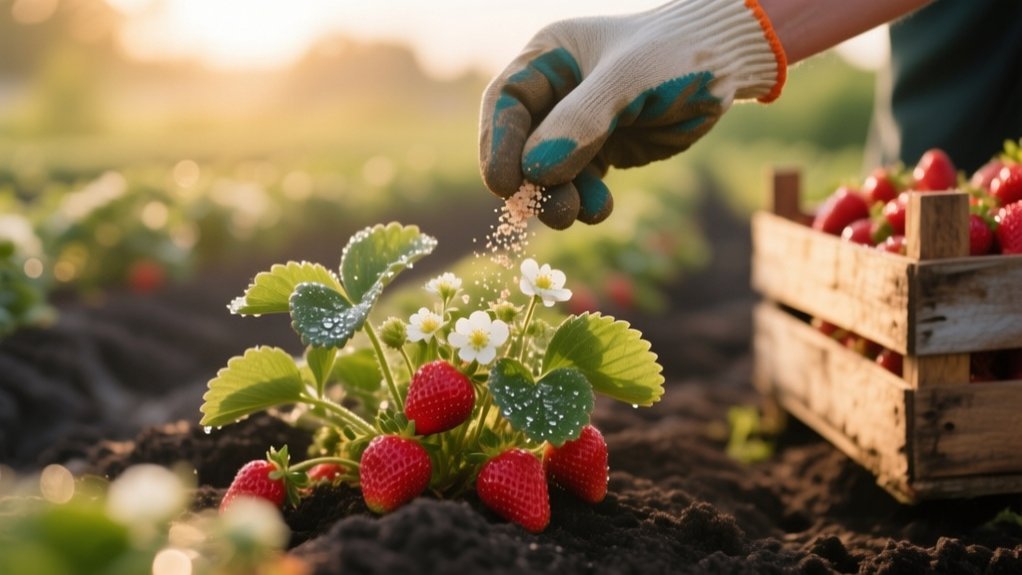
- For granular fertilizer, sprinkle it around the base and lightly rake it into the soil. Avoid direct contact with stems to prevent disease problems.
- If you use liquid fertilizer, apply it during regular watering to dilute the concentration and reduce leaf burn risk.
- Apply fertilizer early in the morning, not during the hottest part of the day, to avoid foliar damage. Also, brush off any granules from leaves promptly.
Signs Your Strawberries Need Fertilizer and How to Adjust Timing
If your strawberry plants show stunted growth, yellowing leaves, or poor fruit production, they’re signaling a nutrient deficiency that needs addressing. These signs that strawberries need fertilizer suggest it’s time to test your soil and adjust timing for fertilization.
Over-fertilizing can cause overly soft berries and encourage disease, so use the Best Fertilizer carefully.
| Sign | What It Indicates |
|---|---|
| Stunted growth | Lack of nitrogen |
| Yellowing leaves | Nutrient imbalance |
| Poor fruit production | Insufficient phosphorus |
| Weak vegetative growth | Low potassium |
| Overly soft berries | Excess fertilizer |
For June-bearing strawberries, fertilize late summer. Day-neutral types benefit from feeding every six weeks after the second flowering. Adjust timing based on your plants’ needs while growing strawberries.
Frequently Asked Questions
Can Organic Fertilizers Be Used Instead of Synthetic Ones for Strawberries?
Yes, you can definitely use organic fertilizers instead of synthetic ones for strawberries.
Organic fertilizer benefits include providing natural nutrient sources that stimulate plant growth while improving soil health.
By applying compost at the right time, you enhance microbial activity, which helps nutrient uptake.
These slow release options guarantee consistent feeding, avoiding nutrient spikes.
Using organic fertilizers supports long-term soil health and promotes robust, healthy strawberry plants throughout the season.
How Does Watering Affect Fertilizer Effectiveness on Strawberries?
Watering plays a key role in fertilizer effectiveness on strawberries by enhancing water absorption and maintaining soil moisture.
If you water properly before and after fertilizer application, you prevent nutrient leaching and help nutrients reach the roots.
Timing strategies and irrigation techniques guarantee consistent moisture, promoting root health and maximizing nutrient uptake.
Is Foliar Feeding Beneficial for Strawberry Plants?
Yes, foliar feeding benefits your strawberry plants by boosting nutrient absorption directly through the leaves, promoting leaf health and overall growth.
You’ll want to apply it during cooler parts of the day to maximize uptake and reduce evaporation.
This method can also enhance pest resistance and minimize environmental impact by using diluted solutions carefully.
When timed right, foliar feeding gives your strawberries a quick nutrient boost for healthier, more productive plants.
Can Over-Fertilizing Strawberries Cause Fruit Taste Issues?
You might find that a nutrient overload gently nudges your strawberries away from their ideal taste balance.
Over-fertilizing can disrupt the flavor profile by lowering sugar content and altering acidity levels, which leaves the fruit less vibrant.
If you want to maintain plant health and the best flavor, pay close attention to fertilizer timing and avoid excessive nitrogen.
This careful approach preserves the natural sweetness and crisp texture your strawberries deserve.
Should Fertilizer Types Vary Based on Soil pH for Strawberries?
Yes, you should vary fertilizer types based on soil pH to meet your strawberries’ nutrient requirements.
Start with pH testing to understand your soil’s needs, then choose appropriate soil amendments to support soil biology and plant health.
Matching fertilizer timing with these adjustments helps optimize yield.
Using the right fertilizers prevents nutrient imbalances, promotes strong roots, and guarantees your strawberries produce flavorful fruit consistently throughout the season.
Conclusion
Just like strawberries burst with flavor when the sun and rain meet at the perfect moment, your plants thrive when you time fertilizing just right. By preparing the soil, choosing the best fertilizer, and feeding your berries according to their type, you’ll see vibrant growth and juicy harvests.
So, as you care for your strawberries, remember: good timing and gentle care work hand in hand, like a sweet dance between earth and sky, to bring out the best in your garden.