
When Do Strawberries Flower Each Year?
You’ll see your strawberry plants start flowering between March and May each year, depending on your variety and climate zone. June-bearing types bloom earliest, usually by March, while everbearing and day-neutral varieties flower later and sometimes continuously.
Warmer zones see earlier blooms; cooler zones experience delays. Flowering kicks off as temperatures rise and daylight increases in spring. By understanding these factors, you’ll be better prepared to time your harvest and care for your plants throughout the season.
When Do Strawberries Typically Start Flowering Each Year?
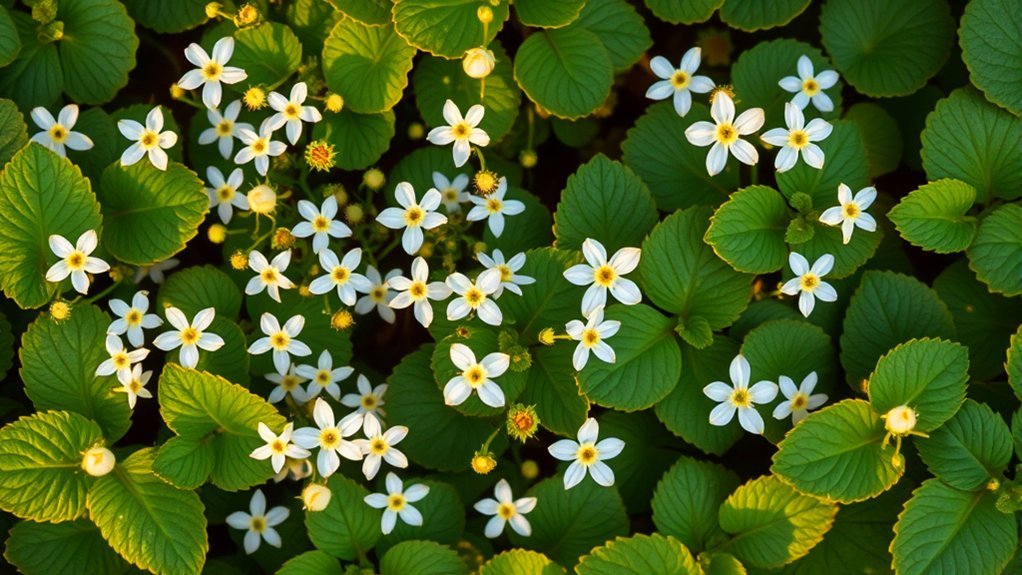
Although the exact timing depends on your local climate and strawberry variety, strawberries typically start flowering about 4 to 6 weeks after coming out of dormancy in spring.
When flowering begins, June-bearing strawberries usually bloom in March, leading to fruit production from late May to June.
Everbearing strawberries start flowering in late spring and again in early fall, giving you two harvest periods.
Day-neutral strawberries are unique because they flower continuously throughout the growing season, producing fruit from late spring until frost.
Your local climate conditions play a vital role in when these stages occur, so keep that in mind as you care for your strawberry plants.
Understanding these patterns helps you anticipate fruit production and enjoy a successful harvest each year.
What Makes Strawberry Plants Start Flowering in Spring?
You’ll notice your strawberry plants start flowering when temperatures rise and daylight hours get longer in spring.
That change tells the plants it’s time to switch gears—from growing leaves to producing flowers.
Plus, your plants need to be mature enough before they can pick up on these environmental signals and bloom.
Temperature And Light
When temperatures consistently reach around 60°F (15°C) and daylight extends beyond 10 hours, strawberry plants start flowering in spring. The temperature and light play significant roles in triggering the flowering process.
Adequate sunlight, at least 8 hours daily, ensures the development of healthy flower buds. These buds later turn into fruit.
June-bearing strawberries form their flower buds in late summer of the previous year, but they still need the right temperature and daylight to bloom properly in spring.
If temperature stays too low or daylight is insufficient, flowering delays, reducing your harvest’s overall yield.
Plant Maturity
Temperature and light set the stage for strawberry plants to flower, but the plants themselves must reach a certain maturity before blooming begins.
You’ll notice flowering usually starts about 3-4 weeks after vegetative growth kicks in. To get your strawberries ready, focus on these key points:
- Encourage strong root development by pinching off early flower buds during the first growing season.
- Verify your plants receive adequate sunlight, at least 8 hours daily, to promote healthy flower buds.
- Understand that June-bearing plants flower in late spring, while day-neutral varieties can bloom throughout the season.
- Recognize that plant maturity depends on well-established roots and leaves, which trigger flowering as temperatures rise.
How Your Climate Zone Affects When Strawberries Bloom?
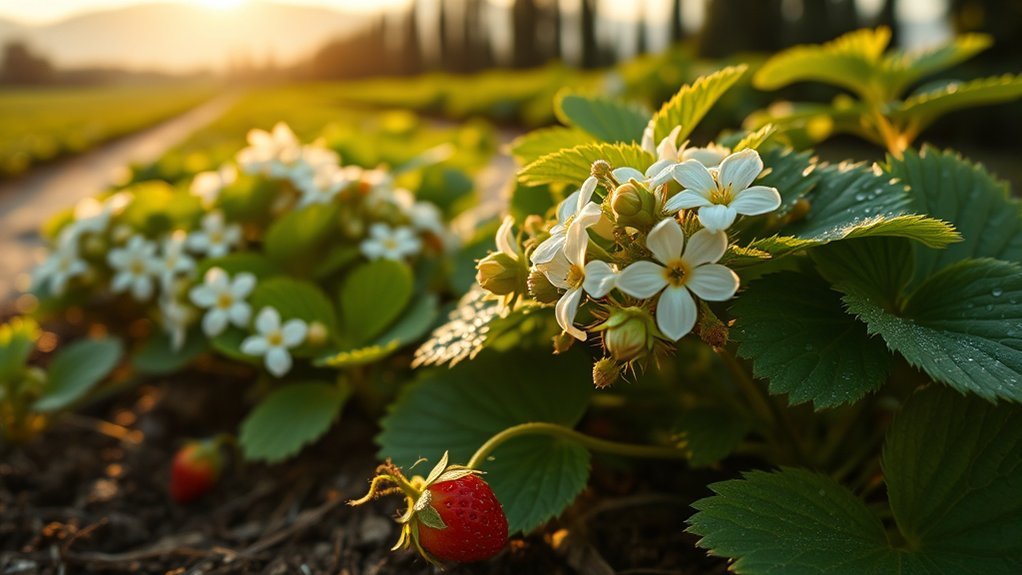
Since climate zones vary widely, your strawberries’ blooming schedule will depend largely on where you live. In warmer USDA zones like 9-10, flowering can start as early as late February or early March.
Cooler zones, such as 3-5, usually see blooms beginning in May.
Your strawberry type also affects the timing: June-bearing varieties flower in late spring and peak mid-June to early July, while everbearing and day-neutral strawberries bloom throughout the growing season.
Local weather conditions, including late frosts or warm spells, can shift this blooming cycle by delaying or advancing flowering.
Understanding your climate zone helps you anticipate when your strawberries will bloom and allows you to manage care accordingly for a successful harvest.
How Sunlight and Temperature Influence Strawberry Flowering?
Your local climate sets the stage, but sunlight and temperature directly signal your strawberries when to start flowering.
Flower buds form when daytime temperatures reach 60°F to 75°F, and your plants get at least 8 hours of direct sunlight daily.
How this plays out depends on the strawberry type:
- June-bearing varieties develop flower buds the previous late summer, needing cool winter dormancy before spring flowering.
- Day-neutral strawberries flower and fruit throughout most of the growing season, less affected by temperature shifts.
- Everbearing plants respond to moderate temperatures in spring and fall, producing flowers and fruit twice yearly.
- Sufficient sunlight guarantees strong flower bud development for all types, promoting healthy blooms and harvests.
How Do Strawberry Varieties Differ in Flowering Times?
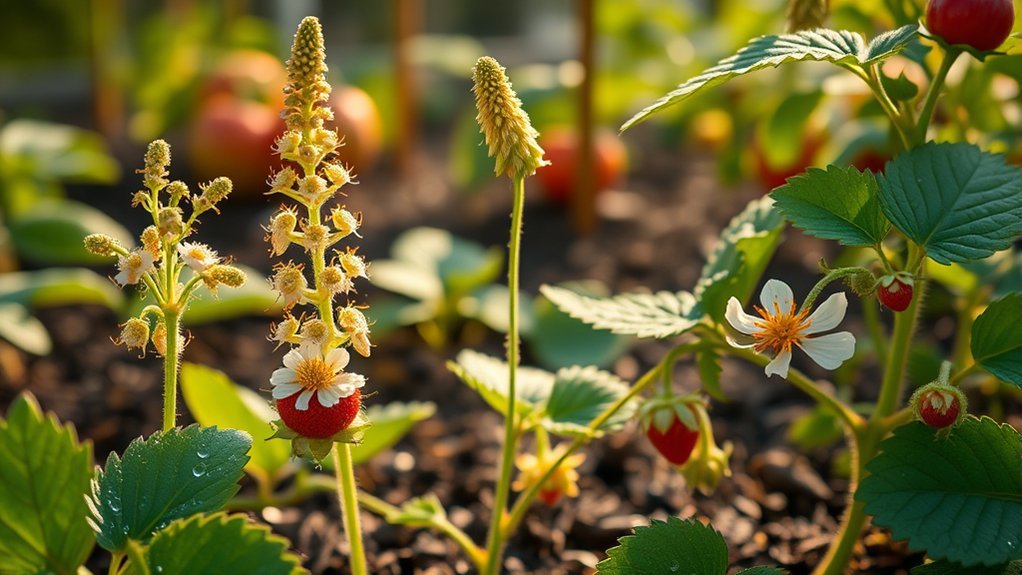
When exactly do different strawberry varieties start to flower?
June-bearing strawberries typically begin flowering in late spring. This leads to fruit production from mid-June to early July.
Everbearing varieties also start flowering in late spring but differ by producing two distinct harvests, one in summer and another in early fall.
Day-neutral strawberries stand out by flowering and producing fruit continuously throughout the growing season, from spring until the first frost.
Keep in mind, flowering times can shift based on local climate conditions. Warmer areas may see earlier blooms while cooler regions delay them.
Understanding these differences helps you plan for fruit production and harvest schedules, ensuring you get the most from your strawberry plants throughout the season.
How to Predict Strawberry Flowering in Your Garden?
To predict when your strawberries will flower, it helps to first get to know their growth stages and how long it usually takes before you see blooms.
Also, keep an eye on things like soil temperature and sunlight because these environmental factors really influence when the flowers start to appear.
If you watch your plants closely and notice changes in their development, you’ll be able to guess the best time for flowers and fruit to show up.
Understanding Growth Stages
Although strawberry plants start flowering several weeks after their vegetative growth phase, predicting the exact timing requires paying attention to factors like sunlight, soil conditions, and weather patterns.
Flowering usually begins 3-4 weeks after vegetative growth, which starts in early spring when temperatures are stable.
The timing depends on your strawberry variety. June-bearing types bloom in late spring, while ever-bearing ones flower intermittently.
To understand growth stages for better fruit production, consider these points:
- Vegetative growth kicks off in early spring with leaf and runner development.
- Sunlight is essential; aim for at least 8 hours daily to support flowering.
- Soil conditions matter: maintain slightly acidic, well-drained soil (pH 5.5–6.8).
- Frost can harm flower buds, impacting fruit production if not monitored.
Monitoring Environmental Conditions
Understanding the growth stages of your strawberry plants sets the foundation for monitoring environmental conditions that influence flowering. You’ll want to track soil temperature, which should be near 60°F (15°C) for ideal flowering.
Day length and air temperature also play key roles. Warmer temperatures and longer days encourage earlier blooms. Keep an eye out for pollinators during the flowering period, as they’re essential for fruit set.
| Environmental Factor | Ideal Range | Impact on Flowering |
|---|---|---|
| Soil Temperature | ~60°F (15°C) | Triggers flower bud growth |
| Day Length | Longer daylight | Promotes earlier flowering |
| Pollinators | Bees and insects | Guarantees successful fruit set |
Observing Plant Development
When you watch your strawberry plants closely during early spring, you’ll notice they start flowering about 3 to 4 weeks after the vegetative growth phase kicks in.
To predict flowering, observe these key signs:
- Check the vegetative growth stage; vigorous leaf growth signals upcoming flower buds.
- Monitor soil temperature, as strawberries need warming soils to trigger flowering.
- Look for developing flower buds, which appear before full bloom and indicate imminent fruit production.
- Consider environmental conditions like sunlight and temperature fluctuations, especially during summer, as they affect flowering timing and duration.
Best Soil Preparation for Strawberry Flowering
To prepare the best soil for strawberry flowering, start by ensuring your soil is loamy and slightly acidic, with a pH between 5.5 and 6.5. Conduct a soil test to check nutrient levels and identify any necessary amendments.
Amend the soil well in advance, at least six months before planting, by mixing in organic compost to boost fertility and improve drainage. Good drainage is essential since waterlogged soil can damage roots and reduce flowering.
Loamy soil enriched with organic matter creates an ideal environment for healthy root growth and nutrient uptake, which directly supports flowering.
Avoid compacted or poorly draining soil to give your strawberries the best chance at a robust flower set and abundant harvest.
How Watering Habits Impact Strawberry Flowering and Fruit Set?
You want to keep your strawberries happy by watering them consistently—about 1 to 1.5 inches each week does the trick. This helps them stay healthy and encourages plenty of flowers to bloom.
Now, when you water is just as important as how much. Giving them a good soak early in the day helps the soil stay moist longer and keeps pesky diseases at bay.
If you happen to skip watering or wait too long, your plants might start to wilt.
And when that happens, they won’t produce as many flowers or fruits, which is definitely something you want to avoid.
Watering Frequency Effects
Although strawberry plants thrive with consistent moisture, watering habits play an important role in their flowering and fruit production. Your watering frequency directly affects ideal flowering and fruit set. If watering is irregular, plants can become stressed, leading to fewer flowers and smaller fruit.
Consistent watering guarantees adequate hydration, supporting a strong root system and enhancing nutrient uptake vital for flower and fruit development. Avoid overwatering, which risks root rot and impairs growth.
To enhance your watering frequency:
- Provide 1 to 1.5 inches of water weekly, especially during dry spells.
- Water early in the day to maintain moisture levels.
- Avoid irregular watering to prevent plant stress.
- Monitor soil moisture to support root health and nutrient absorption.
Timing of Water Application
Anyone caring for strawberry plants knows that when you water can be just as important as how much you water. The timing of water application plays a vital role during the flowering stage, as adequate watering, about 1 inch weekly, supports flower development and fruit set.
Watering early in the day helps reduce moisture on leaves and flowers, lowering the risk of fungal diseases that can damage blooms. Consistent hydration encourages healthy root growth, improving nutrient uptake and boosting flower production.
Keep soil moisture steady, especially during flowering, to avoid disrupting pollination and fruit set. However, avoid overwatering or poor drainage, as they lead to root rot and stress, which reduce both flowers and yield.
Pruning Runners and Flowers to Boost Strawberry Flowering
When you pinch off flower buds during the first growing season, you help strawberries focus on building strong roots instead of producing fruit too early.
Pruning runners and managing flower buds play a key role in maximizing flowering and fruit production in strawberry plants. Here’s how to boost your strawberry flowering and yield:
- Remove runners regularly to redirect energy from vegetative growth to flowering and fruit production.
- Thin strawberry plants to 6-8 inches apart to improve air circulation and reduce nutrient competition.
- Pinch off flower buds in the first season to prioritize root development over early fruiting.
- Conduct pruning in early spring, just before flowering begins, to maximize yield during the growing season.
Following these steps helps you maintain healthy plants and increase flowering success.
Common Pests and Problems That Delay Strawberry Flowering
Since pests and environmental issues can directly affect your strawberries’ health, it’s important to recognize common problems that delay flowering. Common pests like strawberry bud weevils and tarnished plant bugs damage flower buds, reducing fruit production.
Aphids weaken strawberry plants by stressing them, which also delays flowering. Poor drainage encourages fungal diseases such as gray mold, hindering plant health and blooms. Regular monitoring helps catch these issues early, ensuring healthy plants and timely flowering.
| Problem | Effect on Flowering | Prevention Tip |
|---|---|---|
| Strawberry Bud Weevil | Damages flower buds | Regular monitoring |
| Tarnished Plant Bug | Causes bud drop | Inspect plants weekly |
| Aphids | Weakens plants | Use natural predators |
| Poor Drainage | Promotes fungal diseases | Improve soil drainage |
| Fungal Diseases | Hinders flowering & plant health | Avoid excess moisture |
How to Protect Strawberry Flowers From Frost and Pests?
Protecting your strawberry flowers from frost and pests is key to securing a good harvest after managing common pests and environmental challenges.
Since strawberry flowers bloom in late spring, they’re vulnerable to frost damage, which can reduce healthy fruit yield.
Here’s how you can guarantee effective protection:
Use straw mulch around your plants to insulate strawberry flowers during cold nights. It helps keep the soil warm and protects delicate blooms from frost.
Apply row covers or cloches to provide warmth while letting sunlight through. These covers create a mini greenhouse effect, shielding your flowers without blocking the light they need.
Monitor local weather forecasts closely to anticipate frost events and act promptly. Being prepared means you can cover your plants before the temperature drops too low.
Implement pest control by setting organic insect traps and regularly checking for pests like the strawberry bud weevil. Early detection and natural methods keep your plants healthy without harsh chemicals.
How to Time Strawberry Harvest by Flowering Dates
Timing your strawberry harvest starts with understanding the flowering dates of your plants.
June-bearing strawberries form flower buds in late summer the previous year and flower in mid-June to early July. So, you’ll expect to harvest ripe berries about 4-6 weeks after flowering.
Everbearing types flower in late spring and again in fall, giving you multiple harvests during the growing season.
Day-neutral varieties can flower and produce fruit continuously from May until frost, allowing a steady harvest of ripe berries.
By closely monitoring the flowering period, you can time your harvest precisely when the berries are fully red and ripe.
Knowing each variety’s flowering schedule helps you plan your harvest efficiently and enjoy the freshest strawberries throughout the season.
Frequently Asked Questions
Can Strawberries Flower More Than Once per Year?
Yes, strawberries can flower more than once per year, especially if you grow perennial strawberry varieties like everbearing or day-neutral types.
These plants have multiple flowering cycles, producing summer blooms and fruiting stages throughout the growing season.
You’ll want to focus on strawberry plant care, optimizing sunlight exposure, and understanding environmental effects to promote repeated flowering.
Also, meeting pollination requirements guarantees better fruit production across cycles.
Do Strawberry Flowers Have a Scent?
You might be surprised to learn that strawberry flowers have a low fragrance intensity, which means you won’t notice a strong scent.
Their flower anatomy prioritizes visual pollinator attraction over scent variation, relying on bees drawn to their white or light pink petals.
While growth conditions can slightly affect floral lifespan and scent, the fragrance rarely influences flavor or disease resistance.
How Long Does Strawberry Flowering Last?
Strawberry flowering duration usually lasts about 4 to 6 weeks, but seasonal variations and climate impact can affect it.
You’ll want to monitor soil conditions and maintain flower health to support the pollination process, which is essential for fruit development.
Keep your plants healthy with proper watering and care, and you’ll help guarantee a strong flowering phase that leads to a bountiful harvest despite changing weather.
What Colors Are Strawberry Flowers?
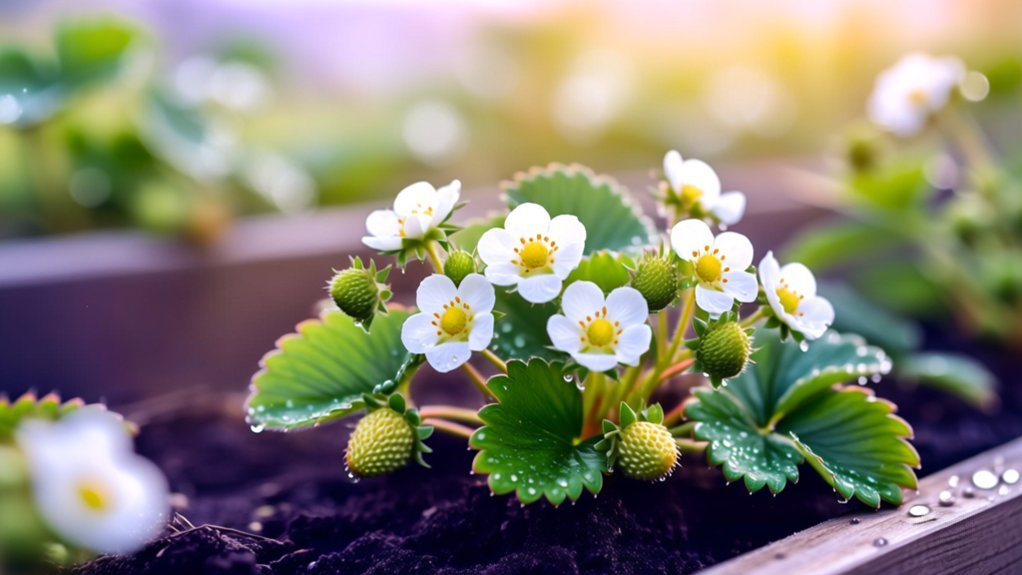
You’ll notice strawberry plant colors mostly show white or pale pink flowers, with five rounded petals.
These petal shape varieties attract pollinators like bees, enhancing flower pollination methods.
Flowering season differences affect color vibrancy, as flower growth conditions like temperature influence hues.
To boost pollinator attraction, use flower care techniques like watering and mulching.
Can Strawberries Flower Indoors or in Containers?
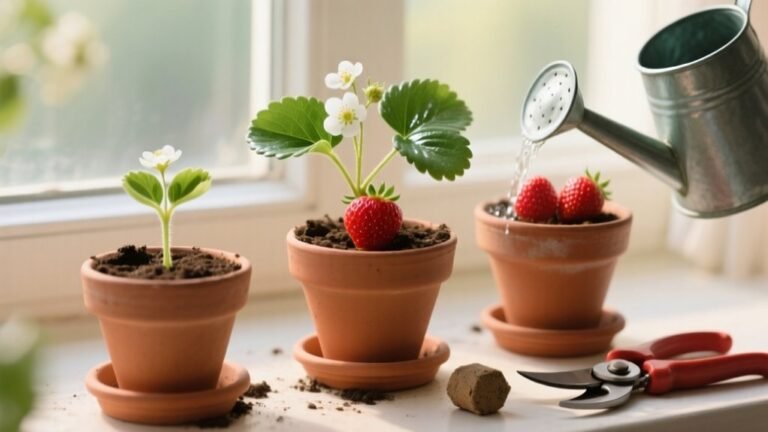
Yes, strawberries can flower indoors or in containers if you master indoor gardening basics.
To boost flower production, you’ll need to meet their sunlight requirements, about 8 hours daily, and use well-draining, nutrient-rich soil types.
Focus on strawberry care by watering consistently, about 1 to 1.5 inches weekly, and manage pollination methods like hand pollination since natural pollinators may be scarce indoors.
This approach guarantees healthy blooms and fruit.
Conclusion
You’ll see strawberries start flowering when temperatures rise, sunlight increases, and your climate feels just right. You’ll notice earlier blooms in warmer zones and later ones where frost lingers.
You’ll manage runners and pests, protect flowers from frost, and watch different varieties bloom on their own schedule. By understanding these patterns, you’ll time your harvest perfectly, nurture your plants carefully, and enjoy fresh, juicy strawberries year after year.