
How Do Strawberries Come Into Season?
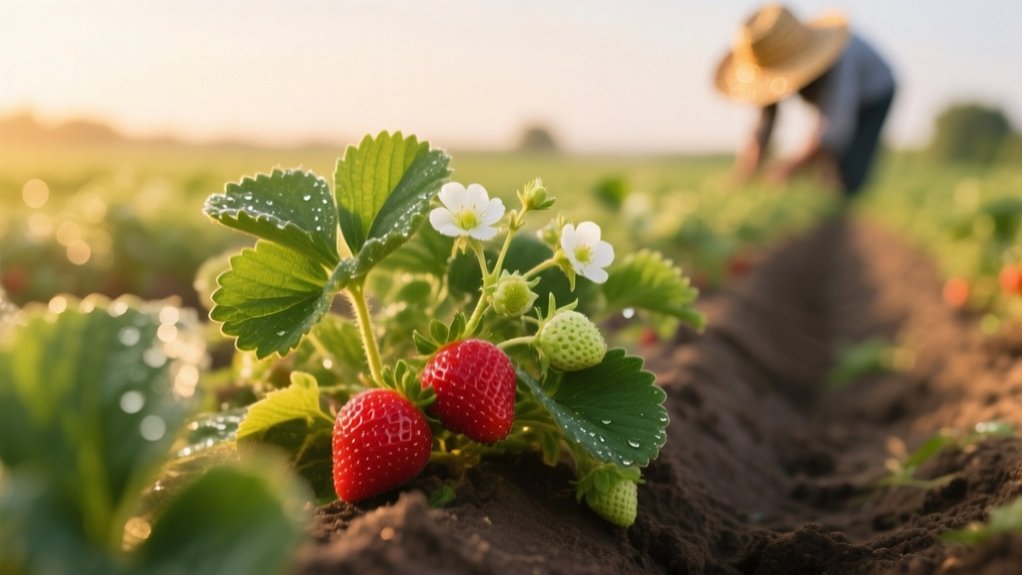
Strawberries come into season when the right climate, temperature, and moisture signal the fruit to ripen. Warmer areas see earlier harvests, while cooler areas experience them later. You’ll notice early berries in southern regions from late February and northern areas by May or June.
Different strawberry varieties, like June-bearing or everbearing, also influence timing. Weather conditions impact ripening speed, and local farms offer the freshest fruit picked at peak sweetness. Explore further to understand seasonal patterns and how to pick the best berries.
How Does Climate Affect Strawberry Season Timing?
Because climate directly influences when strawberries ripen, you’ll notice their season starts earlier in warmer areas and later in cooler ones.
Strawberry season begins sooner in warm climates and later in cooler regions due to climate’s impact on ripening.
In places like the Deep South, mild climate conditions can kick off strawberry season as early as late February.
Conversely, in northern regions such as Canada, the harvest season usually peaks around late June.
The USDA Plant Hardiness Zones help explain these differences, as each zone experiences varying temperatures that affect ripening times.
During harvest season, warm and sunny days speed up fruit development, while too much rain can slow it down.
Since local climate conditions vary yearly, the exact timing of strawberry season can fluctuate, so it’s important to keep an eye on your region’s weather patterns to know when strawberries will be ready.
What Are the Main Strawberry Varieties and Their Seasons?
You’ll find that June-bearing strawberries offer a sweet, concentrated harvest from mid-June to mid-July. They really shine during that short window.
On the other hand, day-neutral strawberries are a bit different—they produce fruit continuously from early July through October.
June-Bearing Strawberries
When June-bearing strawberries reach their peak, they deliver a concentrated harvest over 3 to 6 weeks, usually from mid-June to mid-July. You’ll want to pick them every 1 to 2 days to maintain peak quality and avoid overripeness.
These strawberries are sweeter compared to others, making them a favorite for fresh eating and desserts. Typically grown in regions with defined growing seasons, they yield 8,000 to 12,000 pounds per acre under healthy conditions.
| Characteristic | Detail | Benefit |
|---|---|---|
| Harvesting Frequency | Every 1-2 days | Guarantees peak quality |
| Season | Mid-June to Mid-July | Concentrated, predictable |
| Taste | Sweeter than everbearing types | Ideal for fresh consumption |
Day-Neutral Strawberries
While June-bearing strawberries offer a sweet, concentrated harvest in early summer, day-neutral strawberries keep the fruit coming from early July through October. You’ll find day-neutral strawberries thrive especially well in cooler Southern states, USDA Zones 6 to 8, extending the harvest season considerably.
Unlike June-bearers, these plants don’t limit you to a brief picking window. They produce fruit continuously, so you can enjoy fresh berries for months. Their yield potential is impressive too, ranging between 10,000 to 20,000 pounds per acre, surpassing the typical June-bearing output.
To make the most of your day-neutral strawberries, you’ll want to harvest every 1-3 days. This frequent picking maximizes both marketable yield and fruit quality, ensuring a steady supply of delicious strawberries throughout the growing season.
How Do Weather Conditions Influence Strawberry Ripening?
You’ll notice that temperature plays a huge role in how quickly strawberries ripen.
Warm days tend to speed things up, while cool or wet weather slows them down.
Moisture levels also have an impact—they affect both the fruit’s growth and its quality.
Since weather can vary quite a bit from season to season, it’s important to stay alert to these changes.
That way, you’ll know the best time to harvest your strawberries.
Temperature Effects On Ripening
Although strawberries can grow in various climates, you’ll notice that temperature greatly influences how quickly they ripen. When daytime temperatures stay between 70°F and 80°F, ripening occurs steadily, allowing the fruit to develop its best flavor.
Cooler nights help enhance this flavor, so the contrast in weather conditions benefits the strawberries. If the temperature swings too much, like sudden cold snaps or heatwaves, you’ll see delayed or uneven ripening, which affects the harvest quality.
Consistent weather conditions for about a week are essential for uniform ripening across your crop.
Keep in mind, while temperature mainly drives ripening speed, it works hand in hand with other weather elements to guarantee your strawberries reach peak sweetness and texture.
Impact Of Moisture Levels
Temperature plays a key role in how strawberries ripen, but moisture levels also have a major impact. When you manage moisture levels well, strawberries grow healthily and develop flavorful fruit.
However, too much moisture can cause fungal diseases, reducing quality and yield during the harvest season. On the other hand, dry conditions speed up ripening, making strawberries ready for picking sooner.
Since strawberries need specific soil moisture to thrive, any imbalance can shift the timing of the harvest season.
Keep these in mind about moisture levels and strawberries:
- Adequate moisture supports healthy plant growth
- Excess moisture increases disease risks
- Dry weather accelerates ripening
- Soil moisture affects harvest timing
- Monitoring local moisture helps predict the harvest season
Seasonal Weather Variability
When weather conditions shift, they directly affect how quickly strawberries ripen. Warm days speed up ripening, pushing the season earlier, while rain or cool temperatures slow it down, delaying the harvest.
Depending on your local climate, you might see strawberries ready as early as late February or as late as June. The first red berries mark the season’s start, but that timing varies yearly.
Knowing your area’s weather helps you catch the best harvest window, ensuring great quantity and quality.
| Weather Condition | Effect on Ripening |
|---|---|
| Warm, sunny | Accelerates ripening |
| Cool temperatures | Delays ripening |
| Rain | Slows ripening, risks quality |
| Early warmth | Early season start |
| Late frost | Delays season, reduces yield |
When Does Strawberry Picking Season Start and End?
Since strawberry picking season depends heavily on your location, you’ll find that it starts as early as late February in the Deep South and stretches into late June in northern areas like Canada.
The first fruit to ripen signals the start of this season, but the exact timing can vary each year due to weather.
The season begins when the first berries ripen, though timing shifts yearly with the weather.
The peak harvest season usually lasts about three weeks, offering the best picking experience.
To make the most of your visit, keep these points in mind:
- Strawberry picking season varies by region and climate
- Peak harvest season typically falls between late April and June
- Early berries turning red indicate season start
- Local weather impacts harvest timing and length
- Contact farms directly for the most accurate picking dates
This helps you catch the freshest berries at their prime.
How Do Regional Differences Impact Strawberry Harvests?
Although strawberry harvests occur nationwide, regional differences greatly shape when and how berries reach their peak. You’ll notice that strawberry harvest seasons vary widely, from Florida’s early start in late February to Canada’s late June peak.
This variation stems largely from regional climate differences, which influence when strawberries reach peak ripeness. In the Deep South, berries are prime in late April and May, while the Midwest enjoys harvests in May and June.
Cooler Mid-Atlantic and mountainous areas may not see ripe strawberries until June. These timing shifts correspond to USDA Plant Hardiness Zones, which reflect local climate conditions.
Plus, weather factors like temperature and moisture further affect the length and timing of the strawberry season where you live, making regional climate a key player in harvest schedules.
Why Is the Peak Strawberry Season So Short?
Because strawberries respond quickly to changes in temperature and moisture, their peak season lasts only about three weeks. You’ll notice how weather conditions directly affect the timing and length of this intense harvest period.
Strawberries’ peak season is brief, lasting about three weeks, as they quickly react to temperature and moisture changes.
Warm days speed up ripening, while rain or cooler weather can delay it, making the peak season both predictable and fleeting.
Here’s why the peak strawberry season is so short:
- Rapid response to temperature and moisture shifts
- Warm weather accelerates berry ripening
- Cool or rainy weather slows down growth
- Regional timing differences, like late April in the Deep South
- Short window from first ripe berry to end of harvest
Understanding these factors helps you catch strawberries at their freshest during that brief peak season.
How Do Everbearing Strawberries Extend the Season?
You’ll find that everbearing strawberries produce fruit continuously from early summer to fall, giving you a longer harvest than June-bearing types.
They thrive best in cooler Southern states, especially USDA Zones 6 to 8, where multiple crops are possible.
Everbearing Strawberry Characteristics
Everbearing strawberries give you two chances to pick fruit each year, once in summer and again in fall, extending the harvest season beyond the typical June-bearing varieties.
These plants thrive in cooler Southern states and produce fresh strawberries from early July through October. While they mightn’t be as sweet as June-bearers, their continuous fruiting makes them a favorite for gardeners wanting a longer harvest season.
Key characteristics of everbearing strawberries include:
- Two main harvests: summer and fall
- Continuous fruit production in ideal zones
- Slightly less sweet than June-bearing types
- Require full sun and well-drained, organic-rich soil
- Popular for home gardeners seeking fresh strawberries over an extended period
Growing Conditions and Zones
To get the most out of everbearing strawberries, understanding where and how they grow best is key. These berries thrive in cooler Southern states, especially within USDA Zones 6 to 8, where the growing conditions allow them to fruit from early July until frost.
Unlike June-bearing varieties, which produce mainly in late spring to early summer, everbearers extend your harvest season by offering continuous fruiting through summer and fall.
However, if you’re in hotter regions, like USDA Zones 8 to 11, temperature stress might limit their performance.
To maximize production and flavor, make sure your everbearing strawberries get full sunlight and grow in well-drained soil.
Season Extension Benefits
Although June-bearing strawberries offer a brief harvest window from mid-June to mid-July, everbearing varieties keep your garden productive well into fall.
Everbearing strawberries provide excellent season extension by producing fruit twice a year, once in summer and again in fall. This stretches your harvest season from early July until the first frost.
These plants thrive in cooler Southern climates (USDA Zones 6 to 8), making them ideal for prolonged fruiting.
However, they may struggle in hotter zones, which limits their season extension benefits there.
By choosing everbearing strawberries, you maximize your garden’s yield and enjoy fresh berries longer.
- Extends harvest season beyond typical June-bearing period
- Produces fruit in summer and fall
- Thrives in cooler Southern zones (6 to 8)
- Limited effectiveness in hotter regions (zones 8 to 11)
- Increases total berry yield with multiple harvests
How Commercial Growers Keep Strawberries in Season Year-Round
When you buy strawberries outside the typical season, commercial growers have already used advanced methods like controlled environments and hydroponics to keep the fruit available year-round.
Strawberries are typically seasonal, but commercial growers extend their availability by using greenhouses and high tunnels that regulate temperature and humidity.
In places like California, mild winters and plasticulture warm the soil, supporting an extended growing season.
They also grow everbearing and day-neutral varieties, which produce fruit throughout summer and fall, ensuring you get fresh strawberries nearly all year.
These techniques boost yields and help meet demand beyond traditional harvest times.
How Does Transportation Affect Strawberry Availability and Freshness?
Commercial growers manage to supply strawberries year-round through advanced growing methods, but getting those berries from farm to table presents its own challenges.
Transportation plays a vital role in strawberry availability and freshness. You’ll find that strawberries shipped long distances often lose quality, as they’re picked early to survive transport. This means flavor and texture can suffer compared to locally sourced berries.
Strawberries shipped long distances are picked early, sacrificing flavor and texture compared to local berries.
While transport technology improves availability, it sometimes sacrifices peak freshness.
Consider these points about transportation’s impact on strawberries:
- Long transit times reduce freshness and flavor
- Early picking helps berries endure shipping but lowers sweetness
- Large growers focus on firmness to withstand transport
- Local farms deliver fresher, tastier strawberries quickly
- Advanced transport widens availability but can compromise quality
Understanding transport’s role helps you choose the freshest strawberries.
How to Identify Ripe Strawberries for Picking
Knowing how to identify ripe strawberries is key to enjoying the best flavor and freshness. When you pick strawberries, look for a deep, shiny red color. That’s a clear sign they’re fully matured and sweet.
Avoid berries with white tips; they need more time to ripen. Gently squeeze the strawberry. Ripe strawberries should be firm to the touch but not hard or mushy.
You’ll also notice a sweet aroma, which signals the fruit is ready to eat. Check that the green stems are intact, indicating freshness and careful handling.
Why Local Farms Offer Better Strawberry Flavor and Quality
Because local farms pick strawberries at peak ripeness, you get fruit bursting with flavor and sweetness that mass-produced berries often lack.
When you choose strawberries from local farms, you enjoy fresher strawberries with better flavor and aroma since they’re allowed to fully ripen on the plant.
Plus, local farms focus on sustainable practices, meaning fewer chemicals and a healthier product for you.
The short trip from farm to table preserves their freshness and quality.
Many local farms, like Eckerts, even grow varieties prized for taste over size, enhancing your eating experience.
- Strawberries picked at peak ripeness
- Fully ripened fruit enhances sweetness
- Sustainable, chemical-conscious farming
- Shorter transport retains freshness
- Flavor-focused strawberry varieties
How to Plan Your Strawberry Picking Based on Seasonal Patterns
When can you pick the best strawberries in your area? Strawberries are often ready to pick during an early season that varies by region. Planning around the peak harvest guarantees you get the freshest, juiciest berries. Contact local farms to confirm exact dates since weather influences timing.
| Region | Early Season | Peak Harvest |
|---|---|---|
| Deep South | March – April | Late April – May |
| Midwest | April – May | May – June |
| Northern US | May – June | Late June |
Knowing these patterns helps you time your picking trips perfectly. Remember, the first red berries signify the season’s start, so keep an eye out to enjoy strawberries at their best!
Frequently Asked Questions
Can Strawberries Be Grown Indoors Year-Round?
Yes, you can grow strawberries indoors year-round by using indoor gardening techniques like hydroponic strawberries.
Choosing day-neutral strawberry varieties helps because they fruit continuously regardless of season.
You’ll need to provide 12-16 hours of light daily with grow lights and maintain a temperature between 65°F and 75°F.
Regular watering and nutrient-rich, well-drained soil or hydroponic solutions will keep your plants healthy and productive all year.
What Pests Commonly Affect Strawberry Plants?
You’ll commonly face pests like aphids, spider mites, and strawberry root weevils on your plants.
To protect your strawberries, focus on pest identification to spot these early.
Employ pest management strategies such as crop rotation and attracting beneficial insects.
If you prefer organic approaches, you can use organic pesticides that target these pests without harming your plants or the environment.
Staying vigilant keeps your strawberries healthy and productive.
How Long Do Strawberries Last After Picking?
Strawberries are like ticking clocks once picked. You’ve got about 2 to 3 days to enjoy peak freshness.
For longer strawberry storage, keep them unwashed in the fridge. This can extend freshness duration up to a week.
Watch for ripeness indicators like softness or bruising. They signal you should eat them soon.
If you freeze strawberries properly, you can preserve that sweet taste for up to a year.
Are Organic Strawberries Healthier Than Conventional Ones?
Yes, organic strawberries can be healthier than conventional ones.
You’ll benefit from lower pesticide residues, which means fewer harmful chemicals on your fruit.
They often pack more antioxidants, offering extra health benefits.
Plus, many people notice taste differences, finding organic strawberries sweeter and more flavorful due to better soil health.
Choosing organic supports sustainable farming and helps you enjoy strawberries that are both tasty and better for your body.
What Are the Best Soil Conditions for Growing Strawberries?
You need balanced soil pH, proper drainage, and rich nutrient content to grow strawberries successfully.
Aim for a soil pH between 5.5 and 6.8 to help your plants absorb nutrients efficiently.
Make sure your soil drains well to prevent root rot and waterlogging.
Enrich the soil with compost or aged manure to meet your strawberries’ nutrient needs, and plant them in full sun for the best growth and fruit production.
Conclusion
Just as the changing seasons in *A Midsummer Night’s Dream* set the stage for transformation, strawberry season unfolds with nature’s subtle cues. By understanding climate, weather, and regional rhythms, you can time your picking perfectly to savor the freshest, sweetest berries.
Remember, like a well-tuned play, every element—from variety to transportation—plays a role. So embrace the season’s dance, and enjoy strawberries at their peak, bursting with flavor and freshness.