
When Can You Grow Strawberries Step by Step
You can start growing strawberries by planting them in early spring or after the last frost, depending on your region. Begin seeds indoors 8 to 10 weeks before transplanting outside, ensuring they get plenty of light.
Prepare well-draining, slightly acidic soil enriched with organic matter, and space plants properly. Water consistently and protect them from frost using mulch or covers.
Fertilize appropriately for best fruiting. Keep up with these basics, and you’ll soon master thriving strawberry plants and tasty harvests.
Best Season to Plant Strawberries by Region
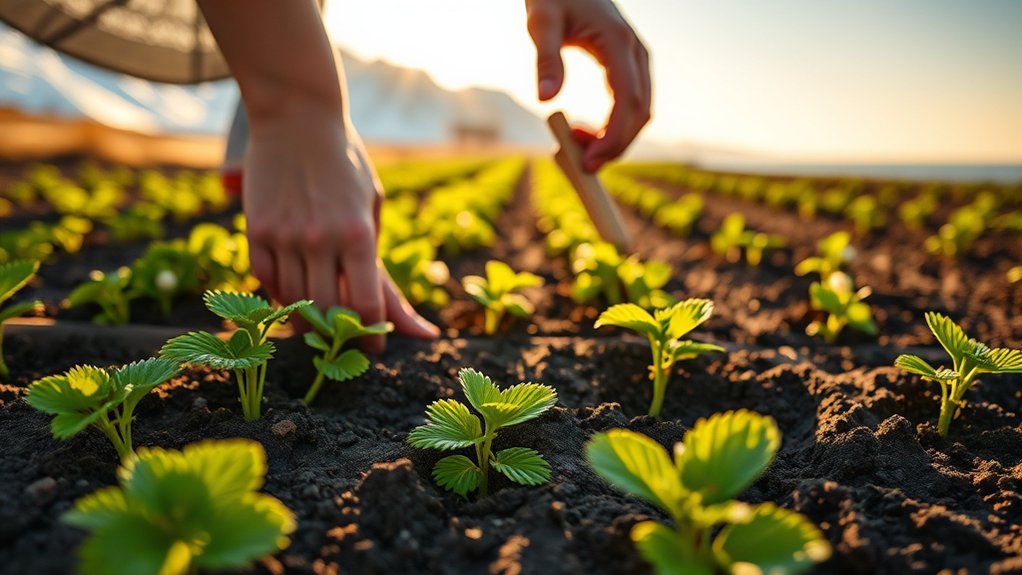
Although the best time to plant strawberries varies by region, you should aim to plant them when temperatures are mild and the risk of frost is low.
Plant strawberries when temperatures are mild and frost risk is minimal for optimal growth.
In warmer climates, the planting period runs from January to April, letting your strawberry plants thrive in gentle weather.
If you live in temperate regions, late February to April is ideal to give your plants enough time to grow before summer heat.
For colder areas, early spring, typically April to May, is best once frost danger passes.
Wherever you are, make sure your strawberry plants get full sun, at least eight hours daily, to boost healthy growth and maximize fruit production.
Planting during these windows helps your strawberries establish well and yield a bountiful harvest.
How to Prepare Soil for Strawberries
Before planting your strawberries, you’ll want to prepare the soil carefully to give them the best chance at thriving.
Start by choosing a well-draining spot with slightly acidic soil, ideally between pH 5.5 and 6.8.
Remove all weeds, roots, and old plant debris to prevent competition and disease.
Next, conduct a soil test to check nutrient levels and pH, ensuring the soil suits strawberries’ needs.
Incorporate plenty of organic matter like aged compost to improve nutrient content and boost moisture retention.
Good soil rich in organic matter helps strawberries absorb water evenly.
Finally, set up an irrigation system before planting to maintain consistent moisture, as strawberries require about 1 to 1.5 inches of water weekly for healthy growth.
How to Pick Strawberry Varieties for Your Climate
You’ll want to choose strawberry varieties that match your climate to guarantee a healthy harvest and good fruit production.
Think about how long your frost-free season lasts. For example, if you have a shorter season, varieties like June-bearing strawberries are a great choice.
On the other hand, if you live in a milder climate, day-neutral strawberries might work better for you since they produce fruit throughout the growing season.
It’s also a good idea to look for varieties that have disease resistance—this helps keep your plants healthy and thriving.
And don’t forget to plan your planting based on when the strawberries will be ready to harvest.
Timing things right can really make a difference in getting the best results from your garden.
Climate Compatibility
Because strawberry varieties respond differently to climate, choosing the right type for your region is key to a successful harvest. June-bearing strawberries favor cooler climate conditions and fruit in early summer. Day-neutral strawberries adapt well to varied climates, producing fruit throughout the season.
In warmer areas, everbearing varieties yield two harvests annually. When selecting strawberry varieties, prioritize those resistant to local pests and diseases to guarantee healthy plants.
| Strawberry Variety | Ideal Climate |
|---|---|
| June-bearing | Cooler regions |
| Day-neutral | Wide range |
| Everbearing | Warmer climates |
| Multiple varieties | Experiment locally |
Testing several strawberry varieties helps you find the best fit for your climate and maximizes fruit production.
Disease Resistance
While choosing strawberry varieties for your garden, prioritize those resistant to common diseases like red stele and verticillium wilt to guarantee healthier plants and longer productivity.
Disease resistance is essential because these fungal infections can severely damage roots and reduce yields.
You’ll want to select strawberry varieties known to perform well in your local conditions, as disease pressure varies by region.
June-bearing varieties often thrive in areas with less frost risk, while day-neutral types may suit fluctuating climates but might struggle in high heat.
To find the best fit, consider consulting local agricultural extensions for recommendations tailored to your growing zone.
Trying multiple disease-resistant strawberry varieties helps you identify which ones adapt best, ensuring a robust and fruitful patch year after year.
Harvest Timing
When should you harvest strawberries to get the best flavor and yield? Timing is key.
June-bearing strawberries typically produce fruit over a few weeks in early summer. To nail your harvest timing, monitor bloom stages closely. Berries usually ripen about 28 to 30 days after full bloom. This guarantees you pick them at peak sweetness.
If you’re in a warmer climate, plant between January and April. Colder areas do better from February to April.
Remember, June-bearing varieties need flower buds removed in the first year to build strong roots before fruiting.
Day-neutral strawberries offer flexibility by producing fruit continuously, letting you harvest over a longer period.
When to Start Strawberry Seeds Indoors
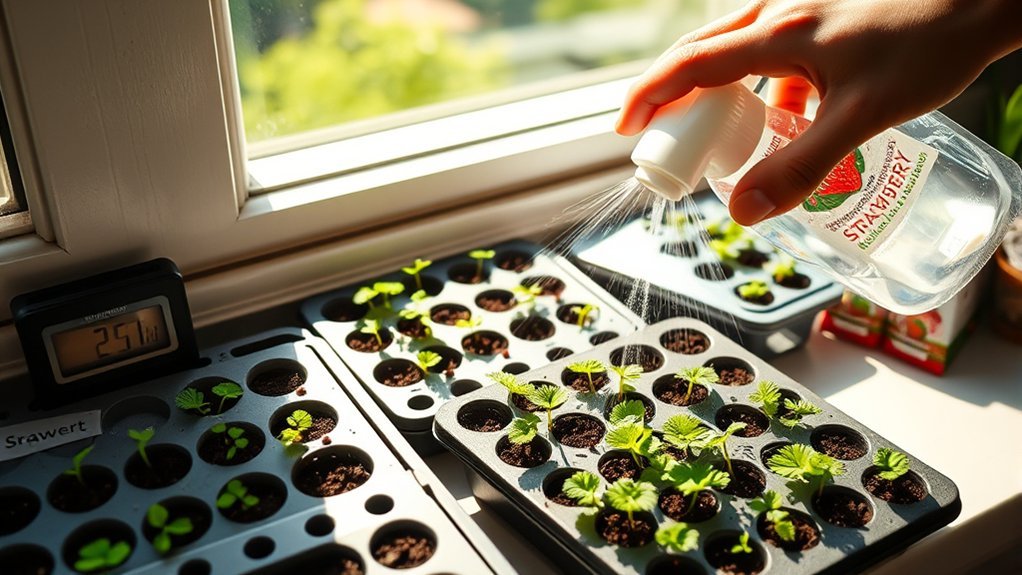
If you want your strawberry plants to thrive, start the seeds indoors about 8 to 10 weeks before your region’s last expected frost date. This timing guarantees ideal germination timing and healthy growth.
Use a seed-starting flat with drainage holes filled with a mix designed for moisture retention and aeration. Lightly cover your seeds with this mix, keeping the soil consistently moist but not soggy until they sprout.
Choose a well-draining seed-starting mix and keep soil evenly moist for optimal seed sprouting.
Provide about 12 hours of light daily to support seedling development. About 4 to 5 weeks before transplanting, begin hardening off seedlings by gradually exposing them to outdoor conditions.
This essential step prepares your young plants for life outside, improving their survival and vigor. Knowing when to start strawberry seeds indoors sets you up for a successful growing season.
How to Transplant Strawberry Seedlings Outdoors
Before transplanting your strawberry seedlings outdoors, make sure you’ve hardened them off for 4 to 5 weeks to help them adjust to the outdoor environment.
Choose a full sun location with well-draining soil to prevent root rot and support healthy growth.
When you transplant strawberry seedlings, space the seedlings about 1 to 2 feet apart to give them enough room to spread and thrive.
Plant them at soil level, and if you’re working with June-bearing varieties, hill them slightly to encourage runner development.
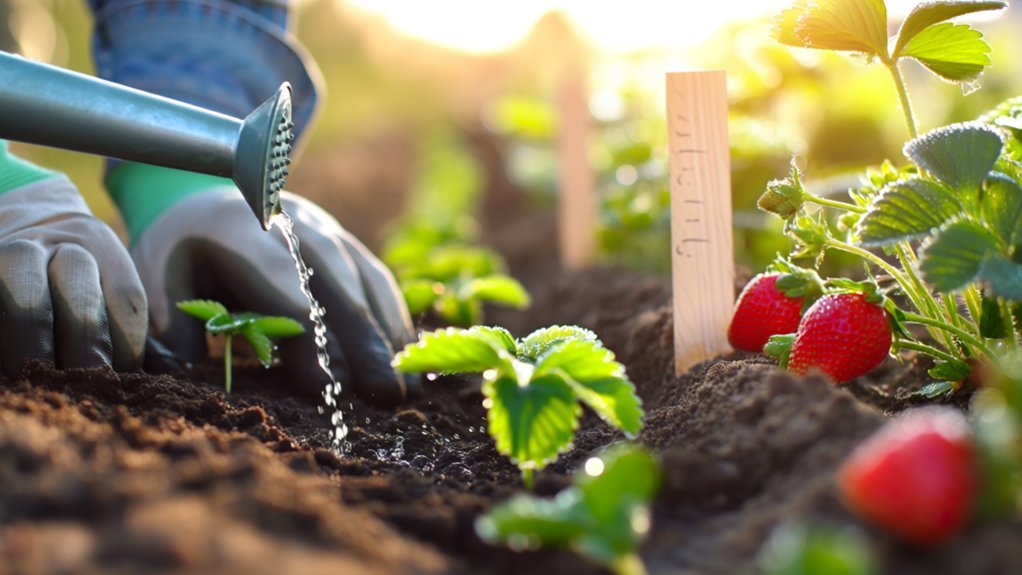
After planting, water the seedlings immediately to settle the soil and provide moisture.
Keep watering them regularly, aiming for about an inch of water per week during their establishment phase.
This careful approach will help your strawberries grow strong and productive.
How Much Sunlight Do Strawberry Plants Need?
You’ll want to give your strawberry plants at least 6 hours of direct sunlight every day.
But if you can, aim for 8 to 10 hours—that’s the sweet spot for juicy, flavorful berries.
If they don’t get enough light, you might notice fewer flowers and a smaller harvest.
And if you’re in a hot climate, it’s a good idea to provide some shade during the hottest part of the day.
That way, your plants stay healthy and keep thriving.
Ideal Sunlight Hours
How much sunlight do strawberry plants really need to thrive? For ideal growth, they require at least 8 hours of full sunlight each day. Ensuring your plants get this amount of sunlight not only boosts fruit production but also improves plant health.
Without enough light, you’ll likely see reduced yields and smaller, less flavorful berries. Morning sunlight is especially important because it helps dry dew on the leaves, reducing disease risks.
If you’re growing strawberries in hotter climates, consider providing some afternoon shade to prevent heat stress and keep your plants healthy.
Effects Of Insufficient Light
Although strawberry plants need at least 8 hours of sunlight daily to thrive, falling short of this can seriously affect their growth and fruit quality.
When your plants don’t get enough sunlight, you’ll notice poor fruit development and weaker overall plant health.
If they receive less than 6 hours, they often become leggy and struggle to produce healthy blooms or runners.
Here’s what insufficient light can cause:
- Reduced fruit production with smaller, less flavorful berries
- Leggy, weak stems prone to damage
- Poor fruit development and uneven ripening
- Lower resistance to pests and diseases
- General decline in plant health and vigor
Make sure your strawberries get ample sunlight to keep them robust and productive throughout the growing season.
Shade Requirements And Tips
Since strawberry plants need at least 8 hours of full sun daily to produce the best fruit, you should choose a planting spot that gets ample sunlight throughout the day.
Make sure your strawberries receive consistent sun exposure by avoiding areas shaded by trees or buildings.
In cooler climates, full sun maximizes plant health and promotes peak fruit yields.
However, if you’re growing strawberries in hot regions, providing some afternoon shade can help prevent heat stress and keep your plants thriving.
Monitor sun exposure throughout the growing season to adjust if necessary, as insufficient light reduces flowering and fruit size.
Watering Strawberries: Frequency and Amount
To keep your strawberry plants thriving, you’ll need to provide about 1 to 1.5 inches of water each week, especially during dry periods or when growing in containers.
Proper watering strawberries practices guarantee ideal growth and fruit quality.
Proper watering ensures strawberries grow healthy and produce high-quality fruit.
Maintaining consistent moisture is key, particularly during the fruiting stage. Here’s what to keep in mind:
Water at the roots to prevent leaf spot diseases.
Adjust water per week based on rainfall to avoid over-saturation.
Increase watering frequency in hot climates.
Provide shade when possible to reduce water loss.
Avoid wetting the foliage during watering sessions.
How to Space Strawberry Plants for Best Growth
You’ll want to space your strawberry plants depending on the method you choose—whether it’s matted row, hill, or plasticulture.
Managing runners properly is really important. Some methods encourage runners to fill in the bed, while others need you to remove them to boost fruit production.
Getting the spacing right ensures healthy growth, good air circulation, and makes maintenance easier.
Proper Plant Spacing
Although each planting method has its own spacing requirements, giving your strawberry plants enough room is essential for healthy growth and abundant fruit. Proper plant spacing lets strawberry plants produce their best yields and reduces disease risk.
Here’s how to space them:
Use the matted row method by planting 18 inches apart, allowing runners to fill the bed.
Space hill-planted strawberries 1 foot apart and remove runners for bigger fruits.
For day-neutral strawberries, plant 5 to 9 inches apart for continuous harvests.
Maintain rows 36 inches apart for June-bearing varieties to improve air circulation.
In plasticulture, leave enough space for soil warmth and weed control.
Runner Management Techniques
Managing runners effectively plays an essential role in how you space your strawberry plants for ideal growth. Proper runner management guarantees your plants stay healthy and focus energy on producing fruit, boosting your overall yield.
Depending on your planting method, spacing varies to support runner growth or control it.
| Planting Method | Recommended Spacing |
|---|---|
| Matted Row | 18 inches between plants |
| Hill Planting | 12 inches in double rows |
| Plasticulture | Proper spacing for soil warmth and weed control |
| Runner Clipping | Regularly remove excess runners to promote fruit |
When and How to Fertilize Strawberry Plants
Since proper fertilization directly impacts the health and yield of your strawberry plants, knowing when and how to apply nutrients is essential.
Proper fertilization is key to healthy, high-yield strawberry plants and requires timely nutrient application.
You need to fertilize strategically to encourage healthy growth and maximize fruit production without overdoing nitrogen, which can promote leaf growth over fruit.
Here’s when and how to fertilize your strawberries:
Apply 2 pounds of 10-10-10 balanced fertilizer per 100 feet of row immediately after planting.
Add another 2 pounds in late August to boost fruit production and plant vigor before winter.
For day-neutral varieties, give 1 pound of ammonium nitrate monthly to supply steady nitrogen.
Avoid high-nitrogen fertilizers during fruiting to prevent excessive foliage.
After harvest, use balanced fertilizer to rejuvenate plants for the next season.
Following this schedule helps maintain strong, productive strawberry plants year-round.
How to Protect Strawberry Plants From Frost
Fertilizing your strawberries properly sets the stage for healthy growth, but protecting them from frost guarantees that effort doesn’t go to waste.
Before winter, apply a 4-inch layer of straw or hay mulch to protect roots and insulate against freezing.
As the frost date approaches, monitor weather forecasts closely. When temperatures are expected to drop below freezing, water thoroughly. The moist soil retains heat better, shielding your plants.
Use row covers or frost blankets during cold snaps, securing them against wind to maintain warmth.
Remove these covers promptly in the morning after frost to let plants soak up sunlight and recover.
Staying vigilant about weather changes and taking these steps assures your strawberries survive frost and thrive throughout the growing season.
How and When to Renovate Strawberry Beds
Although the harvest season has ended, late summer, typically between late July and early August, is the best time to renovate your strawberry beds. This process boosts productivity for the next season.
Late summer, from late July to early August, is ideal for renovating strawberry beds to enhance next season’s yield.
To renovate strawberry beds effectively, follow these steps:
- Thin the plants to leave 6 to 12 inches between them, improving air circulation and sunlight exposure.
- Remove weeds, debris, and dead foliage to reduce disease risk.
- Fertilize the renovated beds with a balanced fertilizer, applying about 2 pounds of 10-10-10 per 100 feet of row.
- Maintain consistent watering to help plants establish strong roots.
- Monitor for pests and address issues promptly.
How to Know When Strawberries Are Ready to Harvest
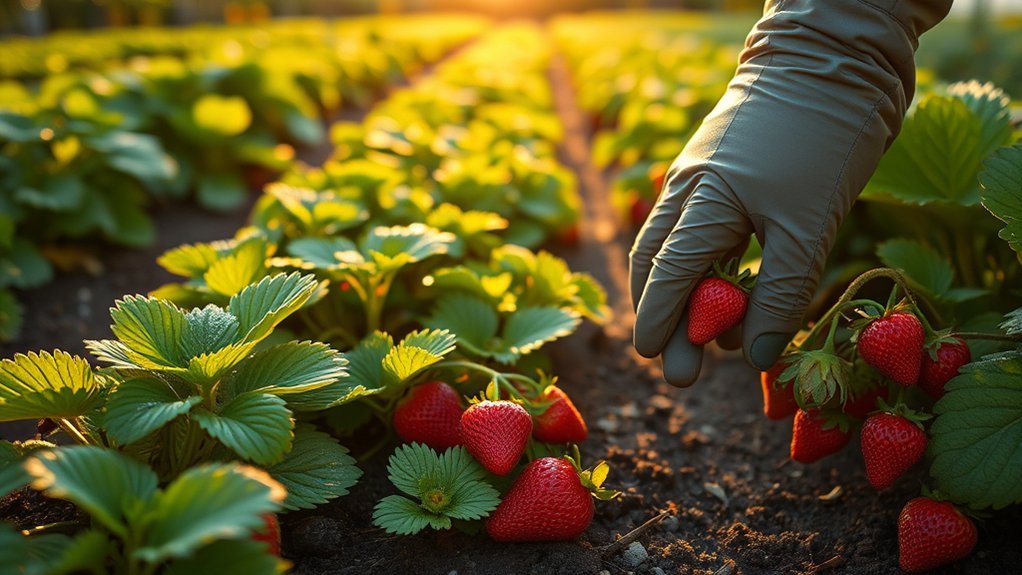
After renovating your strawberry beds, you’ll want to keep an eye on the fruit as it develops to know the best time to harvest. Strawberries are ripe when fully red; any green or white means they need more time.
Monitor your plants closely because strawberries ripen about 28 to 30 days after full bloom. Harvest in the morning after dew dries to maximize flavor and quality. Twist berries gently to keep the cap on, which helps maintain freshness.
Leaving ripe strawberries too long can cause rot and spoil the harvest.
| Indicator | What to Look For | Action |
|---|---|---|
| Color | Fully red, no white/green | Ready to harvest |
| Timing | 28-30 days after bloom | Begin monitoring |
| Time of day | Morning after dew dries | Pick for best flavor & quality |
| Handling | Twist, keep cap intact | Guarantees longer freshness |
Frequently Asked Questions
Can Strawberries Be Grown in Containers or Hanging Baskets?
Yes, you can grow strawberries in containers or hanging baskets, making container gardening a great option for small spaces.
You’ll need pots at least 12 inches deep with well-draining soil that’s slightly acidic, around pH 5.5 to 6.8.
Make sure your strawberries get at least 8 hours of sunlight exposure daily, and keep up with regular watering, about 1 to 1.5 inches weekly, to meet their watering needs and promote healthy growth.
How Do You Prevent Common Strawberry Pests and Diseases?
Think of your strawberry patch as a castle, with you as its vigilant guardian. Use pest identification techniques to spot invaders early.
Employ organic pest control like Sluggo and encourage beneficial insects to patrol your garden.
Practice disease prevention methods by maintaining good air circulation and removing infected fruit.
Rotate crops yearly to confuse pests and break disease cycles.
These steps will keep your strawberries thriving and your harvest bountiful.
What Are the Best Companion Plants for Strawberries?
The best companion plants for strawberries are onions, garlic, and chives because they aid pest control by deterring aphids and spider mites.
Marigolds also help repel harmful insects.
Choose companions like spinach and lettuce with shallow roots to meet soil requirements without competing for nutrients or water.
Borage improves strawberry flavor and attracts pollinators.
Proper watering techniques and timing your harvest guarantee a healthy, bountiful strawberry crop alongside these companions.
How Long Do Strawberry Plants Typically Produce Fruit?
You might expect strawberries to bear fruit forever, but their fruiting season usually lasts about 3 to 4 years.
Once your plants reach maturity, they enter a harvest timeline where production yield peaks, then gradually declines.
Environmental factors like watering, sunlight, and soil health play a big role in how long your strawberries keep producing.
Can You Grow Strawberries From Runners Instead of Seeds?
Yes, you can grow strawberries from runners instead of seeds.
Using runners for propagation is a common method that helps you clone your favorite strawberry varieties.
Focus on proper planting techniques by rooting runners in well-prepared soil and exposing the crown to air.
Pay attention to care requirements like watering and fertilizing.
With good care, you’ll enjoy timely harvests and a flourishing strawberry patch in no time.
Conclusion
You might think growing strawberries is tricky, but following these simple steps makes it easy and rewarding. By planting at the right time for your region and preparing your soil well, you’ll set your plants up for success.
Even if you’re new to gardening, starting seeds indoors and protecting plants from frost guarantees a healthy harvest. So don’t hesitate. Grow your own juicy strawberries and enjoy fresh, homegrown sweetness all season long!