
Signs Strawberries Are Ripe
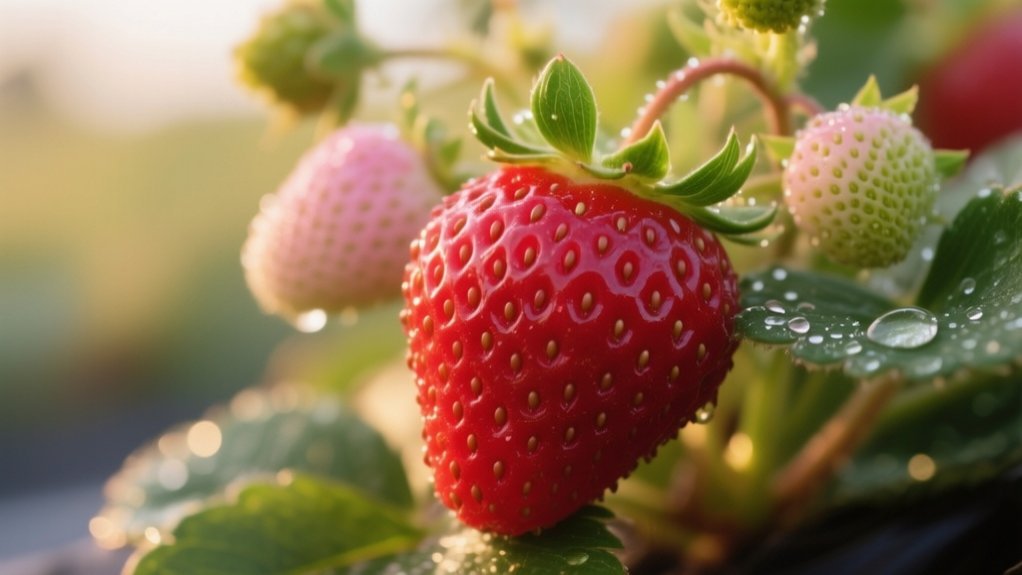
You can tell strawberries are ripe when you see a bright, consistent red color all over, without any green or white patches. They’ll have a glossy skin and emit a sweet, fragrant aroma that’s hard to miss. When you gently squeeze, ripe berries feel firm but slightly tender, not too hard or mushy.
Fresh green tops mean they were picked recently. Want to get the best flavor and avoid mold or underripe fruit? Keep these signs in mind as you pick.
How to Spot the Perfect Red Color in Ripe Strawberries
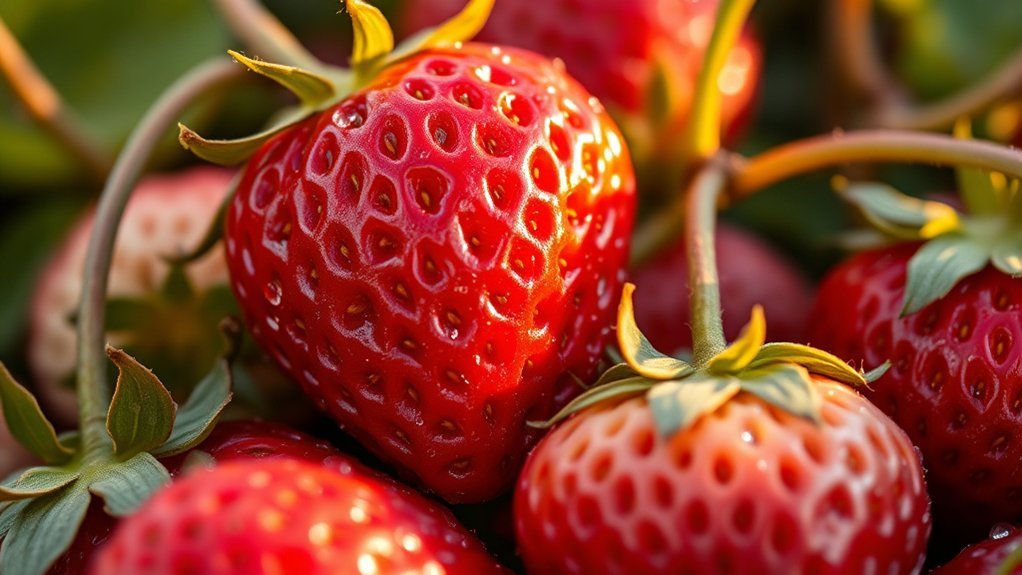
When you’re checking strawberries for ripeness, focus on their color. Red strawberries that are ready to be picked show a bright, consistent red from top to bottom.
Don’t overlook the bottom tip; if it’s still white or greenish, the berry isn’t ripe yet.
Look for a uniform color without any green or white patches. This tells you the strawberry has reached ideal ripeness.
Also, a glossy finish on the surface signals freshness and readiness.
If the color looks dull or uneven, it’s better to wait another day or two before harvesting.
Why Aroma Is a Key Sign of Strawberry Ripeness
Because ripe strawberries emit a fragrant aroma, you can often tell they’re ready to be picked just by smelling them. This aroma is a strong indicator that the fruit is ripe enough for harvest, setting it apart from underripe berries that lack this sweet scent.
When you sniff a strawberry, a pleasant, inviting aroma signals freshness and peak ripeness. On the other hand, if the smell is sour or off, it means the strawberry is overripe or beginning to spoil.
Using your sense of smell helps you choose strawberries that taste their best and avoid those past their prime.
Firmness: How to Feel If a Strawberry Is Ripe
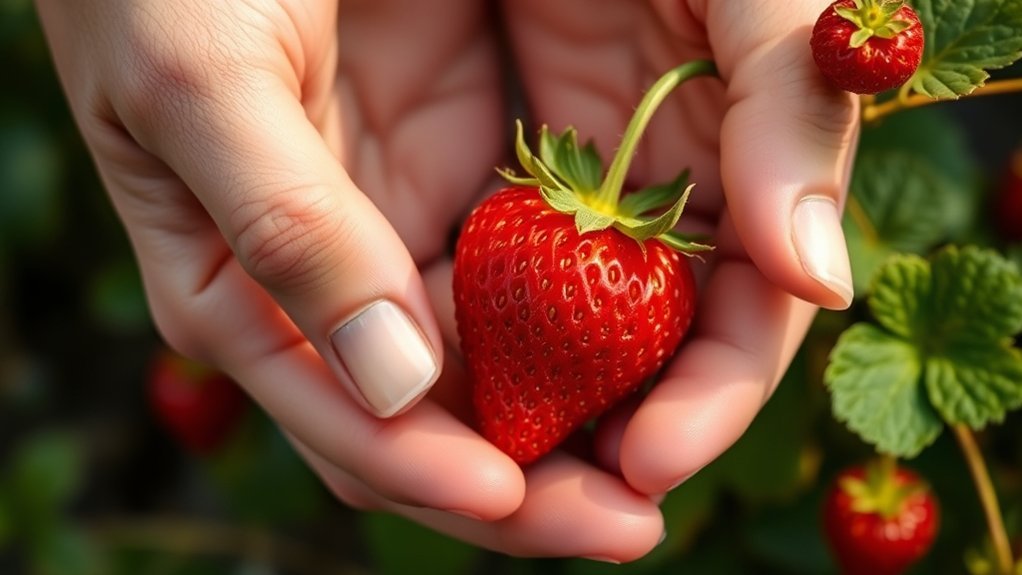
You want to feel a strawberry that’s firm but gives just a little when you squeeze it.
If it’s too soft, it’s probably overripe and might spoil faster.
Ideal Strawberry Texture
Texture plays a key role in determining if a strawberry is ripe and ready to eat. When you pick up a strawberry, you want it to feel moderately firm with a slight give. This balance shows it’s ripe strawberries are at their best.
If the berry feels too hard, it’s likely underripe and won’t have full flavor. On the other hand, overly soft or mushy strawberries suggest overripeness and spoilage. You’ll also want to avoid berries with dull indentations or wrinkling, as these signs mean the fruit has passed its prime.
Handling strawberries gently is a good idea because bruised berries spoil faster and affect the rest. Aim for smooth, fresh-feeling strawberries to enjoy peak taste and texture every time.
Avoid Overripe Softness
Watch out for overly soft strawberries when picking your fruit, as they tend to spoil quickly and can ruin the rest of your batch.
When strawberries are ready, they should feel moderately firm with a slight give.
If you notice overripe softness, like berries that are very soft, wrinkled, or have dull indentations, it’s a clear sign they’re past their peak.
Avoid picking these because they’ll spoil faster and affect the fresher strawberries.
Hard strawberries are underripe, so aim for that balanced firmness.
After harvesting, separate any softer strawberries to prevent them from spoiling the firmer ones.
Glossy Skin and Uniform Color: Visual Ripeness Clues
A glossy, deep red hue is the clearest sign that strawberries have reached their peak ripeness. When you pick strawberries, look for a consistent red color covering the entire fruit, from top to tip.
Avoid berries with green or white patches, especially near the bottom, as these indicate they’re not fully ripe yet. The skin should have a shiny, glossy finish that signals freshness and quality.
If you spot any dullness or blemishes, it’s best to pass on those berries. Uniform coloration combined with that appealing glossy skin guarantees you’re selecting strawberries at their best flavor and texture.
If the red isn’t quite even, give the strawberries another day or two to develop that perfect, glossy ripeness.
Why Fresh Green Tops Mean Better Strawberries
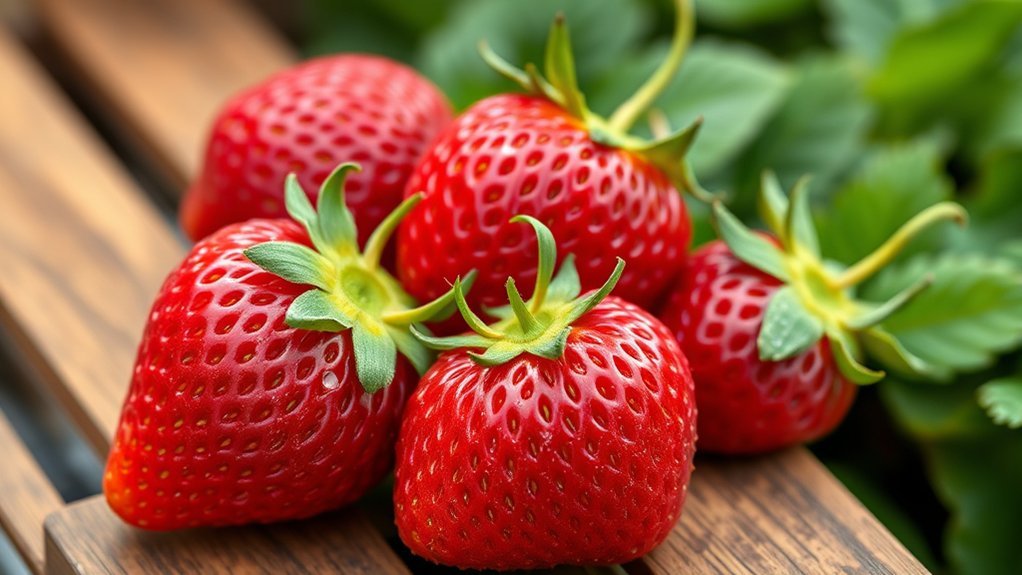
You’ll know strawberries are fresh when their green tops look vibrant and healthy.
That bright green color means the berries were picked recently, so you’re less likely to end up with overripe fruit.
Plus, if the green tops are still intact, it actually helps the strawberries stay fresher for longer.
Indicator Of Berry Freshness
Fresh green tops on strawberries signal that they were picked at the perfect time, preserving their flavor and freshness. When you see fresh strawberries with vibrant green tops, you can trust that the red color is at its peak, indicating ideal ripeness.
These green tops mean the berries are still connected to their nutrient source, helping them stay fresh longer. If the tops look dried or brown, the strawberries are likely overripe and starting to spoil, affecting taste and quality.
Choosing strawberries with healthy green tops not only guarantees better flavor but also helps you avoid less fresh, overripe fruit.
Preventing Overripe Harvest
Noticing vibrant green tops on strawberries helps you pick fruit that hasn’t started to over-ripen, preserving its taste and quality.
Strawberries will usually show fresh green tops when they’re still healthy, signaling that the fruit is firm and flavorful.
Avoid berries with dried or brown tops, as these are often overripe and prone to mold or spoilage, which reduces shelf life.
When you harvest, aim to pick strawberries with about one-quarter of the stem attached, including the green tops, to keep them fresher longer.
Regularly checking for these fresh tops during picking prevents collecting overripe fruit and helps maintain the plant’s energy, extending your harvest period.
Does Size and Shape Affect Strawberry Flavor?
Although many believe bigger strawberries taste better, size and shape don’t reliably indicate flavor. When you spot strawberries ready to pick, don’t judge them solely by their size or how perfect they look.
Smaller strawberries can pack a surprisingly sweet, concentrated taste, while larger ones from certain varieties might also be delicious. The variety you’re harvesting influences size and shape more than flavor does.
Plus, some “ugly” looking strawberries can still surprise you with their richness. Ultimately, your personal taste matters most.
Whether you prefer the bold punch of small berries or the juiciness of larger ones, focus on ripeness and color to find the best flavor rather than size or shape alone.
How to Avoid Mold and Rot When Picking Strawberries
To keep your strawberries healthy, you should regularly remove any rotten or moldy fruit from the patch, since mold can spread quickly and ruin the entire crop.
Clear away leaf litter and old mulch where berries hide to reduce rot risk.
When you harvest strawberries, do it every couple of days to prevent mold from developing on overripe fruit left on the plants.
Always inspect the berries before picking; discard any with mold or blemishes immediately.
Use clean containers each time you pick strawberries to avoid transferring mold spores between harvests.
Taste Testing: The Best Way to Confirm Ripeness
After carefully selecting strawberries free from mold and rot, the next step is to confirm their ripeness through taste testing. This method is the most reliable way to judge sweetness and overall quality since flavor intensity changes as strawberries ripen.
When you taste test, you can directly experience the best flavor, which fully ripe berries deliver with their rich sweetness compared to under- or overripe ones. Many local farms even offer taste testing opportunities, letting you sample berries before buying.
By trying different strawberries, you’ll learn which varieties suit your palate best.
Keep in mind, personal preference plays a big role in what you consider perfectly ripe. So, taste testing not only confirms ripeness but also helps you pick strawberries you’ll truly enjoy.
What Wildlife Behavior Tells You About Strawberry Ripeness
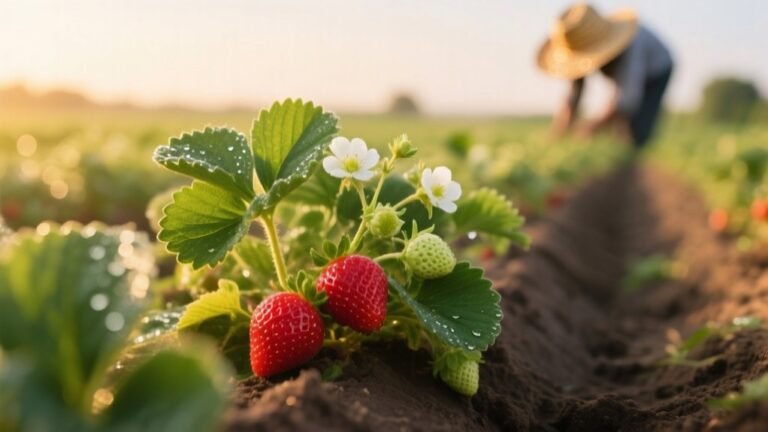
Many wildlife species, especially birds, give clear signals when strawberries reach peak ripeness. When you notice increased wildlife activity around your berry patch, it’s a strong sign the strawberries are sweet and ready to pick.
Birds usually wait until the fruit is fully ripe before pecking, so their presence acts as a natural indicator. Animals feeding on the berries also help spread seeds, showing they prefer mature fruit.
Keep a close eye on how wildlife interacts with your patch. If they avoid the berries, they’re likely not ripe yet.
How Picking Often Helps You Harvest the Best Strawberries
Although it might seem time-consuming, picking strawberries every couple of days helps you catch them at their sweetest and prevents overripening or mold from ruining your harvest.
When you regularly check your patch, you spot berries that are ready but might be hiding under leaves or mulch, ensuring none go unnoticed.
This frequent harvesting encourages your plants to keep producing more fruit, maximizing your overall yield. By picking often, you select strawberries based on their perfect look and taste, ensuring you enjoy the best flavor possible.
Plus, removing any rotten berries promptly maintains the health of the rest, so your harvest stays fresh and delicious.
Consistent attention truly helps you gather the best strawberries each season.
Frequently Asked Questions
Can Strawberries Ripen After Being Picked?
Yes, strawberries can ripen after being picked, but the ripening process slows down considerably once harvested.
If you leave pink or half-red berries at room temperature, the fruit continues to ripen due to ethylene gas they naturally produce.
However, they won’t get as sweet or flavorful as those fully ripe on the plant.
For the best taste, you should pick strawberries when they’re already fully ripe.
How Long Do Ripe Strawberries Stay Fresh?
Ripe strawberries usually stay fresh for about 3 to 7 days with proper fresh storage.
To keep them longer, don’t wash them until you’re ready to eat. Store them in a breathable container lined with paper towels.
Watch for spoilage signs like mold or mushy spots, and remove any damaged berries immediately.
If you catch these early, you’ll enjoy your strawberries at their best for several days.
Are Organic Strawberries Sweeter Than Conventional Ones?
Yes, you’ll often find organic strawberries sweeter than conventional ones.
Organic farming focuses on soil health and biodiversity, letting strawberry varieties develop richer flavors naturally.
Without synthetic fertilizers and pesticides, plants allocate more energy to fruit quality, boosting sugars and antioxidants.
When you choose organic, you’re likely tasting strawberries that benefited from longer ripening periods and sustainable practices, resulting in a sweeter, more flavorful berry compared to conventional options.
What Is the Best Time of Day to Pick Ripe Strawberries?
The best time for morning picking is right after dawn when strawberries are cool and dry. This helps you keep them fresh and less prone to bruising.
You’ll want to avoid afternoon harvesting since the heat can soften berries and reduce their flavor.
Picking in the morning also lets you see ripeness clearly without harsh sunlight washing out the color.
Can Strawberries Ripen in the Refrigerator?
No, strawberries won’t ripen in the refrigerator. Refrigerator ripening actually slows down the process, so if your strawberries aren’t fully ripe, storing them cold won’t help.
For best strawberry storage, keep them at room temperature in a single layer to encourage ripening.
Once they’re ripe, you can refrigerate them to extend freshness, but this won’t improve their sweetness or flavor.
Conclusion
When you’re hunting for the perfect strawberry, remember: it’s not just about looks. Your senses are the true guides. That deep red color, sweet aroma, and firm touch all team up like a delicious secret code.
Trust your instincts, and don’t be shy to taste test. After all, ripe strawberries don’t hide; they invite you in. So, keep picking often and enjoy the juicy rewards that nature’s little red treasures have to offer!