

When Are Strawberries in Season?
You’ll find strawberries in season mainly during spring and early summer, with timing depending on your location. In warmer states like Florida and California, the season starts as early as late February, while Northern areas see peak harvests in late June.
Everbearing varieties produce fruit in spring and again in late summer. Your local weather also influences ripeness, so weather patterns matter.
Keep strawberries fresh after picking for the best taste, and there’s plenty more to uncover about varieties and picking tips.
When Does Strawberry Season Start Where You Live?
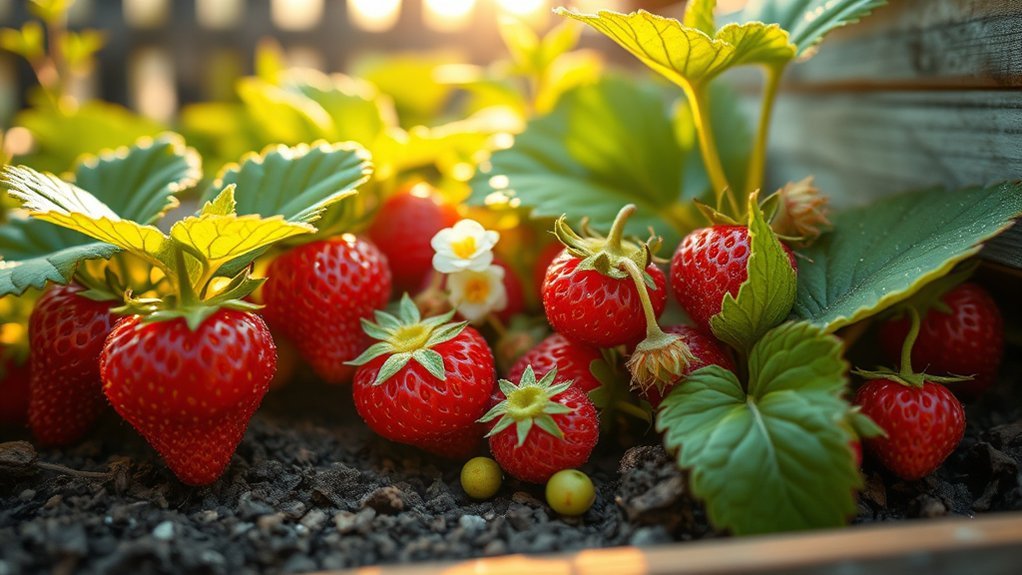
Wondering when strawberry season kicks off near you? If you’re in Florida and California, you’re in luck because strawberry season starts early. Florida’s begins as soon as late February, while California also enjoys an early harvest thanks to its mild climate. You’ll spot berries that are bright and juicy, perfect for fresh eating or baking.
As you move northward, the season shifts. Coastal states like Alabama and Georgia hit their peak in late April and May, while central states such as Illinois see strawberries ripen around May and June.
Up in the far northern regions and Canada, strawberry season doesn’t peak until late June. So, wherever you live, strawberry season varies, but you can count on fresh, vibrant berries when the time’s right.
How Long Does Strawberry Season Last?
How long can you enjoy fresh strawberries once the season begins? Typically, strawberry season lasts about three weeks, but it can stretch longer depending on your location and weather. In most U.S. regions, the season runs through late spring and early summer, roughly two months. Southern areas may enjoy strawberries for three months or more.
Everbearing varieties even produce fruit again in late summer or fall, extending your harvest. Warm weather speeds ripening, while cooler, wet conditions slow it down.
| Region | Typical Season Length | Notes |
|---|---|---|
| Northern U.S. | 2 weeks | Short, late spring season |
| Central U.S. | 3 weeks | Peak season in early summer |
| Southern U.S. | 2-3 months | Longer season, warm climate |
| Everbearing | Multiple harvests | Spring & late summer/fall |
| Weather Impact | Variable | Heat speeds, rain delays |
What Affects When Strawberries Are Ready to Pick?
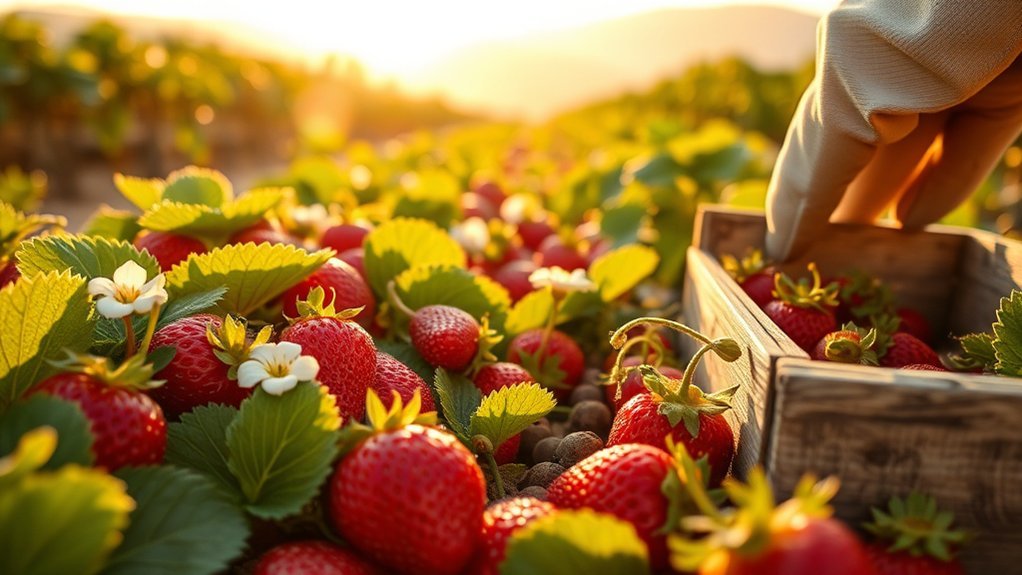
The length of strawberry season varies, but knowing when the berries are actually ready to pick depends on several factors.
Strawberry season length varies, with ripeness depending on factors like weather and location.
Strawberries are typically the first fruit to ripen in many regions, but the exact timing can shift based on local weather conditions. Warm, sunny days speed up ripening, while cool or rainy weather slows it down, causing the season to vary each year.
In southern areas, you might see ripe strawberries as early as late February, but in northern climates, they often don’t appear until June.
Moisture levels and temperature fluctuations also influence when strawberries are ready for harvest.
Because the season varies by location and year, it’s smart to check with local farms to know precisely when to pick the sweetest, ripest berries.
What Are Everbearing Strawberries and Their Season?
If you want strawberries that keep producing throughout the season, everbearing varieties might be your best bet. Everbearing strawberries give you multiple harvests, usually in spring and again in late summer or fall.
You’ll notice they start producing fruit just a few weeks after planting, which is great if you want an extended season. These plants thrive in cooler Southern states, especially USDA Zones 6 to 8.
However, if you live in hotter areas, their fruit production might suffer due to heat stress. Unlike June-bearing strawberries that yield a large, sweeter crop in a short season, everbearing strawberries offer smaller, more frequent harvests.
This makes them ideal for home gardeners who want fresh strawberries over a longer period during the growing season.
Can You Find Fresh Strawberries in Stores Year-Round?
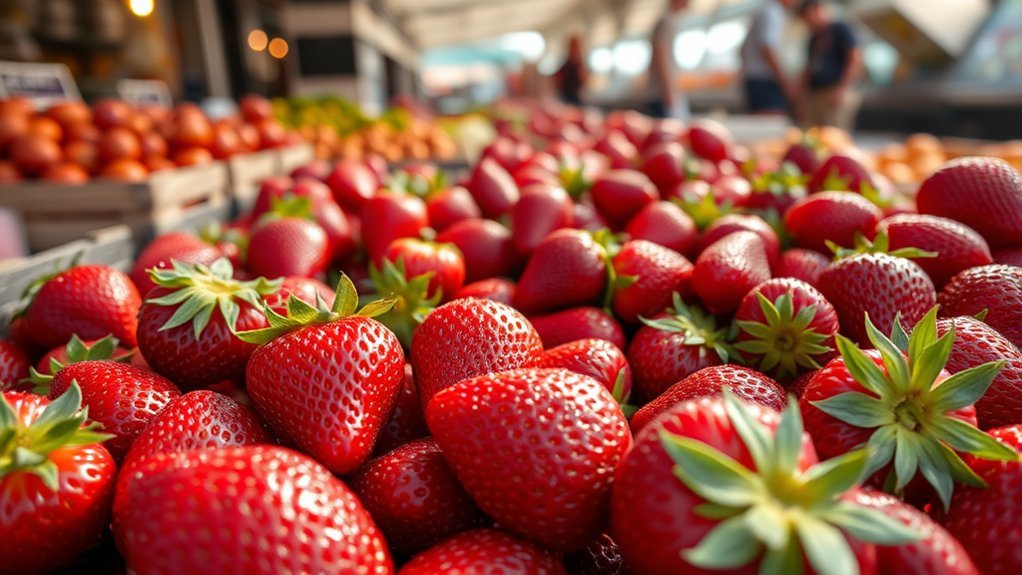
Wondering whether you can find fresh strawberries in stores all year long? The answer is yes, thanks to advanced growing and transportation methods.
However, the flavor and texture of these berries often differ from strawberries in season. Here’s what you should know:
- Fresh strawberries appear year-round but off-season berries often lack the intense flavor and firm texture of peak-season fruit.
- Off-season strawberries tend to be larger and more water-filled, diluting their sweetness.
- Conventional strawberries are bred for size, firmness, and pest resistance, sometimes sacrificing flavor.
- Smaller strawberries, usually found in season, pack a stronger, richer flavor than their bigger counterparts.
How to Tell When Strawberries Are Ripe for Picking
How can you tell when strawberries are truly ripe for picking? Look for berries with a deep, shiny red color. They should be plump and give off a sweet scent.
Medium firmness is key. Too soft means they’re overripe, while hard, partly white tops show they’re still under-ripe.
Aim for medium firmness; softness signals overripe berries, while hard, white-topped ones aren’t ripe yet.
When you pick strawberries, aim to leave about one-quarter of the green stem attached to keep them fresh longer. Remember, quality beats size. Smaller strawberries often pack a stronger flavor than large, water-heavy ones.
If you’re shopping at farmers markets, use these tips to choose the ripest strawberries available. This way, you’ll enjoy the best taste whether picking yourself or buying fresh from local growers.
How to Keep Strawberries Fresh After Picking
To keep your strawberries fresh after picking, start by giving them a gentle clean. You can use a mild vinegar solution or even hot water to help kill any bacteria hanging around.
Once they’re clean, make sure to store them in a dry, breathable container. Lining the container with paper towels is a great idea because it helps soak up any extra moisture and prevents mold from forming.
And hey, if you happen to have more strawberries than you can eat right away, don’t worry! Just remove the tops and pop them into a dry bag before freezing.
That way, you can enjoy them long-term without losing any of that fresh flavor.
Proper Storage Methods
Although strawberries are deliciously delicate, you can keep them fresh longer by storing them properly. Follow these proper storage methods to enjoy your strawberries at their best:
- Store strawberries in a dry environment to prevent mold and spoilage.
- Use a breathable container lined with a paper towel to allow air circulation and reduce bruising.
- For extra freshness, soak strawberries briefly in a mild vinegar solution or hot water, then dry thoroughly before storing.
- Freeze any uneaten strawberries by removing their tops, drying them, and sealing them in a bag to avoid frost.
Cleaning Techniques
Three simple steps can keep your freshly picked strawberries fresh longer. First, use effective cleaning techniques by soaking your strawberries in a mild vinegar solution (1 part vinegar to 3 parts water) for 5 minutes to kill bacteria.
Next, wash strawberries thoroughly under cool running water to remove dirt and vinegar residue. Finally, store them dry to avoid mold growth.
| Step | Purpose |
|---|---|
| Soak in vinegar | Kill bacteria |
| Rinse thoroughly | Remove dirt and vinegar taste |
| Store dry | Prevent mold and spoilage |
Freezing Strawberries
When you want to keep strawberries fresh after picking, washing them gently and removing any damaged or bruised berries is essential to prevent spoilage.
To freeze fresh strawberries properly, follow these steps:
- Remove the green tops and pat the berries completely dry to avoid frost.
- Place strawberries in a single layer on a baking sheet to prevent clumping.
- Freeze them until solid, usually a few hours.
- Transfer frozen strawberries to a sealable bag for long-term storage.
Freezing strawberries lets you enjoy their flavor year-round and is perfect for smoothies or various strawberry recipes.
For best quality, use frozen berries within six months, though they can last up to a year in your freezer.
This method keeps your berries fresh and ready whenever you need them.
Popular Strawberry Varieties and Their Picking Seasons
You’ll find around 600 strawberry varieties in the U.S., and each one has its own unique flavors and textures.
June-bearing types give you a sweet burst of berries, but only for a few weeks. On the other hand, everbearing varieties produce fruit multiple times throughout the season.
Common Strawberry Varieties
Over 600 strawberry varieties grow in the U.S., each offering unique sizes, flavors, and textures that can influence your picking experience.
You’ll often encounter:
- Common June-bearing strawberries, which produce one large crop from May to June. They’re ideal if you want a perfect strawberry for jam or desserts.
- Everbearing strawberries, giving you multiple harvests throughout spring and fall, especially in cooler Southern climates.
- Chandler, prized for its large, sweet berries that make picking rewarding.
- Albion, known for its consistent yield and excellent shelf life, great if you want strawberries that last.
Knowing these varieties helps you plan your picking trips and enjoy strawberries at their best.
Variety-Specific Harvest Times
Although strawberry varieties differ widely, their harvest times follow distinct patterns that can guide your picking plans. Understanding these variety-specific harvest times helps you know when to expect peak berry availability.
For instance, June-bearing varieties like “Chandler” and “Sweet Charlie” start ripening in late April and peak by early summer. Everbearing types offer two harvests, late spring and late summer. Day-neutral strawberries, such as “Albion,” produce berries continuously from late spring until frost.
| Variety | Harvest Period | Notes |
|---|---|---|
| Chandler | Late April to June | Sweet, early summer peak |
| Everbearing | Late spring, late summer | Multiple harvests |
| Albion (Day-neutral) | Late spring to fall | Continuous fruiting |
Knowing these times guarantees you pick fresh strawberries at their best.
Flavor And Texture Differences
When you choose strawberries, keep in mind that their flavor and texture depend heavily on the variety and picking season.
Strawberries taste varies widely, influenced by size and growing season. Here’s what you should know:
- Smaller berries pack a stronger, more intense flavor than larger, juicier ones.
- June-bearing strawberries, harvested in late spring to early summer, tend to be sweeter and firmer.
- Everbearing varieties yield fruit through summer and fall but may have a milder taste due to heat stress.
- Cooler growing seasons enhance the flavor and texture of June-bearers, especially in southern regions.
Why Pick Strawberries at Local Farms?
Why choose to pick strawberries at local farms like Eckerts?
During spring and early summer, you’ll find the freshest berries available through Strawberry Picking right where they’re grown. Picking your own strawberries means you get fruit harvested the same day, ensuring exceptional flavor and quality.
Freshly picked strawberries in spring and early summer offer unmatched flavor and quality straight from the farm.
Plus, many local farms use fewer chemicals, so you’re likely getting cleaner, more natural berries.
You also get a unique chance to enjoy the outdoors, connect with nature, and learn about how strawberries grow.
Local farms often offer special varieties you won’t find in stores, letting you taste something truly unique.
When you pick strawberries locally, you support sustainable farming and help your community’s economy thrive, creating a win-win for you and the environment.
Where to Go for the Best Strawberry Picking Experiences
If you’re looking for the best strawberry picking experiences, heading to top you-pick farms is a great idea.
You get to enjoy the freshest strawberries right off the plants, which is pretty special.
Local farmers markets are another fantastic option. They often have berries picked at their peak ripeness, so you’re guaranteed tasty fruit.
Before you set out, though, it’s a good idea to check with the farms about the current picking conditions.
That way, you can make sure your visit is as enjoyable as possible!
Top You-Pick Farms
Although strawberry picking seasons can vary, visiting a you-pick farm during peak months offers an unbeatable experience. You’ll find the best red color strawberries ready for harvest from late spring through early summer at many you-pick farms.
Here’s what you can expect:
- Rows of vibrant strawberry plants bursting with ripe berries.
- Families and friends enjoying fresh air and hands-on picking.
- Farm staff keeping you informed on the freshest spots and picking conditions.
- Additional seasonal produce to explore, making the trip even more rewarding.
Farms like Eckerts often provide a variety of strawberry types and fun activities for all ages.
Local Farmers Markets
After enjoying the hands-on fun of picking strawberries at local farms, many people head to nearby farmers markets to continue their strawberry experience. Local farmers’ markets offer fresh, in-season strawberries straight from growers, so you get the best quality during peak strawberry season.
Visiting these markets helps you support local agriculture and often means fewer pesticides on your fruit. Since farmers’ markets operate seasonally, check their schedules to match the strawberry season, typically late April to June. Many markets also educate you about different strawberry varieties, helping you pick the perfect berries for your needs.
| Location | Peak Season | Highlights |
|---|---|---|
| Downtown Market | Late Apr – June | Fresh picks, local growers |
| Riverside Market | May – Early June | Variety education, organic options |
| Hilltop Market | April – June | You-pick farm nearby, farm demos |
Frequently Asked Questions
Can Strawberries Be Frozen for Later Use?
Yes, you can freeze strawberries for later use. Use proper freezing techniques by washing, drying, and removing the tops before placing them in a sealable bag.
Remove as much air as possible to prevent frost. For storage, keep them in the freezer for up to a year.
When you’re ready, use gentle thawing methods like refrigerating or adding them directly into smoothies or recipes to maintain their flavor and texture.
What Nutritional Benefits Do Strawberries Offer?
Think of strawberries as little red shields guarding your health. When you eat them, you tap into strawberry health benefits like powerful antioxidant properties that fight inflammation.
Their impressive vitamin content, especially vitamin C, boosts your immune system and keeps your skin glowing.
Plus, they offer fiber for digestion and minerals like potassium to support muscle function.
How Do You Prevent Strawberries From Spoiling Quickly?
To prevent strawberries from spoiling quickly, follow key strawberry storage tips.
Don’t wash them until you’re ready to eat, as moisture speeds up spoilage. Keep them in a container lined with paper towels to control moisture.
Store strawberries at the ideal temperature between 32°F and 36°F in the fridge to maintain freshness.
If you want to keep them longer, soak briefly in a vinegar solution to kill bacteria before drying and refrigerating.
Are Organic Strawberries Better Than Conventionally Grown Ones?
Yes, organic strawberries are often better because organic farming practices reduce pesticide residues, making them safer for you.
You’ll likely notice a taste comparison favoring organic berries, as they’re grown naturally and usually taste fresher and sweeter.
Plus, organic methods support soil health and biodiversity, which benefits the environment.
Though they might cost more, many find the taste and health advantages worth it.
Can Strawberries Cause Allergic Reactions?
Imagine biting into a juicy strawberry, only to feel your lips tingle or swell. That’s a sign strawberry allergies might affect you.
Common symptoms include hives, digestive upset, or even severe reactions like anaphylaxis.
If you notice these signs, you should consider allergy testing to confirm. Knowing your triggers helps you enjoy treats safely or find alternatives that keep your health in check without missing out on flavor.
Conclusion
Strawberries might be everywhere, but knowing when they’re truly in season changes everything. While stores stock them year-round, nothing beats the sweet burst of flavor from freshly picked berries at local farms.
You’ll savor the difference between generic and garden-fresh, fleeting and lasting. So, whether you’re chasing early spring berries or late summer’s last pick, make the most of the season. Fresh strawberries aren’t just fruit; they’re a fleeting celebration you don’t want to miss.