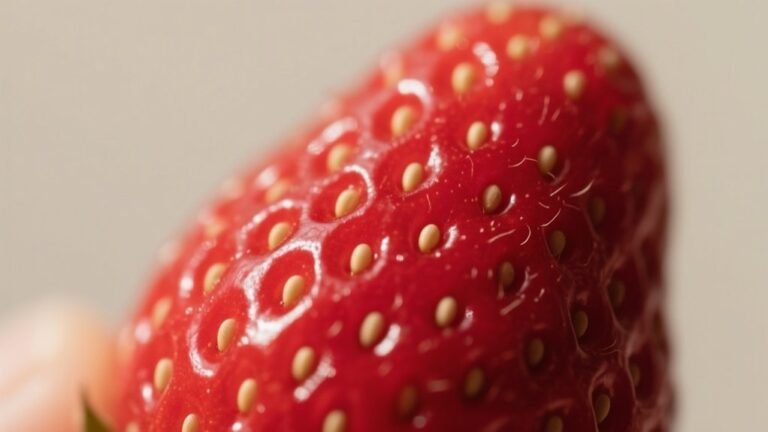

What Causes Strawberry Skin?
You get strawberry skin mostly because your pores get clogged with dead skin, oil, or bacteria, creating those dark spots that look like strawberry seeds. Shaving improperly can cause ingrown hairs and irritation, making the bumps more noticeable.
Sometimes, folliculitis, an infection of hair follicles, worsens the condition. Using the wrong hair removal methods or not moisturizing can also contribute.
Keep exploring if you want to know how to prevent and treat this common concern effectively.
What Does Strawberry Skin Look Like?
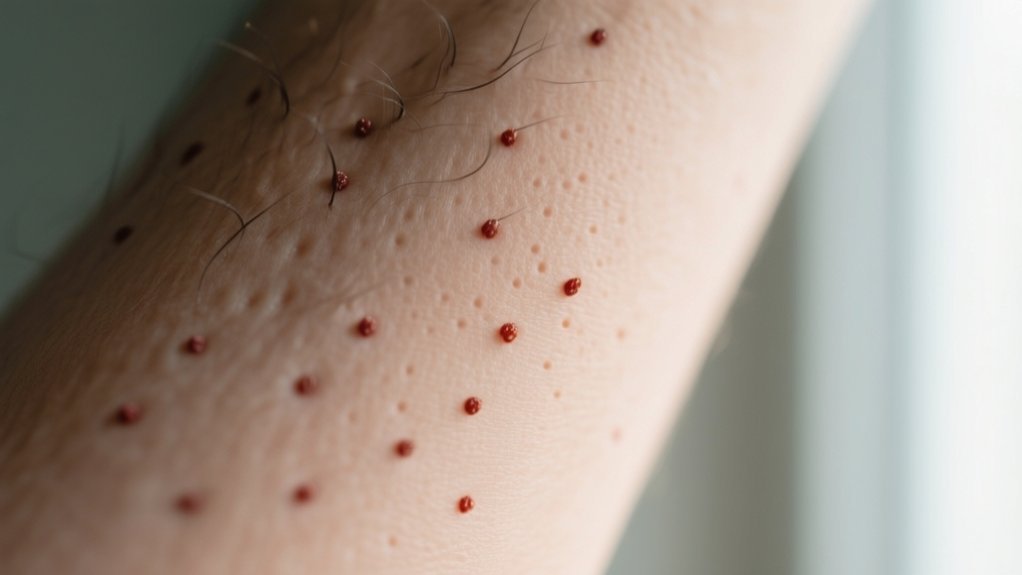
Strawberry skin shows up as small, dark spots that look like strawberry seeds, mostly on your legs. These spots are actually bumps on the skin, often appearing around hair follicles.
Strawberry skin appears as tiny dark bumps near hair follicles, resembling seeds mostly on your legs.
You might notice that the skin looks pitted or dotted, with colors ranging from brown to black or even red, depending on your skin tone.
What’s happening beneath the surface is that clogged pores get filled with dead skin, oil, and bacteria, leading to that distinctive appearance.
While the spots might stand out more if you have lighter skin, everyone can experience these bumps on the skin in some form.
Recognizing strawberry skin helps you understand why your legs sometimes look like they’ve tiny seeds scattered across them.
How Clogged Pores Cause Strawberry Legs
When hair follicles get blocked by dead skin cells, oil, or bacteria, clogged pores form and create those dark spots you see on your legs. These spots resemble strawberry seeds, giving rise to the term strawberry legs.
After shaving or waxing, clogged pores become more noticeable because hair removal exposes them. The trapped bacteria and debris inside these clogged pores can cause inflammation, making the dark spots stand out even more.
To prevent clogged pores and reduce the appearance of strawberry legs, you should regularly exfoliate to remove dead skin cells and keep your skin clean.
Using non-comedogenic products also helps keep your pores clear, minimizing the chances of developing strawberry legs and maintaining smoother skin.
Why Ingrown Hairs Lead to Strawberry Legs
Because ingrown hairs grow back into the skin instead of outward, they cause painful bumps and inflammation that darken the area around hair follicles.
When hair gets trapped beneath the surface, it irritates your skin, leading to redness and tiny dark spots.
These spots, clustered around the hair follicles, give strawberry legs their characteristic speckled appearance.
If you shave improperly, like going against the grain or using dull razors, you increase the chance of ingrown hairs developing.
Over time, repeated irritation can make these darkened follicles more noticeable, worsening strawberry legs.
To prevent this, you should exfoliate regularly and use proper shaving techniques.
Doing so helps keep hair follicles clear and reduces the formation of ingrown hairs, improving your skin’s smoothness and appearance.
How Folliculitis Can Make Strawberry Legs Worse
If you’ve ever dealt with ingrown hairs, you might also be familiar with folliculitis, a condition that can make the appearance of your legs even worse.
Folliculitis is an inflammation or infection of the hair follicles, often triggered by shaving or waxing. It causes redness, swelling, and small, pus-filled bumps that resemble strawberry legs.
Folliculitis inflames hair follicles, causing redness, swelling, and pus-filled bumps that look like strawberry legs.
Here’s how folliculitis worsens strawberry legs:
- It creates additional dark spots and bumps around hair follicles, making strawberry legs more noticeable.
- Bacteria or fungi infect the follicles, increasing irritation.
- Warm, humid conditions promote sweat and bacteria buildup, clogging follicles.
- Aggressive shaving irritates skin, raising folliculitis risk.
Treating folliculitis and using gentle hair removal can improve the look of strawberry legs.
What Is Keratosis Pilaris and How Does It Affect Your Skin?
Keratosis pilaris, often called “chicken skin,” causes small, rough bumps to appear on your upper arms, thighs, cheeks, and buttocks. This happens when keratin, a protective protein, clogs your hair follicles.
While harmless, these rough bumps can make your skin feel uneven. You can manage keratosis pilaris by using regular exfoliation and moisturizing to smooth your skin and reduce bump visibility. It often worsens in dry, cold weather and may run in families.
| Aspect | Keratosis Pilaris Details |
|---|---|
| Cause | Keratin buildup blocks hair follicles |
| Appearance | Small, rough bumps on arms, thighs |
| Management | Exfoliation and moisturizing |
| Risk Factors | Dry skin, family history, cold weather |
How Dry Skin Contributes to Strawberry Legs
Dry skin plays a significant role in the development of strawberry legs by increasing irritation during shaving and making your hair follicles more prone to inflammation.
When your skin lacks moisture, it’s more likely to suffer from clogged pores and ingrown hairs, which cause those dark spots resembling strawberry seeds.
To combat this, focus on regular moisturizing to restore hydration and strengthen your skin’s barrier.
Prevent dead skin buildup that blocks hair follicles and leads to clogged pores.
Also, reducing sensitivity helps prevent inflammation and bump formation.
Managing dry skin conditions like keratosis pilaris is important too, as they worsen the rough texture.
Shaving Tips That Help Prevent Strawberry Legs
When you shave, using the right techniques can greatly reduce the risk of developing strawberry legs.
Always use a sharp, clean razor and replace it regularly to avoid irritation and cuts that clog pores.
Before shaving, apply a generous amount of moisturizing shaving cream or gel to protect your skin and minimize friction.
Shave in the direction of hair growth rather than against it to prevent ingrown hairs, which contribute to strawberry legs.
Rinse your razor frequently during shaving to keep it free of hair and product buildup, ensuring a smoother shave.
After shaving, moisturize your skin with a hydrating lotion to soothe irritation and maintain hydration, helping prevent dryness and the appearance of strawberry skin.
These simple shaving tips can keep your legs smooth and clear.
Can Razor Burn Cause Strawberry Legs?
Razor burn often causes irritation and inflammation around hair follicles, which can make strawberry legs worse.
When you get razor burn, the skin becomes red and bumps form, darkening the pores and contributing to that characteristic strawberry skin look.
To prevent this and reduce strawberry legs, focus on using a sharp, clean razor to avoid skin trauma.
Also, apply proper lubrication like shaving cream to minimize irritation.
Regular exfoliation helps clear clogged pores and dead skin cells.
Moisturizing after shaving soothes your skin and prevents dryness.
If you skip these steps, razor burn can lead to ingrown hairs and worsen strawberry legs.
Do Hair Removal Methods Trigger Strawberry Legs?
Hair removal methods can play a significant role in triggering strawberry legs by irritating hair follicles and causing clogged pores. Shaving with a dull razor or waxing can inflame follicles, leading to bumps and dark spots.
You might worsen strawberry skin by shaving against the grain or skipping proper exfoliation and moisturizing. Regular exfoliation helps clear clogged hair follicles and reduces irritation. Moisturizing keeps skin smooth, preventing further damage.
| Hair Removal Method | Risk Factor | Prevention Tip |
|---|---|---|
| Shaving | Razor irritation | Use sharp razors, shave with the grain |
| Waxing | Follicle trauma | Moisturize post-wax |
| Both | Clogged hair follicles | Exfoliate regularly |
How to Treat and When to See a Doctor About Strawberry Legs
Although strawberry legs can be frustrating, you can effectively treat them with regular exfoliation and daily moisturization to smooth your skin and reduce dark spots.
Here’s how to manage strawberry legs at home and know when to see a dermatologist:
- Use exfoliation products like salicylic acid scrubs to clear clogged pores and remove dead skin cells.
- Moisturize daily with hydrating lotions to improve skin texture and minimize dark spots.
- Adopt proper shaving techniques. Use a sharp razor and shave in the direction of hair growth to prevent irritation and ingrown hairs.
- If your symptoms persist, worsen, or you notice painful bumps or signs of infection, consult a dermatologist for personalized treatment and to rule out underlying conditions.
Frequently Asked Questions
Can Diet Affect the Appearance of Strawberry Skin?
Yes, your diet can definitely affect the appearance of strawberry skin. When you have nutrient deficiencies, your skin mightn’t heal or maintain itself well, making the condition worse.
Staying hydrated supports skin hydration, which helps keep your skin smooth and elastic.
Also, watch out for inflammation triggers like high sugar and processed foods because they can inflame your skin and worsen strawberry skin.
Are Certain Fabrics More Likely to Irritate Strawberry Skin?
Certain fabrics can be like a storm on your skin, stirring up irritation. When you have fabric sensitivity, rough or synthetic materials trap heat and moisture, worsening your skin texture and causing discomfort.
Your clothing choices play a vital role. Opt for soft, breathable fabrics like cotton or bamboo and avoid tight, chemically treated clothes.
These simple swaps can soothe your skin and keep strawberry skin flare-ups at bay.
Does Exercise Influence the Development of Strawberry Legs?
Yes, exercise does influence the development of strawberry legs.
While workout routines boost skin circulation and offer exercise benefits, they can also cause sweating and friction, which may clog pores or irritate hair follicles.
To prevent this, you should maintain good hygiene, wear breathable fabrics, and exfoliate regularly after workouts.
Staying hydrated during exercise also supports skin health, helping keep your legs clear and smooth despite your active lifestyle.
Can Hormonal Changes Cause Strawberry Skin Flare-Ups?
Think of your skin as a delicate garden. When hormonal imbalance strikes, it stirs up flare-up triggers like increased oil and inflammation.
You’ll notice skin sensitivity rising, making your strawberry skin more pronounced.
During puberty, menstruation, or PCOS, these hormonal shifts can cause clogged pores and irritation, worsening the appearance.
Are There Any Natural Remedies to Reduce Strawberry Skin?
Yes, you can reduce strawberry skin using natural oils like jojoba or shea butter to keep your skin hydrated.
Regular exfoliation methods, such as gentle scrubs made from sugar or coffee grounds mixed with olive oil, help remove dead skin and unclog pores.
Herbal treatments like aloe vera gel soothe irritation and promote healing after shaving.
Incorporate these into your routine, and you’ll notice smoother, healthier skin over time.
Conclusion
So, it turns out your “strawberry skin” isn’t just a quirky nickname—it’s clogged pores, ingrown hairs, and maybe even folliculitis throwing a party on your legs. Who knew your skin could be so dramatic?
But don’t worry. With the right shaving tips and a bit of TLC, you can send those strawberry seeds packing. If things get out of hand, don’t hesitate to see a doctor because your legs deserve better than a fruit salad look.