
Identifying and Understanding Strawberry Birthmarks
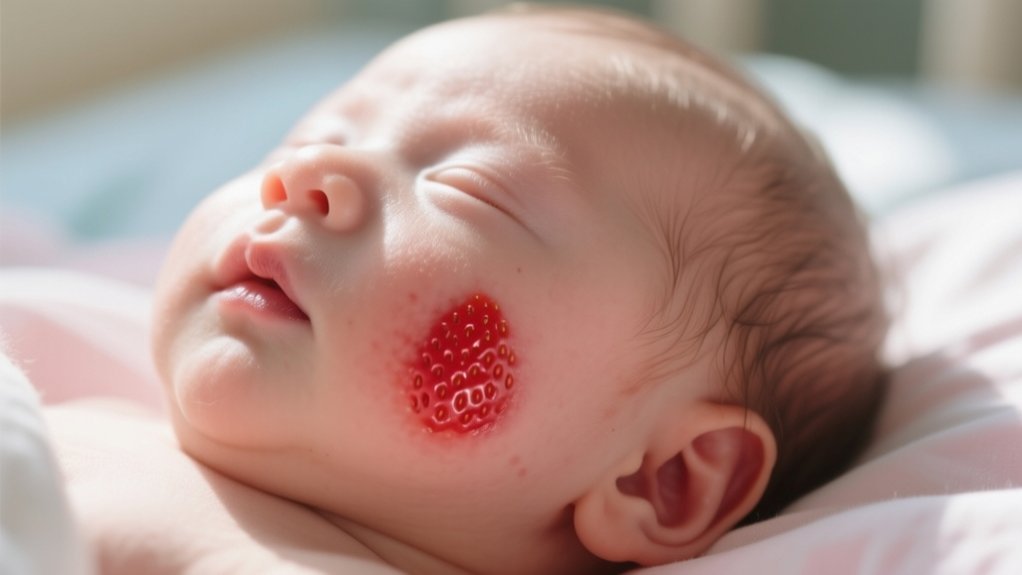
You’ll notice strawberry birthmarks as bright red, raised bumps appearing on your baby’s skin within weeks after birth, caused by extra blood vessels growing abnormally. They’re common, affecting about 4 to 5 out of 100 infants, especially girls and premature babies.
Most fade naturally, but some near the eyes or mouth might need treatment to prevent issues like vision or feeding problems. If you want to understand their types, symptoms, and care options, there’s more to explore.
What Is a Strawberry Hemangioma?
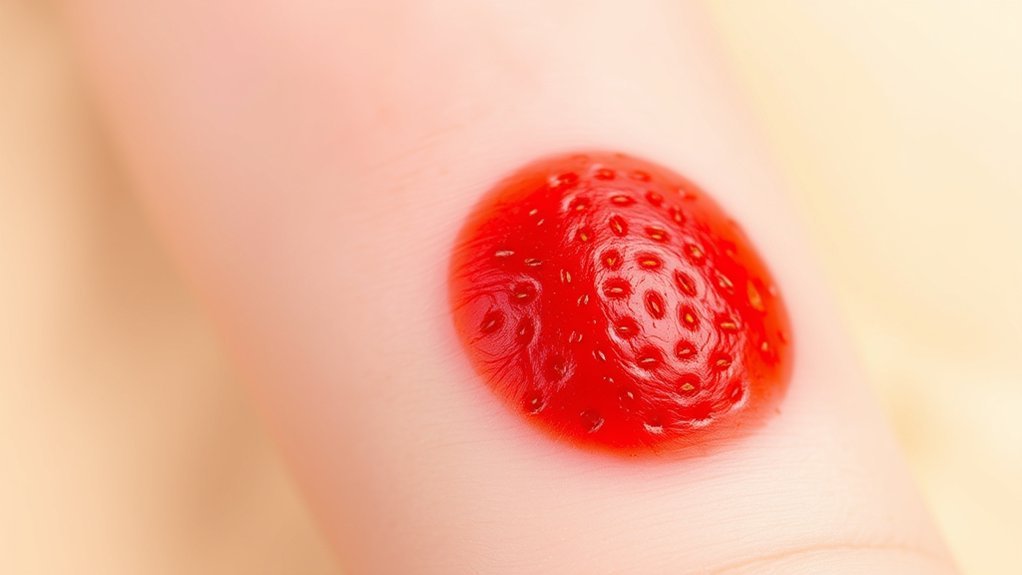
A strawberry hemangioma is a common benign tumor made up of extra blood vessels that form a raised red growth on an infant’s skin.
These hemangiomas, also called infantile hemangiomas, often appear within the first few weeks after birth and grow rapidly during the baby’s first year.
While the bright red appearance might worry you, most of these growths are harmless and typically don’t require treatment.
In fact, many infantile hemangiomas shrink and disappear on their own by age 10.
However, if a hemangioma is near sensitive areas like the eyes or mouth, your doctor might suggest monitoring or treatment to avoid complications.
Understanding what these hemangiomas are helps you stay informed and prepared for your infant’s care.
How Common Are Strawberry Hemangiomas in Infants?
Strawberry hemangiomas affect about 4% to 5% of newborns, making them the most common benign tumors in infants. You’ll often see these hemangiomas appear within the first few weeks after birth, usually becoming noticeable by 4 weeks of age.
While they can develop in any infant, they’re especially common in premature babies and those with low birth weights. Girls tend to get hemangiomas more often than boys, with a ratio of about 5:1, and Caucasian infants are more frequently affected.
Although the exact reason behind their rising incidence over the past 30 years isn’t fully understood, it’s important to know that most strawberry hemangiomas don’t cause problems and will gradually fade away by the time the child turns 10.
What Causes Strawberry Hemangiomas to Develop?
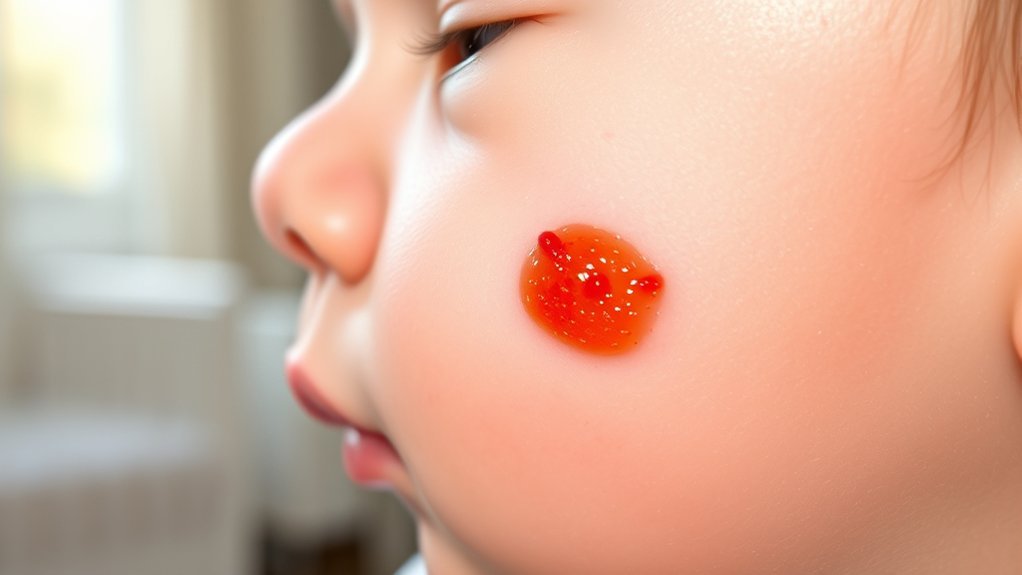
You might be curious about how strawberry hemangiomas actually form.
Well, they happen because of an unusual growth of blood vessels and the cells that line them, called endothelial cells, just beneath the skin. Several things can play a role in this, like whether the baby is a girl or boy, their birth weight, and even their genetics.
Origin of Hemangiomas
Understanding what causes hemangiomas can help you grasp why these birthmarks develop during infancy. The origin of hemangiomas lies in the improper development of blood vessels and cells near the skin, though the exact cause remains unclear.
You should know that certain risk factors, like low birth weight and premature birth, increase the chances of hemangiomas forming. While genetic links exist, most cases appear sporadically without family history.
Environmental influences during pregnancy, such as maternal health and age, might also play a role. Hypoxic stress is thought to trigger the production of factors that promote abnormal blood vessel growth.
Risk Factors and Causes
Although the exact cause remains unclear, strawberry hemangiomas develop when blood vessels and endothelial cells form improperly during infancy.
You should know that several risk factors increase the chance of these hemangiomas appearing, especially within the first year of life.
Girls are more likely to develop them than boys, and Caucasian infants see higher rates too. Being born prematurely, having a low birth weight, or being part of multiple births also raises your risk. If you’re the firstborn child, that can increase the likelihood as well.
While environmental factors during pregnancy might play a role, there’s no direct link to specific parental actions or pregnancy conditions.
What Types of Strawberry Hemangiomas Are There?
Strawberry hemangiomas come in three main types, each with distinct appearances and characteristics.
You’ll find superficial hemangiomas as raised, bright red marks that look just like strawberries and usually show up by four weeks of age.
Deep hemangiomas, on the other hand, develop beneath the skin, appearing bluish or bruise-like, and may not be visible at birth.
Mixed hemangiomas combine features of both, showing red, raised areas alongside bluish patches under the skin.
Understanding these types helps you identify the hemangioma more accurately and anticipate its behavior.
If you notice any strange marks on your infant’s skin, recognizing these distinctions can guide you toward proper care and monitoring.
How Do You Recognize Symptoms and Growth Stages?

You’ll usually notice strawberry birthmarks as bright red or purple lumps that appear within the first month of life.
They tend to grow pretty quickly over the first few weeks. After that, they slowly start to shrink, usually around the one-year mark.
It’s good to pay attention to how they feel — they’re typically firm and not itchy.
Watching how they change over time can really help you understand their different growth stages better.
Early Appearance Signs
How can you spot a strawberry hemangioma early on? These strawberry marks usually appear within the first month of life as small, raised red or purple spots on your baby’s skin.
Hemangiomas appear quickly and are firm to the touch without any itching. You’ll notice these marks often growing rapidly during the initial weeks, but at this early stage, they’re just small, distinct bumps.
It’s important to monitor them closely, especially if they show up on the face or near the eyes since their size and location could affect crucial functions or your child’s self-esteem later on.
Recognizing these early signs helps you stay informed and prepared to track their progression carefully as your child grows.
Growth Patterns Timeline
Once you’ve spotted those early red bumps, tracking their growth over time helps you understand what to expect.
Hemangiomas are common in infants and typically show rapid growth within the first six months, often reaching their peak size by 5 to 7 weeks.
After this, the growth patterns shift as the birthmark begins to shrink around 12 months. This involution phase can last several years, with about half resolving by age 5 and nearly all by age 10.
Monitoring your child’s health regularly, especially through pediatric check-ups, guarantees any changes are noted promptly.
Understanding these stages helps you stay informed and reassured about the natural progression of strawberry birthmarks without unnecessary worry.
Typical Symptom Features
Strawberry hemangiomas usually show up as raised, bright red or purple marks on your baby’s skin, often resembling tiny strawberries.
These strawberry marks have a firm texture and a non-itchy surface, making them easy to distinguish from other skin conditions.
You’ll often notice rapid growth within the first 5 to 7 weeks, with the mark expanding quickly in size.
The texture might vary, sometimes appearing rubbery red or bluish, depending on the hemangioma type.
After this rapid growth phase, the birthmark typically stabilizes before gradually shrinking, often starting around 12 months.
While most hemangiomas fade considerably by age 5 to 10, keep an eye out for any changes like ulceration or bleeding, and consult a doctor if these occur.
When Should You See a Doctor About a Strawberry Hemangioma?
When should you be concerned about a hemangioma on your child’s skin?
You should see a healthcare provider if the hemangioma is near the eye, as it may affect vision and need urgent care.
Hemangiomas near the eye require prompt medical evaluation to prevent vision problems and ensure timely care.
Also, if the hemangioma is larger than 2 cm, it may need closer monitoring to prevent complications.
Rapid growth, changes in appearance, ulceration, bleeding, or discomfort are signs that you should seek medical advice promptly.
Discuss treatment options with your pediatrician if the hemangioma causes cosmetic concerns or impacts your child’s self-esteem, especially in visible areas.
Knowing when a hemangioma requires professional attention guarantees your child gets timely support and avoids potential complications.
When and How Are Strawberry Hemangiomas Diagnosed?
You’ll usually spot a hemangioma within the first month of your baby’s life, thanks to its distinct raised, red, and rubbery texture.
Although strawberry marks aren’t always visible at birth, they often become apparent by four weeks of age as they rapidly grow.
Diagnosis mainly relies on this characteristic appearance, so your healthcare provider can typically confirm it through visual assessment alone.
In rare cases, if the diagnosis isn’t clear, a skin biopsy might be done to rule out other conditions.
After diagnosis, regular follow-up visits help track the hemangioma’s progress and any changes.
Understanding when and how strawberry hemangiomas are diagnosed guarantees you stay informed about your baby’s skin health and what to expect moving forward.
When and How Are Strawberry Hemangiomas Treated?
Although many hemangiomas fade on their own, treatment becomes important if they interfere with your baby’s vision, hearing, or cause noticeable cosmetic issues.
In these cases, doctors may recommend early intervention, especially for hemangiomas near the eyes or face that grow rapidly or are larger than 2 cm.
A common treatment is a topical beta blocker, which helps the hemangioma go away by shrinking the blood vessels.
Other options include oral beta blockers, local steroids, or laser therapy, depending on your child’s health and the hemangioma’s size and location.
Most strawberry hemangiomas naturally shrink over time, but regular check-ups allow your healthcare provider to monitor progress and decide if treatment is necessary to protect your child’s well-being and appearance.
What Complications Can Strawberry Hemangiomas Cause?
If your child has a strawberry hemangioma near the eyes, it might affect their vision or tear ducts if it’s not monitored closely.
And when hemangiomas are around the mouth, they can sometimes cause feeding or breathing problems as they grow.
It’s also important to keep an eye out for any skin breakdown, because that can lead to painful sores and infections.
Vision Problems Risk
When strawberry hemangiomas develop near your eyes, they can block your vision and cause amblyopia if left unchecked.
These hemangiomas may also cause eyelid ptosis, which interferes with normal vision development.
About 10% of hemangiomas can ulcerate, leading to complications that affect nearby eye structures.
That’s why early identification of hemangiomas, especially in significant facial areas, is essential to prevent lasting vision problems.
Regular check-ups with your healthcare provider help catch issues before they worsen.
If you notice a birthmark near your child’s eye, don’t delay in seeking medical advice.
Acting promptly can protect your child’s vision and avoid complications that may impact their sight and overall eye health.
Skin Breakdown Issues
Strawberry hemangiomas don’t just pose risks to vision; they can also cause skin breakdown that leads to ulcers or open sores. This skin breakdown occurs in up to 10% of cases and may result in painful wounds that risk infection.
If your child’s hemangioma is in an area prone to friction or trauma, complications like bleeding can arise, so you’ll need to monitor it closely.
These complications may cause permanent skin changes such as scarring or discoloration, especially in larger or facial hemangiomas.
Early recognition and management of skin breakdown are essential to prevent worsening issues and support your child’s physical and emotional well-being.
Understanding these risks helps you act quickly to protect your child’s delicate skin and overall health.
Breathing Difficulties Potential
How can hemangiomas affect your child’s breathing?
When strawberry hemangiomas develop in the nasal or laryngeal passages, they can cause serious breathing difficulties by blocking the airway.
If your child has large facial hemangiomas, especially near the nose or mouth, the risk of airway obstruction increases greatly.
About 10% of these hemangiomas may ulcerate, which can lead to infections that worsen breathing problems.
Rapidly growing or ulcerated hemangiomas require prompt specialist evaluation to prevent severe respiratory distress.
Early intervention is key to managing complications and ensuring your child’s airway remains clear.
If you notice signs of breathing difficulties, don’t delay in seeking medical advice to protect your child’s health and comfort.
What Is the Long-Term Outlook for Children With Strawberry Hemangiomas?
Although strawberry hemangiomas often grow rapidly during the first year, you’ll find that about 90% of them resolve by age 10, usually leaving minimal skin changes. The long-term outlook for children with these strawberry marks is generally positive.
Most hemangiomas start shrinking around 12 months without intervention. However, complications can sometimes arise, especially if the hemangioma is near sensitive areas like the eye, potentially affecting vision.
About 8% of children may experience permanent skin changes such as discoloration or scarring after the hemangioma fades. To guarantee the best outcome, regular monitoring by healthcare providers is essential.
They’ll watch for any complications and decide if treatment is necessary, particularly for larger or problematic hemangiomas. Overall, most children do very well with minimal lasting effects.
Frequently Asked Questions
Can Strawberry Birthmarks Appear Anywhere on the Body?
Yes, strawberry birthmarks can appear almost anywhere on your body, including common locations like the face, scalp, torso, and limbs.
You’ll notice appearance variations depending on where they develop; some might be bright red and raised, while deeper ones could look bluish.
Treatment options depend on their size, location, and potential complications, so it’s important to monitor them closely, especially near crucial areas like your eyes or airway.
Are Strawberry Hemangiomas Hereditary or Genetic?
You might think strawberry hemangiomas are passed down through genetic inheritance, but the truth isn’t so clear-cut.
While family history can sometimes hint at a higher hemangioma risk, these birthmarks aren’t directly inherited.
Researchers haven’t pinpointed specific genes responsible, and most cases appear sporadic.
Do Strawberry Birthmarks Cause Pain or Discomfort?
Strawberry birthmarks generally don’t cause pain or discomfort, as their pain perception is minimal in most cases.
However, if complications like ulceration occur, you might notice some pain or irritation.
Treatment options vary, so it’s important to consult a healthcare provider if discomfort arises.
Also, consider the psychological impact these birthmarks might’ve on your child’s self-esteem, and seek support if needed to manage emotional well-being alongside physical care.
Can Strawberry Hemangiomas Affect a Child’s Development?
Yes, strawberry hemangiomas can affect your child’s development, especially if they interfere with developmental milestones like vision or feeding.
You’ll want to watch for any emotional impact too, since visible birthmarks might affect your child’s self-esteem and social skills.
Thankfully, there are treatment options available if the hemangioma causes complications or doesn’t shrink on its own.
Early evaluation by healthcare providers helps guarantee your child’s growth stays on track.
Are There Natural Remedies to Reduce Strawberry Birthmarks?
You won’t find scientifically proven natural treatments to reduce strawberry birthmarks.
While some people try topical applications or home remedies like natural oils or herbal products, these methods haven’t been validated through clinical studies.
It’s best to monitor the birthmark since most shrink and fade on their own.
Always consult a healthcare provider before trying any treatment to guarantee it’s safe and won’t cause complications.
Conclusion
So, you’ve got a strawberry birthmark, lucky you! While it sounds like a tasty treat, it’s really just a harmless little tumor that loves to show off during infancy.
Most of the time, it fades away all on its own, no fancy treatments needed. Just remember, this “berry” is more about biology than breakfast. Keep an eye on it, but don’t stress. Nature’s got this one under control.