
Choosing the Perfect Strawberry: Tips and Tricks
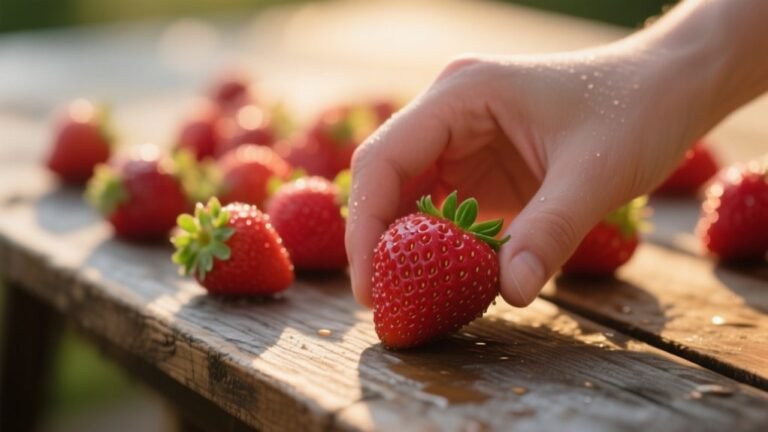
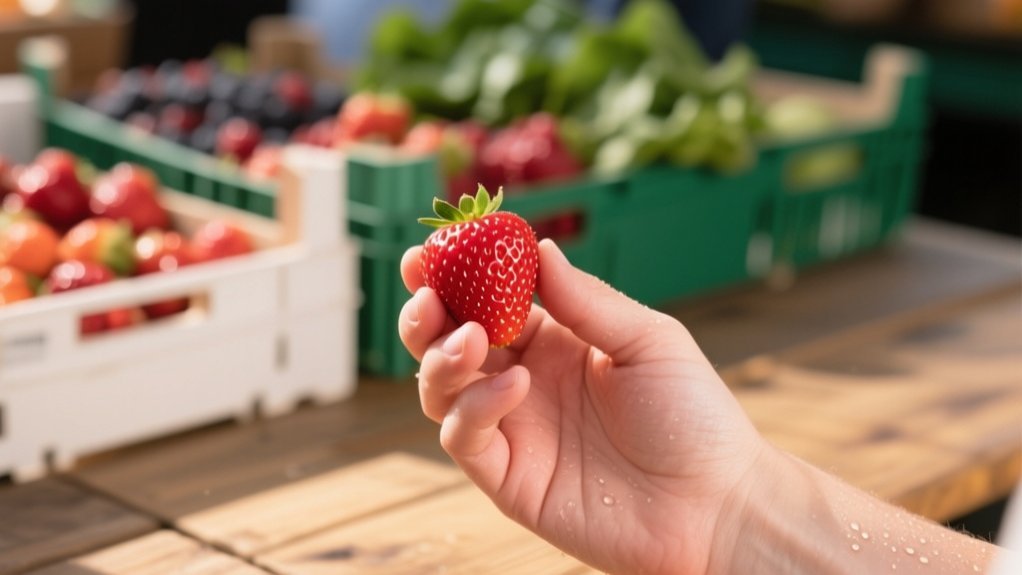
To choose the perfect strawberry, look for a deep ruby red color that reaches all the way to the top. The “Tippy Top” rule guarantees sweetness. Gently squeeze to check firmness; ripe berries feel firm but not hard.
Smell them for a sweet, fresh aroma, and avoid any with bruises or mold. Keep the green crowns intact and store berries unwashed in a cool spot. Want to know how to pick strawberries for smoothies or jam?
How to Identify a Perfectly Ripe Strawberry
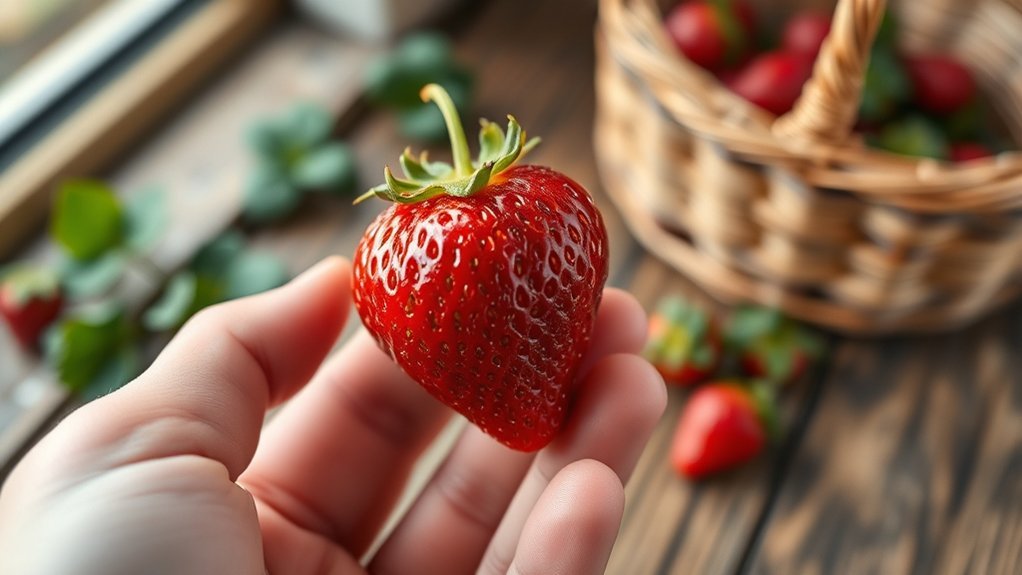
When you’re picking strawberries, look for ones with a deep ruby red color that reaches the top; this signals they’ll be sweet and juicy.
Make sure the redness is consistent and extends all the way to the hull, or calyx, as this means the fruit has a higher sugar content and fuller flavor.
Check the underside for any pale yellow or light red spots. These often indicate the strawberry isn’t fully ripe or firm.
Also, inspect the packaging carefully for any signs of mold or bruising.
Finally, don’t forget to use your nose: a pleasant aroma is a strong indicator of freshness and quality.
When and Where to Buy Strawberries for Peak Quality
Finding strawberries at their peak quality means paying attention to both timing and location. To pick the best, shop during their season, late spring through summer, with peak freshness from May to July. Local farmers’ markets are your best bet, offering freshly picked berries bursting with flavor. Avoid grocery stores unless the strawberries meet strict quality checks, including deep red color and no mold.
| Time of Year | Location | Quality Tip |
|---|---|---|
| May to July | Local Farmers’ Markets | Freshly picked, best flavor |
| June to August | Grocery Stores | Check for mold, bruising |
| Spring | Local Farms | Smell strawberries for ripeness |
Why the ‘Tippy Top’ Rule Matters for Strawberry Sweetness
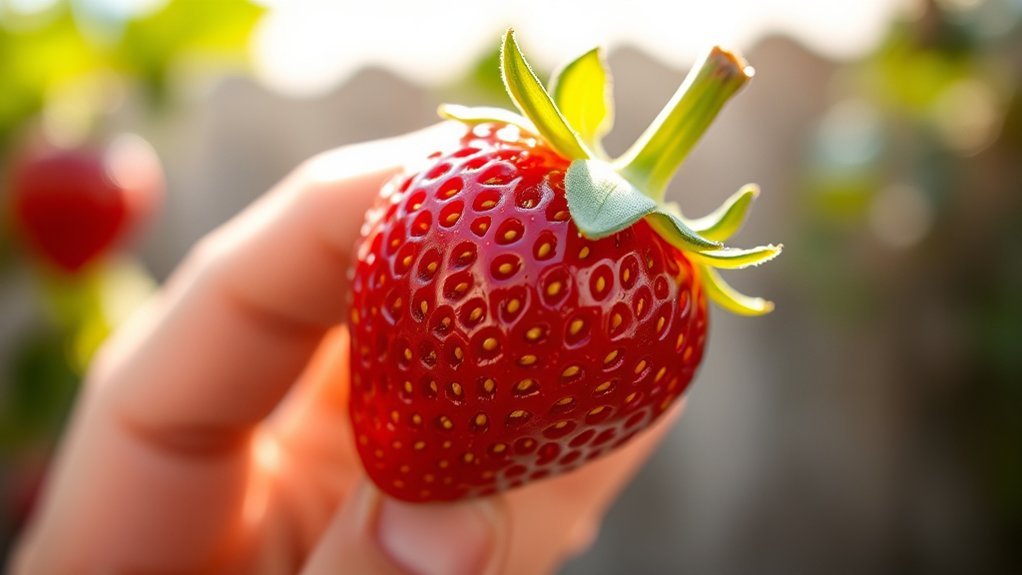
You’ll want to check the color all the way to the top of the strawberry, right under the leafy cap.
If the red reaches the hull, you’re looking at a sweeter berry. Pale or uneven coloring usually means less sweetness, so don’t skip this quick check.
It’s a simple trick but makes a big difference when you’re picking the best strawberries!
Color Indicates Sweetness
Color plays an essential role in telling you how sweet a strawberry will be. When you pick strawberries, look for deep ruby red all the way to the tops, no little green or pale yellow patches. That “Tippy Top” rule guarantees the fruit’s sweetness reaches the hull or calyx, signaling maximum sugar content.
Strawberries with less red, especially near the tops, tend to be firmer and less sweet, so save those for recipes or cooking.
Next time you shop, avoid berries with uneven color or light red spots; instead, choose those with rich, consistent redness for a juicy, sweet bite.
Paying attention to color on strawberry tops helps you pick the best berries for fresh eating every time.
Check Under Leafy Hat
Why should you always check beneath the leafy hat of a strawberry? The leafy hat benefits you by hiding vital sweetness indicators right at the tippy top.
According to the strawberry color guide, strawberries with deep ruby red color extending all the way to the hull or calyx are the sweetest and juiciest.
When you lift that leafy hat, you can spot if the fruit’s color reaches the top, signaling maximum ripeness. Strawberries with pale yellow or light red under the leafy hat tend to be firmer and more tart, while ultra-red patches mean enhanced sweetness.
Following the ‘Tippy Top’ rule guarantees you pick strawberries bursting with flavor, perfect for smoothies, jams, or eating fresh. Don’t skip this simple check; it makes all the difference.
What Strawberry Color Reveals About Flavor
When selecting strawberries, pay close attention to their color. Deep ruby red all the way to the top signals maximum sweetness and juiciness. Among various strawberry varieties, the color spectrum plays an essential role in revealing flavor profiles.
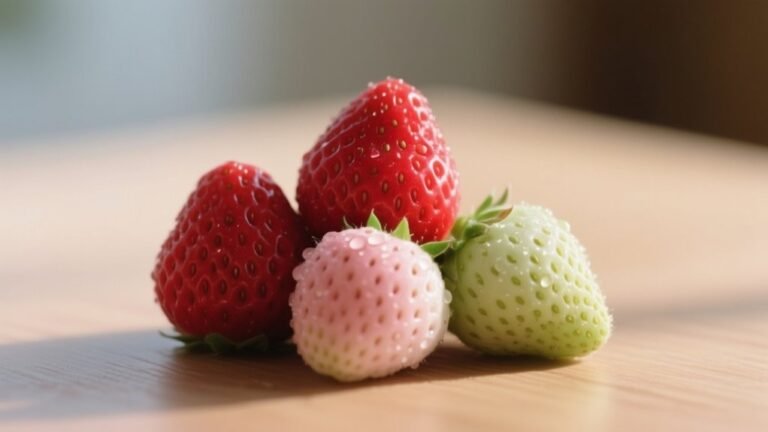
Strawberries that show a uniform deep red, especially reaching the hull or calyx, guarantee a sweeter taste, perfect for eating fresh. Lighter strawberries, ranging from pale yellow to light red, usually indicate less sweetness and a firmer texture, better suited for cooking or longer storage.
Dark red patches enhance sugar content, making those berries ideal for jams or smoothies.
How to Tell if Strawberries Are Firm and Fresh
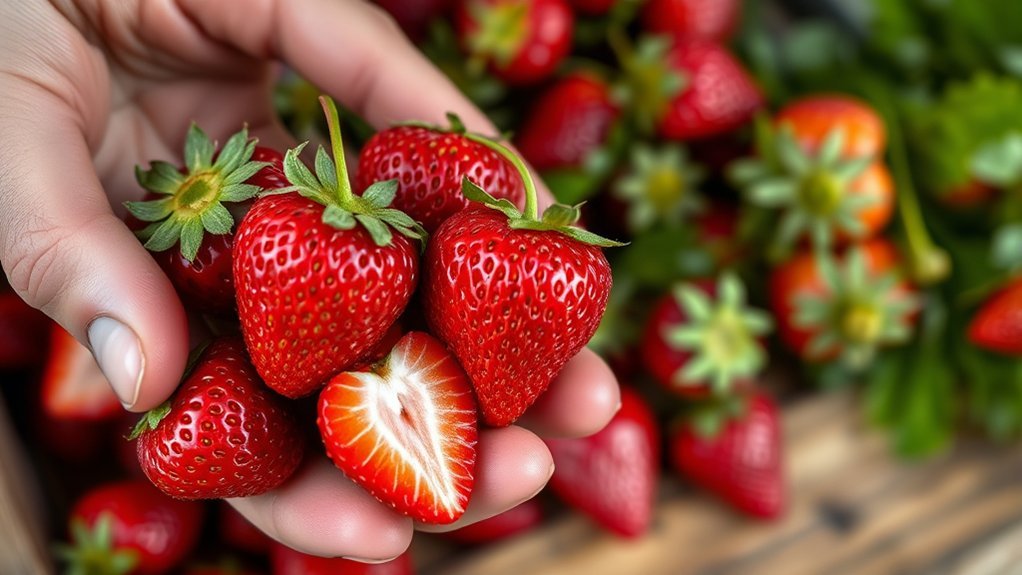
You’ll want to gently squeeze the strawberries to check their firmness. They should feel firm but not hard or mushy.
Also, take a close look for any bruises, mold, or discoloration—these could mean they’re past their prime.
Fresh strawberries usually have a sweet, fragrant aroma, so trust your nose as much as your touch.
Checking Strawberry Texture
Although vibrant color catches your eye first, checking the texture of strawberries is key to ensuring they’re fresh and firm. Use texture comparison techniques by feeling several berries to notice consistency.
Employ firmness testing methods. Gently squeeze each strawberry; it should give slightly but not be overly soft or squishy. Mushy spots indicate spoilage, so avoid those.
Sensory evaluation tips include inspecting the green crowns. Fresh strawberries have bright green, not wilted, hulls.
Also, steer clear of any bruised or leaking strawberries, as these are past their prime.
Signs of Freshness
A deep ruby red color that extends to the hull signals a strawberry’s sweetness and juiciness.
When selecting seasonal strawberries, look for firm berries that don’t yield to gentle pressure. That’s a clear sign of freshness.
Avoid any with green or white patches, as they’re unripe and less flavorful.
Check the container’s bottom for mold or bruising, which means the strawberries weren’t handled carefully or are aging.
Fresh strawberries often give off a strong, pleasant aroma, so trust your nose when shopping.
If you can, choose organic options from local farms; they tend to be fresher and picked at peak ripeness.
Following these tips guarantees you get the best-tasting, firm, and fresh strawberries every time.
How to Spot Mold and Bruising on Strawberries
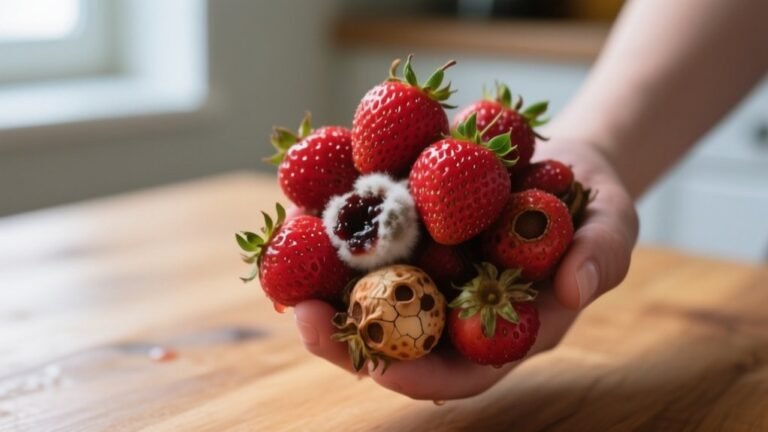
When inspecting strawberries, start by checking the bottom of the package for any signs of mold, since visible mold there often means the entire batch could be compromised.
Use mold detection techniques like looking for fuzzy, white, or gray patches, which are clear spoilage indicators.
Next, examine each strawberry for bruising effects. Dark or soft spots signal damage and faster spoilage.
Avoid packages with smashed fruit or leaking juice, as these are signs of poor handling and aging.
Also, guarantee the strawberries have consistent color without discoloration that could hint at bruising.
Finally, trust your nose; fresh strawberries emit a strong, pleasant aroma, while off-putting smells suggest mold or spoilage.
Spotting these signs helps you pick the freshest, safest strawberries every time.
Picking Strawberries for Different Uses
Since different recipes and uses demand varying levels of sweetness and firmness, you’ll want to pick strawberries that match your intended purpose.
For immediate eating, choose dark ruby-red strawberry varieties known for their juicy sweetness.
When making homemade jam, look for berries with deep red patches to enhance flavor profiles.
If you’re blending smoothies, select strawberries that are fully ruby red to the hull for maximum sweetness.
Firmer, less-red strawberries are better for longer fridge storage and gradual juicing since they maintain freshness.
Seasonal picking also influences your choice. Early season berries may be firmer, while peak season offers sweeter options.
Matching strawberry varieties and their flavor profiles to your needs guarantees the best taste and texture every time.
Best Ways to Store Strawberries to Keep Them Fresh
Though strawberries are delicious, they spoil quickly if not stored properly. To keep them fresh, use effective strawberry preservation methods like lining a container with paper towels to absorb excess moisture. This moisture control technique helps prevent mold and extends freshness.
Always keep the green crowns on the berries while storing, as they help maintain quality and flavor. Avoid washing strawberries until just before you eat them, since moisture speeds spoilage.
Check each strawberry for mold or bruising before storage to guarantee only the best ones are kept. Store your container in the refrigerator under ideal storage conditions—cool and dry.
How to Enjoy Different Types of Strawberries in Recipes
When you’re making smoothies, go for ultra-red strawberries. They’re naturally sweet, so you won’t need to add any extra sugar.
If you want to store berries for a while, it’s best to pick firmer ones. They hold up well over time and won’t get mushy too quickly.
And when you’re making rich, flavorful jam, ruby-red strawberries are the way to go. Their juiciness and deep flavor really make a difference.
Sweet Strawberries For Smoothies
If you want to make your smoothies truly delicious, choose dark ruby-red strawberries for their natural sweetness and juiciness. These ultra-sweet berries, especially those with deep red color reaching the hull, create a revitalizing smoothie base.
Don’t hesitate to use slightly overripe strawberries. Their extra sweetness enhances flavor naturally, showcasing the overripe strawberry benefits in your drinks.
For balanced smoothie flavor combinations, mix these ultra-sweet berries with firmer ones to add texture and complexity. When trying new strawberry smoothie recipes, this balance can make a big difference.
To keep your strawberries fresh, store them in a paper-towel lined container and wash just before blending. This way, you get the best taste and texture every time you make a smoothie.
Firmer Berries For Storage
Because firmer strawberries hold up better over time, you can store them longer in the fridge without worrying about spoilage. This storage benefit makes them perfect when you want to prepare recipes ahead or keep berries fresh for days.
In cooking applications, firmer berries maintain their shape, which is great for sauces and desserts like tarts or shortcakes, where texture enhancement matters. They add a pleasant crunch to salads and salsas, keeping dishes fresh without sogginess.
While sweeter, ultra-red strawberries shine in smoothies, firmer ones help balance consistency without adding too much sweetness.
Choosing firmer strawberries lets you enjoy their versatility and extend their usability in your kitchen, making them a smart pick for recipes that require both durability and texture.
Ruby-Red Berries For Jam
Selecting the right strawberries can make all the difference in your homemade jam. Choose dark ruby-red berries with full redness to guarantee ideal sweetness and juiciness.
Slightly firmer strawberries work best, as they hold their shape during cooking, enhancing your jam’s texture. Avoid berries with light or yellow patches, which may weaken flavor.
| Strawberry Type | Flavor Profile | Preserving Techniques |
|---|---|---|
| Dark Ruby-Red | Sweet, rich | Cook gently to maintain consistency |
| Slightly Firm | Balanced sweetness | Use jam consistency tips for structure |
| Light/Yellow Patches | Less sweet, bland | Not recommended for jam |
Taste berries before cooking to adjust sugar levels and perfect your strawberry flavor profiles.
Expert Picking Tips From the Produce Guy
How can you tell if strawberries are truly at their peak? The produce guy recommends looking for a deep ruby red color at the top, signaling maximum sweetness and juiciness. This is called the Tippy Top Rule.
Look for a deep ruby red top—the Tippy Top Rule—for the sweetest, juiciest strawberries.
Check for consistent color throughout and avoid berries with mold or bruises at the bottom. If you want strawberries to store longer, pick firm ones; ultra-red berries are best for immediate eating or jam.
Don’t hesitate to ask experts at local markets. They know the best strawberry varieties and can guide you on seasonal availability.
Keep the green crowns on during storage and wait to wash strawberries until you’re ready to eat. Following these tips helps you enjoy the freshest, tastiest strawberries every time.
Frequently Asked Questions
Can Strawberries Cause Allergic Reactions in Some People?
Yes, strawberries can cause allergic reactions in some people. If you experience symptoms like itching, hives, or swelling, you might’ve a strawberry allergy.
People with birch pollen allergies often face strawberry cross-reactivity, which increases their risk.
Managing strawberry allergies means avoiding strawberries and consulting an allergist for proper testing and treatment.
Always pay attention to your body’s response and seek professional advice if you suspect an allergy.
Are Organic Strawberries Healthier Than Conventionally Grown Ones?
Imagine biting into a bright, juicy strawberry bursting with flavor. That’s often organic strawberries for you.
They usually offer better nutritional benefits, like higher antioxidants, compared to conventional ones.
You might notice subtle taste differences, with organic berries tasting fresher. However, they can cost more, so you’ll need to weigh the health perks against your budget.
Ultimately, choosing organic means fewer pesticides and potentially richer flavor in every bite.
How Do Pesticides Affect Strawberry Taste and Safety?
Pesticide residue can dull the strawberry’s natural flavor profile, making it taste less vibrant and fresh.
When you eat strawberries with pesticide residue, you might face health concerns since these chemicals can linger on the fruit’s surface.
While washing helps reduce residue, it doesn’t remove it completely.
Choosing organic strawberries often means fewer pesticide residues, which can result in a better flavor and lower health risks for you.
Can Frozen Strawberries Be Used as a Substitute for Fresh Ones?
Yes, you can definitely use frozen strawberries as a substitute for fresh ones in many recipes. When trying frozen strawberry recipes, just make sure to use proper thawing techniques to get the best texture and mix evenly.
While the texture changes a bit, the flavor comparison shows frozen strawberries hold their sweetness and nutritional value well, making them a tasty and convenient alternative in smoothies, sauces, and baked goods.
What Are the Environmental Impacts of Strawberry Farming?
Strawberry farming isn’t always a walk in the park for the environment. You’ll see heavy water usage, sometimes up to 1,200 gallons per acre daily.
Soil health can also take a hit from pesticides and fertilizers.
But don’t worry, sustainable practices like organic farming and integrated pest management are stepping in to save the day.
They help protect soil and reduce water waste, making strawberry farming kinder to our planet.
Conclusion
Now that you know how to spot the perfect strawberry, why settle for anything less? Remember to check for vibrant color, firm texture, and that sweet “tippy top” for the best flavor.
Whether you’re picking strawberries for snacking, baking, or salads, these tips’ll help you choose only the best. Store them right to keep that freshness longer.
So, next time you’re at the market, won’t you give these tricks a try?