
What Does the Strawberry Moon Mean in Astronomy?
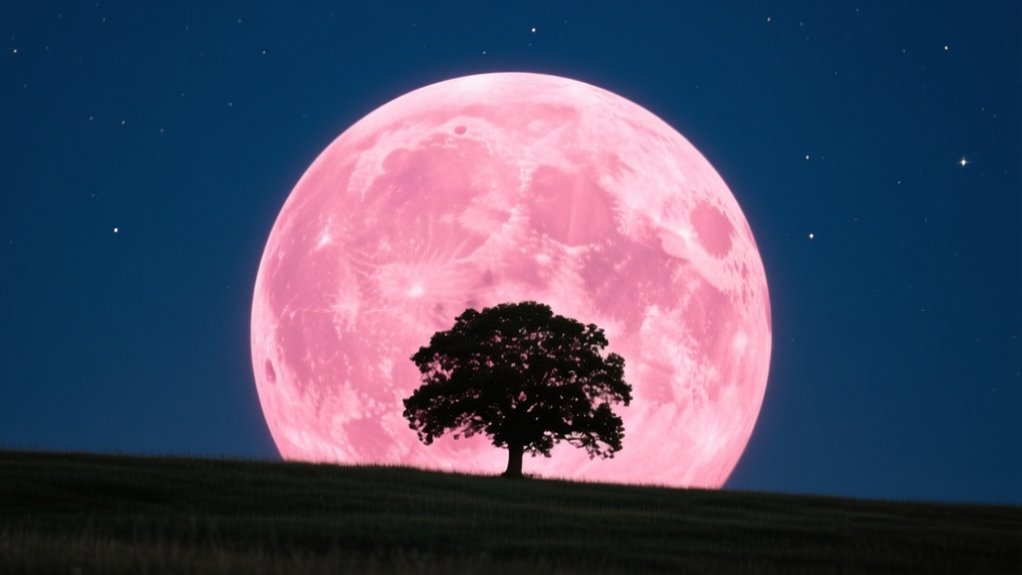
The Strawberry Moon is the full moon in June, signaling the ripening of wild strawberries and the start of summer. You’ll notice it looks larger and sometimes reddish due to atmospheric effects and a rare major lunar standstill.
It falls in Sagittarius, encouraging growth and adventure. This moon is key for astronomers tracking lunar cycles and seasonal changes. If you want to learn about its timing, significance, and how to best observe or photograph it, keep exploring.
What Is the Strawberry Moon? An Astronomical Overview
The Strawberry Moon, rising in June, signals a time of growth and abundance tied to the ripening of wild strawberries. This full moon is one of the many full moons celebrated for its unique timing and cultural significance.
When you look up during the Strawberry Moon, you’ll notice it often appears larger and may take on a reddish hue. This happens because of its low position near the horizon and atmospheric effects.
This particular full moon falls in the fire sign Sagittarius, inspiring adventure and personal growth.
The Strawberry Moon is also linked to a major lunar standstill that influences its visibility.
Understanding these features helps you appreciate how the Strawberry Moon stands out among other full moons throughout the year.
When Does the Strawberry Moon Occur Each Year?
Each year, the Strawberry Moon lights up the sky in June, signaling a special time tied to nature’s rhythms.
This month’s full moon marks the peak of the strawberry season and varies annually in its exact timing.
For example, in 2025, the Strawberry Moon will peak on June 11 at 3:44 a.m. ET.
To help you understand when to look up, here’s what you need to know:
- The Strawberry Moon always occurs in June, marking that month’s full moon.
- Its timing shifts slightly each year, depending on the lunar cycle.
- The moon’s zodiac sign changes annually; in 2025, it will be in Sagittarius.
Why Is It Called the Strawberry Moon?
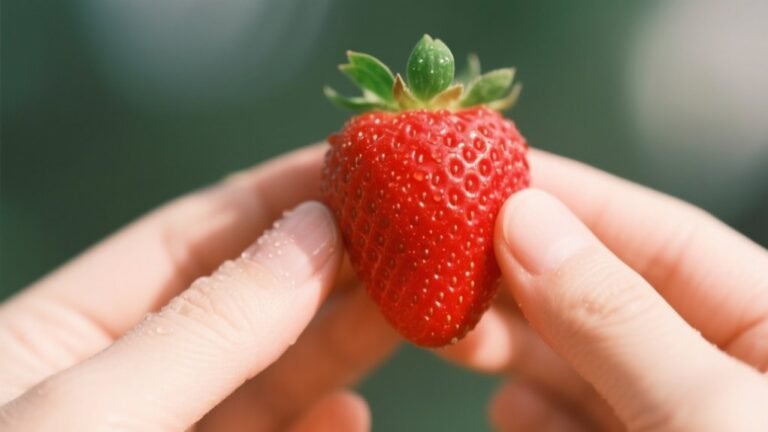
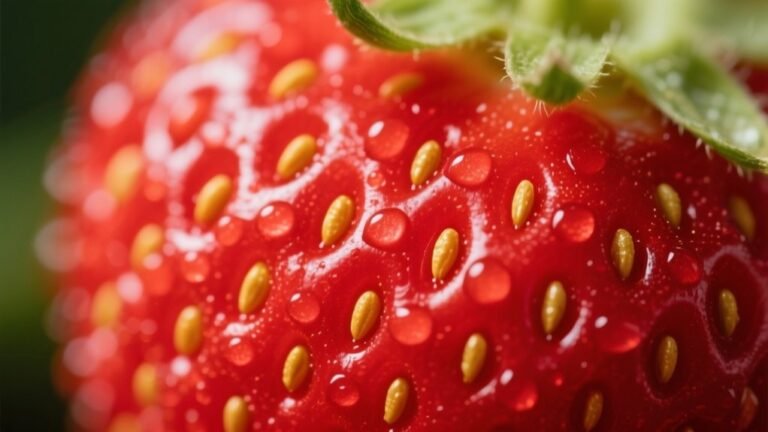
You might wonder why June’s full moon carries the name “Strawberry Moon.” The name comes from Native American Algonquian tribes, who noticed this moon signals when wild strawberries ripen. This connection between the moon and nature’s cycles helped people track seasonal changes.
The Haida people also called it the “Berries Ripen Moon,” highlighting the importance of agricultural abundance. European settlers adopted the term, linking it to honey harvesting and naming it the “Honey Moon” or “Mead Moon.”
Despite the name, the moon’s color doesn’t actually change; it only appears reddish near the horizon due to the atmosphere.
How Does the Strawberry Moon Fit Into the Lunar Cycle?
One full moon in June, known as the Strawberry Moon, marks a key moment in the lunar cycle where growth and culmination come into focus.
As you follow the lunar cycle, the Strawberry Moon appears shortly after the New Moon, completing the cycle that began weeks earlier.
It shines brightest in mid-June, symbolizing a time to reflect on progress and set intentions.
Here’s how the Strawberry Moon fits into the lunar cycle:
- It follows the New Moon phase, representing the culmination of new beginnings.
- It occurs in Sagittarius, adding themes of adventure and personal growth.
- It’s part of the ongoing cycle that includes First and Last Quarters, balancing change and stability.
Understanding this helps you connect with the natural rhythm of the lunar cycle.
What Causes the Strawberry Moon’s Distinct Appearance?
Although the Strawberry Moon’s name comes from its reddish hue, its distinct appearance actually results from a combination of astronomical and atmospheric factors. You’ll notice the moon looks larger and redder because it rises near the horizon during a major lunar standstill, an event that happens every 18.6 years.
This low position causes moonlight to pass through more atmosphere, scattering shorter wavelengths and enhancing reds and golds. The moon’s low angle also makes it appear bigger and brighter, giving it that striking presence.
| Factor | Effect on Strawberry Moon |
|---|---|
| Lunar Standstill | Extreme low rise/set points |
| Atmospheric Scattering | Redder, golden hues |
| Low Moon Angle | Larger visual size |
| Atmospheric Brightness | Amplified glow and contrast |
These combined effects make the Strawberry Moon truly unique among moons.
What Is a Major Lunar Standstill and How Does It Affect the Strawberry Moon?
You mightn’t know this, but a Major Lunar Standstill happens every 18.6 years.
During this time, the moon’s path shifts to its highest and lowest points in the sky. It’s a rare event that lasts for a few months and really changes how you see the moon rise and set.
Now, when the Strawberry Moon lines up with this standstill, its position and appearance become truly unique.
It’s like the moon is putting on a special show just for us!
Definition Of Lunar Standstill
When the moon’s orbit reaches its maximum tilt every 18.6 years, it causes a Major Lunar Standstill, making the moon rise and set at its most extreme points on the horizon.
This rare event dramatically changes the moon’s path, affecting how you see the Strawberry Moon.
During a Major Lunar Standstill:
- The full moon appears larger and more golden due to its low position on the horizon.
- The moon’s rising and setting points shift to their farthest north and south locations.
- The Strawberry Moon in 2025 will be the lowest full moon since 2006, offering a unique sight for skywatchers.
Understanding a Major Lunar Standstill helps you appreciate the distinct visual impact it has on the Strawberry Moon’s appearance and timing.
Frequency And Duration Explained
The Major Lunar Standstill happens every 18.6 years, reshaping the moon’s path across the sky and influencing how you see the Strawberry Moon. This rare event causes the moon to reach extreme high and low points during its rise and set, making the Strawberry Moon appear larger and more golden when it’s near the horizon.
The last Major Lunar Standstill occurred in 2006, so the 2025 Strawberry Moon will be especially notable as the lowest full moon since then.
After 2025, you won’t experience this phenomenon again until 2043, highlighting how unique this occurrence really is.
This infrequent cycle not only affects the moon’s appearance but also ties into cultural and agricultural traditions linked to the Strawberry Moon’s seasonal timing.
Impact On Moon’s Path
Although the Major Lunar Standstill only happens every 18.6 years, it dramatically alters the moon’s path across the sky, making the Strawberry Moon appear strikingly different.
During this event, the moon’s path shifts, causing unique visual effects you won’t see every year.
For the 2025 Strawberry Moon, this means it will be the lowest full moon since 2006, looking larger and more golden.
Here’s what you can expect from the moon’s path during a Major Lunar Standstill:
- The Strawberry Moon rises and sets at extreme high and low points on the horizon.
- Its low position makes it appear bigger and often redder due to atmospheric effects.
- Observers worldwide experience variations in the moon’s path, adding seasonal importance.
This rare event enhances your Strawberry Moon viewing experience remarkably.
How Does the Strawberry Moon’s Position Change in the Sky?
You’ll notice the Strawberry Moon shifts its position in the sky because it occurs during a major lunar standstill, which happens roughly every 18.6 years.
This standstill causes the moon’s path to change dramatically, making the Strawberry Moon rise and set at extreme high or low points on the horizon.
In 2025, for example, it will reach its lowest point since 2006, appearing larger and more golden as it moves through more layers of Earth’s atmosphere.
This atmospheric effect enhances the moon’s warm hues and size impression.
The tilt of the Earth combined with the lunar cycle influences these variations, so each Strawberry Moon can look and behave differently depending on where it falls in this long-standing lunar rhythm.
Why Is the Strawberry Moon Important for Astronomers and Skywatchers?
Because it marks the change from spring to summer, the Strawberry Moon holds special significance for astronomers and skywatchers alike.
This full moon in June offers a unique chance to observe lunar phenomena. You’ll find it especially important because:
- In 2025, the Strawberry Moon peaks on June 11 at 3:44 a.m. ET, providing an ideal moment for skywatchers to witness its full brilliance.
- It will appear lower in the sky than usual due to a major lunar standstill, making it look larger and more golden.
- This rare event won’t happen again until 2043, turning it into a highly anticipated occasion for astronomers and enthusiasts.
The Strawberry Moon’s timing and appearance make it a vital event for anyone interested in lunar observation.
When and How Can You Best Observe the Strawberry Moon?
When can you catch the Strawberry Moon at its most stunning? Mark your calendar for June 11, 2025, at 3:44 a.m. ET, when the moon reaches full illumination.
This full moon appears lower in the sky due to a major lunar standstill, making it easier to observe and enjoy.
To best observe the Strawberry Moon, you should check your local weather for clear skies. Clouds can block the view.
Clear skies are essential for observing the Strawberry Moon; clouds may obscure this spectacular sight.
Watching the moonrise or moonset is especially rewarding, as the moon often takes on a reddish hue near the horizon from atmospheric filtering.
Since viewing times vary by region, look up local moonrise and moonset times to catch the Strawberry Moon at its peak brilliance.
This way, you can fully appreciate this rare astronomical event.
Tips for Photographing the Strawberry Moon
To capture the Strawberry Moon’s beauty, start by setting your camera to manual mode with a low ISO. This helps reduce noise and keeps your images nice and clean.
Also, using a telephoto lens is a great idea if you want those close-up shots that really show off the moon’s details.
Next, try to pick an ideal location where the moon rises or sets near the horizon. This can add some cool depth and interest to your photos, making them stand out.
And one more thing—don’t forget to stabilize your camera with a tripod. It’s super important to keep your images sharp and clear, especially with those longer exposures.
Best Camera Settings
Capturing the Strawberry Moon’s beauty requires a few key camera settings that balance detail and brightness. To get the best camera settings for photographing the Strawberry Moon, you’ll want to control exposure and focus carefully.
- Use manual mode with a low ISO (100-400) to reduce noise and keep the moon’s surface crisp.
- Choose an aperture between f/8 and f/11 for a sharp depth of field that captures the moon and nearby scenery.
- Set your shutter speed between 1/125 and 1/250 seconds to avoid overexposure while preserving detail.
Don’t forget to stabilize your camera with a tripod and use a telephoto lens (200mm+) to zoom in on the Strawberry Moon’s enchanting features.
These best camera settings will help you capture stunning lunar photos.
Ideal Viewing Locations
Selecting the right spot can make all the difference in photographing the Strawberry Moon. For ideal viewing locations, choose areas with low light pollution like rural settings or national parks to see the moon’s full brilliance.
Since the moon appears larger and golden near the horizon, plan your photography during moonrise or moonset for dramatic shots. Bring a tripod and use a telephoto lens to capture detailed surface features at peak illumination.
Don’t forget to check local weather and use apps that track moon phases and rise/set times to guarantee clear skies.
Frequently Asked Questions
Can the Strawberry Moon Affect Tides Differently Than Other Full Moons?
You won’t see the Strawberry Moon affecting tide variations differently than other full moons.
All full moons contribute to tidal changes through lunar cycles, causing higher high tides and lower low tides called spring tides.
While the Strawberry Moon’s timing and position can slightly influence tides, these effects aren’t unique.
Are There Any Myths or Legends Associated With the Strawberry Moon?
You know what they say: every cloud has a silver lining, and the strawberry moon folklore is no exception.
People have long linked this full moon with lunar symbolism of love, renewal, and abundance.
Legends say it marks growth and rewards after hard work, encouraging you to embrace positive change.
Whether it’s about fertility or successful harvests, these stories invite you to connect deeply with nature’s cycles during the strawberry moon.
Does the Strawberry Moon Influence Animal Behavior or Migration Patterns?
Yes, the Strawberry Moon does influence animal behavior and migratory patterns.
You’ll find that many animals rely on instincts triggered by the moon’s brightness and timing.
For example, some species use this full moon as a natural cue to start migrating or breeding. The increased light helps nocturnal animals forage more efficiently.
Others, like certain birds and sea turtles, align their movements with the lunar cycle to optimize survival.
How Does Light Pollution Impact Viewing the Strawberry Moon?
When you face bright city lights and battle scattered glare, light pollution dims your view of the Strawberry Moon. It reduces the moon’s brilliance by up to 30%, ruining ideal viewing conditions.
To truly enjoy its warm glow and subtle details, you need dark skies, like in rural areas or dark sky parks.
Using apps to find these spots helps you escape light pollution and experience the Strawberry Moon’s full beauty.
Is the Strawberry Moon Visible Worldwide or Only in Certain Regions?
You can see the Strawberry Moon worldwide, so it has global visibility.
However, you’ll notice regional variations in how it looks depending on where you are.
Atmospheric conditions and your geographic location affect its color and size, and the moon’s angle differs between the Northern and Southern Hemispheres.
Plus, the timing of the full moon changes with your time zone, so plan your viewing accordingly to catch its peak beauty.
Conclusion
While some say the Strawberry Moon signals the start of summer’s harvest, in reality, it’s simply June’s full moon named for the strawberry-picking season. Don’t let myths distract you. Its true meaning lies in its role within the lunar cycle and changing night sky. By understanding this, you’ll appreciate how the Strawberry Moon connects us to nature’s rhythms and offers a stunning opportunity for observation and photography every year.