
How Does Strawberry Sprouting Look Like?
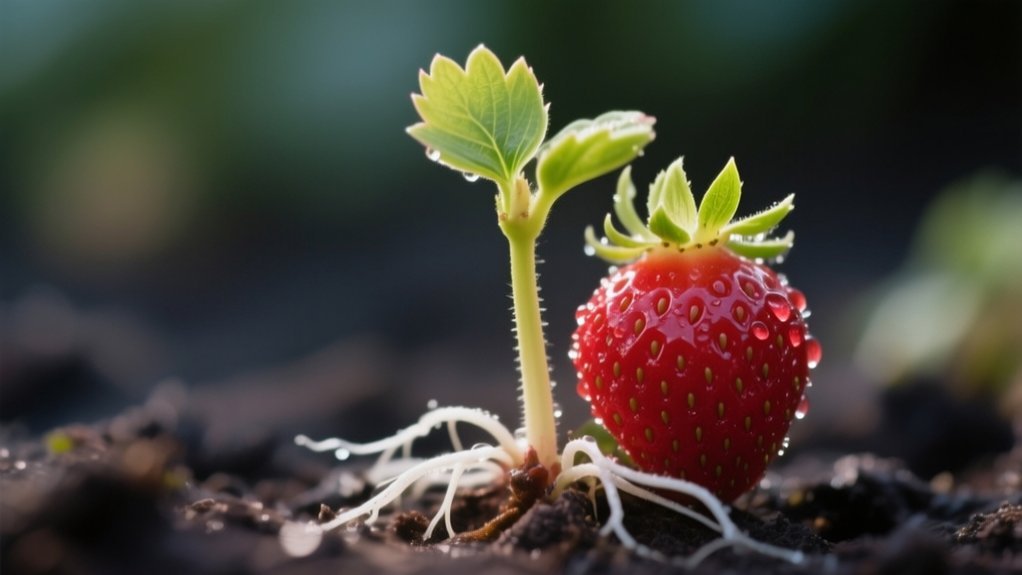
You’ll notice strawberry sprouting when tiny green leaves start growing directly from the seeds on the berry’s surface. This natural process, called vivipary, happens when seeds begin to germinate right on the fruit, giving it an unusual look with small sprouts popping out.
These sprouts are healthy if they’re vibrant green and pest-free. While it might seem odd, sprouted strawberries are safe to eat. Keep exploring to understand what this means for your berries and plants.
What Does Strawberry Sprouting Look Like?
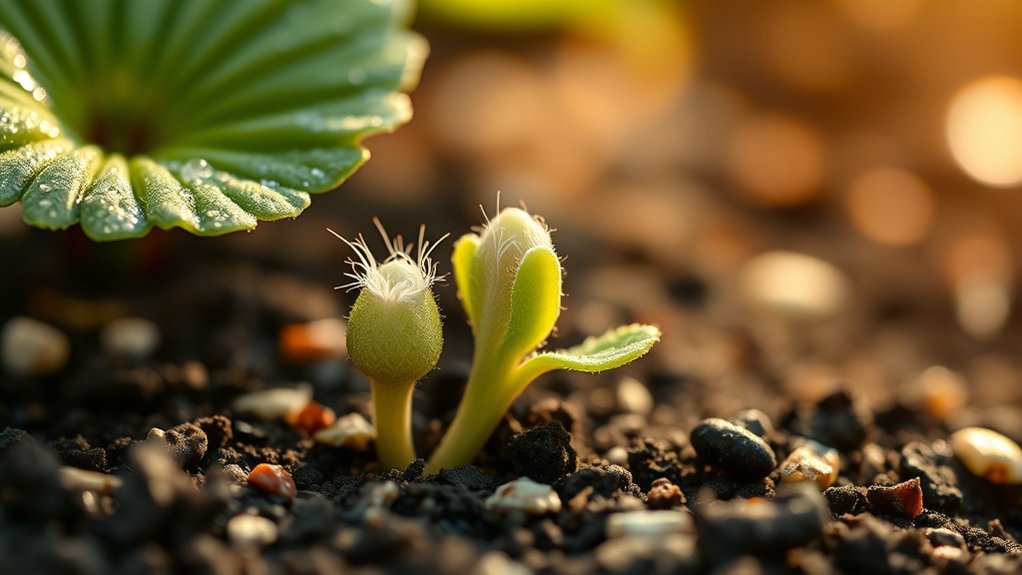
When you spot green leaves growing right out of a strawberry’s surface, you’re seeing vivipary, or strawberry sprouting. This unusual sight might surprise you, especially if you came across a post shared on a new account showcasing these berries covered in tiny leaves.
Seeing green leaves sprout directly from strawberries? That’s vivipary, a rare but natural phenomenon.
It’s not common to see strawberries partially or fully adorned with small green shoots, which sets them apart from typical fruit. While this might seem odd, it’s a natural process where seeds start growing leaves while still attached to the fruit.
Although the appearance changes, these sprouted strawberries are perfectly safe to eat.
If you decide to plant them, spacing is key to prevent overcrowding, ensuring your sprouted strawberries can thrive into healthy plants.
Signs of Healthy Strawberry Sprouts to Look For
Vibrant green leaves growing from a strawberry indicate healthy sprouting and successful vivipary. When you observe sprout growth, focus on the leaf development; healthy indicators include leaves that are robust, bright green, and free from damage.
The sprouts may have multiple leaves emerging, signaling strong growth potential while still attached to the parent fruit. Check that the berry itself is firm and plump, as soft or shriveled strawberries often fail to support viable sprouts.
Healthy strawberry sprouts usually form clusters of leaves ready to develop into new plants if planted properly.
Keep an eye out for any signs of disease or pests, which can hinder sprout growth. By recognizing these healthy indicators, you’ll know your strawberry sprouts are thriving and on the right track.
What Is Vivipary and Why Do Strawberry Seeds Sprout?
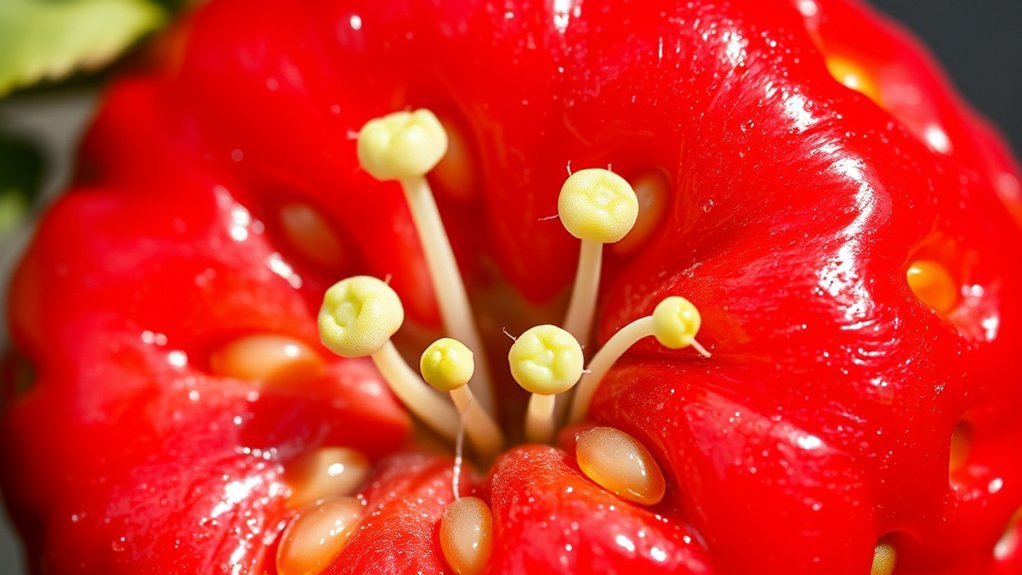
Although it might seem unusual, vivipary causes strawberry seeds to sprout while still attached to the fruit. This phenomenon occurs in certain strawberry varieties when sprouting conditions, like humidity and temperature, encourage seeds to germinate prematurely.
Vivipary causes the seeds on the surface to develop tiny shoots or leaves right on the berry itself. You’ll notice this mostly in varieties prone to this behavior, especially if the fruit stays moist for extended periods.
While it can signal developmental issues affecting fruit quality, these sprouted seeds are perfectly safe to eat. Plus, you can even plant the sprouts to grow new strawberry plants.
Understanding vivipary helps you recognize why your strawberries sometimes look like they’re growing right on the berry and how sprouting conditions influence this unique process.
How Vivipary Changes Strawberry Appearance and What It Means
You’ll notice vivipary when tiny leaves start sprouting right out of the strawberry’s surface.
It gives the fruit a pretty unusual look. This change can actually affect the texture and appearance of the strawberry, which might make it less appealing for some recipes.
Now, even though these strawberries are still edible, they mightn’t be the best choice when presentation really matters.
Visual Signs Of Vivipary
A clear sign of vivipary in strawberries is the appearance of tiny green leaves sprouting directly from the seeds while they’re still attached to the fruit. This unusual growth changes the berry’s usual red, smooth surface, as parts of it become covered with small green foliage.
When you notice this during strawberry growth, it signals a shift in normal fruit development.
Regarding gardening techniques and plant care, recognizing these visual signs helps you decide whether to harvest or use these berries for planting instead.
While viviparous strawberries remain safe to eat, their leaf-covered look might be less appealing for fresh consumption.
Impact On Fruit Quality
When vivipary occurs in strawberries, you’ll notice the fruit’s appearance changes considerably as seeds sprout leaves right on the berry’s surface. This growth creates aesthetic concerns, making the berries look less appealing for serving or selling.
While viviparous strawberries are safe to eat, the fruit texture often shifts because the fruit ripens unevenly, which can affect your enjoyment.
Furthermore, vivipary signals potential issues with fruit development, leading to yield variability in your plants. Some strawberries may produce fewer or lower-quality fruits, impacting your overall harvest.
However, if you’re a gardener, you might find value in these sprouted seeds since they can grow into healthy plants despite the initial odd appearance.
Understanding these effects helps you manage your crop’s quality and expectations better.
Can You Eat Strawberries With Sprouted Seeds?
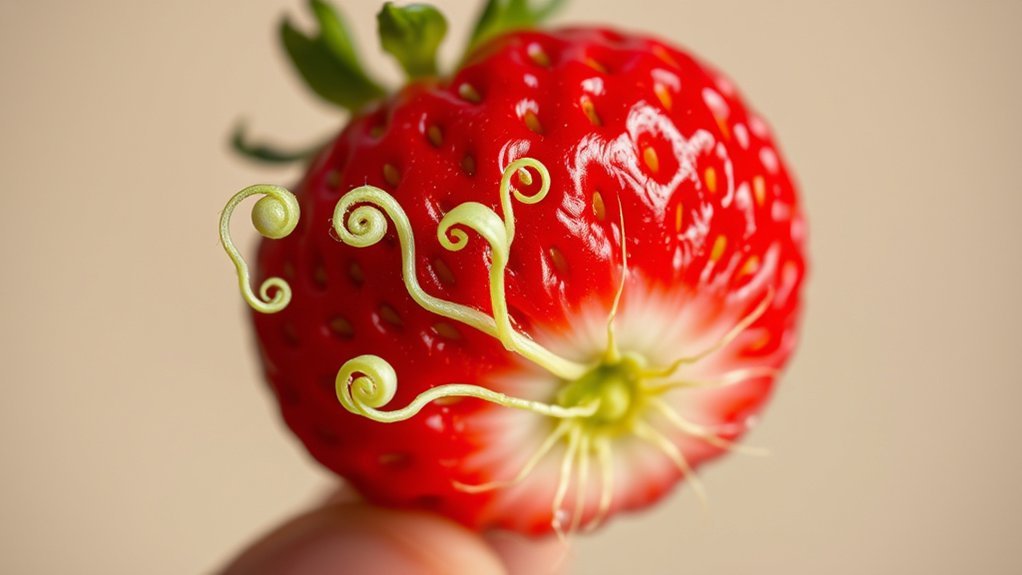
You might be wondering if strawberries with sprouted seeds are safe to eat.
Well, the good news is they’re perfectly fine. The sprouting doesn’t really change the taste much, so you can still enjoy them fresh or use them in recipes like smoothies and jams.
And here’s a fun fact: those sprouted seeds can actually be planted to grow new strawberry plants if you’re interested in giving gardening a try!
Safety Of Sprouted Strawberries
Although sprouted seeds on strawberries might look unusual, they’re perfectly safe to eat and won’t affect the fruit’s flavor or nutrition. You can enjoy sprouted strawberries without worrying about health risks, as the sprouting doesn’t make them inedible.
In fact, these berries maintain their health benefits and add a unique touch to your meals thanks to their culinary versatility.
Here’s what you can expect with sprouted strawberries:
- Tiny green leaves emerging from seeds
- Slightly altered appearance, still fresh
- Full retention of vitamins and antioxidants
- Ideal for pies, smoothies, and salads
- Opportunity to plant and grow new strawberry plants
Impact On Taste
Even if strawberries show tiny green sprouts from their seeds, they still taste just as sweet and delicious as you expect.
When you do a taste comparison between sprouted and non-sprouted strawberries, you’ll notice the flavor profile remains unchanged.
The presence of those small green leaves doesn’t affect the fruit’s sweetness levels or overall juiciness. You can enjoy the same bright, fruity notes without any bitterness or off-flavors.
Although the sprouted seeds might alter the visual appeal, they don’t impact the core taste.
Culinary Uses And Tips
While sprouted seeds might look unusual, you can still use strawberries with them in your favorite recipes without worry. Their sprouted appearance doesn’t affect flavor, so embrace your culinary creativity.
To enjoy sprouted strawberries, try these ideas:
- Add them to sprouted salads for a fresh, unique look.
- Blend into smoothie variations for added texture and nutrition.
- Make jams or preserves, removing leaves if you want a classic feel.
- Use as a garnish to highlight natural growth and freshness.
- Bake them into pies or tarts, noting that sprouted seeds add visual interest.
Feel free to keep or remove the sprouted leaves depending on your presentation preference.
These strawberries remain perfectly edible, letting you enjoy their taste and texture in many dishes.
How to Plant Strawberries Showing Vivipary
Start by carefully separating the strawberry sprouts that show vivipary to prevent overcrowding and encourage healthy growth.
Use proper planting techniques by spacing the sprouts adequately in well-prepared soil.
Focus on soil preparation by enriching it with nutrients and ensuring good drainage to support root development.
Stick to a consistent watering schedule, keeping the soil moist but not soggy to avoid root rot.
Consider planting the viviparous strawberries in pots or designated garden beds to better manage their growth.
After planting, monitor the sprouts closely for signs of stress or pests, adjusting care as needed.
Following these steps will help your viviparous strawberry plants establish themselves effectively and thrive in your garden or containers.
Tips for Caring for Newly Sprouted Strawberry Plants
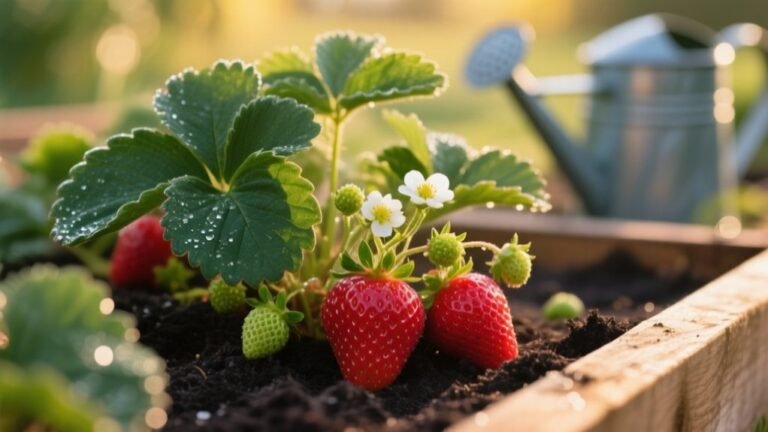
To help your newly sprouted strawberry plants thrive, you’ll need to provide well-drained soil and at least 6-8 hours of direct sunlight daily.
Healthy strawberry plants need well-drained soil and 6-8 hours of direct sunlight daily to thrive.
Focus on soil drainage techniques to prevent root rot and meet sunlight requirements to boost growth. Here are key care tips:
Use raised beds or add organic matter to improve soil drainage techniques.
Position plants where they get 6-8 hours of direct sunlight daily.
Keep the soil consistently moist but avoid waterlogging.
Fertilize every 4-6 weeks with a balanced fertilizer to nourish sprouts.
Monitor regularly and apply pest management strategies to protect young plants.
Common Challenges With Sprouting Strawberry Plants
Because sprouting strawberry plants are vulnerable in their early stages, you’ll need to watch for several common challenges that can hinder their growth.
Wildlife interference, especially from squirrels, can disrupt your plants by digging them up or eating them.
Proper soil preparation is essential; without well-prepared soil rich in nutrients, your sprouts won’t develop strong roots or healthy leaves.
Pest management is another critical factor. Aphids and slugs often target young sprouts, so you’ll want to monitor regularly and take action promptly.
Furthermore, avoid overcrowding your plants, as it leads to competition for resources, weakening growth.
How to Prevent Unwanted Vivipary in Your Strawberries
When you keep your strawberry plants well-watered without overdoing it, you reduce the risk of unwanted vivipary. This happens when seeds sprout prematurely inside the fruit. Effective water management helps avoid waterlogging and plant stress.
To prevent vivipary, focus on applying balanced fertilizers to maintain soil nutrient balance. Plant in well-draining soil to stop excess moisture.
Avoid overcrowding to reduce stress on your plants. Regularly check for pests and use pest control methods promptly.
Also, choose strawberry varieties that are less prone to vivipary.
When to Expect Full Growth From Strawberry Sprouts
Although strawberry sprouts need about 4 to 6 weeks to establish strong roots and show noticeable growth, you can expect full fruit-bearing development within 4 to 6 months, depending on the variety and growing conditions.
Different strawberry varieties have varying fruit timing, so knowing your specific type helps set realistic expectations.
To reach full growth, provide consistent watering, ample sunlight, and balanced fertilizer, especially during flowering and fruiting stages.
Healthy growth conditions not only speed development but also improve yield and fruit quality.
Keep an eye out for pests and diseases to protect your plants and guarantee they mature properly.
Frequently Asked Questions
How Long Do Strawberry Sprouts Take to Appear After Planting?
You can expect your strawberry sprouts to appear within 4 to 6 weeks after planting.
To stay on track with the sprout growth timeline, make sure you provide ideal planting conditions: soil temperatures around 60°F to 70°F and consistent sunlight.
Don’t forget sprout care tips like regular watering and gentle handling of seedlings once they develop leaves.
With patience and proper care, you’ll see healthy sprouts thriving in no time.
Can Strawberry Sprouts Survive Frost Conditions?
Did you know that even a light frost can reduce strawberry plant resilience by up to 50%?
Strawberry sprouts generally can’t survive frost without frost protection methods.
To keep them safe, you’ll want to cover young plants with frost cloths or blankets during cold snaps.
For winter care tips, plant after the last frost date and consider raised beds or containers.
These steps help your strawberries thrive despite chilly conditions.
Do Strawberry Sprouts Need Direct Sunlight or Shade?
You need to give strawberry sprouts plenty of sunlight exposure to boost sprout growth.
At least 6 to 8 hours of direct sunlight daily works best. While a bit of shade can provide benefits like protecting plants from extreme heat, too much shade reduces their energy and fruit production.
So, aim for morning sun with some afternoon shade.
This helps balance sunlight exposure and optimizes sprout growth without stressing the plants.
What Soil Type Is Best for Strawberry Sprouting?
You’ll want to use loamy soil for strawberry sprouting since it offers the perfect balance of sand, silt, and clay, ensuring good drainage.
Maintaining the right pH balance between 5.5 and 6.8 helps strawberries absorb nutrients effectively.
Make sure the soil drains well to prevent root rot; heavy clay soils don’t meet these drainage requirements.
Adding organic matter like compost can improve soil texture and fertility, boosting sprout growth.
How Often Should You Water Strawberry Sprouts?
Think of watering your strawberry sprouts like giving a thirsty friend a drink. They need about 1 to 2 inches of water per week to stay healthy.
Use proper watering techniques by checking moisture levels regularly. Make sure the top inch of soil feels dry before watering again. This prevents overwatering and promotes sprout health.
In hot weather, you might need to water more often, even every other day, to keep your sprouts thriving.
Conclusion
So, you’ve spotted those tiny green babies popping out of your strawberries. Congratulations, you’re officially a witness to nature’s surprise party called vivipary!
Don’t freak out; your fruit isn’t trying to start a rebellion. Instead, think of it as strawberries multitasking: fruit and nursery in one.
Just care for those sprouts like the plant parent you are, and soon enough, you’ll have a whole strawberry squad ready to conquer your garden. Who knew fruit could be so ambitious?