
What Is the Natural Color of Strawberries?
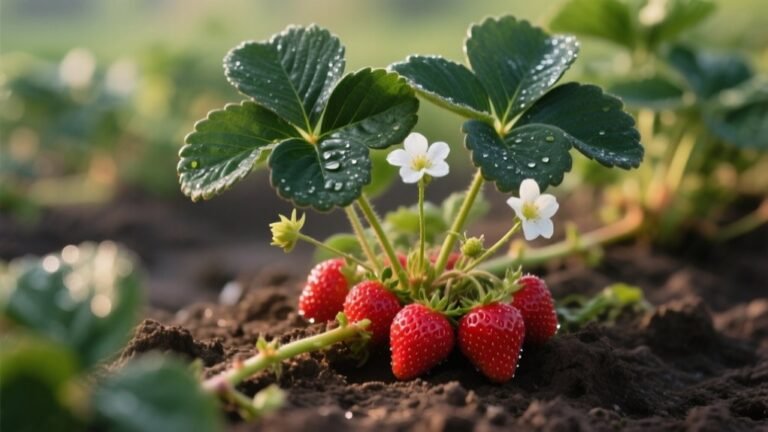
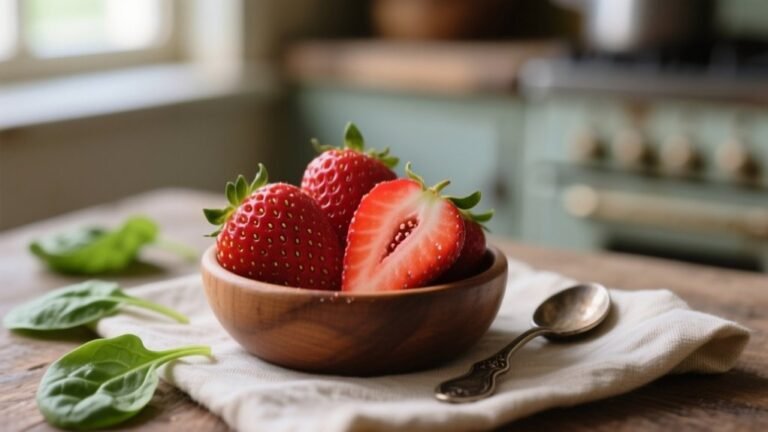
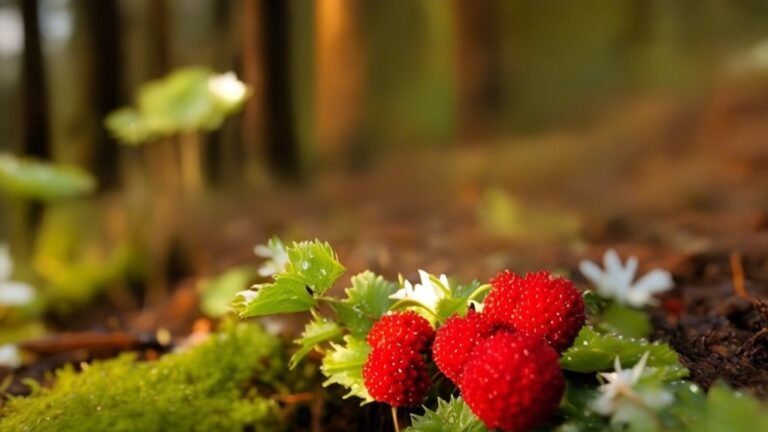
You see strawberries naturally in vibrant red thanks to pigments called anthocyanins, mainly pelargonidin-3-glucoside, which develop as the fruit ripens. This bright color signals sweetness and ripe flavor, while also providing antioxidants that support your health.
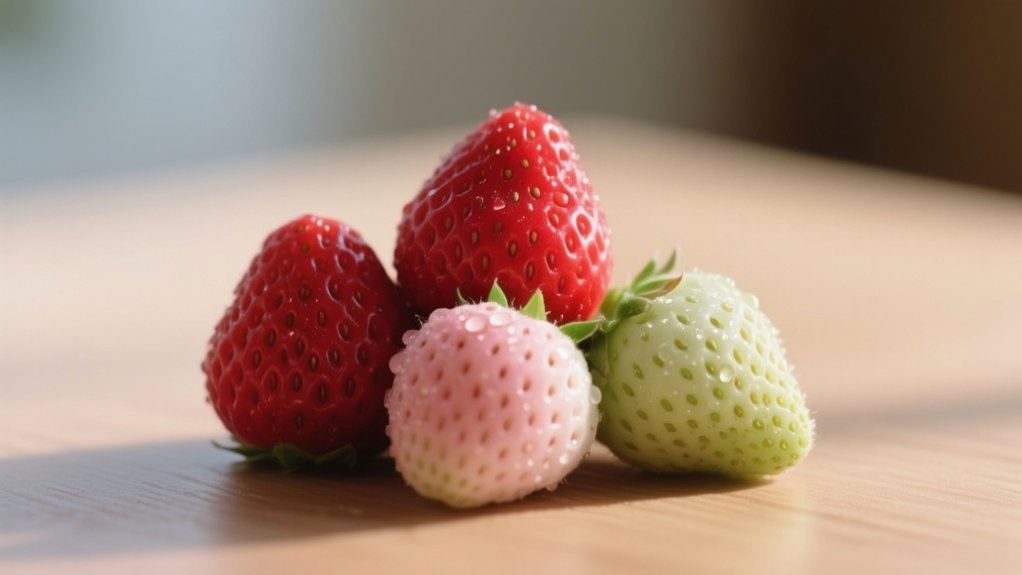
The MYB10 gene controls how much pigment the berry produces, so genetics and growing conditions shape the shade you get. Some strawberries appear pale or white due to natural gene variations.
Keep exploring to uncover how this color affects taste and nutrition.
What Gives Strawberries Their Natural Red Color?
The natural red color of strawberries comes from anthocyanins, especially the pigment pelargonidin-3-glucoside. When you look at a ripe strawberry, you’re seeing the result of anthocyanin biosynthesis actively producing these vibrant pigments.
This process ramps up as the fruit develops, filling the skin with that rich red hue you expect. Environmental factors like sunlight and temperature also play a role, influencing how much anthocyanin accumulates during ripening.
So, when strawberries get plenty of light and the right conditions, their color intensifies. Understanding anthocyanin biosynthesis helps you appreciate why some strawberries turn bright red while others might appear paler.
This natural pigment not only makes strawberries visually appealing but also signals their ripeness and flavor to you.
How the MYB10 Gene Controls Strawberry Color
Because MYB10 plays a central role in anthocyanin biosynthesis, it directly controls the red color you see in strawberries. The MYB10 gene regulates pigment production during fruit development, making it essential for that vibrant red hue. Variations in this gene can change how much pigment accumulates, which alters the fruit’s color intensity.
MYB10 is key for strawberry pigment production, directly influencing their vibrant red color.
Here’s how the MYB10 gene influences strawberry color:
- Polymorphisms in the MYB10 promoter region affect gene expression levels.
- An 8-bp insertion in the MYB10 gene can halt anthocyanin production.
- The fvmyb10-2 allele truncates the MYB10 protein, stopping pigment formation.
- Natural mutations in MYB10 create diversity in strawberry colors.
Understanding the MYB10 gene helps you grasp why strawberries display such rich reds.
Genetic Reasons for White and Pale Strawberries
You’ll find that mutations in the MYB10 gene play a key role in why some strawberries turn white or pale.
These changes disrupt anthocyanin biosynthesis, which means the red pigments don’t form.
So, that’s a big part of why you see those unique color variations in strawberries.
Understanding this genetic factor really helps explain why some berries come out looking so different.
MYB10 Gene Mutation
When mutations occur in the MYB10 gene, strawberries lose their vibrant red color and turn white or pale. This gene controls anthocyanin biosynthesis, which gives strawberries their signature red hue. If the myb10 gene mutates, anthocyanin production drops, leading to color loss.
Here’s what you should know about the MYB10 gene mutation:
An 8-bp insertion in the myb10 gene causes white fruit by blocking anthocyanin accumulation.
The fvmyb10-2 allele stops MYB10 target genes from activating color development.
Variations in the myb10 promoter affect how much pigment gets produced, causing color differences.
Overexpressing the MYB10-2 gene can restore red color in pale or white strawberries.
Understanding these mutations helps you grasp why some strawberries naturally lack their classic red shade.
Anthocyanin Biosynthesis Disruption
Although strawberries usually get their vibrant red color from anthocyanins, mutations in the MYB10 gene can disrupt this process and produce white or pale fruit.
When MYB10 is altered, like through an 8-bp insertion or gypsy-transposon truncation, it stops activating the genes needed for anthocyanin production. This disruption prevents the buildup of pigments that give strawberries their signature red color.
For example, the fvmyb10-2 allele causes white strawberries by silencing these target genes. Researchers have pinpointed specific SNPs linked to white fruit skin in cultivated varieties, confirming MYB10’s role.
Thanks to genetic tools like CRISPR-Cas9, restoring anthocyanin biosynthesis in these pale strawberries is becoming possible. This allows you to potentially enhance their red color and overall appearance.
How Anthocyanins Give Strawberries Their Color and Health Benefits
You’ll notice that the bright red color of strawberries comes from anthocyanins, especially pelargonidin-3-glucoside.
These pigments don’t just make strawberries look appealing—they also offer powerful antioxidant benefits that support your health.
So, when you enjoy a strawberry, you’re not only getting a tasty treat but also a boost for your well-being.
Understanding how anthocyanins work helps you appreciate both the fruit’s beauty and its nutritional value.
It’s pretty cool how something that looks so good can be good for you, too!
Anthocyanin Role In Color
Because anthocyanins are water-soluble pigments, they play a key role in giving strawberries their vibrant red color, with pelargonidin-3-glucoside being the main compound responsible for this hue.
You’ll notice that the amount and type of anthocyanins in a strawberry depend largely on the MYB10 gene, which controls their biosynthesis.
Different versions of this gene can create a range of colors from deep red to white or yellow strawberries. Environmental factors like light and temperature also influence how much anthocyanin accumulates, affecting the fruit’s color intensity.
- Anthocyanins dissolve in the water content of strawberry cells, coloring the fruit.
- Pelargonidin-3-glucoside dominates strawberry pigmentation.
- MYB10 gene regulates anthocyanin production during ripening.
- Variations in gene expression cause color diversity in strawberry varieties.
Health Benefits Of Anthocyanins
When you enjoy strawberries, you’re not just savoring their bright red color, which comes from anthocyanins like pelargonidin-3-glucoside. You’re also benefiting from powerful antioxidants.
These anthocyanins help reduce inflammation and lower your risk of chronic diseases such as heart disease and cancer.
With about 128 mg of anthocyanins per 100 grams, strawberries are a rich source compared to many other fruits. Research shows these compounds can even boost your cognitive function and improve memory, supporting brain health.
Furthermore, anthocyanins promote cardiovascular health and help regulate blood sugar levels.
Environmental Factors Affecting Strawberry Color
Although the natural red color of strawberries mainly comes from anthocyanins like pelargonidin, environmental factors play a crucial role in how vibrant that color appears. You’ll notice that strawberries grown under ideal conditions develop a richer hue, thanks to enhanced anthocyanin production.
Several key environmental elements influence this pigment synthesis:
High light intensity during fruit development boosts anthocyanin levels, making strawberries brighter.
Cooler temperatures promote deeper red shades by encouraging pigment accumulation.
Excessive heat can inhibit anthocyanin formation, dulling the color.
Soil nutrient balance, especially nitrogen levels, affects metabolic pathways that control pigment production.
Is It True That Some Strawberries Are Artificially Dyed?
Have you ever wondered if the bright red strawberries you buy are artificially dyed? While strawberries naturally turn ruby-red due to anthocyanins, some rumors suggest artificial dyeing, especially in countries with looser regulations.
In the U.S., the FDA doesn’t specifically ban dyes on strawberries, but evidence shows supermarket strawberries are rarely dyed.
| Region | Dye Use Reports | Typical Strawberry Color |
|---|---|---|
| U.S. | None found | Natural bright red |
| Mexico | Anecdotal only | Vibrant red, natural |
| Other Markets | Rare rumors | Usually natural red |
Washing strawberries might cause slight color leaching, but that doesn’t prove they’re artificially colored. Overall, it’s unlikely that the red strawberries you eat are dyed.
How to Tell If a Strawberry’s Color Is Natural or Enhanced
How can you tell if a strawberry’s color is natural or enhanced? Bright red strawberries usually get their vibrant hue from natural pigments like anthocyanins. Since the FDA generally bans artificial dyes on fresh fruit, most strawberries you find aren’t artificially colored.
To spot natural versus enhanced color, consider these points:
- Check for uniformity; natural strawberries often have slight color variations.
- Look for a glossy, fresh surface rather than an overly shiny, coated appearance.
- Consider the source; strawberries from certain regions or varieties might naturally be more vivid.
- Wash the strawberry; if color comes off on your hands, it may be artificially enhanced.
What White Strawberries Reveal About Strawberry Genetics
When you encounter white strawberries, you’re actually seeing the effects of specific genetic changes, especially in the MYB10 gene that controls the production of anthocyanins, the pigments responsible for the fruit’s red color.
A mutation called the fvmyb10-2 allele, caused by a gypsy-transposon insertion, truncates this gene and halts anthocyanin biosynthesis, resulting in white fruit skin.
Researchers have pinpointed MYB10 through genome-wide studies as the key gene behind these color variations.
Curiously, overexpressing MYB10-2 can restore red pigmentation in white-fleshed strawberries, showing how altering this gene directly influences color.
Understanding the role of MYB10 reveals how strawberry genetics shape their natural hues and offers insights into how these fascinating color traits develop without human interference.
How Breeders Develop New Strawberry Colors
Although strawberry color depends largely on genetics, breeders actively manipulate the MYB10 gene to create new fruit colors. By targeting this gene, which controls anthocyanin production responsible for the red pigment, they introduce mutations that can yield white or yellow strawberries.
You’ll find that specific alleles, like fvmyb10-2, play a key role in reducing pigment production. Breeders also use marker-assisted techniques to efficiently track these genetic changes and select for desired colors.
Furthermore, they consider environmental factors that influence gene expression, optimizing conditions for developing vibrant new hues. Here’s how they do it:
- Mutate the MYB10 gene to alter pigment production
- Identify alleles linked to color variation
- Employ marker-assisted breeding to track traits
- Manage light and temperature to influence gene expression
Why Strawberry Color Matters for Flavor and Nutrition
Because strawberry color reflects the presence of anthocyanins like pelargonidin-3-glucoside, it directly affects both flavor and nutrition.
When you pick a bright red strawberry, you’re choosing fruit rich in antioxidants that enhance taste and provide health benefits.
The MYB10 gene plays a key role in this process by regulating anthocyanin production; mutations in MYB10 create white or yellow strawberries with less pigment and fewer nutrients.
The MYB10 gene controls anthocyanin levels, with mutations causing paler, less nutritious strawberries.
You’ll notice that strawberries with deeper hues often taste sweeter and offer stronger anti-inflammatory properties.
Environmental factors, like sunlight and temperature, also influence anthocyanin levels, so growing conditions impact the berry’s flavor and nutritional value.
Ultimately, the color you see isn’t just about looks—it signals the strawberry’s quality and health benefits.
Frequently Asked Questions
How Long Does It Take for Strawberries to Change Color During Ripening?
You can expect the ripening process of strawberries to take about 30 days from flowering to harvest.
During this time, the fruit changes color gradually, from green to white, then pink, and finally bright red.
This color change signals the development of sweetness and flavor.
Keep in mind, temperature and sunlight play big roles in speeding up or slowing down this ripening process, so your strawberries might vary a bit depending on growing conditions.
Are Strawberries Naturally Sweet or Sour When Ripe?
Ripe strawberries are naturally sweet, but their taste profile includes a hint of sourness. You’ll notice sugars like sucrose, glucose, and fructose dominate, giving that pleasant sweetness you expect.
However, the sour notes come from organic acids, balancing the flavor. Factors like genetics and growing conditions influence this taste profile, so you might find some strawberries sweeter or tarter depending on those variables.
What Is the Average Size of a Fully Grown Strawberry?
The average size of a fully grown strawberry ranges from 1 to 2 inches in diameter, but it can vary depending on the strawberry varieties you choose.
For example, larger varieties like Chandler or Sweet Charlie can reach up to 3 inches.
When you grow strawberries, factors like soil quality and water availability play a role in their size.
Can Strawberry Color Indicate Pesticide Use or Residue?
You can’t rely on strawberry color to indicate pesticide use or residue because color doesn’t correlate with pesticide detection.
Both red and white strawberries can have pesticide residues, but regulatory agencies monitor and limit these levels to keep you safe.
To reduce any pesticide presence, you should always wash your strawberries thoroughly before eating.
Do Different Strawberry Colors Affect Their Shelf Life?
Yes, color variability in strawberries does affect their shelf life.
When you see strawberries with bright red hues, they usually have better firmness and last longer.
In contrast, those with unusual colors like yellow or white, caused by genetic changes, tend to be softer and spoil faster.
Conclusion
You might think strawberries are naturally red because that’s what you always see, but nature loves to surprise you. Thanks to genes like MYB10 and tiny pigments called anthocyanins, strawberries come in various shades—even white ones.
So, next time you bite into a perfectly red berry, remember: its color isn’t just pretty; it’s a complex genetic and environmental story. Ironically, that familiar red might be the exception, not the rule.