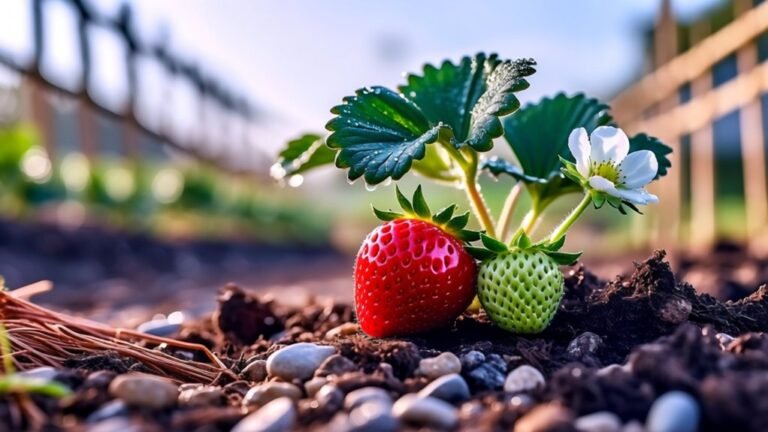

How to Identify What White Strawberries Are Called
You’ll find white strawberries commonly called pineberries or Alpine strawberries. They stay white because they lack the protein Fra a1, which prevents the usual red color from developing.
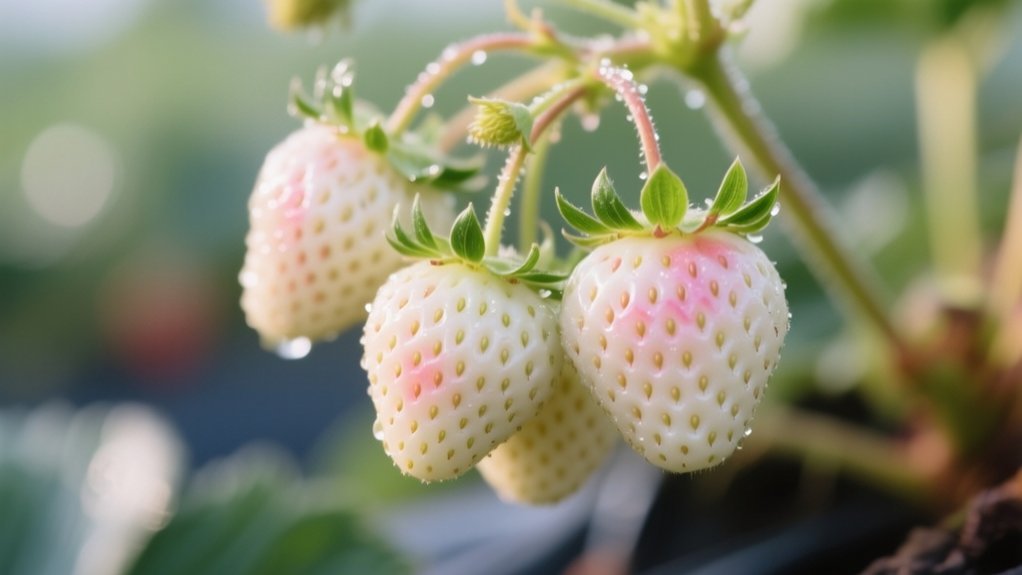
Pineberries have creamy white skin with bright red seeds and a sweeter, tropical flavor. These berries often appear smaller and can be mistaken for regular strawberries, but their unique color sets them apart.
Keep exploring to uncover more about their varieties, flavors, and uses.
What White Strawberries Are Called

Although you might simply call them white strawberries, these fruits go by several names depending on their variety. The most common white strawberries you’ll find are pineberries, hybrids of Fragaria chiloensis and Fragaria virginiana. They’re easily recognized by their white flesh and red seeds.
But white strawberries aren’t limited to just pineberries. You’ll also come across Alpine strawberries like Pineapple Crush and White Delight, as well as Beach strawberries, sometimes called coastal or Chilean strawberries.
In the U.S., pineberries are often sold under brand names like Florida Pearl®, Pink-a-Boo®, and Berry de Blanc, setting them apart from other white strawberry types. Knowing these names helps you identify the exact variety you’re dealing with when you spot white strawberries.
Why White Strawberries Stay White
You’ll notice white strawberries stay white because they don’t have the protein Fra a1.
This protein is usually what triggers the red color in ripe berries.
So, without it, the typical red pigmentation just doesn’t develop as they ripen.
That’s why these strawberries keep their unique pale look, making them really stand out compared to the red varieties.
Genetic Cause Of Color
Because white strawberries lack the protein Fragaria allergen 1 (Fra a1), they don’t develop the red pigment typical of regular strawberries. This genetic deficiency means white strawberries stay white even when ripe, setting them apart from unripe red varieties.
The absence or low level of Fra a1 stops red pigmentation but allows a sweeter, often tropical flavor to shine through. You might notice some white strawberries show a faint pink blush, but the primary color remains white thanks to their unique genetics.
| Trait | White Strawberries |
|---|---|
| Protein Present | Fra a1 (Fragaria allergen) deficient |
| Color | White or faint pink blush |
| Ripeness Indicator | Genetic color, not maturity |
| Flavor Profile | Sweeter, tropical notes |
Role Of Fra a1
The key factor that keeps white strawberries from turning red is the absence of the protein Fragaria allergen 1 (Fra a1).
Fra a1 plays a critical role in producing the red pigmentation found in typical ripe strawberries.
In white strawberries, this protein is either missing or present in very low levels, which prevents them from developing the usual red color.
You might notice a faint pink blush on some, but their creamy white appearance remains dominant.
This unique trait isn’t just about color.
It also means white strawberries often cause fewer allergic reactions linked to Fra a1, making them a great option for sensitive individuals.
Knowing how Fra a1 impacts white strawberries helps growers tailor cultivation and understand the fruit’s distinct market appeal.
Pigmentation Absence Effects
Understanding the role of Fra a1 sheds light on why white strawberries keep their pale appearance.
Unlike the typical red strawberry, white strawberries have a genetic deficiency causing pigmentation absence, meaning they don’t produce enough Fra a1 protein to develop that vibrant red color.
Even when fully ripe, they stay creamy white or show just a faint pink blush. This pigmentation absence doesn’t just affect color. It also influences flavor, making white strawberries taste sweeter and more tropical compared to their red counterparts.
Plus, if you’re sensitive to traditional strawberries, you might find white strawberries less allergenic due to the low levels of Fra a1.
Why White Strawberries Look Different (It’s All in the Genes)
When you see a white strawberry, you’re actually looking at a fruit that lacks the protein Fragaria allergen 1 (Fra a1), which normally gives strawberries their red color. This genetic deficiency is why white strawberries look so unique.
Here’s what sets them apart:
- They don’t develop the typical red pigment as they ripen, staying mostly white with sometimes a faint pink blush.
- Their genetic makeup results in sweeter flavors and a softer texture compared to red strawberries.
- Because of this genetic trait, white strawberries need specific growing conditions to maintain their color.
- This genetic difference is the key reason white strawberries have a distinct tropical taste.
Understanding these genetic factors helps you appreciate why white strawberries look and taste so different.
Common Varieties of White Strawberries to Know
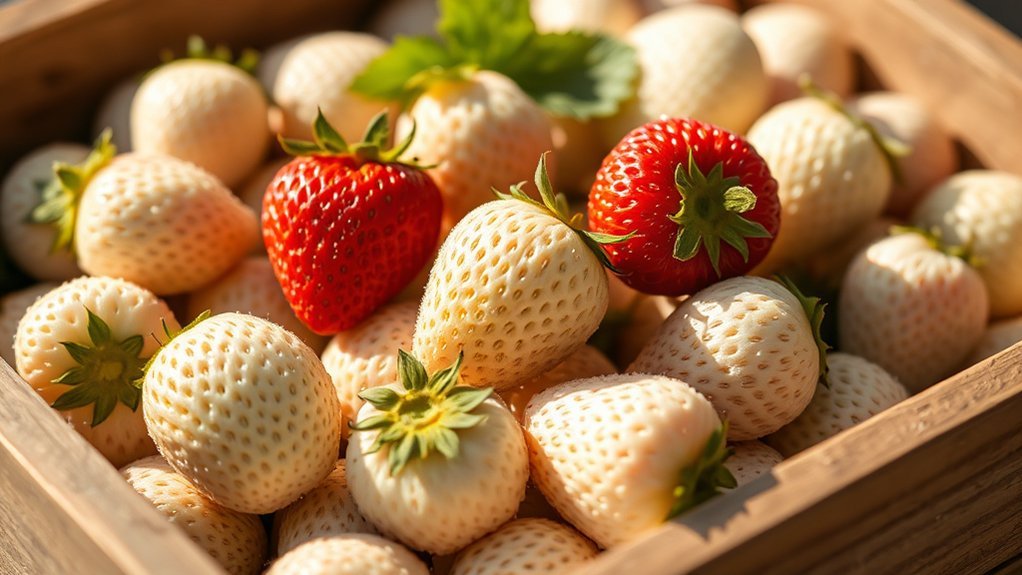
You’ll find several common varieties of white strawberries to explore.
For example, Alpine whites are known for their small size and unique flavors.
Then there are pineberries, which really stand out with their subtle pineapple taste and white color. They’ve become quite popular among enthusiasts.
And don’t forget about beach strawberries! These grow along coastal areas and offer a distinct variety that’s definitely worth recognizing.
Alpine White Strawberries
Alpine white strawberries, known scientifically as Fragaria vesca, offer a unique twist on the traditional berry with their creamy white skin and vibrant red seeds.
If you’re curious about alpine white strawberries, here’s what you should know:
- These berries thrive in cooler climates and are smaller than typical strawberries, measuring 15-23 mm.
- Varieties like Pineapple Crush, White Delight, Albicarpa, and Krem each bring distinct flavors, often sweet with tropical hints.
- They’ve a soft texture and delicate nature, making them ideal for fresh eating or gourmet dishes.
- You can grow Fragaria vesca from seeds, giving you more options for cultivation.
Understanding alpine white strawberries helps you appreciate their unique taste and versatility.
Pineberries Characteristics
Pineberries stand out among white strawberries for their striking white color and red seeds, paired with a distinct pineapple-like flavor.
As a hybrid between Fragaria chiloensis and Fragaria virginiana, pineberries measure about 15-23mm, smaller than typical red strawberries.
You’ll find common pineberry varieties like Pink-a-Boo®, Florida Pearl®, and Berry de Blanc, each marketed under different names depending on the region.
These white strawberries grow mainly in Florida, with a season from November to April, making them a seasonal treat.
Pineberries are more delicate than conventional strawberries, so they need careful handling during shipping to avoid bruising and spoilage.
If you’re looking to try a unique white strawberry, pineberries offer a rare flavor and appearance you won’t forget.
Beach Strawberry Varieties
Beach strawberries, known scientifically as Fragaria chiloensis, thrive along coastal regions, particularly in Chile.
These white strawberries stand out for their unique traits and adaptability. If you want to understand beach strawberry varieties better, keep these key points in mind:
They grow well in sandy soils and tolerate salty ocean breezes, making them ideal for coastal gardens.
Their berries are smaller and aromatic but have a milder flavor compared to red strawberries.
Beach strawberries spread with a creeping growth habit, perfect as ground cover plants.
While adaptable, they flourish best in mild climates with moderate rainfall and mild winters.
Knowing these facts helps you appreciate the unique qualities of beach strawberries and how they differ from other white strawberry types.
How Pineberries Relate to White Strawberries
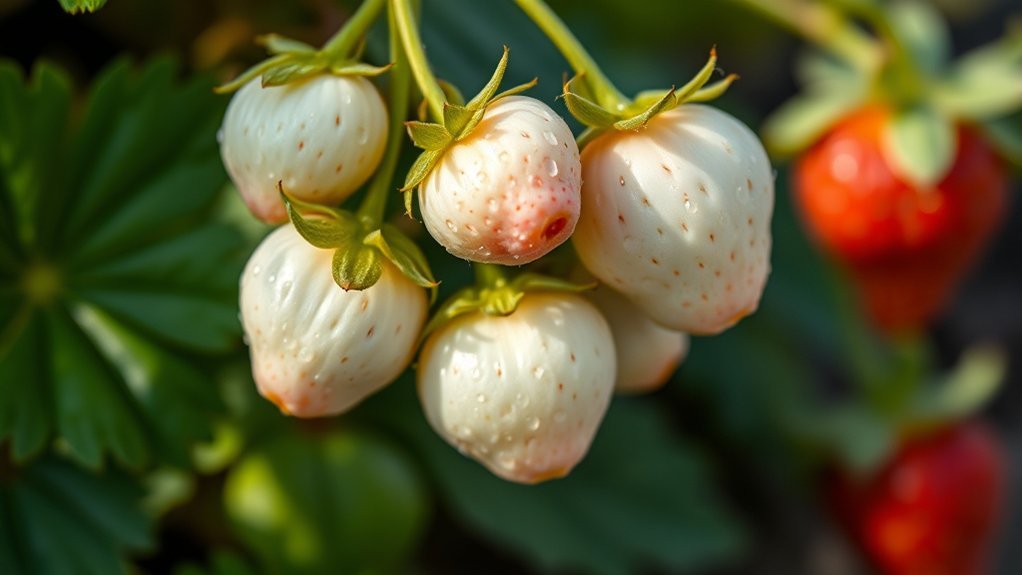
Although you mightn’t always spot them in the produce aisle, white strawberries include a fascinating variety known as pineberries. Pineberries stand out because of their unique white flesh and red seeds, setting them apart from typical red strawberries.
As a hybrid of Fragaria chiloensis and Fragaria virginiana, pineberries combine traits from both species. You’ll often find pineberries marketed under brand names like Florida Pearl® and Pink-a-Boo®, signaling their distinct pineapple-like flavor.
Unlike many white strawberries that remain rare, pineberries are commercially cultivated and available in supermarkets, especially from November to April in Florida.
When you try pineberries, you’ll notice they’re softer and have a milder taste compared to red strawberries, making them a unique, accessible example of white strawberries you can enjoy.
Visual and Taste Traits That Define White Strawberries
You’ll recognize white strawberries by their creamy skin and bright red seeds, which really set them apart from the usual red ones.
When you taste them, you can expect a sweeter, milder flavor that sometimes carries hints of pineapple.
Plus, they’ve a soft texture and tend to be smaller in size.
Color And Seed Features
When you spot a strawberry with creamy white skin dotted by red seeds, you’re likely looking at a white strawberry. Here’s what sets them apart:
White strawberries lack the red pigment typical of regular strawberries, giving them their pale, almost translucent appearance. The red seeds on their surface contrast vividly against the white flesh, making them easy to recognize.
Their softer flesh means you’ll notice bruises or damage more readily, visible through the delicate skin.
Varieties like Pineberries and Alpine strawberries share these color and seed features, yet each maintains the characteristic creamy white hue with red seeds.
These distinctive visual traits help you easily identify white strawberries among their red counterparts.
Flavor Profile Characteristics
White strawberries catch your eye with their creamy white skin and bright red seeds, but their flavor profile offers an equally distinctive experience.
Unlike traditional red strawberries, white strawberries boast sweeter taste notes with a unique tropical twist, often reminding you of pineapple.
This distinct flavor profile characteristics stem from the absence of the red pigment due to low levels of the protein Fra a1, influencing both taste and color.
When you bite into one, you’ll notice a delicate sweetness that’s less tart than regular strawberries.
Their softer flesh adds to this mild, fruity flavor, making white strawberries a rejuvenating and unusual treat that stands apart from the familiar berry flavor you’re used to.
Texture And Ripeness Indicators
Texture plays a key role in identifying ripe white strawberries, as their softer flesh makes them more delicate than traditional red varieties.
To spot ripeness indicators, you’ll want to:
- Look for a creamy white color with faint pink blushes, signaling readiness.
- Gently press the berry; a slightly springy texture means it’s ripe.
- Notice the bright red seeds on the surface, confirming it’s a white strawberry.
- Taste the flesh, which should be sweeter with tropical flavor notes.
These texture and ripeness indicators help you distinguish white strawberries from other fruits.
Since they bruise easily, handle them carefully to enjoy their unique taste and delicate texture at peak ripeness.
How to Tell Pineberries Apart From Red Strawberries
How can you quickly tell pineberries apart from regular red strawberries? First, look at the color. Pineberries are white with bright red seeds, while red strawberries are fully red with green stems.
Size is another clue. Pineberries are smaller, typically between 15-23mm, compared to larger red strawberries.
When you taste them, pineberries offer a mild pineapple flavor, unlike the classic sweetness of red strawberries. Though, this flavor may not be obvious to everyone.
Genetically, pineberries lack the red pigmentation that colors regular strawberries, which makes their appearance uniquely distinct.
Keep in mind, pineberries are more delicate and need extra care during growing and shipping, unlike the sturdier red strawberries you’re used to seeing at the market.
Where White Strawberries Are Grown and Sold
Where can you find these unique strawberries? White strawberries, including pineberries, are mainly grown in Florida, with a season from November to April.
Though less common, some specialty growers cultivate them in cooler climates, peaking in late spring to early summer. You can track them down through:
- Florida farms producing varieties like Florida Pearl® and Pink-a-Boo®.
- Mainstream supermarkets, which increasingly stock white strawberries.
- Online specialty retailers such as Melissas, though availability varies.
- Select markets in South America, where small-scale cultivation has started.
While South America isn’t a major producer, its growing interest in niche fruits is expanding white strawberry access.
Keep an eye on seasonal availability to enjoy these rare berries fresh.
How to Recognize White Strawberries (Pineberries) in Stores
Wondering what sets white strawberries, or pineberries, apart from regular ones? When you’re in stores, look for their distinctive white skin dotted with red seeds, unlike the bright red of typical strawberries.
Pineberries are usually smaller, about 15-23mm in diameter, which makes them easy to spot. You’ll often find them in specialty produce sections or farmers’ markets, especially from late winter to early spring.
Keep an eye out for labels like Florida Pearl®, Pink-a-Boo®, or Berry de Blanc, as these are popular pineberry brands in the U.S. and Europe.
While their subtle taste hints at pineapple, their unique appearance is the easiest way to recognize these white strawberries in stores.
Tips for Buying Authentic White Strawberries
Spotting white strawberries in stores is just the start. Knowing how to buy genuine ones guarantees you get the real deal.
To guarantee you pick authentic white varieties, follow these tips:
Look for labels like “Pineberries,” “White Alpine Strawberries,” or “White Beach Strawberries” to confirm authenticity. Check their creamy white color and red seeds. These unique traits distinguish white strawberries from unripe red ones.
Ask about the origin since many white varieties sold in the U.S. come from Florida and might be labeled Florida Pearl® or Pink-a-Boo®.
Shop at specialty produce stores or farmers’ markets during late winter to early spring, when white strawberries are in season.
Keep in mind, authentic white strawberries might cost more due to their delicate growth needs.
What Makes Pineberries Different in Flavor and Size
Although pineberries share some similarities with traditional red strawberries, their flavor and size set them apart clearly.
Pineberries are smaller, usually between 15-23 mm in diameter, making them noticeably tinier than the average red strawberry.
Their distinctive white flesh with red seeds gives them a unique appearance you won’t confuse with typical strawberries.
When it comes to flavor, pineberries offer a mild pineapple taste, which is quite different from the sweet, familiar strawberry flavor.
However, not everyone picks up on this pineapple flavor, so your experience might vary.
Their softer texture also distinguishes pineberries from regular strawberries, requiring extra care during handling.
Understanding these differences in size and flavor helps you identify pineberries easily when you come across them.
How to Use and Enjoy White Strawberries and Pineberries
You can enjoy white strawberries and pineberries in many delicious ways that highlight their unique flavors and appearance. Here’s how to make the most of them:
- Add white strawberries and pineberries to your cereal or fruit salad for a crisp, tropical twist.
- Top waffles, toast, or desserts like cheesecake with these berries to boost both taste and visual appeal.
- Use pineberries as garnishes in cocktails or fruity drinks to enhance flavor and presentation.
- Incorporate white strawberries into charcuterie boards alongside other berries and tropical fruits for a vibrant, invigorating spread.
Handle these delicate berries gently and eat them soon after purchase to enjoy their best flavor and texture.
Frequently Asked Questions
Are White Strawberries Genetically Modified or Natural Hybrids?
White strawberries aren’t genetically modified; they’re natural hybrids created through natural selection and traditional breeding.
You’ll find that varieties like pineberries come from crossing different strawberry species, not genetic engineering.
This process removes the red pigment, giving them their unique white color.
Can White Strawberries Be Grown Successfully at Home?
Growing white strawberries at home is like tuning a delicate instrument. You’ll need patience and care.
In your home gardening journey, choosing the right strawberry varieties matters. White strawberries thrive best in full sun with well-drained, rich soil.
Avoid mixing them with red varieties to keep each plant’s flavor pure. Regularly trim runners and watch for that slight firmness to know when they’re ripe.
With consistent care, you’ll enjoy their unique, sweet harvest.
Do White Strawberries Have the Same Nutritional Benefits as Red Ones?
White strawberries don’t offer the same nutritional benefits as red ones.
When you do a nutritional comparison, you’ll find white strawberries have lower antioxidant levels and less vitamin C.
The absence of the Fra a1 protein means you miss out on some health benefits red strawberries provide, like anti-inflammatory effects and heart health support.
While white strawberries taste sweeter, they’re not quite equal in nutritional value to their red counterparts.
How Long Do White Strawberries Stay Fresh After Picking?
You know what they say: “A stitch in time saves nine.”
White strawberries usually have a freshness duration of about 3 to 5 days after picking.
To keep them fresh longer, follow proper storage tips like placing them in a breathable container and avoid washing them until you’re ready to eat.
Since their delicate skin bruises easily, enjoy your white strawberries soon to savor their unique flavor and texture at their best.
Are White Strawberries Allergenic or Safe for All Consumers?
White strawberries aren’t completely safe for all consumers, especially if you have white strawberry allergies. They contain lower levels of the allergenic protein Fra a1, which reduces reactions for many people, but some varieties like Pineberries can still trigger allergies.
For your consumer safety, it’s best to consult a doctor before trying them if you’re allergy-prone.
Always monitor your body’s response when you try white strawberries for the first time.
Conclusion
Now that you’ve unraveled the mystery of white strawberries, you’re ready to spot these snowy gems in any market. Think of pineberries and white strawberries as nature’s sweet secrets, waiting to surprise your taste buds with their unique charm.
So next time you want to add a twist to your fruit bowl, reach for these pale delights. They’re like little bursts of summer wrapped in a white coat, ready to brighten your day with every bite.