

Why Is a Strawberry a Fruit?
You know a strawberry is a fruit because it grows from a flower’s ovaries and holds seeds, fitting the botanical definition perfectly. Unlike true berries that develop from one ovary, strawberries are aggregate fruits formed from multiple ovaries in a single flower.
Each tiny seed on the surface is its own fruit called an achene. Their juicy red part isn’t the fruit itself but an enlarged flower stalk. Keep exploring, and you’ll uncover more fascinating details about strawberries’ unique nature and flavor.
What Makes a Strawberry a Fruit and Not a Berry?

When you bite into a strawberry, you might think it’s a berry, but botanically, it’s quite different. Strawberries are classified as aggregate fruits because they develop from a single flower with multiple ovaries.
Each tiny seed-like structure on the strawberry’s surface is actually an individual fruit called an achene. Unlike true berries, which form from one ovary and have seeds inside their fleshy part, strawberries have their seeds on the outside.
The juicy red part you enjoy isn’t the ovary; it’s an enlarged flower stalk, or receptacle. True berries, like blueberries, have three fleshy layers, but strawberries don’t meet this criterion.
How Do Strawberries Develop From Flowers?
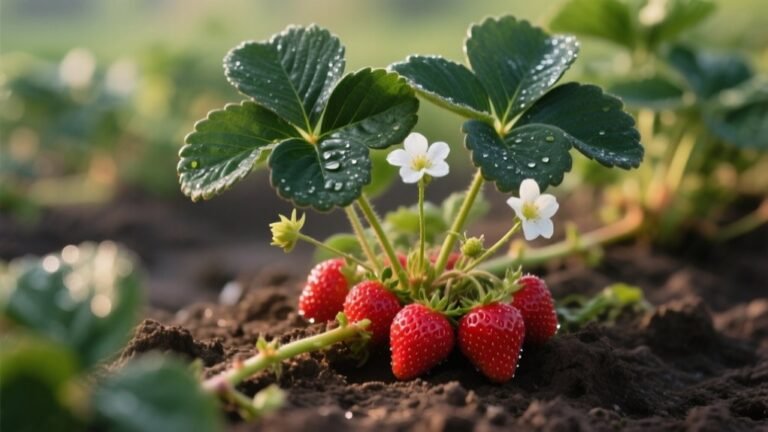
Although strawberry flowers may seem simple, their central yellow part plays an essential role in fruit development. This yellow center contains the ovaries, which are critical for forming fruit after pollination.
When bees transfer pollen from the stamens to the ovary, fertilization occurs, prompting the ovary to swell. You’ll notice the yellow center elongates, shaping what’ll become the strawberry.
After pollination, green strawberries start growing on the stem and gradually change color as they ripen. Curiously, the strawberry is actually developing from this central part of the flower, not from the petals.
The green sepals you see attached to the fruit are remnants of the flower’s protective parts, showing the close connection between the flower and the strawberry you enjoy.
Why Are Strawberries Classified as Aggregate Fruits?
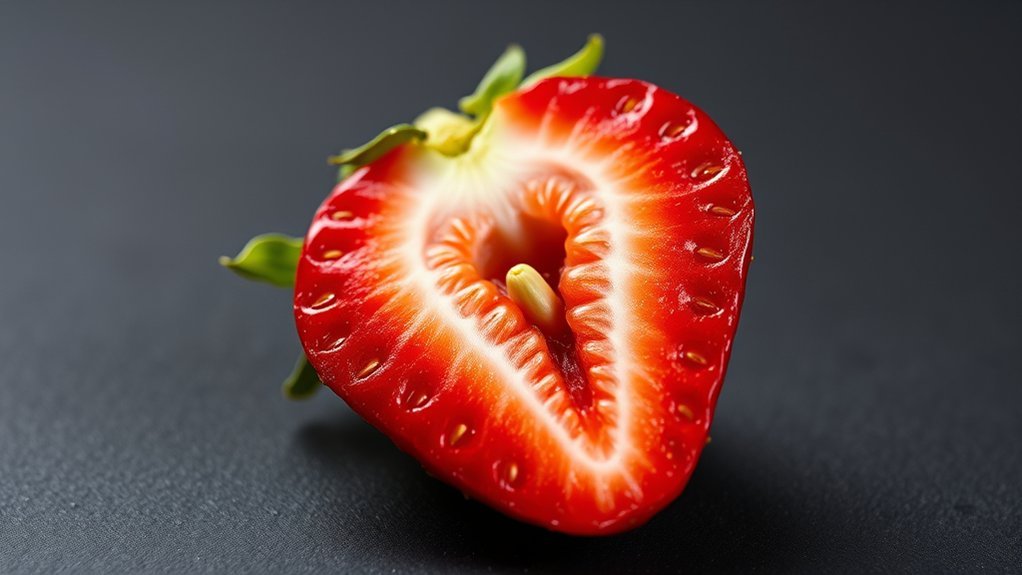
You might notice that strawberries develop from a single flower that has multiple ovaries. That’s actually the main reason they’re classified as aggregate fruits.
Each tiny seed-like thing you see on the surface, called an achene, is actually one of these individual fruits. So, when you look at a strawberry, you’re really seeing a collection of many small fruits all together.
Understanding these achenes helps explain what makes strawberries different from true berries. It’s pretty interesting once you think about it!
Multiple Ovaries Explained
Because a single strawberry flower contains multiple ovaries, it develops into what’s called an aggregate fruit. Each of these multiple ovaries produces a tiny fruit called an achene, which you see as the small seeds on the strawberry’s surface.
Unlike true berries that come from one ovary, strawberries grow from several separate carpels in the same flower.
After pollination, the yellow center of the flower swells and elongates to form the juicy, fleshy part you enjoy.
Understanding the multiple ovaries’ role helps you see why strawberries aren’t classified as true berries, even though they’re often called berries.
This unique structure of multiple ovaries working together is what makes strawberries special in the fruit world.
Achenes On Surface
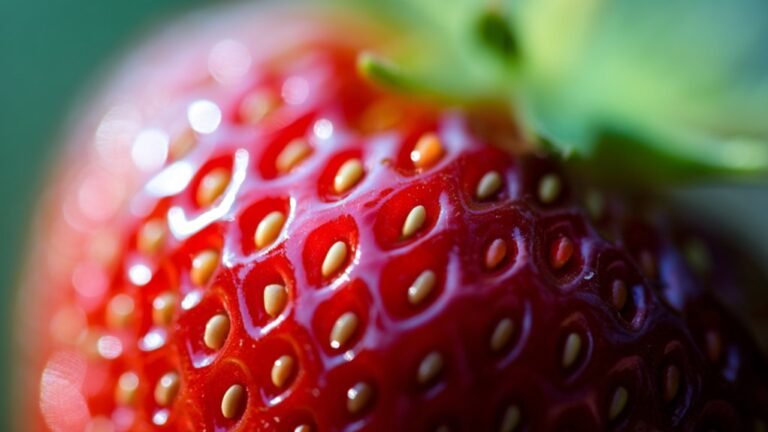
The tiny achenes covering a strawberry’s surface reveal why it’s classified as an aggregate fruit. When you look closely, those little “seeds” are actually achenes on the surface. Each one is a small, one-seeded fruit with its own seed inside a dry shell.
Unlike true berries that grow from a single ovary, strawberries develop from one flower with multiple ovaries, producing many achenes. Each achene attaches to the strawberry’s fleshy part, which isn’t the fruit itself but an enlarged flower stalk called the receptacle.
On an average strawberry, you’ll find around 200 achenes on the surface, making them unique among fruits. This structure shows why strawberries fall into the aggregate fruit category, highlighting their fascinating reproductive process.
What Are Strawberry Achenes and Why Do They Matter?
You mightn’t realize it, but those tiny specks on a strawberry’s surface are called achenes. Each achene contains a single seed inside a dry, protective shell.
These little guys play a crucial role in how strawberries reproduce and spread their seeds. When you understand their structure, it becomes clear why strawberries aren’t true berries but are actually aggregate fruits instead.
Pretty interesting, right?
Achene Structure Explained
Achenes play a crucial role in what makes strawberries unique among fruits. When you examine the achene structure, you’ll see that each tiny achene on a strawberry’s surface is actually a one-seeded fruit encased in a thin, dry covering.
Unlike true berries, the strawberry’s fleshy part that you eat isn’t a fruit itself but an enlarged flower stalk called the receptacle. These achenes contain the seeds, which is why strawberries are classified as aggregate fruits.
Despite making up only about 1% of the strawberry’s weight, achenes contribute roughly 11% of its polyphenols, highlighting their nutritional significance.
Understanding achene structure helps you appreciate how strawberries differ from other fruits and why their classification isn’t as straightforward as it seems.
Role In Seed Dispersal
Though the fleshy part of the strawberry grabs your attention, it’s the tiny achenes on its surface that hold the key to the plant’s reproduction.
These achenes are actually the true fruits, each containing a seed essential for growing new strawberry plants.
The fleshy fruits you enjoy, known as the receptacle, protect and nourish these achenes, increasing their chances of successful seed dispersal.
When animals eat strawberries, they help spread the seeds by excreting them in different locations, allowing the plant to propagate widely.
This natural process guarantees strawberry plants can colonize new areas.
Understanding the role of achenes in seed dispersal reveals why strawberries are classified as aggregate fruits, formed from multiple ovaries of a single flower.
How Are Strawberries Different From True Berries?
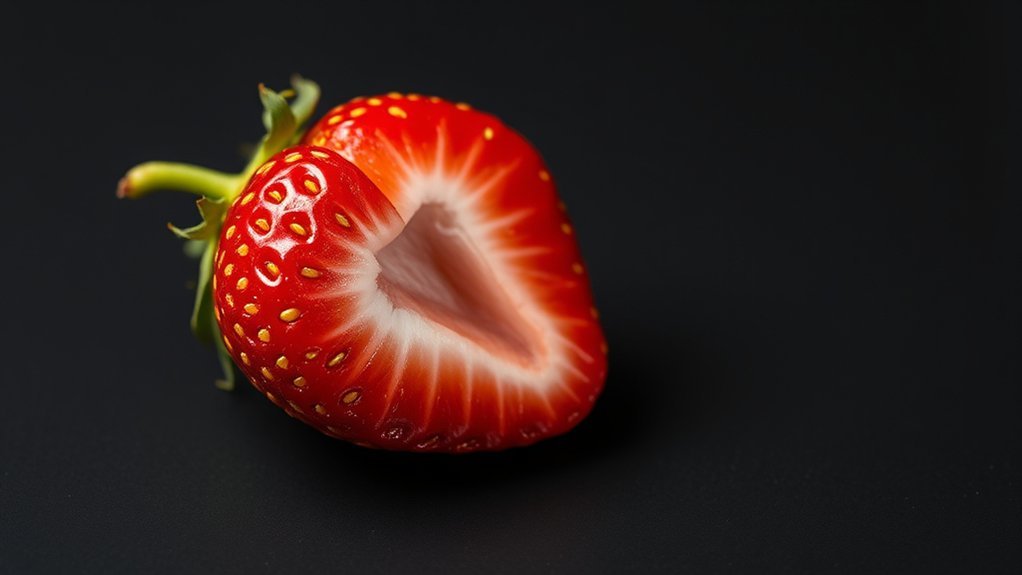
While many people assume strawberries are true berries, they actually belong to a different category called aggregate fruits because they develop from a single flower with multiple ovaries.
Unlike true berries, which come from a single ovary and have three fleshy layers, strawberries form from a fleshy receptacle covered with tiny achenes, each housing a seed.
You’ll notice raspberries and blackberries share this aggregate fruit structure, which sets them apart from true berries like blueberries and bananas.
True berries have a uniform fleshy body, but strawberries’ surface texture with multiple small fruits makes them unique.
Understanding these differences helps you appreciate the unique botanical classification of strawberries compared to the more straightforward true berry category.
What Makes the Strawberry’s Flesh Unique?
You mightn’t realize this, but the juicy part of a strawberry isn’t actually the fruit itself. Instead, it’s an enlarged flower stalk called the receptacle.
And those tiny seeds you see on the surface? Each one is actually an individual fruit, known as an achene.
Once you understand this unique structure, it’s easy to see why strawberries stand apart from true fruits.
Receptacle Versus True Fruit
Because the fleshy part of a strawberry comes from an enlarged flower stalk called the receptacle, its structure differs from typical fruits you might expect.
When you bite into a strawberry, you’re not eating the ovary of the flower like you’d with apples or peaches. Instead, the juicy flesh is the swollen receptacle supporting the flower’s ovaries.
This makes strawberries accessory fruits, with the receptacle playing a key role in what you enjoy. Unlike true fruits that develop solely from the ovary, the strawberry’s flesh grows from this flower stalk.
Understanding the receptacle’s role helps you see why strawberries don’t fit the classic fruit mold. They’re unique because their edible part isn’t the ovary but this specialized flower structure.
Achene Structure and Role
Achenes play an essential role in defining what you actually eat when enjoying a strawberry. Each tiny “seed” you see on the surface isn’t a seed but a separate fruit called an achene, with a thin, dry coating.
The achene structure is unique because each achene develops from a different ovary of the flower, making strawberries aggregate fruits.
These achenes embed themselves into the fleshy part you bite into, which is actually the enlarged flower stalk, or receptacle.
This combination of achenes on the receptacle gives strawberries their distinctive texture and flavor, setting them apart from true berries.
Understanding achene structure helps you appreciate why the strawberry’s flesh is so unique. It’s not just fruit flesh but a complex assembly of many tiny fruits.
How Has Strawberry Evolution Shaped Its Fruit?
Though strawberries have been enjoyed for centuries, their unique fruit structure results from a complex evolutionary journey. Strawberries are aggregate fruits, evolving through hybridization of native species like F. chiloensis and F. vesca. This blending created the garden strawberry we recognize today, with multiple ovaries forming tiny achenes on the fruit’s surface.
The species’ polyploid genome enhances diversity and adaptability, helping breeders develop improved varieties. Cultivation shifted from wild forests to massive farms, producing over ten million tons globally in 2023.
| Evolutionary Aspect | Description | Impact on Fruit |
|---|---|---|
| Hybridization | F. chiloensis × F. vesca | Modern garden strawberry |
| Aggregate Fruits | Multiple ovaries in one flower | Multiple achenes on fruit |
| Polyploidy | Complex genome structure | Genetic diversity & adaptability |
| Cultivation Shift | Wild to large-scale farming | Increased production |
What Nutrients and Phytochemicals Do Strawberries Contain?
Strawberries pack a powerful nutritional punch with their high water content and low calorie count, making them a revitalizing and healthy choice. They contain 91% water, 8% carbohydrates, and just 1% protein, delivering about 33 kilocalories per 100 grams.
You’ll get 65% of your daily vitamin C needs and 17% of manganese from a serving. Like raspberries, strawberries are rich in phytochemicals, including ellagitannin agrimoniin and various polyphenols, which boost antioxidant activity.
The vibrant red color comes from pelargonidin-3-glucoside, an anthocyanin pigment offering health benefits. These nutrients and phytochemicals not only support your immune system but also contribute to overall well-being.
Including strawberries in your diet provides a tasty way to enjoy powerful antioxidants alongside other berries like raspberries.
How Does Strawberry Flavor Relate to Its Fruit Type?
The vibrant red color and antioxidant benefits you enjoy from strawberries come from pelargonidin-3-glucoside, but this pigment also influences their flavor.
As a fleshy, aggregate fruit, strawberries combine sugars, acids, and aromatic compounds in each tiny achene, creating their unique taste. This complexity results from the interaction between the fruit’s structure and chemical makeup.
| Component | Role in Flavor | Contribution |
|---|---|---|
| Sugars | Sweetness | Balances tartness |
| Organic Acids | Tartness | Enhances freshness |
| Volatile Compounds | Aroma and Complexity | Defines overall taste |
Understanding these factors helps you appreciate why strawberry flavor is so distinct and linked directly to its fruit type.
What Are Common Misconceptions About Strawberry Fruits?
Why do many people mistakenly call strawberries true berries? It’s because strawberries look and taste like typical berries, leading you to group them with fruits such as blueberries or grapes.
However, strawberries are actually aggregate fruits, forming from multiple ovaries of one flower. Each tiny seed you see on the strawberry’s surface is an individual fruit called an achene.
Unlike true berries, which develop from a single ovary, strawberries develop from a fleshy receptacle.
Another common misconception is assuming all fruits labeled as “berries” share the same botanical traits. But strawberries, raspberries, and blackberries fall into the aggregate fruits category.
Understanding these distinctions helps you appreciate why strawberry classification differs from culinary usage and clears up confusion about fruit types.
How Are Strawberries Cultivated for Best Fruit Quality?
When you want the best fruit quality, cultivating strawberries involves more than just planting seeds. You’ll often use plasticulture, which means raised beds covered with plastic. This helps reduce weeds and soil erosion while boosting fruit quality.
Managing water, sunlight, and nutrients carefully is key because healthy soil directly improves strawberry yield and taste. To protect your crop from over 200 pests like aphids and fruit flies, integrated pest management helps keep damage low without harming the fruit.
Careful water, sunlight, and nutrient management, combined with integrated pest control, ensures healthy soil and vibrant strawberries.
During off-season periods, growing strawberries in greenhouses lets you control the environment. This ensures fresh, high-quality strawberries year-round.
With these methods, you can cultivate strawberries that aren’t only abundant but also rich in flavor and appearance, making your efforts truly worthwhile.
Why Does Knowing Fruit Types Enhance Strawberry Enjoyment?
Since strawberries aren’t true berries but aggregate fruits, knowing this can change how you see and enjoy them. Each tiny “seed” you spot isn’t a seed but an individual fruit called an achene, making strawberries uniquely complex.
This awareness deepens your appreciation for their structure and the fascinating botanical process behind them. Understanding strawberries as aggregate fruits also connects you to their nutritional benefits, like high vitamin C and antioxidants, encouraging you to include them more often in your diet.
Plus, knowing how pollinators influence their growth lets you value the role of bees in your strawberries’ journey. This knowledge sparks curiosity and inspires creativity, whether you eat them fresh or use them in desserts and jams, enriching your overall strawberry experience.
Frequently Asked Questions
Can Strawberries Grow in Containers or Only in Gardens?
You can definitely grow strawberries in containers, not just in gardens.
Container gardening is perfect if you have limited space or live in an urban area.
Just pick pots that are at least 12 inches deep and use well-draining potting mix.
Choose everbearing or day-neutral varieties so you get fruit all season.
Keep the soil consistently moist and move your containers to catch plenty of sunlight for the best results.
How Long Does It Take for Strawberries to Ripen?
Imagine waiting for a hidden treasure to reveal itself. That’s how long strawberries take to ripen.
Depending on the strawberry varieties you choose, it usually takes about 4 to 6 weeks after flowering for the fruit to mature.
Warm temperatures between 70°F and 80°F speed up this magical transformation, turning berries from green to a luscious red.
Patience is key, but your reward is a sweet, ripe strawberry worth every moment.
What Pests Commonly Affect Strawberry Plants?
You’ll find that strawberry plants commonly face pests like aphids, fruit flies, and various moth species.
These pests can damage your crop and spread diseases, so effective pest management is essential.
You should monitor your plants regularly and use integrated pest management strategies, including biological controls, to keep infestations in check.
Are Strawberries Safe for Pets to Eat?
When it comes to pet safety, strawberries are a sweet treat you can share with your furry friend, but in moderation.
They’re packed with vitamins and antioxidants that support your pet’s health.
Just remember, too many strawberries might upset their tummy, so introduce them slowly.
Always check with your vet first to make sure strawberries fit your pet’s diet like a glove, keeping their wellbeing front and center.
How Can I Preserve Strawberries for Longer Freshness?
To guarantee longer strawberry preservation, store your strawberries in the refrigerator between 32°F and 36°F.
Don’t wash them until you’re ready to eat, as moisture causes mold. Use breathable or paper towel-lined containers to absorb excess moisture.
For extended storage, freeze strawberries by washing, hulling, slicing, and freezing them individually before sealing airtight.
Vacuum sealing before freezing also helps prevent freezer burn and keeps your strawberries fresh much longer.
Conclusion
So, you’ve learned that strawberries aren’t true berries but aggregate fruits. Surprising, right? It’s ironic how something you’ve been happily munching on all your life turns out to be a botanical rebel.
Next time you enjoy that juicy strawberry, you’ll appreciate its unique story and quirky classification. Who knew fruit science could make your snack time so unexpectedly fascinating?
Now, isn’t that a sweet twist to your fruit knowledge?