
10 Steps to Thaw Frozen Strawberries Perfectly
To thaw frozen strawberries perfectly, start by washing and drying them if fresh. Then place them in a covered container in your fridge overnight for gentle thawing.
If you’re short on time, seal them in a bag and submerge in cold water, changing it every 30 minutes. You can also microwave in short bursts on defrost mode.
Handle gently to keep the texture firm, drain excess juice, and store refrigerated. Keep going to reveal tips for best uses and storage.
Prepare Strawberries Before Thawing
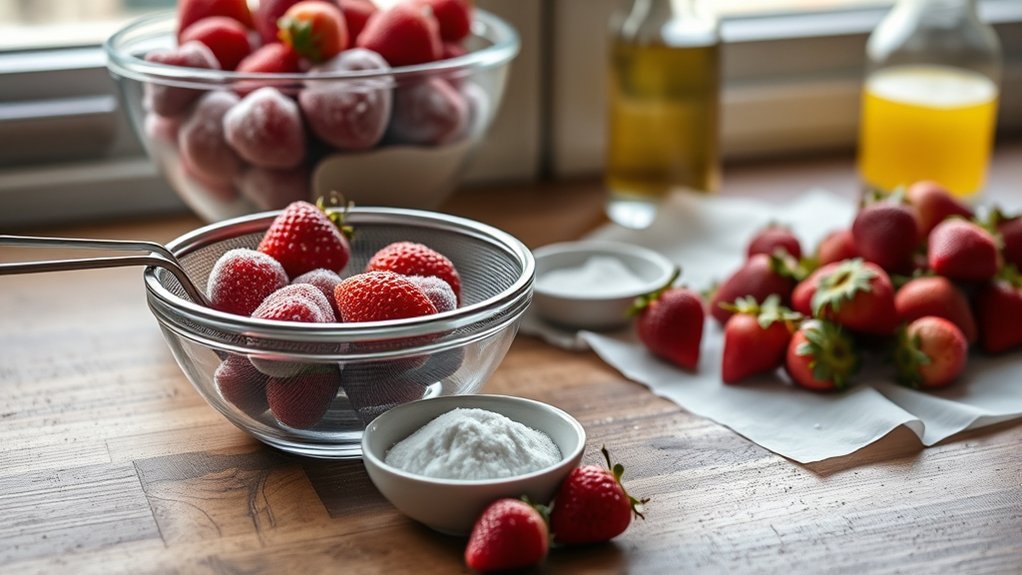
Before you start thawing frozen strawberries, make sure to wash them thoroughly to remove dirt and pesticides, since strawberries often rank high on the dirty dozen list.
To prepare strawberries before thawing, remove the green tops and stems with a knife or hulling tool. This step improves the texture of the thawed berries.
Check for any moldy or mushy strawberries and discard them, as these can negatively affect the quality of your thawed berries.
After washing and trimming, air dry the strawberries on kitchen towels to prevent excess moisture, which can interfere with the thawing process.
Decide if you want to leave the strawberries whole or slice them before freezing; sliced ones thaw faster, making your thawing experience more efficient.
Thaw Strawberries Overnight in the Refrigerator
You can thaw strawberries overnight in the refrigerator to keep their texture firm and fresh.
Just place them in a covered container or in a strainer over a bowl to catch any juice that drips off. This method takes about 8 hours and helps preserve both flavor and safety.
Refrigerator Thawing Benefits
When you thaw strawberries overnight in the refrigerator, you allow them to defrost gradually, which preserves their texture and flavor better than quicker methods.
Leaving your strawberries in the fridge for about eight hours guarantees they thaw evenly without becoming mushy. This slow thawing reduces the risk of bacterial growth, making it the safest option.
To catch any excess juice, place the frozen berries in a sealed container or on a strainer. Properly thawed strawberries maintain a firmer texture, perfect for salads or desserts where you want that fresh bite.
Using this method, your strawberries stay flavorful and avoid the sogginess often caused by faster thawing techniques, guaranteeing your dishes turn out just right every time.
Timing For Best Texture
Although quick thawing might seem convenient, letting your frozen strawberries thaw overnight in the refrigerator is key to preserving their best texture.
This slow thaw process, usually about eight hours, helps prevent the cell walls from rupturing, which often causes mushiness and excess juice.
When you thaw strawberries this way, they keep a firmer texture, perfect for recipes needing whole or sliced berries.
To get the best results, place the strawberries in a sealed container while thawing to avoid cross-contamination and help retain their natural juices.
Planning ahead for this overnight thaw guarantees your strawberries are ready to use without sacrificing quality or texture, making your culinary creations more enjoyable.
Juice Retention Tips
Since thawing frozen strawberries overnight in the refrigerator slows the defrosting process, it helps retain their natural juices and keeps the berries from becoming overly soggy.
To maximize juice retention, place the strawberries in a sealed container or on a strainer over a bowl to catch any excess liquid released during thawing. This prevents the berries from sitting in juice, which can make them mushy.
Thaw frozen strawberries this way for about eight hours, ideally planning ahead for your recipes. Keeping them refrigerated during thawing also reduces bacterial growth compared to faster methods like room temperature or warm water.
Speed up Thawing With Cold Water
To speed up thawing, first seal your frozen strawberries in a plastic bag. This keeps them safe from water and bacteria.
Then, submerge the bag in cold water that’s below 70°F. Make sure to change the water every 30 minutes to keep it cold.
This way thaws your strawberries faster than using the fridge, while still keeping them fresh and evenly defrosted.
Cold Water Benefits
When you want to thaw frozen strawberries quickly without sacrificing their texture, the cold water method works wonders. By submerging a sealed bag of frozen berries in cold water, you speed up the thawing process while keeping the fruit fresh and juicy.
Here’s why using cold water benefits your thawed fruit:
- Thaws strawberries in under 2 hours
- Preserves texture better than microwaving
- Limits juice loss for tastier fruit
- Reduces risk of bacterial growth compared to room temperature thawing
- Allows safe, controlled thawing by changing water every 30 minutes
Keep the water below 70°F and refresh it regularly.
This approach gives you perfectly thawed fruit that’s ready to enjoy in no time.
Proper Bag Sealing
Always make sure you seal your frozen strawberries in a plastic bag tightly before placing them in cold water. Proper bag sealing is essential to prevent water from entering and contaminating the frozen berries.
When you submerge the sealed bag in cold water, it keeps the strawberries protected and preserves their natural juices. You can use these juices later for sauces or drinks. This step also speeds up thawing by ensuring direct contact between the cold water and the bag’s surface, which helps heat transfer evenly.
Water Temperature Control
Although thawing frozen strawberries might seem straightforward, controlling the water temperature plays an essential role in speeding up the process while keeping your fruit safe and flavorful.
Using water temperature control effectively means submerging your sealed strawberries in cold water below 70°F (21°C). This method thaws berries quickly, usually under two hours, while preserving taste and texture.
Keep these tips in mind for ideal results:
- Use a sealed plastic bag to prevent water contact
- Submerge in cold water, never warm or hot
- Change the water every 30 minutes to maintain temperature
- Avoid thawing at room temperature to reduce bacteria risk
- Skip microwaving for better flavor retention
Quickly Thaw Strawberries Using the Microwave
To thaw strawberries quickly using the microwave, spread them out in a single layer on a paper towel-lined, microwave-safe plate to soak up excess moisture.
Set your microwave to the defrost setting and heat the strawberries in 30-second increments.
After each interval, gently stir the strawberries to guarantee even thawing and prevent hot spots that might cook the fruit.
Check their progress regularly, continuing for up to 2 minutes total.
Once thawed, remove the strawberries immediately to avoid excess heat that can make them mushy.
Keep in mind that microwaving can break down cell walls, often leading to sogginess, so use this method only when you’re pressed for time.
This way, you’ll thaw strawberries fast while minimizing texture loss.
Handle Strawberries to Preserve Texture During Thawing
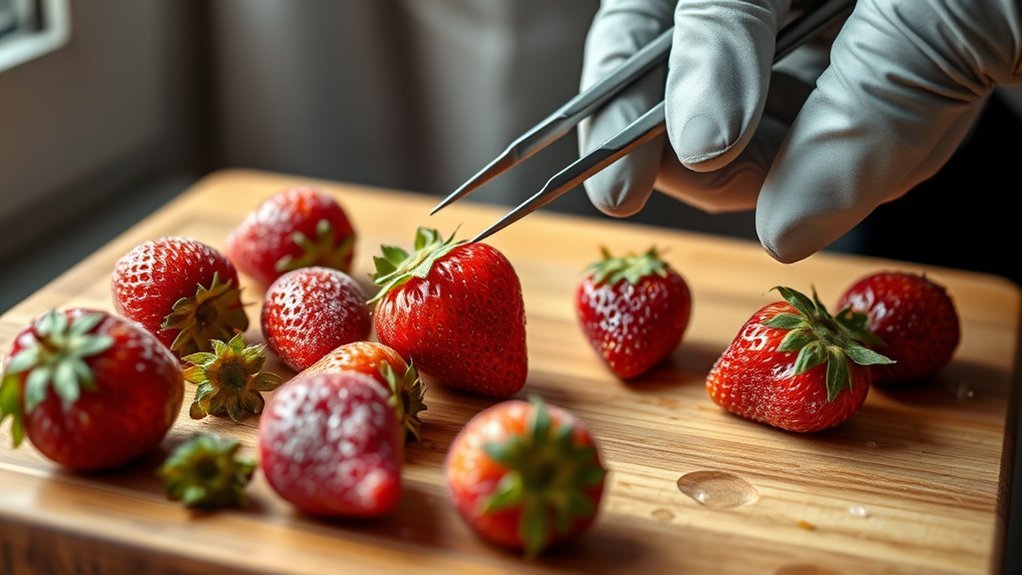
When you thaw frozen strawberries carefully, you can preserve their texture and flavor much better. To handle them properly, avoid rapid temperature changes that cause cell damage.
Here’s how you can prevent freezer burn and keep strawberries firm during thawing:
Use the refrigerator defrost setting for 8 hours or overnight to minimize cell wall rupture. Place strawberries in a strainer over a bowl to catch juice and keep berries firm.
For faster thawing, submerge a sealed bag in cold water for 1–2 hours. Avoid the microwave unless necessary; if you must, use 30-second increments on paper towels.
Handle berries gently to prevent bruising and texture loss.
Use Strawberry Juice Released During Thawing
When you thaw frozen strawberries, be sure to collect the juice they release. It’s packed with natural sweetness and flavor.
You can use this juice to make simple syrups, add a burst of strawberry to smoothies, or even enhance salad dressings and marinades.
Don’t let that flavorful liquid go to waste—it’s a great way to boost your dishes creatively.
Collecting Strawberry Juice
Place frozen strawberries in a strainer set over a bowl to catch the flavorful juice they release as they thaw. Collecting strawberry juice during thawing frozen strawberries is a smart way to enhance your kitchen creations while reducing waste.
Here’s why you’ll want to save that juice:
- It’s rich and concentrated, perfect for boosting flavor.
- Great for making flavored simple syrups.
- Adds natural sweetness to drinks and desserts.
- Ideal for smoothies, sauces, and dressings.
Store the juice in the fridge and use it within a few days for the best freshness.
Using Juice Creatively
Although thawing frozen strawberries primarily softens the fruit, you can also capture the juice they release and use it to elevate your recipes. The juice from thawed strawberries is a natural flavor booster.
Mix it with sugar and water to make a simple syrup perfect for drizzling over pancakes, waffles, or ice cream. You can add the juice to beverages like lemonade, iced tea, or cocktails to give them a rejuvenating, fruity twist.
Incorporate thawed strawberry juice into smoothies or yogurt for vibrant color and extra flavor without added sweeteners.
Don’t forget baking. Use the juice in cake batters or muffins to add moistness and a subtle strawberry taste.
Using this juice creatively helps you maximize flavor and reduce waste.
How to Tell When Strawberries Are Fully Thawed
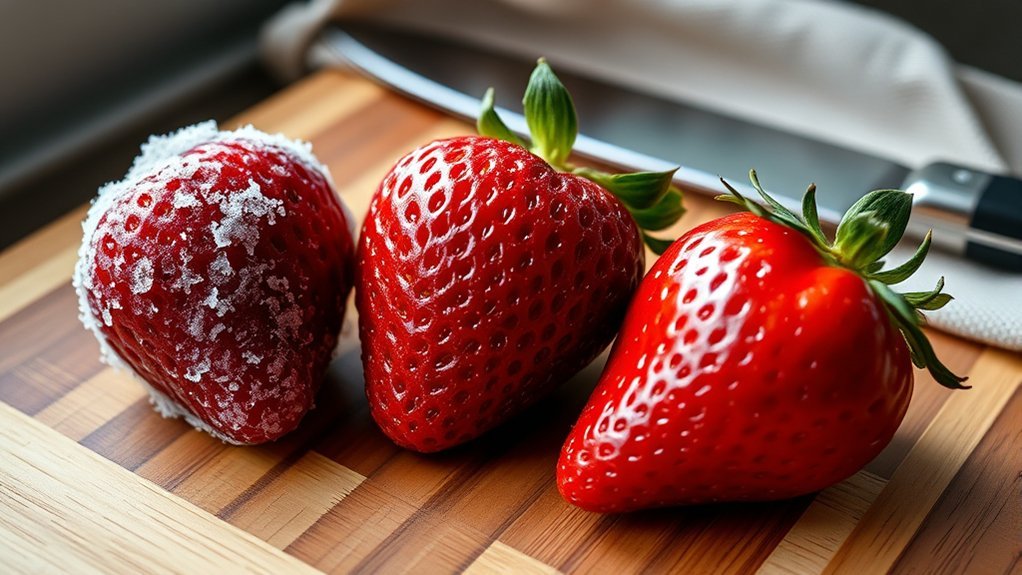
Anyone handling frozen strawberries can quickly tell when they’re fully thawed by checking their texture and color. Thawed strawberries become softer and show a deep red hue, signaling moisture absorption.
To confirm, look for these signs:
- The berries feel pliable and moist, not icy or hard
- They easily break apart when gently pressed
- You notice excess juice pooling in the bowl or container
- The color deepens to a rich red, indicating proper thawing
- A quick taste test reveals sweet, flavorful fruit without icy texture
Avoid Common Mistakes That Make Strawberries Mushy
If you want to keep your strawberries firm and flavorful, you’ll need to avoid common thawing mistakes that lead to mushiness. Thawing them too quickly or at room temperature breaks down their delicate texture. Use the refrigerator method or cold water in a sealed bag, changing water every 30 minutes to maintain coldness.
| Mistake | Effect on Texture | Best Practice |
|---|---|---|
| Microwave thawing | Mushy, soggy | Avoid microwave |
| Room temperature thaw | Uneven, soft spots | Avoid room temp |
| No water change | Warm water, mushy | Change cold water every 30 min |
| Quick thawing | Texture breakdown | Thaw overnight in fridge |
| Using frozen raw | Not ideal for fresh | Use thawed for cooking/blending |
Following these tips preserves your strawberries’ texture perfectly.
Store Thawed Strawberries Safely to Prevent Spoilage
Proper storage is key to keeping thawed strawberries fresh and safe to eat. To store thawed strawberries correctly, use an airtight container and refrigerate them immediately.
Follow these tips to prevent spoilage:
Keep your refrigerator at or below 40°F (4°C). Drain any juice that collects to avoid sogginess. Consume thawed strawberries within one day for best quality.
Never refreeze thawed strawberries to preserve texture and flavor. Regularly inspect for mold or off smells and discard spoiled fruit promptly.
Best Ways to Use Thawed Strawberries Based on Texture
While thawed strawberries lose their firmness, they still offer great versatility in the kitchen. Their softer texture works well in cooked or blended recipes like jams, syrups, and smoothies.
Partially frozen strawberries hold a firmer texture, making them perfect for salads or yogurt toppings. However, thawed strawberries aren’t ideal for fresh uses that require firmness, such as chocolate-covered strawberries.
Use the juice released during thawing to add flavor to sauces or drinks.
| Texture | Best Uses | Avoid For |
|---|---|---|
| Softer (fully thawed) | Jams, smoothies, pies | Fresh, firm desserts |
| Partially frozen | Salads, yogurt toppings | Overly soft dishes |
| Juice released | Sauces, drinks | Solid fruit applications |
Choose uses based on the texture to make the most of thawed strawberries.
Frequently Asked Questions
Can I Refreeze Thawed Strawberries Safely?
You can practice safe refreezing of thawed strawberries if you’ve used proper thawing methods, like thawing them in the refrigerator and not leaving them out at room temperature for over two hours.
Always check for spoilage before refreezing.
Keep in mind, refrozen strawberries might lose texture, so it’s best to use them in cooked recipes like jams or baked goods rather than eating them fresh.
Do Frozen Strawberries Lose Nutritional Value After Thawing?
No, frozen strawberries don’t lose much nutritional value after thawing thanks to frozen preservation.
You’ll still enjoy most of the nutritional benefits, including vitamins and antioxidants.
The freezing process locks in these nutrients with only minimal losses, mainly in vitamin C and some B vitamins.
Just make sure to eat them soon after thawing, as keeping them too long can reduce their health benefits.
How Long Do Thawed Strawberries Last in the Fridge?
Wondering how long thawed strawberries last in the fridge? Their shelf life is typically 1 to 3 days.
To keep them fresh, you should store them in an airtight container. This storage tip helps prevent spoilage and contamination.
Remember, strawberries start losing texture and flavor quickly, so use them promptly.
If they smell off or show mold, toss them out right away to stay safe.
Can Thawed Strawberries Be Used for Baking Without Draining?
You can definitely use thawed strawberries for baking without draining. Their softer strawberry texture releases juice that adds moisture and flavor to your baked goods.
Just keep baking tips in mind: adjust the other liquids in your recipe to balance the extra moisture. This way, your muffins or pies won’t turn out too soggy.
Embrace that juicy goodness; it enhances the overall taste and texture beautifully.
Are There Specific Strawberry Varieties Better for Freezing and Thawing?
You might think all strawberry varieties freeze and thaw equally well, but that’s not the case.
When you pick strawberry varieties like ‘Chandler’ or ‘Albion,’ you’re using freezing techniques that preserve firmness and flavor thanks to their sugar content.
Avoid mushy, overripe berries. Instead, choose smaller, firmer ones or acidic types like ‘Seascape.’
These choices guarantee your thawed strawberries taste as fresh as when you picked them.
Conclusion
Now that you know how to thaw frozen strawberries perfectly, you’re set to enjoy their flavor without the usual mushiness. Contrary to the myth that thawing always ruins texture, proper methods actually preserve juiciness and taste.
Whether you choose the slow fridge thaw or a quick microwave zap, handling them gently makes all the difference. So go ahead, thaw with confidence and savor those sweet berries just like fresh ones!