

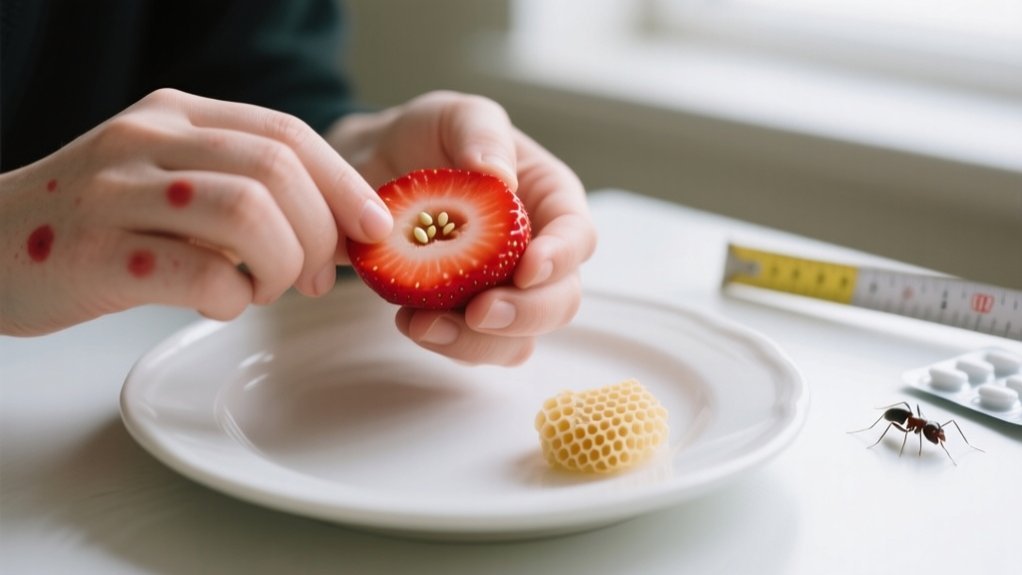
How Can You Tell If You Are Allergic to Strawberries?
You can tell you’re allergic to strawberries if you experience itching or tingling in your mouth, throat tightness, or skin rashes shortly after eating them. Other signs include nausea, stomach pain, or hives around your face.
Symptoms usually show up within minutes to two hours. If your reaction worsens with swelling or breathing trouble, seek emergency help.
To better manage your allergy, it’s helpful to understand what rashes look like, how to track symptoms, and what to avoid.
What Are Common Signs of a Strawberry Allergy?
If you eat strawberries and soon notice itching or tingling in your mouth, it could be an early sign of an allergy. This sensation often indicates oral allergy syndrome, a mild form of allergic reaction.
With a strawberry allergy, symptoms can quickly escalate to throat tightness, skin rashes like hives or eczema, and gastrointestinal distress including nausea, stomach pain, or vomiting.
Strawberry allergy symptoms may escalate rapidly to throat tightness, skin rashes, and gastrointestinal distress like nausea and vomiting.
You might also experience respiratory issues such as wheezing or coughing.
In severe cases, anaphylaxis can occur, marked by tongue swelling, difficulty breathing, and a rapid drop in blood pressure. This requires immediate medical attention.
Recognizing these allergic reactions early helps you manage your condition effectively and avoid potential complications from consuming strawberries or related fruits.
When Do Strawberry Allergy Symptoms Usually Appear?
You’ll usually notice strawberry allergy symptoms within minutes to two hours after eating them.
Some reactions show up quickly, like itching or throat tightness. Others might take a bit longer to appear.
Knowing when symptoms start can help you respond faster and get the care you need.
Symptom Onset Timing
When exactly do strawberry allergy symptoms usually show up? You might notice allergic reaction signs within minutes to two hours after eating strawberries. Immediate symptoms often include throat tightness, itching or tingling in your mouth, and skin rashes like hives.
Sometimes, gastrointestinal issues like nausea or stomach pain appear quickly. Severe symptoms such as anaphylaxis can develop rapidly and need urgent care.
| Symptom Type | Onset Time | Severity |
|---|---|---|
| Throat tightness | Minutes to 1 hour | Moderate to severe |
| Itching & skin rashes | Within 30 minutes | Mild to moderate |
| Anaphylaxis | Within minutes | Severe |
Your symptom timing depends on your sensitivity and how much you consumed.
Early Versus Delayed Reactions
Symptoms from a strawberry allergy can show up quickly or take a bit longer to appear. Early reactions usually develop within minutes to two hours after eating strawberries.
You might notice symptoms like throat tightness, itching or tingling in your mouth, and skin rashes such as hives. These early reactions signal your body’s allergic response.
Delayed reactions, which are less common, might show up hours later and often include gastrointestinal issues like nausea, stomach pain, or diarrhea.
The timing and severity of symptoms depend on how sensitive you’re and how much strawberry you consumed.
Be aware that severe allergic reactions, including anaphylaxis, can occur rapidly and need immediate medical attention.
Knowing the difference between early and delayed reactions helps you respond appropriately to your allergic reaction.
What Does a Strawberry Allergy Rash Look Like?
A strawberry allergy rash usually shows up as red welts or hives around your mouth or cheeks soon after eating strawberries. The rash may be flat, red, and sometimes not itchy, resolving within hours. In children, it might appear as irritation without other symptoms.
If you notice skin dryness or eczema, the rash can worsen. Watch for severe allergic reaction symptoms like swelling or trouble breathing, which could signal anaphylaxis and need urgent medical attention.
| Rash Appearance | Description |
|---|---|
| Hives | Raised, red welts on skin |
| Flat Rash | Red, non-itchy patches |
| Eczema Flare-up | Dry, irritated, inflamed skin |
| Severe Reaction Signs | Swelling, difficulty breathing |
How Can You Track Your Strawberry Allergy Symptoms at Home?
Noticing a rash after eating strawberries is just one part of understanding your allergy. To effectively track your strawberry allergy symptoms at home, start by keeping a detailed food diary. This helps you pinpoint an allergic response and any contact reactions that may occur.
Noticing a rash after eating strawberries is a key step in tracking your allergy symptoms effectively.
Here’s how to track your symptoms:
- Log every instance you eat strawberries, noting the time and quantity.
- Record specific symptoms like throat tightness, skin rashes, or digestive issues, including their severity.
- Track symptoms after consuming related fruits, such as peaches or apples, to watch for cross-reactivity.
- Share your detailed observations with a healthcare professional to aid in managing your allergy.
This careful tracking allows you to recognize patterns and better understand your allergy symptoms.
How Is a Strawberry Allergy Diagnosed by Doctors?
When you visit a doctor about a possible strawberry allergy, they’ll probably start with some tests like a skin prick or blood test to see how your body reacts.
They want to get a clear picture of whether strawberries are the culprit.
Sometimes, the doctor might ask you to try an elimination diet. This means cutting out strawberries from your meals for a while to see if your symptoms get better.
By combining these steps, they can confirm if strawberries are really causing your allergic reactions.
It’s all about figuring out what’s behind your symptoms so you can manage them better.
Diagnostic Testing Methods
Doctors use several diagnostic testing methods to determine if you’re allergic to strawberries. These tests help identify allergic reactions and guide your medical advice.
Here are four common methods:
- Skin Prick Test: Doctors place strawberry extract on your skin and prick it to check for reactions within 15-20 minutes.
- Blood Tests: These measure IgE antibodies specific to strawberry proteins, confirming a food allergy.
- Symptom Diary: You track symptoms and food intake, helping doctors spot connections to strawberries.
- Elimination Diet: Although detailed later, this involves removing strawberries to see if symptoms improve, aiding diagnosis.
Together, these methods give a clear picture of your sensitivity and help guarantee you get accurate diagnosis and proper medical advice.
Elimination Diet Approach
Alongside skin prick tests and blood work, an elimination diet offers a practical way to identify if strawberries cause your allergic reactions. You’ll remove strawberries and related products from your diet for 2-4 weeks, closely monitoring symptoms.
During this time, keeping a detailed food diary helps track any changes.
After the elimination phase, you’ll enter the reintroduction phase, gradually adding strawberries back to see if allergic reactions return.
This process helps you and your healthcare provider confirm diagnosis more accurately. Doctors often recommend combining this approach with allergy testing to guarantee reliable results.
Since nutritional balance is vital, conducting the elimination diet under a healthcare provider’s supervision is essential to safely identify if strawberries trigger your allergy.
Which Foods Can Cause Similar Allergic Reactions?
Allergic reactions to strawberries often overlap with those triggered by other fruits and foods that share similar proteins. Your immune system may mistake these foods for strawberries due to cross-reactivity, causing similar symptoms.
Accurate diagnosis is key to managing these allergic reactions effectively.
Common foods that can cause similar allergic reactions include:
- Raspberries, peaches, and blackberries. These are closely related fruits with similar proteins.
- Kiwi, bananas, and avocados. They share protein structures that may trigger symptoms.
- Apples and certain nuts. These can mimic strawberry allergy symptoms.
- Natural rubber latex. It’s linked to latex-fruit syndrome, which may cause strawberry allergies.
Knowing these foods helps you avoid unexpected allergic reactions and guarantees your diagnosis covers all potential triggers.
What Should You Do If You Have Severe Allergy Symptoms?
Since some foods can trigger reactions similar to strawberries, it’s important to know how to respond if your symptoms become severe.
If you experience an allergic reaction with symptoms like tongue swelling, difficulty breathing, or a rapid drop in blood pressure, use your epinephrine auto-injector immediately.
Anaphylaxis can escalate quickly, so don’t wait. After administering the epinephrine, call emergency medical services to get further medical attention, even if you start feeling better.
Make sure to inform those around you about your allergy so they can help in an emergency. Always carry your epinephrine auto-injector and avoid foods that might trigger your allergy.
Recognizing and acting promptly during severe symptoms can save your life.
How to Avoid Strawberries and Hidden Sources in Foods
When you have a strawberry allergy, you need to steer clear of fresh and dried strawberries as well as any products containing them, like jams, jellies, and candies.
To avoid strawberries and hidden sources in foods, follow these steps:
- Always check ingredient labels on processed foods for strawberry derivatives or flavoring.
- Watch for cross-reactivity by avoiding related fruits such as raspberries, blackberries, peaches, and apples.
- Ask about ingredients when eating out or buying prepared foods like smoothies, ice creams, and desserts.
- Inform others about your strawberry allergy to reduce the risk of accidental exposure.
Staying vigilant helps you avoid strawberries and hidden sources, keeping your allergy under control and your health safe.
How to Manage Mild Strawberry Allergy Symptoms Safely
Avoiding strawberries and their hidden sources is the first step, but sometimes you might still experience mild allergy symptoms. If that happens, over-the-counter antihistamines can help relieve itching, rashes, and skin reactions.
Always rinse the affected area with lukewarm water to remove any strawberry residue and apply soothing ointments to ease redness.
Be sure to monitor your symptoms closely, including any throat tightness or gastrointestinal issues, and keep a food diary to track what you eat and any allergic reactions.
Avoid foods containing strawberries, such as jams or flavored syrups, to reduce exposure.
Consult a healthcare professional for personalized advice and to get antihistamines prescribed for future use. Staying vigilant helps you manage mild symptoms safely and maintain your health.
When to See a Doctor About Your Strawberry Allergy
If you notice severe symptoms like throat tightness or difficulty breathing after eating strawberries, you should seek medical help right away.
Don’t wait around if your reactions get worse or just won’t go away—getting checked out sooner can help prevent any serious complications.
Your doctor can help by doing allergy tests to confirm if strawberries are the cause and work with you to plan the best treatment.
Recognizing Severe Symptoms
How can you tell when your reaction to strawberries is more than just mild irritation? Recognizing severe symptoms is essential because a severe allergy can escalate quickly into a medical emergency.
If you notice any of the following symptoms of a food allergic reaction, seek urgent care immediately:
- Swelling in the lips, throat, tongue, or mouth, which signals a serious allergic reaction.
- Difficulty breathing, wheezing, or a tight throat, indicating possible anaphylaxis.
- Blue, grey, or pale skin around the lips or tongue, showing a lack of oxygen.
- Sudden confusion, drowsiness, or fainting after eating strawberries.
These signs demand prompt medical attention to prevent life-threatening complications. Don’t hesitate to get help if you suspect a severe allergy.
Timing Medical Consultation
Though mild symptoms might seem manageable, you should see a doctor whenever you experience throat tightness, hives, or stomach issues after eating strawberries. Immediate medical consultation is essential if severe symptoms like anaphylaxis occur.
If you have a family history of allergies, asthma, or eczema, discussing your symptoms with a healthcare professional is wise. Keeping a food diary helps track allergic reactions and supports diagnosis.
Your doctor may suggest allergy testing to confirm the cause.
| Symptom Severity | Action Needed | Notes |
|---|---|---|
| Mild | Monitor & record in diary | Track symptoms for consultation |
| Moderate | Schedule medical consult | Discuss symptoms and history |
| Severe (anaphylaxis) | Seek emergency care | Immediate treatment required |
Preparing For Allergy Testing
Because symptoms like itching, swelling, or digestive discomfort may signal a strawberry allergy, you should consult a healthcare provider for proper evaluation and testing.
Preparing for allergy testing involves several important steps to help diagnose your condition accurately.
Consider these actions:
- Track your allergic symptoms in a food diary, noting when and what you eat.
- Discuss your family history of food allergies, asthma, or eczema with your doctor.
- Follow an elimination diet by removing strawberries from your meals, then gradually reintroduce them under medical supervision.
- Undergo allergy testing, which may include a skin prick test or blood tests to detect specific antibodies.
These steps will help your health care provider determine if strawberries cause your allergic reactions.
Frequently Asked Questions
Can Strawberry Allergy Develop Later in Life?
Yes, strawberry allergy triggers can develop later in life due to immune response changes that cause late onset allergies.
Adult food allergies often emerge even if you’ve tolerated strawberries before.
Dietary habits influence symptom onset timing, and cross reactivity factors may worsen reactions.
To confirm, you should consider allergy testing methods like skin or blood tests.
Monitoring your symptoms closely helps you manage this newfound sensitivity effectively.
Are Strawberry Allergies More Common in Children or Adults?
Imagine your immune system as a vigilant gatekeeper. It’s more alert in childhood, making strawberry allergy prevalence higher in kids.
You’ll find childhood allergies, including strawberries, are more common due to genetic factors and immune response differences.
Adults can develop sensitivities too, but less frequently. They often face diagnosis challenges from cross reactivity issues.
If you notice severe symptoms, understanding these patterns helps you manage and seek proper diagnosis confidently.
Can Cooking Strawberries Reduce Allergic Reactions?
Yes, cooking strawberries can reduce allergic reactions for some people because heat effects alter allergenic proteins through food processing and cooking methods.
However, your individual reactions vary with allergy severity.
Cooking might change flavor and lower nutritional value, and ingredient interactions during cooking can also impact allergies.
Still, you shouldn’t assume cooked strawberries are safe without consulting an allergist, as cross-reactivity and severe reactions might persist despite these changes.
Is Strawberry Allergy Linked to Other Fruit Allergies?
About 3-4% of young children show strawberry allergies, which often links to related fruit allergies through fruit cross reactivity.
If you have a strawberry allergy, you might also experience oral allergy syndrome or pollen food syndrome with berries, peaches, or apples due to immune response similarities.
Keep in mind, histamine intolerance issues and tropical fruit allergies can complicate things, but berry allergy connections often signal broader fruit sensitivities.
Are There Any Natural Remedies to Ease Strawberry Allergy Symptoms?
You can try natural remedies like herbal teas and ginger supplements to ease strawberry allergy symptoms, thanks to their anti-inflammatory effects.
Applying cold compresses or oatmeal masks helps soothe skin irritation.
Incorporate anti-inflammatory foods and vitamin C to support your immune system.
Probiotics use might also improve your gut health, potentially reducing reactions.
Some believe honey benefits allergy relief, but it’s not proven specifically for strawberry allergies, so use it cautiously.
Conclusion
If you suspect you’re allergic to strawberries, don’t ignore the signs your body sends. It’s speaking a language of caution. From rashes to breathing troubles, these symptoms are your body’s red flags.
Keep track, avoid hidden sources, and seek medical advice when needed. Remember, managing your allergy isn’t just about avoiding strawberries; it’s about protecting your well-being. After all, your health is the sweetest fruit you can cherish.