

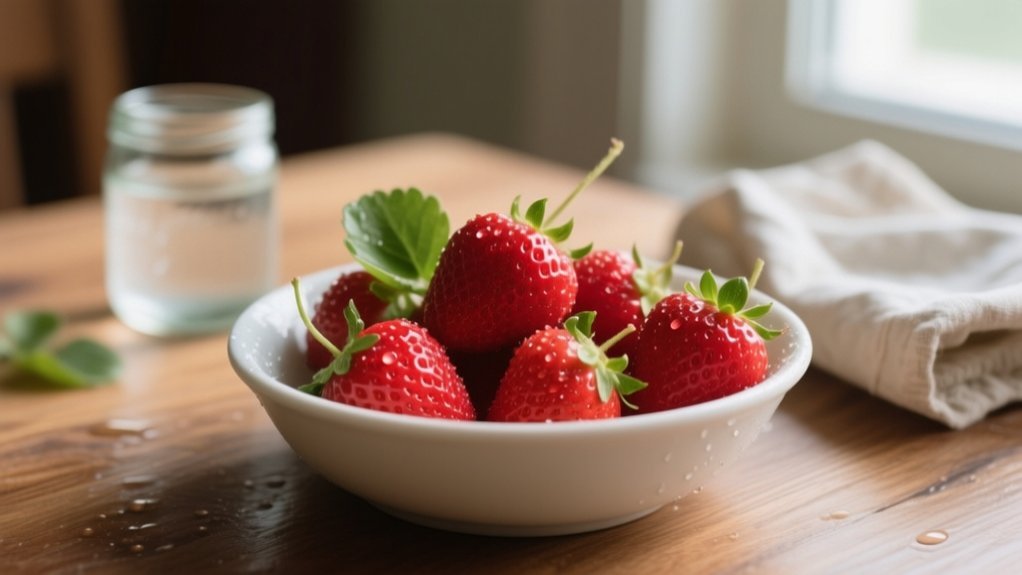
How to Store Freshly Picked Strawberries for Maximum Freshness
To keep your freshly picked strawberries fresh, pick firm, bright berries with intact green caps, and skip washing until just before eating to prevent moisture build-up. Gently dry any you rinse with a towel or spinner, then store them in their original container or an airtight one lined with paper towels in the fridge at around 32°F.
Keep an eye out for any spoiled berries and remove them quickly. Using a vinegar soak before storage can extend freshness even more. There’s more to learn about keeping your strawberries fresh longer.
How To Choose Fresh Strawberries For Longer Storage
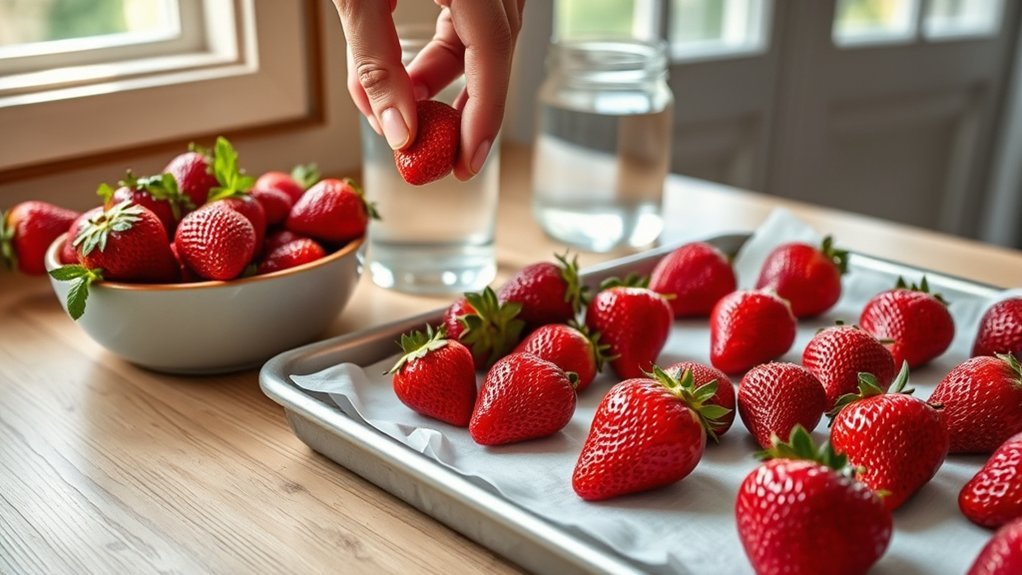
When choosing fresh strawberries for longer storage, focus on bright red berries that are firm and shiny. These qualities indicate ripeness and good quality, essential for keeping them fresh longer.
Check the carton carefully, especially the bottom, for any bruises, blemishes, or mold that could cause faster spoilage. Avoid berries with soft spots or signs of decay, as they’ll spoil the entire batch quickly.
Pick strawberries with green caps intact since they help retain moisture and prolong freshness. Also, choose berries that look fresh and smell sweet. These are at their peak for storage.
When And Why To Avoid Washing Strawberries Before Storage
After carefully selecting fresh strawberries, you might wonder if washing them right away helps keep them fresh.
However, when storing fresh strawberries, it’s best to avoid washing them before storage. Washing removes the protective bloom on the strawberries, which increases moisture and speeds up spoilage.
Moisture is the biggest enemy when storing fresh strawberries because it promotes mold growth and decay. Instead, keep your strawberries dry and store them in their original containers until you’re ready to eat them.
Only wash strawberries right before consumption to maintain their freshness and prolong shelf life.
Prepare Strawberries For Refrigeration: Cleaning And Drying Tips
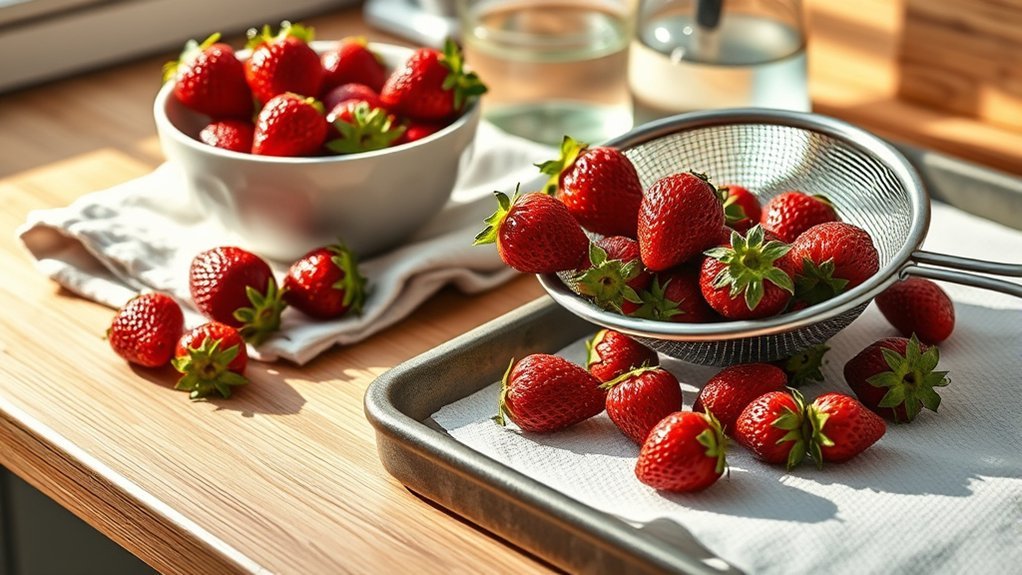
Although you should wait to wash strawberries until just before eating, rinsing them briefly in cool water removes bacteria and mold spores that can cause spoilage. After rinsing, use these cleaning and drying tips to keep your berries fresh: remove any damaged ones and dry the strawberries thoroughly with a salad spinner or paper towels.
Moisture speeds up spoilage, so drying is essential. For your storage method, place the cleaned, dried berries in an airtight container or their original carton. Keep your fridge at around 32°F to prolong freshness.
| Step | Purpose |
|---|---|
| Rinse in cool water | Remove bacteria and mold spores |
| Inspect and discard | Eliminate spoiled berries |
| Dry thoroughly | Prevent moisture buildup |
| Store airtight | Maintain freshness and avoid mold |
How To Dry Strawberries Properly Before Refrigerating
Cleaning strawberries with cool water removes dirt and pesticides, but to keep them fresh longer, you need to dry them thoroughly before refrigerating.
After you wash the berries, use a salad spinner or lay them on a clean kitchen towel. Gently pat the strawberries dry rather than rubbing to avoid bruising. Make sure each berry is thoroughly dried to prevent moisture buildup, which leads to spoilage.
Before drying, remove any damaged or spoiled strawberries to protect the rest. Avoid washing strawberries too early; their natural protective bloom helps keep them fresh until you’re ready to eat.
Proper drying is key to extending their shelf life, so take your time ensuring no excess water remains before storing them in the fridge.
Best Containers For Storing Fresh Strawberries
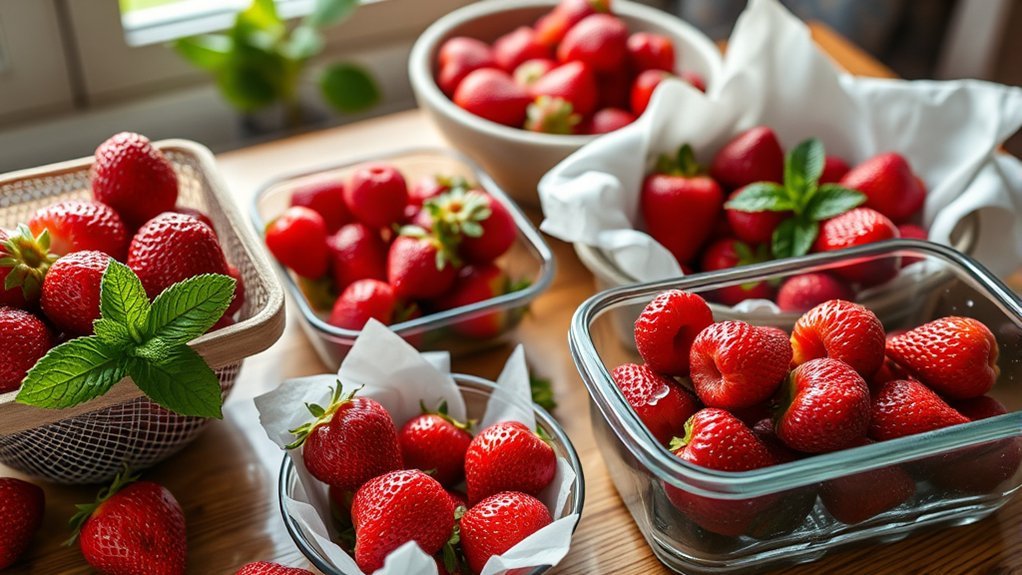
When it comes to storing fresh strawberries, picking the right container makes all the difference. You’ll want something that controls moisture well—think airtight containers that keep humidity steady and help prevent spoilage.
Also, using the original carton or a shallow container is a smart move because it lets air circulate properly and keeps the strawberries dry.
Just a heads up: avoid using sealed jars since they trap moisture, which can lead to mold.
And here’s a handy tip—always store your berries in a single layer. This little trick helps them stay fresh for longer.
Airtight Containers Benefits
When you store fresh strawberries in airtight containers, you lock in the ideal humidity while keeping excess moisture out. This is key to extending their freshness.
Airtight containers help minimize spoilage, with studies showing a spoilage rate around 30%, much lower than other storage methods.
To get the most from your containers, place strawberries in a single layer to prevent crushing and guarantee even air circulation.
Avoid using towels inside the container, as they can trap moisture and cause faster decay.
Using airtight containers to store fresh strawberries means you’ll enjoy:
- Longer-lasting, juicy berries
- Reduced spoilage and waste
- Consistent humidity for perfect texture
- Protection from unwanted moisture and air
This way, your strawberries stay fresh and delicious longer!
Original Carton Usage
One of the best ways to store fresh strawberries short-term is by keeping them in their original carton. This original container is designed with ventilation holes that promote air circulation, reducing moisture buildup and lowering the chance of mold growth.
When storing berries this way, be sure to remove any spoiled ones first to prevent them from affecting the rest. Using the original container can cut spoilage rates to about 15%, making it highly effective for maintaining freshness.
For best results, place the carton in your refrigerator at around 32 degrees Fahrenheit. By sticking to the original carton for storing berries, you provide a breathable environment that helps keep your strawberries fresh and tasty for longer periods without unnecessary handling or transfer.
Moisture Control Techniques
Although strawberries thrive with some airflow, controlling moisture is key to keeping them fresh longer.
Choosing the right storage containers plays a huge role in preventing moisture accumulation, which can lead to spoilage. Here’s how you can master moisture control:
Use airtight containers that maintain humidity without trapping excess moisture.
Keep strawberries in their original cartons to allow airflow and reduce moisture buildup.
Avoid sealed mason jars, as trapped moisture encourages mold growth.
Place dry paper towels inside containers to absorb extra moisture and keep berries dry.
Storing Strawberries In Their Original Carton For Best Freshness
You’ll want to keep your strawberries in their original carton to maintain the best freshness.
The carton lets air circulate while keeping the berries dry, which helps prevent spoilage.
It’s a simple step, but it can make a big difference in how long your strawberries stay fresh.
Benefits Of Original Carton
When you keep strawberries in their original carton, you allow air to circulate around the berries. This reduces moisture buildup and helps extend their freshness.
This container is designed to protect your fruit. So, you can store strawberries without extra effort or risk of damage.
Using the original carton offers key benefits:
- Shields berries from bruising and crushing
- Keeps strawberries upright and intact
- Minimizes extra cleaning or drying needed
- Cuts down spoilage, keeping fruit fresh longer
Air Circulation Importance
Since strawberries are highly perishable, storing them in their original carton guarantees proper air circulation that keeps moisture at bay and slows down spoilage. When you store your strawberries this way, the open design allows air to flow freely, preventing mold and bruising.
Studies show only about 15% spoilage occurs when using the original carton, compared to other methods.
| Feature | Benefit |
|---|---|
| Original Carton Design | Promotes balanced air circulation |
| Moisture Control | Keeps strawberries dry |
| Reduced Spoilage | About 15% spoilage rate |
| Protection from Damage | Prevents bruising and crushing |
| Time Efficiency | Easy and effective storage |
Use the original carton to store your strawberries and enjoy fresher berries longer.
Extend Strawberry Freshness With A Vinegar Soak
Although fresh strawberries can spoil quickly, soaking them in a vinegar-water solution helps you keep them fresh much longer by eliminating mold spores and bacteria. Use a 3:1 water to vinegar ratio and soak the berries for 15 minutes.
Soaking strawberries in a 3:1 water-vinegar mix for 15 minutes keeps them fresher by removing mold and bacteria.
After soaking, dry them thoroughly. Moisture is the enemy of freshness.
Here’s how this method helps you:
- Drastically reduces spoilage to about 5% after a week
- Kills bacteria and mold spores effectively
- Keeps strawberries tasting fresh and vibrant
- Makes your berries last longer in the fridge
Once dry, store your strawberries in an airtight container in the refrigerator to stay fresh up to a week. This simple vinegar-water solution is the best way to extend your strawberry’s shelf life.
How Temperature And Humidity Impact Strawberry Shelf Life
You’ll want to store strawberries at around 32 degrees Fahrenheit to keep them fresh longer.
And controlling humidity is just as important because too much moisture can lead to mold and spoilage.
Plus, try to avoid temperature fluctuations—they can speed up decay and cut down the shelf life of your berries.
Ideal Storage Temperature
Temperature and humidity play essential roles in keeping your fresh strawberries fresh longer. The ideal storage temperature for strawberries is around 32°F. Keeping them this cool helps your berries last longer and maintains their juicy texture.
If stored at room temperature, strawberries spoil quickly within 3 to 4 days. Refrigeration, on the other hand, extends their shelf life to about 6 to 8 days.
To maximize freshness, remember:
- Store strawberries in the coldest part of your fridge
- Avoid freezing unless you plan to use them later in smoothies or desserts
- Use airtight containers to maintain a consistent temperature
- Keep berries dry to prevent mold and decay
Humidity Control Importance
Three key factors, temperature, humidity, and airflow, work together to keep your strawberries fresh longer.
Humidity control plays a crucial role because strawberries need a moist environment without becoming soggy.
Keeping humidity around 90% helps maintain hydration, similar to fresh water inside the fruit, preventing them from drying out.
However, too much moisture encourages mold and spoilage, so you want to avoid a damp setting.
Using sealed containers with proper ventilation can balance humidity, reducing excess moisture while protecting strawberries from air exposure.
Regularly checking and adjusting these conditions prevents rot and keeps your berries tasting fresh.
Effects Of Temperature Fluctuations
Balancing humidity is only part of the equation when it comes to keeping strawberries fresh.
Temperature fluctuations can drastically shorten their shelf life by increasing respiration rates and causing moisture loss. When temperatures rise above 32°F, your strawberries spoil faster.
You need to maintain consistent temperature and moisture conditions to keep them fresh longer. Here’s how temperature fluctuations impact your strawberries:
- Accelerated spoilage with every temperature spike
- Increased risk of mold growth in high humidity
- Drying out and flavor loss in low humidity
- Extended freshness when stored in sealed containers at stable temperatures
Storing strawberries in the refrigerator around 32°F and monitoring moisture conditions daily will help you enjoy them for up to a week without losing quality.
Spot And Toss Spoiled Strawberries Before They Ruin The Bunch
Since spoiled strawberries can quickly cause decay to spread, you should regularly inspect your batch for any mold, bruising, or soft spots.
When you spot berries with dark spots or a mushy texture, toss them immediately.
One bad berry can accelerate spoilage in the entire bunch, so removing spoiled fruit promptly is key.
Store your strawberries in a shallow container to make it easier to spot and access each berry.
Sorting and tossing spoiled strawberries before refrigeration helps maintain freshness and extends shelf life.
By keeping an eye on your strawberries and removing any decayed ones, you’ll guarantee the rest stay fresh longer and reduce waste.
How To Store Strawberries For Freezing And Long-Term Use
To freeze strawberries for long-term use, start by washing them gently and removing the tops.
Spread the berries in a single layer on a baking sheet and freeze for at least 4 hours. Then, transfer them to freezer bags or containers to preserve freshness. This method is the best way to store strawberries for up to 12 months at 0°F (-18°C) or lower.
Consider these tips to keep your strawberries delicious:
- Use airtight freezer bags or containers to prevent freezer burn
- Pack sliced strawberries with sugar to enhance flavor
- Leave 1/4-inch headspace when filling containers
- Thaw slowly in the fridge or quickly in the microwave
Follow these steps, and your strawberries will stay tasty and ready whenever you want.
Frequently Asked Questions
Can Strawberries Be Stored at Room Temperature Safely?
Yes, you can store strawberries safely at room temperature for a few days, but you need to be careful about fruit safety.
Keep them in a cool, dry spot away from direct sunlight, and don’t wash them before storing because moisture speeds up spoilage.
Lay them in a single layer to avoid bruising, and check regularly for any spoiled berries to prevent the rest from going bad too quickly.
How Long Do Strawberries Last Without Refrigeration?
You can expect strawberries to last about 3 to 4 days at room temperature.
The strawberry shelf life without refrigeration depends on keeping them in a cool, dry spot, away from direct sunlight.
Don’t wash them until you’re ready to eat, since moisture shortens their freshness.
If you notice any soft spots or mold, toss those berries to protect the rest.
For best flavor, enjoy them as soon as you can.
Is It Better to Store Strawberries With or Without Their Stems?
It’s better to store strawberries with their stems on because stem benefits include protecting the fruit from moisture loss and bruising.
Leaving the stems intact helps keep your berries fresh longer by preventing mold and decay.
Stem removal exposes the fruit, making it more vulnerable to spoilage.
Can Strawberries Be Stored Alongside Other Fruits Without Spoiling?
Think of strawberries as delicate butterflies in a garden. They don’t mix well with other fruits.
You shouldn’t store strawberries alongside other fruits because fruit compatibility is low, increasing spoilage risks. Ethylene gas from fruits like bananas or apples speeds up decay. Moisture from them encourages mold growth on strawberries.
To keep your berries fresh, store them separately in a ventilated container away from other fruit.
What Signs Indicate That Strawberries Are No Longer Safe to Eat?
You’ll know strawberries aren’t safe to eat if you spot mold growth, like white or fuzzy patches on the berries.
Discoloration signs such as darkening or shriveling also mean they’re past their prime.
Stay alert for soft, mushy spots or a slimy texture, which show spoilage.
If they leak juice or emit a strong, off odor, toss them.
Don’t eat strawberries showing any of these signs to avoid getting sick.
Conclusion
Think of your freshly picked strawberries as delicate treasures. Handle them with care to keep their sweetness shining. By choosing ripe berries, avoiding early washing, drying them thoroughly, and storing them in the right containers, you’ll extend their freshness like wrapping a gift in protective paper.
Remember to spot and toss any spoiled ones quickly. Use vinegar soaks and proper temperature control to keep your strawberries vibrant longer. Treat them well, and they’ll reward you with deliciousness every time.