

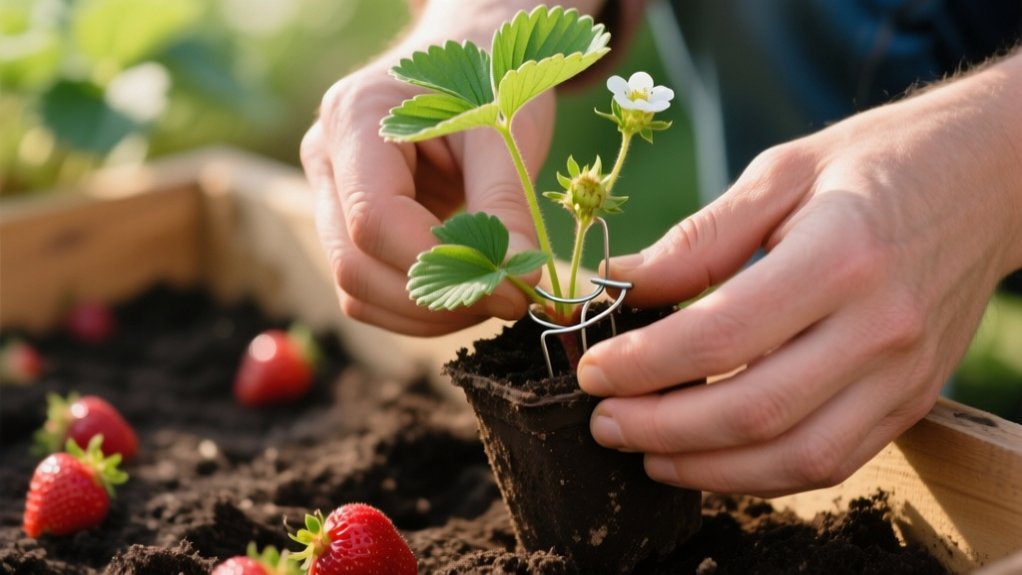
How to Plant Strawberry Runners in 10 Easy Steps
To plant strawberry runners, start by cutting healthy runners early, choosing those with visible root nodules. Prepare well-aerated, nutrient-rich soil and water it thoroughly before planting.
Leave about an inch of stem to anchor each runner and plant at a 45-degree angle, keeping the crown above the soil to prevent rot. Firmly pack moist soil around the base, water gently, and remove flower heads to boost growth.
Follow these steps, and you’ll set a strong foundation. There’s more to explore for thriving plants.
Cut Strawberry Runners Early for Best Growth

When you cut strawberry runners early in the growing season, you boost their chances of producing fruit within the same year. It’s super easy to do and pays off by allowing the plant to focus energy on fruit development instead of spreading runners.
As soon as you spot new runners forming, cut strawberry runners early, right away at their base near the mother plant. This stops them from draining resources and helps the main plant grow stronger.
Removing flower heads from these runners also directs energy toward root and plant growth, increasing their survival chances.
Select Healthy Strawberry Runners With Root Nodules
When you’re picking strawberry runners, keep an eye out for visible root nodules. These little bumps are a good sign that the runner is ready to be transplanted.
It’s best to choose early-season runners that don’t have flower heads yet because this helps the plant put its energy into growing strong roots.
Also, try to avoid runners that look weak or damaged—healthy runners give your new plants the best shot at thriving.
Identify Root Nodule Signs
A healthy strawberry runner shows clear signs of readiness through the presence of root nodules.
These small, well-developed bumps are your signal to actually use that runner for propagation.
When you spot one or two sturdy nodules, you know the runner is primed to establish roots quickly once planted.
After detaching it carefully at the base, let it sit briefly to guarantee any cut surfaces heal before planting.
Avoid runners without nodules or those that look weak, as they’re less likely to thrive.
By focusing on these signs early in the growing season, you give your new plants the best chance to root well and produce fruit within the year.
This simple step maximizes your success in growing strong, productive strawberry plants.
Choose Early Season Runners
Selecting early season runners gives you the best chance to grow strawberries that will fruit within the same year. The early season benefits include faster establishment and a longer growing period to develop strong plants.
When you’re focused on runner selection, choose healthy runners with visible root nodules. They show readiness for detachment and improve planting success.
Make certain to cut runners at the base to preserve energy and resources for growth.
Pay close attention to planting timing; collecting and planting these runners early guarantees they’ve enough time to root and thrive before fruiting.
Avoid Flowering Runners
Although it might be tempting to pick runners with flower heads, you should avoid them because they divert energy away from root development. The flower head impact causes energy diversion that weakens runner health, reducing the chance of successful establishment.
Instead, select runners with visible root nodules, which show they’re ready for planting and more likely to thrive. Choosing healthy runners early in the season maximizes fruit production within the same year.
When cutting runners, snip them at the base to guarantee they receive nutrients from the mother plant. If you’re handling several runners, keep them moist with wet paper towels to maintain viability, especially in warm weather.
Prioritizing runner health by avoiding flowering runners helps your new strawberries grow strong and productive.
Prepare Nutrient-Rich, Well-Aerated Potting Soil
Healthy strawberry runners depend on nutrient-rich, well-aerated potting soil to flourish.
To prepare the best soil, start by selecting quality compost types that are light, airy, and rich in organic matter. You can use a store-bought potting mix, but mixing your own with compost and soil amendments like aged manure or worm castings boosts nutrients.
Guarantee good drainage by adding perlite or coarse sand to prevent waterlogging and root rot. Fill your pots completely with this mix, and lightly compress it to support the runners while maintaining airflow.
Regularly check soil quality and refresh with organic matter or balanced fertilizers to keep nutrients ideal.
This careful soil preparation sets a strong foundation for your strawberry runners to thrive and produce abundant fruit.
Water Soil Thoroughly Before Planting Strawberry Runners
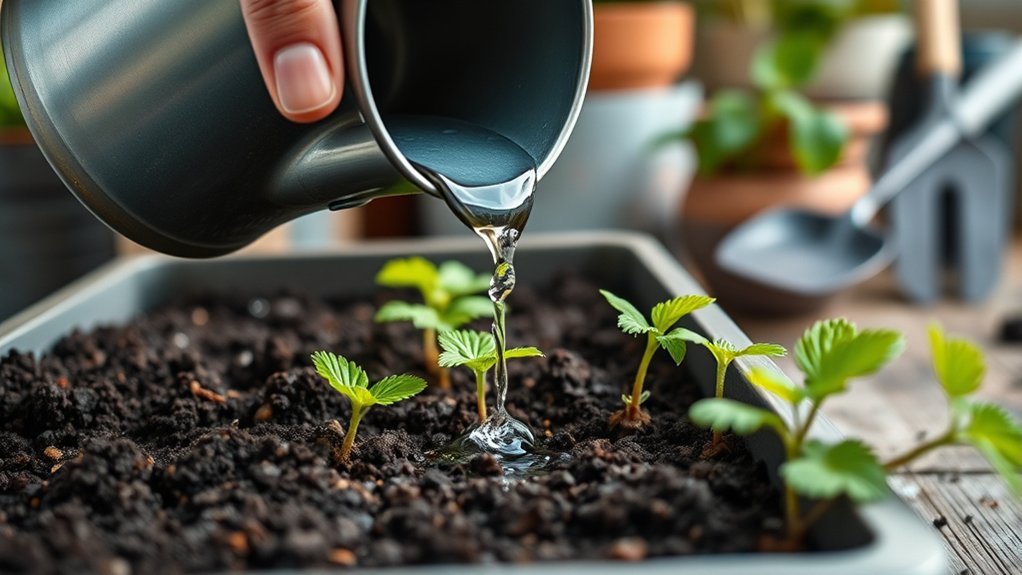
Before you plant your strawberry runners, make sure to water the soil thoroughly. This helps create a nice, moist environment that encourages strong root growth.
One handy tip is to water from below—just place your pots in a tray of water. This keeps the soil evenly damp without disturbing the runners themselves.
Plus, pre-wetting the soil helps get rid of any air pockets and ensures the roots make good contact with the soil, which is key for better establishment.
Importance Of Soil Moisture
When you water the soil thoroughly before planting strawberry runners, you create the ideal conditions for their roots to take hold quickly and firmly.
Proper soil moisture enhances soil texture, boosting moisture retention and drainage improvement. This balance is essential for healthy root development.
Here’s why soil moisture matters:
- It reduces transplant shock by providing immediate hydration.
- Moist soil allows better compaction around roots, improving stability.
- It guarantees roots can access nutrients efficiently.
- Proper moisture supports vigorous growth and fruit production.
Watering Techniques Before Planting
Although watering seems straightforward, you need to thoroughly moisten the soil before planting strawberry runners to help their roots establish quickly. Proper irrigation timing is essential; water the soil a day or two in advance to let it settle, promoting better moisture retention.
Avoid overwatering by placing pots in a tray of water for about 30 minutes. This allows soil to absorb moisture from below without saturating the runners. Confirm the soil is damp but not waterlogged, as poor soil drainage can cause root rot and stunt growth.
Test moisture by feeling an inch below the surface. If dry, water again before planting. This careful watering technique sets the stage for healthy, vigorous strawberry plants.
Benefits Of Pre-Wetting Soil
Thoroughly wetting the soil before planting strawberry runners gives your plants a strong start by creating an evenly moist environment that encourages root growth and minimizes transplant shock.
Using effective soil hydration techniques sets the stage for healthy root development and transplant shock prevention.
Here’s why you should pre-wet soil:
- Guarantees even moisture distribution, so roots access water without drowning the crown.
- Enhances nutrient availability and boosts beneficial microbial activity.
- Compacts the soil mix, stabilizing runners and preventing tipping.
- Speeds up root development, promoting vigorous growth and better fruit yield.
Leave an Inch of Stem to Anchor the Runner
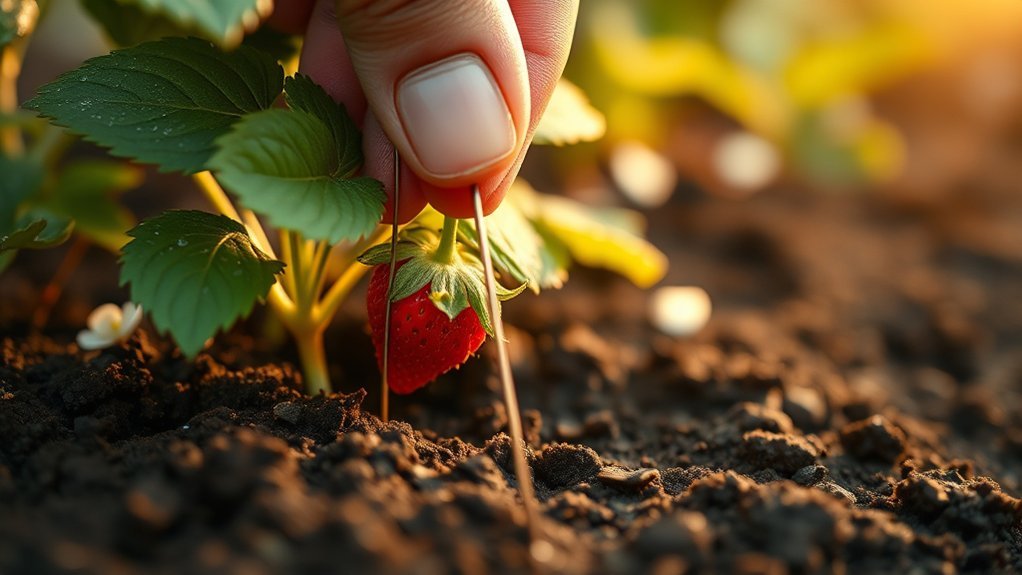
Because the inch of stem left attached plays an essential role, you’ll want to make sure it remains intact when planting strawberry runners. This small length provides vital stem stability, anchoring the runner firmly in the soil and preventing it from toppling over.
Maintaining this stem segment supports runner health by protecting delicate young roots as they develop. It also supplies additional moisture and nutrients during early growth, boosting the new plant’s chance of thriving.
When you use proper planting techniques, leaving that inch of stem guarantees the runner firmly establishes itself, setting the stage for strong root development and future fruit production.
Plant Strawberry Runners at a 45-Degree Angle
Once you’ve left an inch of stem attached to anchor your strawberry runner, the next step is planting it at a 45-degree angle. This angle supports strong root health and avoids common planting mistakes. Here’s how to do it right:
- Insert the runner gently into the soil, keeping the stem at about 45 degrees.
- Make sure the roots are fully covered while the crown remains above soil.
- Positioning at this angle improves air circulation, which is essential for strawberry runner care.
- The angle encourages upright growth, giving the plant better sunlight exposure.
Keep the Crown Above Soil to Prevent Rot
Make sure you keep the crown of your strawberry runner above the soil to avoid rot and fungal issues.
You don’t want to bury the crown because it can trap moisture, which makes the plant unhappy. Instead, plant the runner at just the right depth—get those roots in the soil while leaving the crown exposed.
This way, your strawberry plant stays healthy and grows strong.
Importance Of Crown Position
A healthy strawberry plant depends on keeping the crown above the soil to prevent rot. Maintaining proper crown position directly impacts crown health and fruit production.
When planting, remember:
- Guarantee crown exposure by placing the crown just above soil level.
- Leave about an inch of runner stem attached to anchor the plant securely.
- Avoid burying the crown to prevent moisture buildup and fungal infections.
- Regularly perform crown monitoring after planting to catch any sinking or soil coverage early.
Risks Of Crown Burial
If you bury the crown of your strawberry plant, you risk cutting off essential air circulation and disrupting moisture balance. This can quickly lead to rot. The crown is where the stem meets the roots, and proper placement is key to crown rot prevention.
Keeping the crown above soil guarantees good air circulation, allowing moisture to drain and reducing harmful pathogens. To maintain moisture balance, plant your runner so the crown stays just above soil level, with about an inch of stem anchored below.
Regularly check your plants and remove any buried crowns promptly to avoid rot issues.
Following these moisture balance tips will help your strawberry plants thrive and produce healthy fruit season after season.
Proper Planting Depth
To prevent rot and encourage healthy growth, you should plant strawberry runners so the crown stays just above the soil surface. This guarantees proper air circulation and avoids moisture buildup around the crown.
Follow these steps for proper planting depth:
- Prepare ideal soil composition. Make sure it’s well-drained and rich in organic matter to support root development.
- Position the runner at a 45-degree angle, leaving about an inch of stem attached for anchorage without burying the crown.
- Follow runner spacing guidelines by planting each runner with enough space to allow airflow and prevent overcrowding.
- Use seasonal planting tips by timing your planting to cooler months.
Also, regularly check for flower heads and remove them to help the plant focus energy on growth while keeping the crown exposed.
Firmly Pack Soil Around the Runner’s Base
Press the soil firmly around the base of the strawberry runner to anchor it securely and prevent shifting. Use effective soil compaction techniques to create close contact between roots and soil, which boosts nutrient and moisture absorption essential for healthy root development.
Make certain the soil is moist but not soggy before you pack it, as this balance supports ideal root growth. Avoid burying the crown when firming the soil, since that can cause rotting and stunt the plant’s progress.
Employ runner stability methods by keeping the base upright and well-supported, helping your strawberry runner establish itself quickly.
These root development strategies guarantee your plant stays stable, healthy, and ready to produce delicious fruit throughout the season.
Water Gently After Planting to Settle Soil
Once you’ve planted your strawberry runners, gently watering them helps settle the soil around the roots and removes air pockets. This ensures they establish strong contact with the soil.
To avoid negative soil compaction effects and promote healthy root growth, follow these steps:
- Use a watering can or soft spray to apply water gently without displacing runners.
- Water from below, keeping foliage dry and reducing fungal risks.
- Provide enough moisture to saturate the root zone, avoiding waterlogging that causes root rot.
- Monitor soil moisture regularly, keeping it consistently damp for ideal root establishment.
Remove Flower Heads to Help Your Strawberry Grow
After watering your strawberry runners to help the soil settle, you should remove their flower heads. This step is essential because removing flower heads redirects the plant’s energy toward root and foliage development, which strengthens your runners.
At the time of transplant timing, cutting off all flower heads guarantees new plantlets establish themselves before fruiting. This improves runner spacing and growth.
Early flower removal supports strong root systems, crucial for successful fruit production in the same growing season. It also helps with nutrient management by preventing energy drain from young plants, maximizing their vigor.
Frequently Asked Questions
Can Strawberry Runners Be Planted Directly in the Garden Soil?
Yes, you can plant strawberry runners directly in your garden soil.
Focus on soil preparation techniques by enriching the soil with organic matter to guarantee it’s nutrient-rich and well-draining.
Plant the runners at an ideal planting depth, just enough to keep the crown above soil level, usually at a 45-degree angle.
For best planting time, aim to plant at least eight weeks before the first fall frost to help your strawberries establish strong roots.
How Long Does It Take for Runners to Produce Fruit?
You’ll typically see fruit on strawberry runners within 6 to 8 weeks after they’ve rooted, but the fruiting timeline can vary.
Proper runner care, like removing early flowers, helps the plant focus energy on growth, speeding fruit production.
Environmental factors such as temperature and sunlight also play a big role.
Cooler climates might delay fruit until late summer or early fall.
Keep conditions ideal, and you’ll enjoy fresh berries sooner.
What Pests Commonly Affect Newly Planted Strawberry Runners?
You’ll commonly face aphids, spider mites, and slugs attacking your newly planted strawberry runners.
Use pest identification methods like closely inspecting leaves for yellowing, webbing, or holes to catch them early.
To protect your plants, implement preventative measures such as removing debris and keeping soil moist.
You can also try organic pest control options like introducing ladybugs or applying neem oil to keep these pests in check without harming your garden.
Is It Necessary to Fertilize After Planting Runners?
Did you know 70% of plant nutrient uptake happens after roots establish? You don’t need to fertilize strawberry runners immediately after planting.
Instead, focus on nutrient timing by enriching soil health with compost or potting mix first.
Once runners show active growth, apply balanced or slow-release fertilizer types to boost development. This approach guarantees your plants get nutrients when they can best absorb them, promoting healthy, fruitful growth.
Can Runners Be Planted in Indoor Containers Successfully?
Yes, you can successfully plant strawberry runners in indoor containers.
For indoor gardening, use a light, airy container soil that drains well to keep roots healthy.
Make sure your strawberries get enough light; they need 6-8 hours of direct sunlight daily or supplemental grow lights to meet their light requirements.
Position runners properly and monitor growth to enjoy fresh strawberries right inside your home.
Conclusion
By following these simple steps, you’ll give your strawberry runners the best start to grow strong and healthy. Remember, planting runners is like giving a gift to your garden. Nurture them with care, and they’ll repay you with sweet, juicy berries.
Keep an eye on your plants, water gently, and watch your garden flourish. With patience and love, you’ll soon enjoy a bountiful harvest that’s worth every moment you’ve spent!