
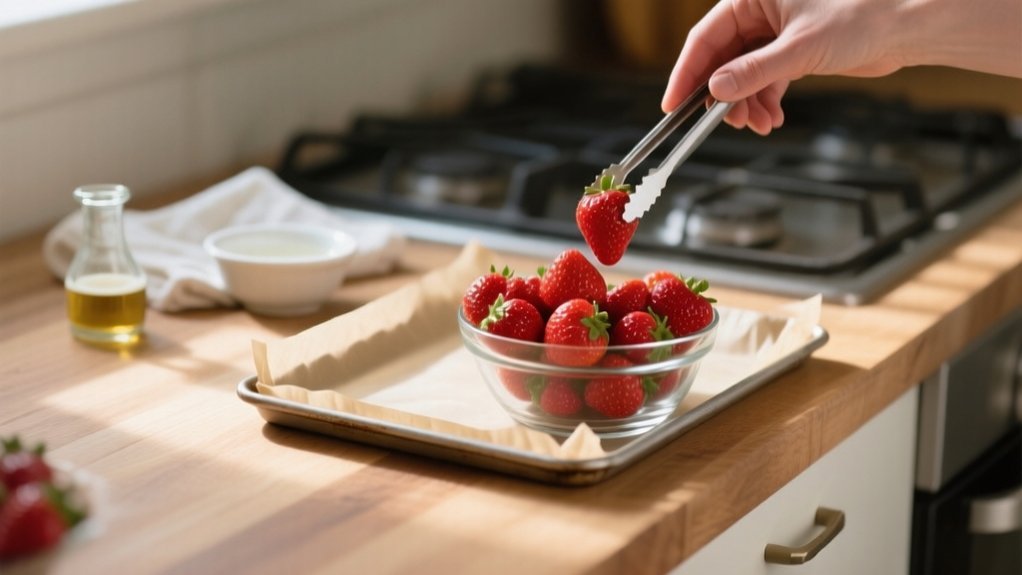
7 Easy Tips to Keep Strawberries From Getting Moldy
To keep your strawberries mold-free, start by picking firm, bright red berries without bruises. Don’t wash them until you’re ready to eat. Or, rinse in a vinegar-water mix and dry thoroughly if you do.
Store them in a breathable container lined with paper towels. Keep berries in a single layer to avoid bruising. Refrigerate at 32–36°F for best freshness.
Handle gently and remove any spoiled ones promptly. For more helpful tips on preserving your strawberries, keep exploring these simple tricks.
Pick Fresh, Unblemished Strawberries
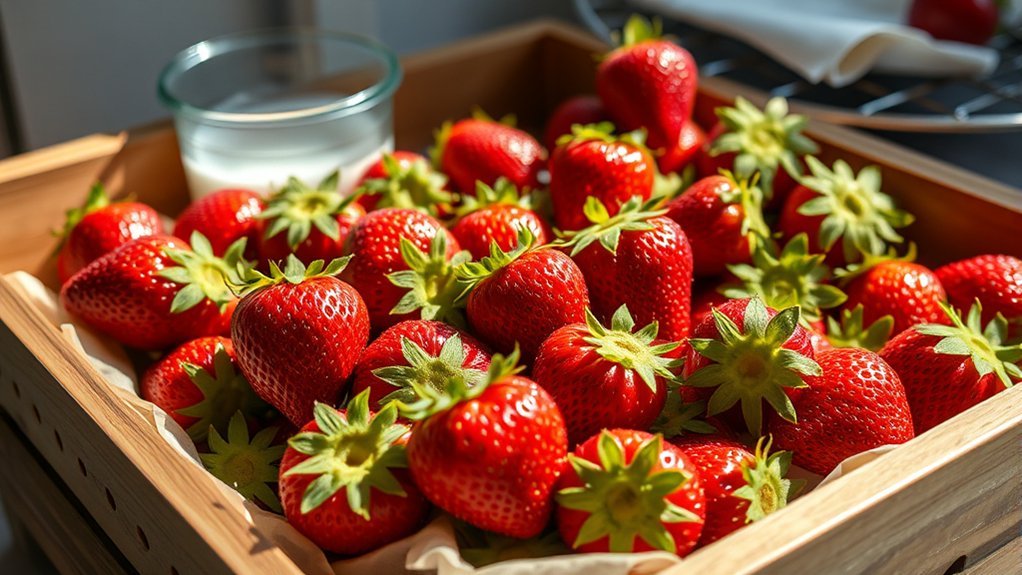
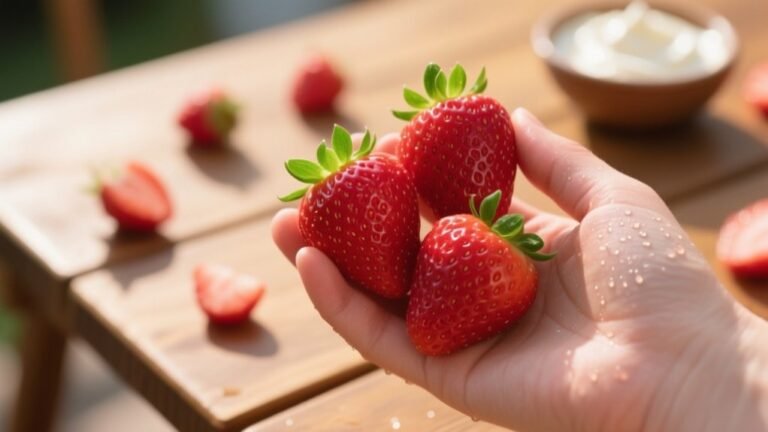
When you pick strawberries, focus on shiny, bright red berries because they show freshness and ripeness. Always pick fresh, unblemished strawberries to guarantee longer shelf life.
Take time to inspect strawberries carefully for bruises, blemishes, or mold, as these flaws can speed up spoilage. Don’t forget to check the bottom of the carton for any signs of decay since strawberries often spoil from the bottom up.
Inspect strawberries thoroughly, including the carton bottom, to catch early signs of bruising or mold and prevent spoilage.
Choose firm strawberries that aren’t overly soft; softer ones tend to spoil faster and develop mold more quickly.
Also, avoid strawberries packaged with excessive moisture, which encourages mold growth.
Hold Off Washing Strawberries Until Eating
If you want your strawberries to stay fresh longer, try not to wash them until you’re about to eat them.
When you wash strawberries too early, the extra moisture can actually make them spoil faster and get moldy.
So, it’s best to keep them dry while storing.
Then, just give them a quick rinse right before you enjoy them.
Wash Just Before Eating
Although it might seem convenient to wash strawberries right after bringing them home, you should wait until just before eating to clean them. Washing strawberries too soon introduces moisture, which speeds up mold growth and causes them to spoil faster.
To store fresh strawberries longer, keep them dry and unwashed until you’re ready to enjoy them. When you do wash, consider a vinegar wash to effectively remove bacteria without soaking the berries.
This method helps prolong freshness by reducing mold spores while minimizing moisture exposure. By choosing to wash just before eating, you maintain the strawberries’ quality and extend their shelf life.
Avoid Premature Moisture
Keeping strawberries dry is essential, so don’t wash them until you’re ready to eat. Washing berries before storing introduces moisture, which speeds up mold growth and spoilage.
To keep them fresh longer, always store strawberries unwashed. Moisture is the biggest enemy when it comes to preserving their quality.
When you do wash them, try a vinegar-water soak (1/4 cup vinegar to 2 cups water) to help eliminate mold spores without affecting storage life.
After rinsing, place the berries in an airtight container lined with a paper towel to absorb any leftover moisture. This prevents mold from developing too quickly.
Soak Strawberries in Vinegar Water to Stop Mold
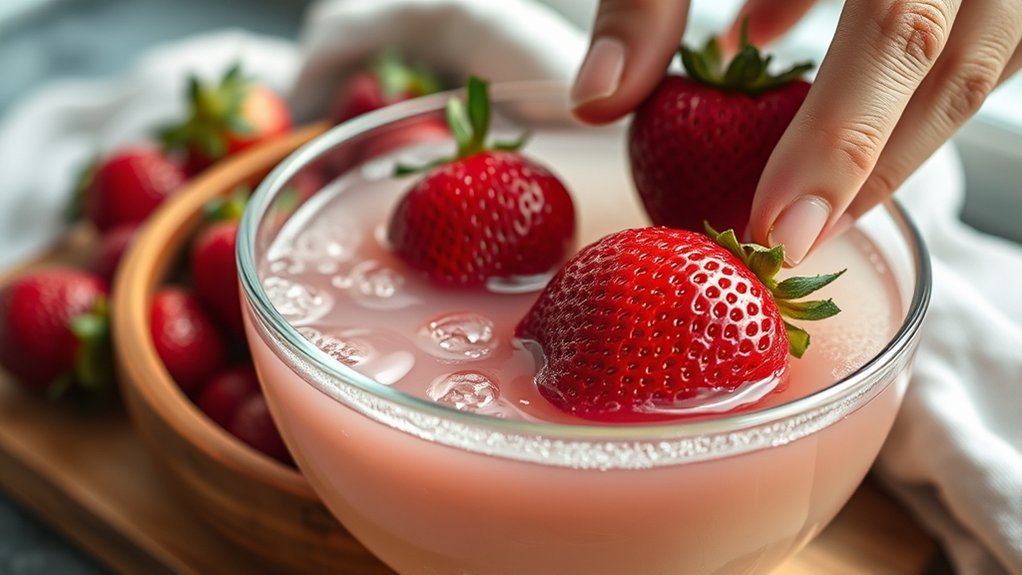
When you soak strawberries in a vinegar-water solution, you effectively kill mold spores that cause spoilage. To keep the berries fresh, mix 1/4 cup vinegar with 2 cups water and soak strawberries for 3-5 minutes. This vinegar solution inhibits decay, extending freshness up to a week compared to other storage methods.
After soaking, rinse the berries under cold water and make certain they’re thoroughly dried before storing to avoid moisture buildup.
Try these tips to maximize freshness:
- Soak strawberries in vinegar water to reduce mold spores
- Rinse the berries well after soaking to remove vinegar taste
- Confirm strawberries are thoroughly dried to prevent mold growth
Using this method can reduce spoilage rates to as low as 5%, making it a simple and effective way to keep your strawberries fresh longer.
Dry Strawberries Thoroughly Before Storing
Since moisture triggers mold growth, you need to dry strawberries thoroughly before storing them.
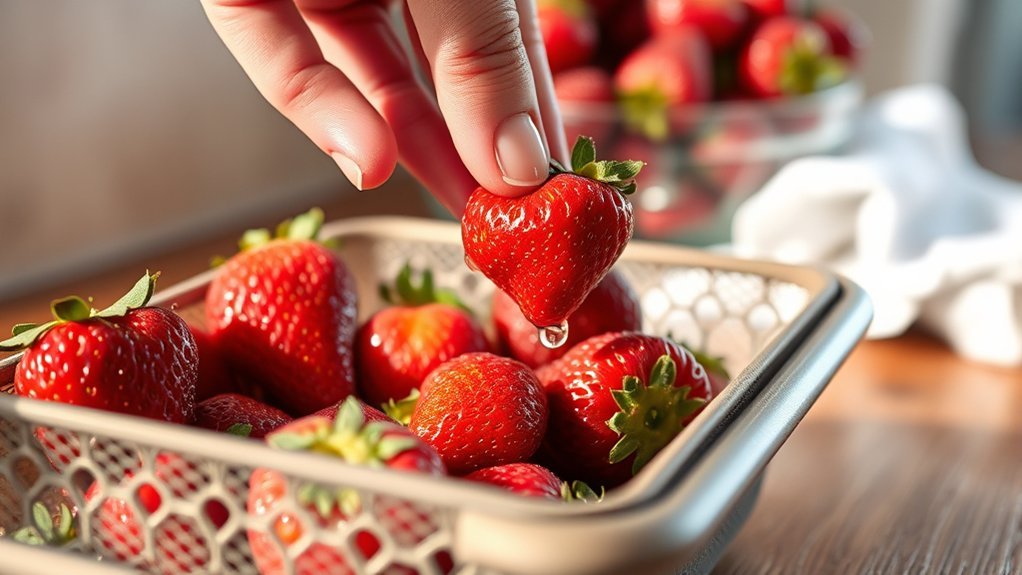
After you wash your berries, make sure they’re dry enough by using a salad spinner or gently patting them with a clean towel.
Excess moisture is the main culprit behind mold growth, so removing it’s essential for storing fresh strawberries.
Once dry, place the berries in a container lined with paper towels to absorb any leftover dampness.
Avoid washing strawberries before storage if you want to extend their shelf life; wash them only right before eating.
Properly drying strawberries and storing them with minimal moisture can considerably slow down mold growth, helping your berries stay fresh and delicious for up to two weeks.
Store Strawberries in a Breathable Container
Although strawberries need moisture removed before storage, you should store them in a breathable container to allow air circulation and prevent mold.
Using a container like a cardboard box or a glass jar with a slightly ajar lid helps reduce moisture buildup and mold growth.
To keep your strawberries fresh longer, try these tips:
- Line the breathable container with a paper towel to absorb excess moisture.
- Store strawberries in a single layer to avoid bruising and squashing.
- Regularly inspect strawberries and remove any that show spoilage.
Avoid plastic containers since they trap moisture, accelerating mold growth.
Keep Strawberries in a Single Layer to Prevent Bruising
You’ll want to store strawberries in a single layer to prevent bruising and keep them fresh longer.
Using a flat container is a great idea because it gives each berry enough space, which helps avoid soft spots and decay.
Benefits Of Single Layer
When you keep strawberries in a single layer, you greatly reduce the risk of bruising that speeds up spoilage. Bruised berries tend to spoil faster and develop moldy spots, so it’s essential to avoid stacking them.
Using storage containers designed for a single layer helps keep your fresh berries intact and extends their shelf life.
Plus, a single layer promotes better air circulation around each strawberry, reducing moisture buildup that encourages mold growth.
Here’s why you should keep strawberries in a single layer:
- Prevents weight damage and bruising that lead to quick spoilage
- Enhances air circulation, minimizing moisture and mold development
- Keeps fresh berries separated, making it easier to spot and remove moldy berries
This simple step in your storage routine keeps strawberries fresher longer.
Preventing Strawberry Bruises
Since bruising damages the delicate skin of strawberries, you should keep them in a single layer to prevent pressure that causes bruises.
When storing strawberries, avoid stacking them directly on top of each other, as this can lead to bruising, accelerating spoilage and mold growth.
Use shallow containers or trays to lay strawberries out evenly. This improves air circulation and reduces moisture retention, which are both key to keeping berries fresh longer.
Be gentle when handling strawberries to prevent damage.
Also, avoid mixing ripe and unripe strawberries in the same container to minimize spoilage risks.
Ideal Storage Containers
Although strawberries are delicate, storing them properly in the right containers can greatly extend their freshness. To keep your fresh strawberries from mold growth and bruising, choose an airtight glass storage container. This helps control moisture buildup, which is a main cause of mold.
Remember to keep the strawberries in a single layer inside the container to prevent damage that speeds up spoilage. Also, place paper towels at the bottom of the storage container to absorb excess moisture. Avoid plastic containers, as they trap humidity and encourage mold.
For best results:
- Use clear airtight glass containers for visibility and moisture control
- Arrange strawberries in a single layer to avoid bruising
- Line containers with paper towels to reduce moisture buildup
This simple setup helps keep your strawberries fresh longer and mold-free.
Refrigerate Strawberries at the Right Temperature
Keeping strawberries fresh starts with refrigerating them at the right temperature, ideally between 32°F and 36°F (0°C to 2°C). This range slows down decay and mold growth, helping you keep them fresh longer.
Store strawberries in a sealed container lined with a paper towel to absorb excess moisture and prevent mold growth. Before refrigerating, sort out damaged berries since one spoiled berry can cause mold to spread rapidly.
Avoid washing strawberries before storing, as moisture accelerates mold. Proper storage combined with correct temperature control guarantees your strawberries stay tasty and mold-free.
| Action | Benefit |
|---|---|
| Refrigerate at 32-36°F | Slows decay, prevents mold |
| Use sealed container | Reduces excess moisture |
| Remove damaged berries | Stops mold spread |
Frequently Asked Questions
Can Freezing Strawberries Prevent Mold Growth?
Yes, freezing strawberries can prevent mold growth effectively. By using proper freezing techniques like drying strawberries completely before freezing and laying them out individually, you enhance mold prevention and preserve freshness.
Proper strawberry storage in a freezer-safe container guarantees food safety and extends freezer duration up to 12 months.
When you thaw strawberries at room temperature, you maintain their flavor and texture.
Following these steps assures safe, mold-free strawberries for months.
How Long Do Strawberries Typically Last in the Fridge?
You can expect strawberries to last about 3 to 7 days in the fridge, depending on the ripeness factor and storage duration.
To maximize freshness, keep the ideal temperature around 32-36°F and avoid washing them before storage to control moisture levels.
Use breathable containers for air circulation and inspect for mold regularly.
When shopping, choose firm, unbruised berries and handle them gently to extend their fridge life.
Is It Safe to Eat Strawberries With Slight Mold Spots?
You shouldn’t eat moldy strawberries, even if the spots seem slight. Mold can carry health risks due to mycotoxins and bacteria.
Always perform a visual inspection and discard any with mold rather than trying to salvage them.
To avoid mold, follow storage tips like keeping strawberries dry and unwashed until use.
Proper cleaning methods before eating help, but mold prevention through good storage is key to staying safe and respecting edible limits.
Can Storing Strawberries With Other Fruits Affect Mold Development?
You might be surprised, but yes, storing strawberries with other fruits can speed up mold growth.
Fruit ethylene production from bananas or apples triggers ripening levels that don’t match strawberries, causing uneven ripeness levels correlation.
Moisture retention factors increase, especially if packaging methods influence airflow poorly.
Temperature variations impact how quickly mold develops, while poor air circulation importance and incompatible fruit compatibility effects create a damp environment.
Keep strawberries separate to stay fresh longer.
Does the Type of Container Material Impact Strawberry Freshness?
Yes, the container material definitely impacts strawberry freshness.
You’ll want to choose glass over plastic because glass reduces moisture retention and offers better ventilation.
Airtight seals in glass containers help keep air and moisture out.
Meanwhile, breathable containers prevent mold by allowing excess moisture to escape.
Always use food grade materials to guarantee safety.
For best results, follow storage recommendations that prioritize airflow and minimal moisture buildup to keep your strawberries fresh longer.
Conclusion
You might think washing strawberries early keeps them fresh, but it actually speeds up mold growth. By holding off washing and soaking them in vinegar water instead, you’re fighting mold before it starts.
Storing them dry and in a breathable container might seem like extra effort, but it’s what truly keeps them fresh longer. These simple steps contrast with common habits, showing how small changes can make a big difference in enjoying fresh, mold-free strawberries.