
How to Grow Strawberries Inside in 7 Simple Steps
To grow strawberries inside, start by picking day-neutral or everbearing varieties for steady fruit. Use pots with drainage holes filled with nutrient-rich, well-draining soil.
Place your plants where they’ll get 6 to 8 hours of sunlight or use grow lights. Water consistently but avoid overwatering, and hand-pollinate flowers every few days.
Keep plants around 70°F with good air circulation, and harvest berries when fully red. Keep going to discover tips that’ll help you maximize your indoor harvest.
Choose the Best Strawberry Varieties for Indoor Growing
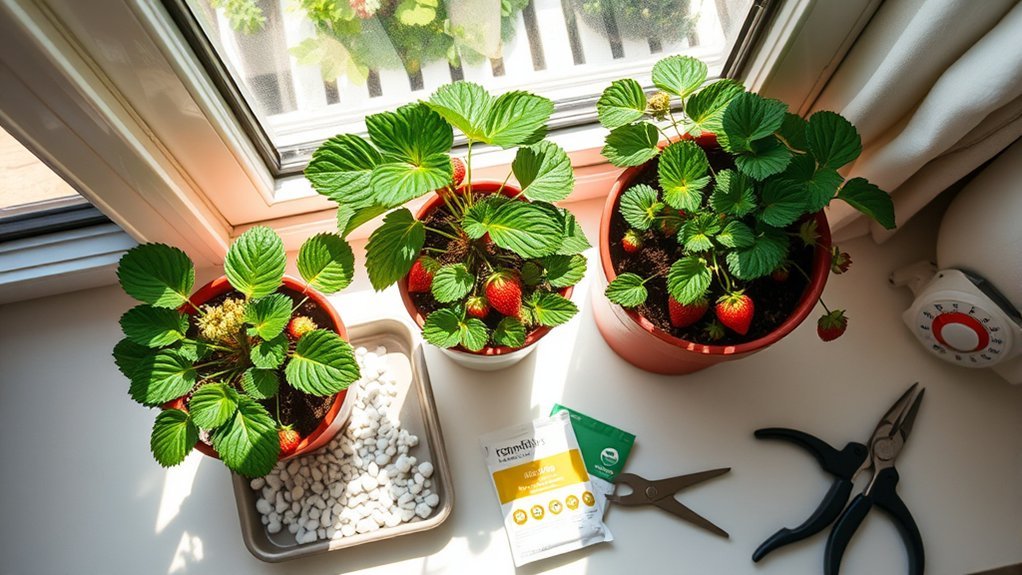
When choosing strawberry varieties for indoor growing, you’ll want to focus on types that perform well in controlled environments.
Day-neutral strawberry varieties like Albion and Florida Beauty are great choices since they produce fruit regardless of day length, giving you a steady harvest.
Albion and Florida Beauty strawberries yield fruit continuously, ensuring a reliable harvest independent of day length.
Everbearing strawberries such as Seascape also thrive indoors, delivering fruit throughout the season with minimal care.
If space is limited, alpine varieties offer sweet, delicate berries and grow in compact mounds, making them perfect for small indoor setups.
Hybrid varieties like Elan F1 are bred specifically for container gardening, producing large, sweet strawberries and adapting smoothly to indoor conditions.
Picking these varieties guarantees better growth, higher yields, and improved fruit quality, making your indoor strawberry garden both productive and rewarding.
Select the Right Pot and Nutrient-Rich Soil Mix for Indoor Strawberries
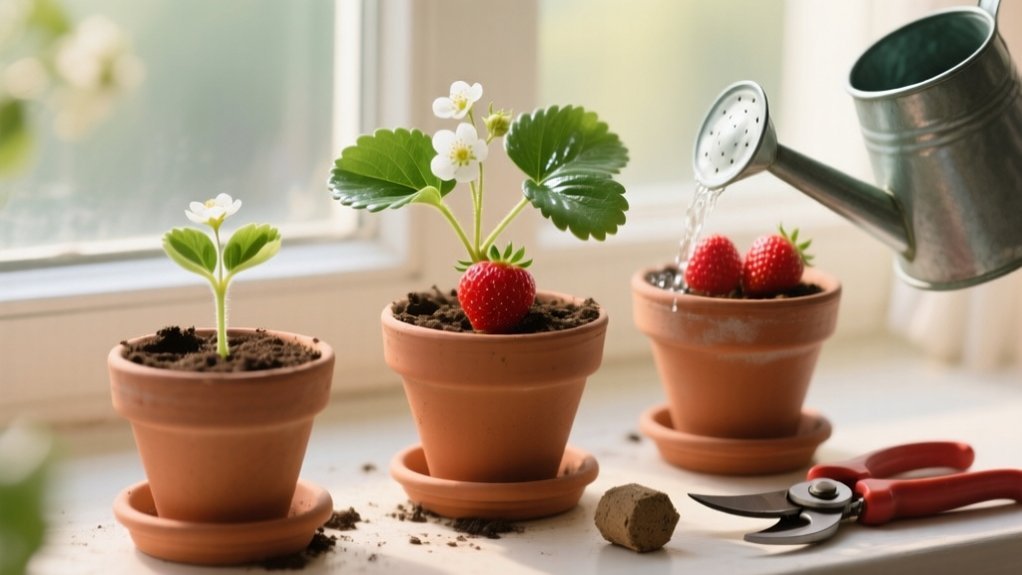
Picking the right pot and soil sets the foundation for your indoor strawberry garden’s success. Use pots with drainage holes to prevent waterlogging and root rot.
For three plants, select pots at least 8 inches deep and 12 inches wide. Smaller 6- to 8-inch pots work well for single plants.
Choose a nutrient-rich potting mix with good drainage, and mix in compost or worm castings to boost nutrients. When planting, place the crowns right at the soil line to avoid stress.
Keep an eye on moisture levels. Strawberries prefer consistently moist, not soggy, soil.
| Pot Size | Number of Plants | Key Features | Planting Tip |
|---|---|---|---|
| 8″ deep, 12″ wide | 3 | Drainage holes, deep | Crowns at soil line |
| 6″ to 8″ pot | 1 | Shallow root space | Maintain moisture |
Provide Plenty of Light for Your Indoor Strawberry Plants
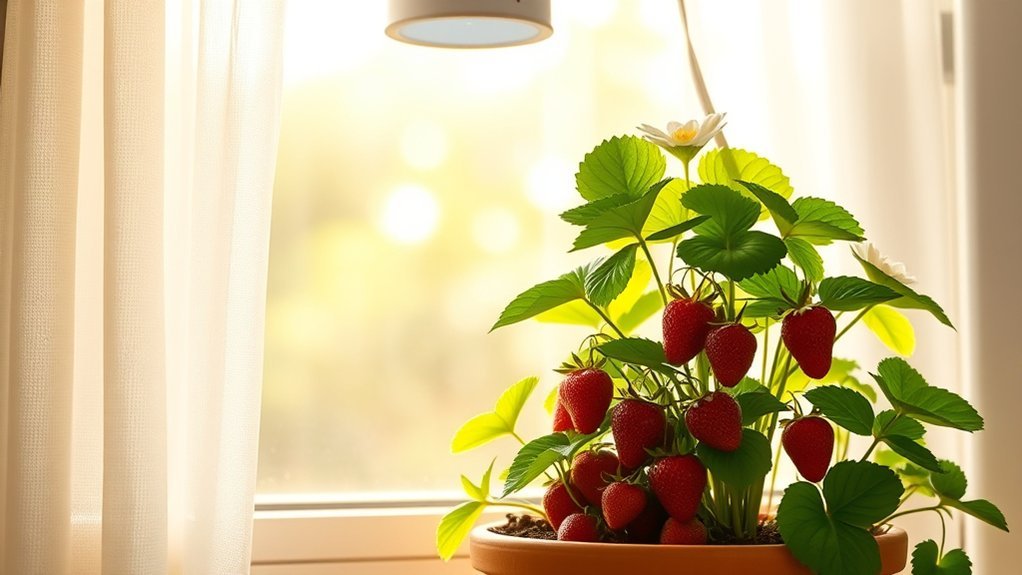
Although indoor strawberries can grow in various light conditions, they thrive best with 6 to 8 hours of bright sunlight each day, preferably from south-facing windows.
If natural sunlight is limited, use grow lights to provide 12 to 16 hours of light daily. This guarantees your indoor strawberry plants receive enough energy for healthy growth and fruit production.
Rotate your plants regularly to expose all sides evenly to the light, preventing leggy growth.
Watch for signs like stretching, which means your strawberry plants aren’t getting enough light. Proper lighting is essential for flowering and maximizing fruit production, so don’t skimp on it.
Water Indoor Strawberries Consistently Without Overwatering
To keep your indoor strawberries healthy, you need to water them consistently without overdoing it. Water indoor strawberries at least once a week or when the top inch of soil feels dry to guarantee adequate moisture.
Use pots with drainage holes to prevent water from pooling and causing root rot. Bottom watering works best. Place the pot in a shallow tray of water for 15-30 minutes so the soil absorbs moisture from the bottom up. This avoids wet leaves that encourage disease.
Use pots with drainage and water from the bottom to keep soil moist and leaves dry.
Pay attention to environmental conditions. Indoor strawberries need less water than outdoor ones because of lower evaporation.
Watch for signs of overwatering, like yellowing leaves or mold, and adjust your watering schedule accordingly to keep your plants thriving.
Hand-Pollinate Indoor Strawberry Flowers to Encourage Fruit
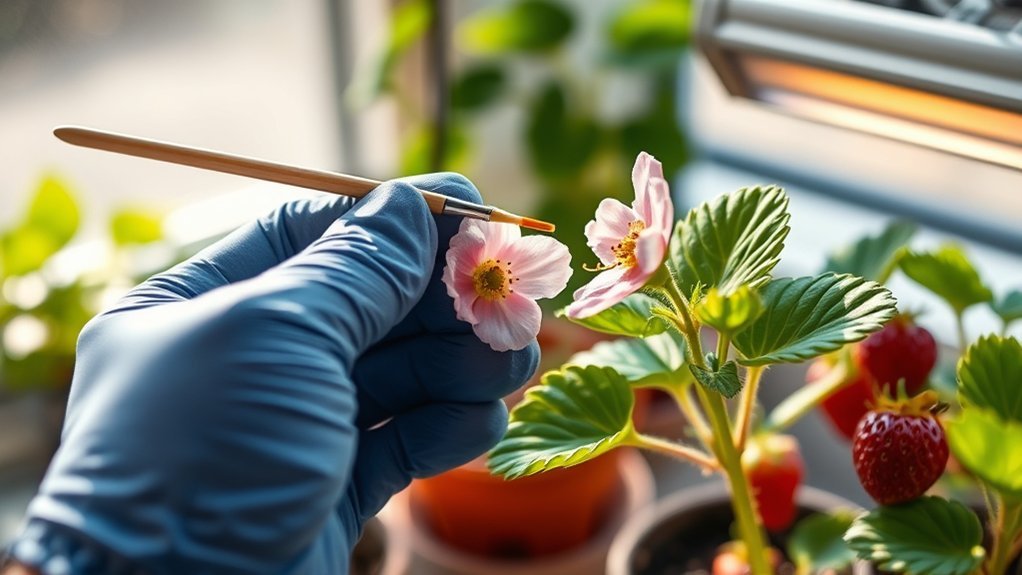
Since indoor strawberries don’t have access to natural pollinators, you’ll need to hand-pollinate their flowers to confirm they develop fruit. Use a cotton swab or small paintbrush to gently transfer pollen from the stamens of one strawberry flower to the center of another. This fertilization promotes fruit production.
Pollinate every few days during the growing season, ideally in the morning when flowers are most receptive.
| Step | Action |
|---|---|
| Tools | Cotton swab or small paintbrush |
| Timing | Morning during growing season |
| Frequency | Every few days |
| Goal | Transfer pollen, produce fruit |
This careful hand-pollination confirms your indoor strawberries set fruit successfully and boosts your overall harvest.
Keep Your Indoor Strawberry Plants Warm and Well-Ventilated
You’ll want to keep your indoor strawberries at a steady 70°F to help them thrive.
It’s pretty important to maintain that warmth consistently.
At the same time, good airflow matters just as much.
Using fans can help prevent the air from getting stagnant, which reduces the risk of mold forming.
Also, try to avoid drafts because sudden changes in temperature can stress your plants.
Keep an eye on the humidity levels too, so your strawberries stay healthy and keep producing.
Maintaining Ideal Temperature
Although indoor strawberry plants can tolerate a wide temperature range from 40°F to 90°F, keeping them around 70°F promotes the best growth and encourages flowering.
To maintain this ideal temperature, monitor your indoor environment regularly, especially if you use grow lights that can raise the ambient heat.
Proper ventilation is key to preventing overheating and ensuring your strawberries thrive. Use fans to circulate air gently around the plants, which helps regulate temperature and reduces the risk of mold.
Consistent warmth combined with good ventilation creates favorable conditions for healthy growth. By carefully balancing temperature and airflow, you’ll provide your indoor strawberries with the perfect environment to flourish and yield delicious fruit.
Always adjust settings based on your plant’s response to maintain this balance effectively.
Ensuring Proper Airflow
Maintaining the right temperature is only part of keeping your indoor strawberry plants healthy; ensuring proper airflow plays a vital role as well. Proper airflow prevents mold and diseases, which boosts plant health and increases your harvest.
To improve air circulation, use an oscillating fan, like the AC Infinity model, positioned to create a gentle breeze. This setup helps maintain stable temperature and humidity, mimicking outdoor conditions.
Good airflow also aids pollination by evenly distributing pollen, essential for fruit production in indoor strawberry plants.
However, be careful with fan placement and settings—you don’t want excessive wind that stresses or dries out your plants.
Harvest Strawberries at Peak Ripeness for the Best Flavor
When your strawberries turn fully red, they’ve reached peak ripeness and are ready to harvest for the best flavor.
Check the top near the stem to confirm vibrant red without green patches, signaling ideal taste.
Since ripening happens about a month after the flowers bloom, keep a close eye on your plants during this time.
As an indoor gardener, you benefit from controlled harvesting without worrying about birds or pests.
Use scissors or garden shears to cut the stem about half an inch above the berry to avoid damaging the plant.
By harvesting strawberries at peak ripeness, you guarantee the sweetest, juiciest fruit.
This careful approach maximizes flavor and helps maintain healthy plants for your next crop.
Frequently Asked Questions
Can I Grow Strawberries Indoors Without Grow Lights?
Yes, you can grow strawberries indoors without grow lights, but you’ll need to pick strawberry varieties that tolerate lower light.
Choose containers with good drainage and place them by a south-facing window to meet their temperature requirements and watering needs.
You’ll also want to hand-pollinate flowers since bees aren’t indoors.
With proper indoor gardening care, your strawberries can thrive, though fruit production might be slower without supplemental lighting.
How Often Should I Repot Indoor Strawberry Plants?
You probably think your strawberries enjoy being cramped forever, but they don’t.
You should repot indoor strawberry plants every 1 to 2 years to keep root health in check and support their nutrient requirements.
Choose a container size with good soil drainage. Ideally, it should be 6 to 8 inches deep and wide enough for growth.
This repotting frequency prevents stunted plant growth and guarantees your berries stay happy and productive indoors.
What Pests Commonly Affect Indoor Strawberries?
Common pests that affect your indoor strawberries include spider mites, aphids, and whiteflies.
For effective pest control, you’ll want to regularly inspect your plants and maintain proper humidity to deter spider mites.
Aphids management involves removing clusters on new growth quickly, while whiteflies prevention often requires insecticidal soap.
Staying vigilant with these strategies will keep your indoor gardening healthy and your strawberries thriving.
Can I Use Regular Garden Soil for Indoor Strawberries?
You shouldn’t use regular garden soil for indoor strawberries because it often lacks proper drainage and balanced soil nutrients.
Instead, opt for a high-quality potting mix designed for indoor soil that meets strawberries’ drainage needs and maintains the right soil pH.
Using the right container size with this mix helps support their shallow roots and prevents waterlogging.
This way, your strawberries can thrive indoors without pest or disease issues.
How Long Does It Take for Strawberries to Bear Fruit Indoors?
You’ll usually see fruit in 2 to 3 months with nursery strawberry varieties indoors.
If you start from seeds, expect to wait until the second year.
For successful indoor gardening, use well-draining soil that meets soil requirements and maintain temperature control between 40°F and 90°F.
Keep up with watering needs and hand-pollinate flowers to support fruiting stages.
Choosing day-neutral varieties helps you enjoy strawberries year-round.
Conclusion
Growing strawberries indoors can be a rewarding experience if you follow the right steps. By choosing the best varieties, providing ample light, and hand-pollinating those flowers, you’ll soon enjoy sweet, juicy berries right at home.
Just remember, patience is key. Don’t put all your eggs in one basket. With consistent care and attention, your indoor strawberry plants will thrive and reward you with delicious fruit you’ll be proud to pick.