
Grow Strawberries From Fresh Fruit: a Step-By-Step Guide
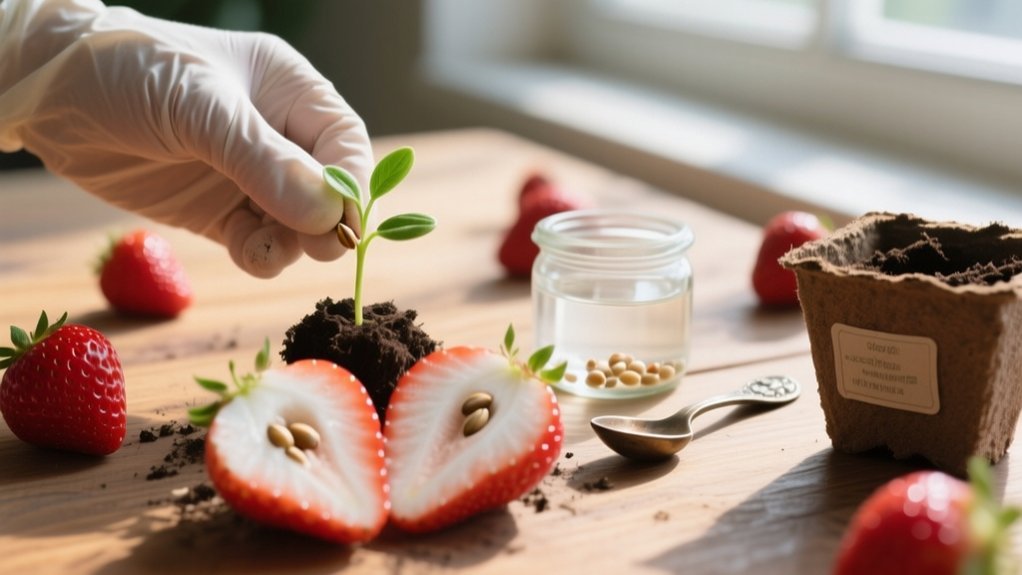
You can grow strawberries from fresh fruit by first extracting seeds from ripe berries and drying them thoroughly. Refrigerate seeds for 2-4 weeks to boost germination, then plant them indoors in well-draining soil about 8-10 weeks before the last frost.
Keep seedlings moist and light-filled until they develop true leaves. Transplant outside once warm, spacing plants well and protecting them from pests. Keep watering and pruning runners for best yields.
With these steps, you’ll be ready to enjoy homegrown strawberries soon and learn about caring for your plants as they grow.
Extracting Seeds to Grow Strawberries From Fresh Fruit
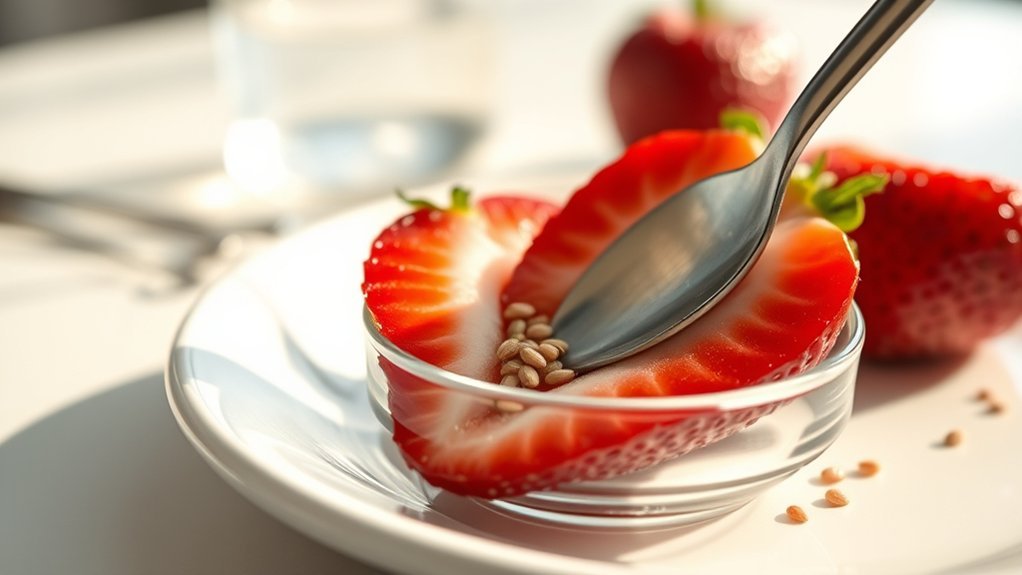
When you want to grow strawberries from fresh fruit, start by extracting the seeds from fully ripe strawberries. You can scrape the seeds off with a toothpick or blend the berries with water, then strain to separate the seeds.
After extracting seeds, dry them on a paper towel in a cool, dark place for a few days. For better germination, try cold stratification by refrigerating the seeds for 2–4 weeks before you plant strawberry seeds.
Dry seeds in a cool, dark spot, then refrigerate for 2–4 weeks to boost germination.
The best time to plant is late winter to early spring, about 8–10 weeks before the last frost. Use a well-draining seed-starting mix, sprinkle seeds evenly without covering, and lightly press them in.
Mist the soil to keep it moist and cover with plastic wrap to maintain humidity. This step-by-step guide guarantees you get a healthy start.
Preparing Strawberry Seeds for Successful Planting
Although extracting seeds is an essential first step, preparing them properly before planting guarantees better germination and healthy growth.
After you extract strawberry seeds from ripe fruit, dry them completely on a paper towel in a cool, dark place.
For even more successful germination, try cold stratifying the seeds by refrigerating them for 2 to 4 weeks.
When you’re ready for planting, use a well-draining seed-starting mix.
Sprinkle the seeds evenly on the soil surface and press them lightly without covering since they need light to germinate.
Keep the soil moist by misting regularly and cover with plastic wrap to maintain humidity.
Maintain temperatures between 15 to 24°C (60 to 75°F), and expect germination in about 2 to 3 weeks.
These steps help guarantee your strawberry seeds develop into healthy seedlings.
When and How to Plant Strawberry Seeds Indoors
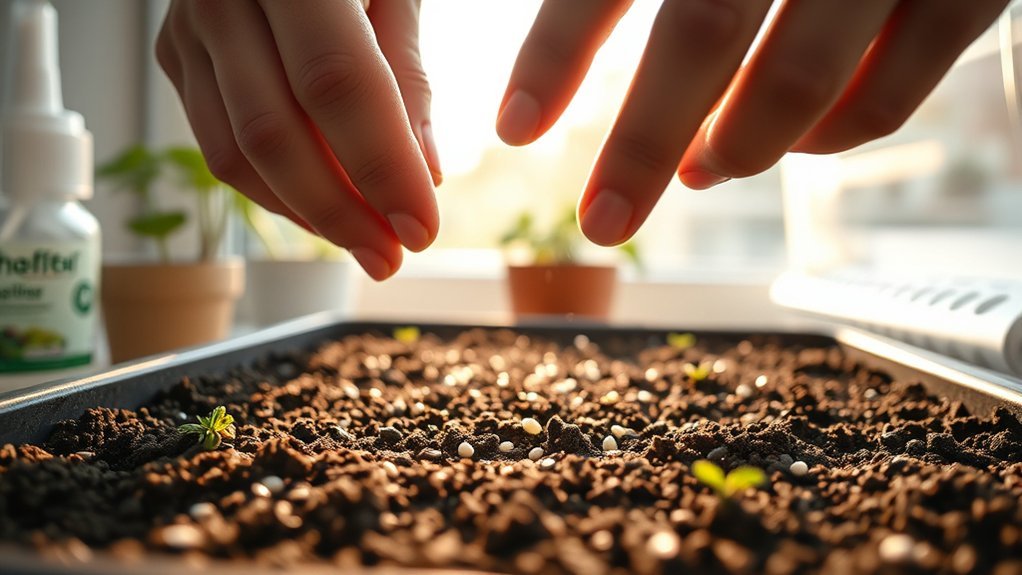
You’ll want to plant strawberry seeds indoors about 8-10 weeks before the last frost, which usually falls in late winter or early spring.
It’s best to use a well-draining seed-starting mix for this.
Next, sprinkle the seeds on top of the soil without covering them.
Then, mist the soil to keep it moist.
To keep the humidity just right, cover the container with plastic wrap.
After that, you can expect the seeds to germinate within 2-3 weeks.
Just make sure the temperature stays between 60-75°F, and you’ll be on your way to growing healthy strawberry plants.
Best Planting Time
Since strawberry seeds need specific conditions to sprout, starting them indoors about 8-10 weeks before the last frost date gives you the greatest chance for healthy growth.
The best time to plant strawberry seeds is in late winter to early spring.
Use a well-draining seed-starting mix, sprinkle seeds evenly on the soil surface, and press them lightly without covering.
Keep the soil moist by misting it regularly. Maintain a temperature range of 15-24°C (60-75°F) for ideal germination, which usually takes 2-3 weeks.
Cover the container with plastic wrap to retain humidity.
Following this step-by-step guide guarantees you create perfect conditions for your seeds, leading to a successful indoor start before transplanting outdoors after the frost has passed.
Seed Preparation Steps
To prepare strawberry seeds for indoor planting, start by selecting fully ripe fruit and extracting the seeds either with a toothpick or by blending the berries with water and straining the mixture. Next, dry the seeds on a paper towel in a cool, dark place for a few days.
For better germination, try cold stratification by refrigerating the seeds for 2 to 4 weeks before planting. Use a well-draining seed-starting mix, sprinkle seeds on the surface without covering, and maintain consistent moisture and humidity by misting and covering with plastic wrap.
| Step | Action | Notes |
|---|---|---|
| Select fruit | Choose fully ripe berries | Best seed viability |
| Extract seeds | Toothpick or blend method | Separate seeds carefully |
| Dry seeds | Use paper towel | Prevent mold/mildew |
| Cold stratify | Refrigerate 2 to 4 weeks | Enhances germination |
| Plant seeds | Surface sow, keep moist | Use well-draining soil |
Indoor Germination Tips
Although planting strawberry seeds indoors requires careful timing, starting them about 8 to 10 weeks before the last frost gives your seedlings the best chance to grow strong before transplanting outdoors.
Use a well-draining mix and sprinkle the strawberry seeds evenly on the soil surface, pressing them lightly without covering, since they need light for indoor germination.
Keep the soil moist by misting regularly and cover it with plastic wrap to maintain humidity.
Maintain a temperature between 60-75°F for germination, which usually occurs within 2-3 weeks.
Once your seedlings develop their second set of true leaves, gradually introduce them to outdoor conditions over one to two weeks to avoid transplant shock.
Only transplant when outdoor temperatures stay above 50°F to guarantee healthy growth.
Sowing Strawberry Seeds for Best Germination Results
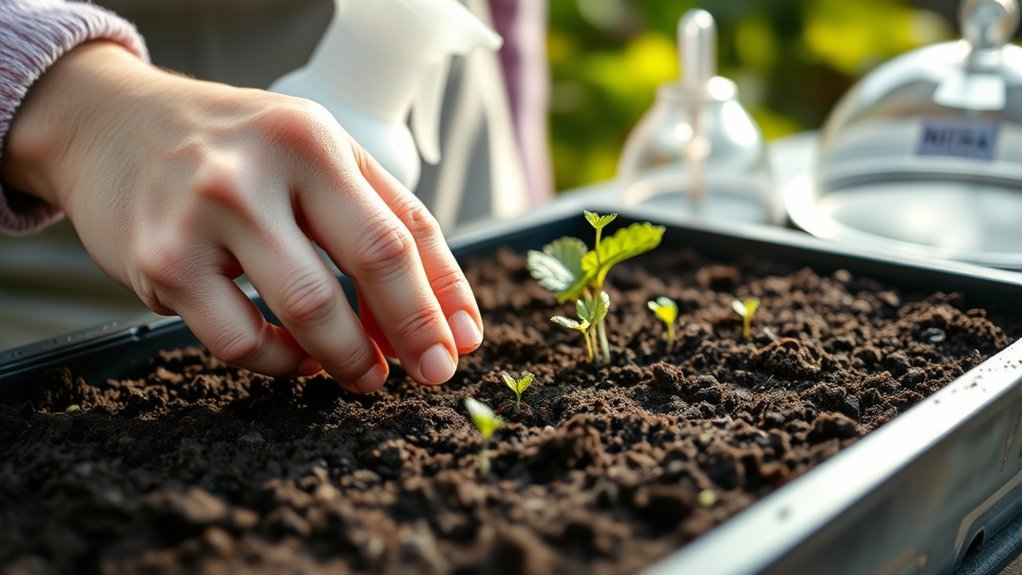
If you want your strawberry seeds to sprout successfully, start by refrigerating them for 2-4 weeks to cold stratify and boost germination rates.
When sowing strawberry seeds, use a well-draining seed-starting mix and lightly press seeds onto the surface without covering them, as they need light during germination.
Keep the soil moist by misting regularly and cover the container with plastic wrap to maintain humidity.
Regular misting and plastic wrap help keep soil moist and humidity high for seed germination.
Maintain temperatures between 15-24°C (60-75°F) for ideal germination, which usually takes 2-3 weeks.
This careful approach to sowing, combined with cold stratifying, guarantees you achieve the best germination rates.
Following these steps gives your seeds the perfect environment to sprout and grow into healthy seedlings ready for the next stage.
Caring for Strawberry Seedlings Indoors Before Transplanting
Once your strawberry seeds have sprouted and developed their first true leaves, it’s important to focus on caring for the seedlings indoors before moving them outside.
Keep your strawberry seedlings in stable indoor conditions with temperatures between 15-24°C (60-75°F).
Provide plenty of light using a grow light or by placing them in a sunny spot to prevent leggy growth.
Monitor moisture levels carefully. Keep the soil consistently moist but avoid waterlogging to encourage healthy root development.
As the seedlings develop their second set of true leaves, prepare to transplant by gradually acclimating them to outdoor conditions.
This means slowly increasing their exposure to sunlight and outdoor temperatures over one to two weeks, ensuring they adjust without stress.
Proper care indoors sets the stage for a successful transplant later on.
When and How to Transplant Strawberry Seedlings Outdoors
Before transplanting your strawberry seedlings outdoors, wait until they’ve developed a second set of true leaves. Also, make sure the outdoor temperatures consistently stay above 10°C (50°F) to avoid transplant shock.
Ensure seedlings have a second set of true leaves and outdoor temps are above 10°C before transplanting.
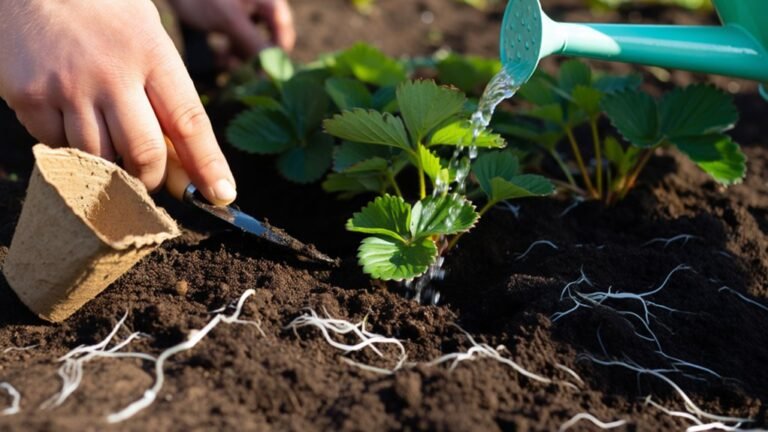
To successfully transplant strawberry seedlings, follow these steps:
- Acclimate seedlings by gradually increasing their outdoor exposure over 1 to 2 weeks, starting with a few hours daily.
- Choose a site with good drainage, full sun for at least 6 to 8 hours, and slightly acidic soil (pH 5.5 to 6.8).
- Space seedlings 25 to 30 cm apart to promote healthy crown development and runners.
- Water thoroughly after planting to keep roots moist and help seedlings establish roots quickly.
Spacing and Soil Preparation for Growing Strawberry Plants From Seed
Proper spacing and soil preparation play an essential role in growing healthy strawberry plants from seed. Space your seedlings 18 inches apart to give runners and crowns enough room to develop fully.
Choose a planting site that receives at least 8 hours of sunlight daily, as this boosts fruit production. Prepare well-draining soil with a slightly acidic pH between 5.5 and 6.8, mixing in aged compost or organic matter to enrich it.
When planting seeds, lightly press them onto the soil surface without covering, since they need light to germinate.
Keep soil moisture consistent by watering about 1 to 1.5 inches weekly, especially during fruiting stages.
These steps guarantee your strawberry plants grow strong and produce abundant fruit.
Protecting Young Strawberry Plants From Pests and Diseases
Although young strawberry plants can thrive with the right care, they often face threats from pests like aphids, slugs, and spider mites, as well as fungal diseases such as powdery mildew and gray mold.
To protect your plants, follow these steps:
- Use organic controls like neem oil and insecticidal soap to manage pests effectively.
- Ascertain good air circulation by spacing plants properly and avoid overhead watering to prevent powdery mildew and gray mold.
- Hand-pick slugs and use straw mulch or netting to deter pests and birds.
- Regularly inspect your strawberry plants, removing affected foliage to reduce disease spread and maintain healthy plants.
Proper watering and mulching will strengthen your plants’ resilience against pests and diseases.
Encouraging Healthy Growth and Managing Strawberry Runners
To keep your strawberry plants thriving, you’ll want to prune runners regularly so the crown can focus on producing fruit.
It’s a good idea to space runners about 18 inches apart—that way, they get plenty of airflow and can grow healthy and strong.
Managing these runners properly really helps your plants stay strong and productive throughout the season.
Pruning Strawberry Runners
Managing strawberry runners is key to growing bigger, better berries because it directs the plant’s energy toward fruit production instead of endless runner growth.
Pruning strawberry runners properly encourages healthy growth and larger berries by focusing resources where they matter most.
Here’s how to manage your strawberry patch effectively:
- Prune most runners during the growing season to prevent energy drain and promote fruit production.
- Leave a few strong runners attached to guarantee healthy growth and future patch expansion.
- Improve air circulation by removing excess runners, reducing the risk of fungal diseases.
- Time your pruning after the fruiting season to protect next year’s fruit buds.
Promoting Crown Development
Pruning strawberry runners not only controls their spread but also plays a big role in strengthening the plant’s crown. By clipping most runners, you allow your strawberry plants to produce larger, healthy fruit by focusing energy on promoting crown development.
Ascertain plant spacing of about 18 inches to support ideal crown growth and accommodate any runners you choose to keep. Strawberry plants thrive in soil with a pH between 5.5 and 6.8, which encourages healthy crown and overall growth.
Regular pruning of discolored or pest-affected leaves is essential to maintain crown health and direct resources efficiently.
Fertilizing with organic options, like Miracle-Gro Organic™ Planting Tablets, further boosts crown strength and fruit yield, helping you grow robust strawberry plants that reward you with a bountiful harvest.
Managing Runner Spacing
Spacing your strawberry runners about 18 inches apart gives each plant enough room to grow strong crowns and produce juicy fruit.
Proper spacing guarantees a healthy crown, promotes air circulation, and maximizes runner production.
To manage your strawberries effectively and boost fruit production, follow these tips:
- Space plants 18 inches apart for healthy crown development and ideal runner growth.
- Maintain 10–12 inches between transplants to improve air circulation and reduce disease risk.
- Thin overcrowded runners regularly to prevent energy diversion away from fruit production.
- Use a grid pattern in small spaces to maximize yield and simplify runner management.
Harvesting and Storing Strawberries Grown From Seed
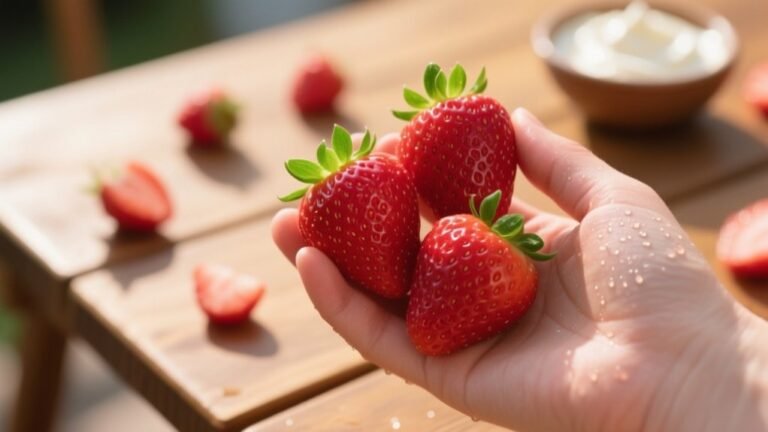
You’ll know your strawberries are ready to harvest when they turn fully red, usually 18 to 45 days after blooming depending on the variety and weather.
Strawberries are ready to harvest when fully red, typically 18 to 45 days after blooming.
Gently tug the fruit; if it comes away easily, it’s fully ripe and ready to pick.
Compared to store-bought fruit, freshly harvested berries from your strawberry plants offer superior flavor and freshness.
On average, each plant yields 5 to 7 strawberries per season, with peak yields in late spring or early summer.
To keep your harvest fresh, refrigerate the strawberries immediately but avoid washing them until just before eating.
For longer storage, freeze any excess fruit to preserve peak freshness and prevent spoilage.
Frequently Asked Questions
Can I Grow Strawberries From Frozen Fruit Seeds?
You can try growing strawberries from frozen fruit seeds, but keep in mind that frozen fruit often suffers reduced seed viability due to frost impact. This affects the germination process negatively.
To improve success, carefully thaw and dry seeds before planting. Use proper planting techniques that expose seeds to light, and provide ideal growth conditions with adequate nutrients.
However, for better fruit quality and reliable propagation methods, fresh seeds or established plants are usually your best bet.
How Long Do Strawberry Plants Take to Fruit From Seed?
Think of growing strawberries from seed like raising a child; you don’t rush milestones.
Typically, you’ll see fruit in 4 to 6 months, depending on seed germination timeline and ideal growing conditions.
Start seeds indoors and care for seedlings with proper soil requirements and fertilization techniques.
Then transplant carefully.
Choose varieties for beginners with disease resistance traits to ease challenges.
With patience and these seedling care tips, you’ll enjoy a rewarding strawberry harvest.
Are Strawberry Plants Grown From Seed as Flavorful as Those From Runners?
You won’t always find a perfect flavor comparison between seed-grown strawberries and those from runners.
Seed quality and plant genetics greatly influence the flavor profile, meaning taste testing is key.
While seed-grown plants may offer unique flavors, runner advantages include uniform taste due to selective cultivation methods.
Growth conditions and harvest timing also affect flavor.
Can Strawberry Seeds Be Saved for Planting Next Season?
Yes, you can save strawberry seeds for next season by using proper seed storage techniques like drying them thoroughly and keeping them in a cool, dark place.
To boost germination success rates, cold stratify seeds before planting.
Test seed viability before sowing.
Follow seasonal planting tips and choose organic seed options if possible.
Remember to practice pest management strategies and provide attentive seedling care and transplanting methods to guarantee healthy growth.
What Varieties of Strawberries Are Best for Seed Propagation?
You’d think growing strawberries from seeds is rocket science, but it’s not!
The best varieties for seed propagation include Alpine strawberries and day-neutral options like Albion, prized for their steady fruiting.
Everbearing types offer multiple harvests, while June bearing varieties provide classic flavors.
Choose organic strawberry seeds or heirloom strawberry varieties for pure genetics.
Hybrid strawberries and disease resistant cultivars boost success, and container friendly strains make small-space growing a breeze.
Conclusion
Growing strawberries from fresh fruit might seem like an impossible dream, but with your hands in the soil and patience in your heart, you’ll be amazed at how quickly those tiny seeds turn into juicy, sweet berries. Just follow each step carefully, and soon you’ll have a thriving strawberry patch that could feed an army!
Keep nurturing your plants, and enjoy the incredible satisfaction of harvesting homegrown strawberries right from your own garden.