
How to Grow Huge Strawberries – A Step-by-Step Guide
To grow huge strawberries, start by choosing large-fruited, disease-resistant varieties like Chandler or Albion. Prepare your soil with compost and maintain a pH between 5.5 and 6.8 for ideal growth.
Plant strawberries 18-24 inches apart in full sun, and use organic fertilizer during early growth stages. Water consistently with about an inch per week, avoid overwatering, and mulch to retain moisture.
Prune runners to focus energy on fruit size. Keep caring seasonally to boost size and yield. There’s more to master for the biggest berries.
Pick the Best Strawberry Varieties for Huge Fruit
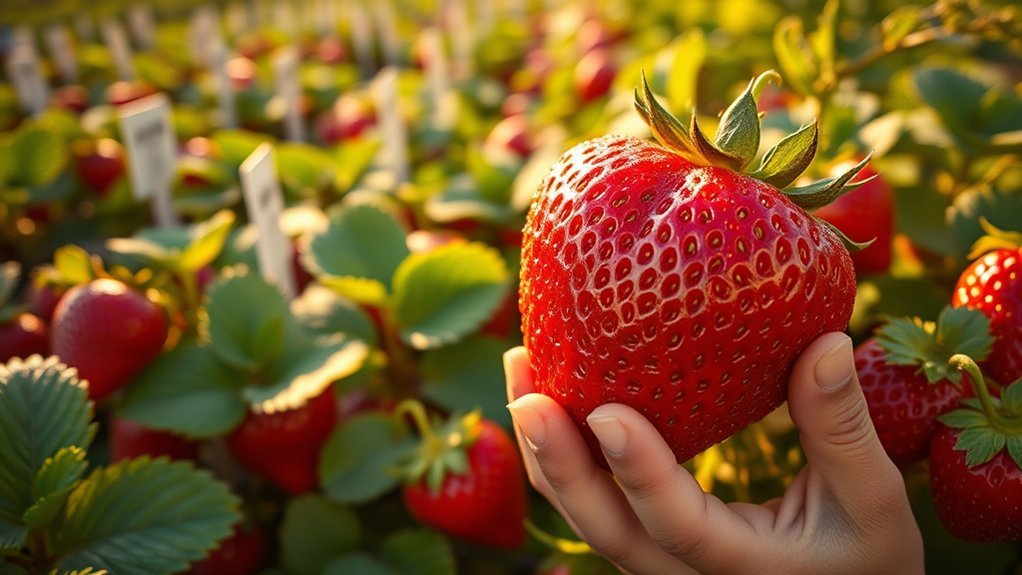
To grow huge strawberries, start by picking the right variety that suits your growing goals. June-bearing varieties like Chandler and Sequoia produce larger fruit in a concentrated harvest, making them ideal if you want a big batch at once.
Everbearing types such as Fort Laramie and Ozark Beauty yield sizeable berries throughout the season with proper care. Day-neutral varieties like Albion and Seascape offer continuous harvests and can produce large, firm strawberries if you provide enough sunlight and nutrients.
Choosing disease-resistant strawberry varieties supports healthy plant growth and reduces stress, helping you achieve bigger fruits.
Make sure your plants get 6-8 hours of sunlight daily to maximize fruit size and sweet flavor.
With the right variety and proper care, you’ll enjoy impressive, juicy strawberries all season.
Prepare Soil for Optimal Strawberry Growth
Choosing the right strawberry variety sets you up for success, but preparing your soil properly will guarantee those plants grow strong and produce large, juicy berries.
Start by conducting a soil test to check nutrient levels and soil pH, aiming for a loamy soil with pH between 5.5 and 6.8.
Begin with a soil test to ensure nutrient balance and a pH of 5.5 to 6.8 for optimal strawberry growth.
Next, improve your soil by mixing in a 2- to 3-inch layer of compost to boost organic matter and fertility.
Gently work balanced organic fertilizers into the soil without disturbing roots. Also, address drainage issues, especially in heavy soils, by using raised beds or containers.
Good drainage is essential for healthy strawberry plants.
Following these steps before planting strawberries guarantees your soil supports ideal growth and huge fruit production.
Plant Strawberries With Proper Spacing and Sunlight
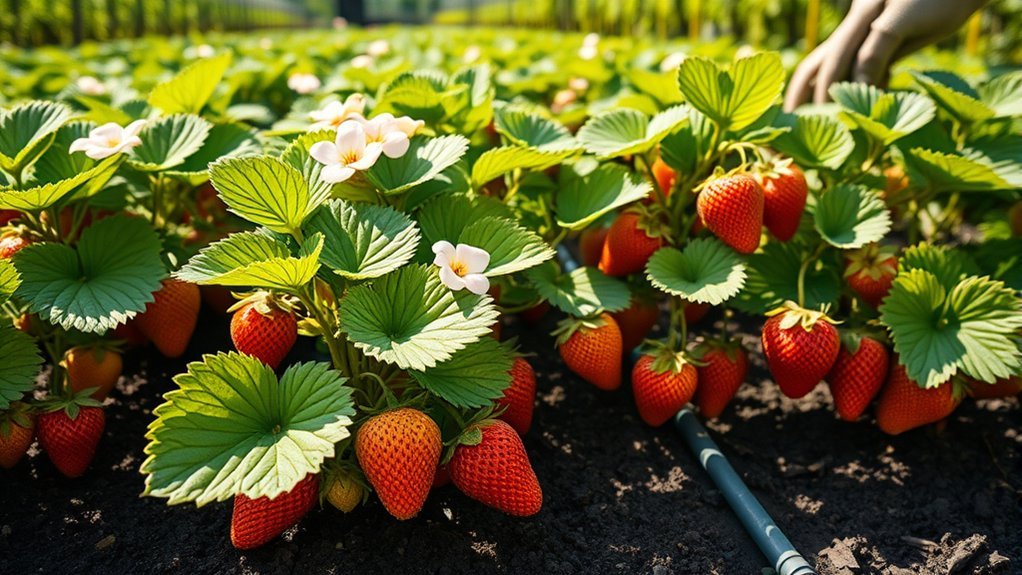
When planting strawberries, spacing them 18 to 24 inches apart gives each plant enough room to grow and produce large, flavorful berries. Proper spacing improves air circulation, which reduces the disease risk common in overcrowded conditions.
Plant strawberries in early spring for cooler climates or as early as January in warmer areas to maximize sunlight. Make sure each plant receives 6-8 hours of full sun daily for ideal fruit production and a healthy plant.
| Factor | Recommendation |
|---|---|
| Spacing | 18-24 inches apart |
| Sunlight | 6-8 hours of full sun |
| Planting Time | Early spring or January |
Use Organic Fertilizers at Key Growth Stages
Spacing your strawberry plants correctly and providing ample sunlight sets a strong foundation, but feeding them right at key growth stages really boosts their size and flavor.
To maximize results, follow these steps when you apply fertilizers:
- Before planting, enrich your soil with compost or other soil amendments to supply essential nutrients.
- In early spring, use a balanced organic fertilizer (10-10-10) to support strong root and leaf development.
- During flowering and fruiting, switch to a high-potassium fertilizer (5-10-10) to enhance fruit size and sweetness.
Reapply organic fertilizers every four to six weeks while monitoring soil nutrient levels through tests.
Tailoring fertilization to your strawberry plants’ needs guarantees bigger, juicier berries at every growth stage.
Water Strawberries Consistently Without Overwatering
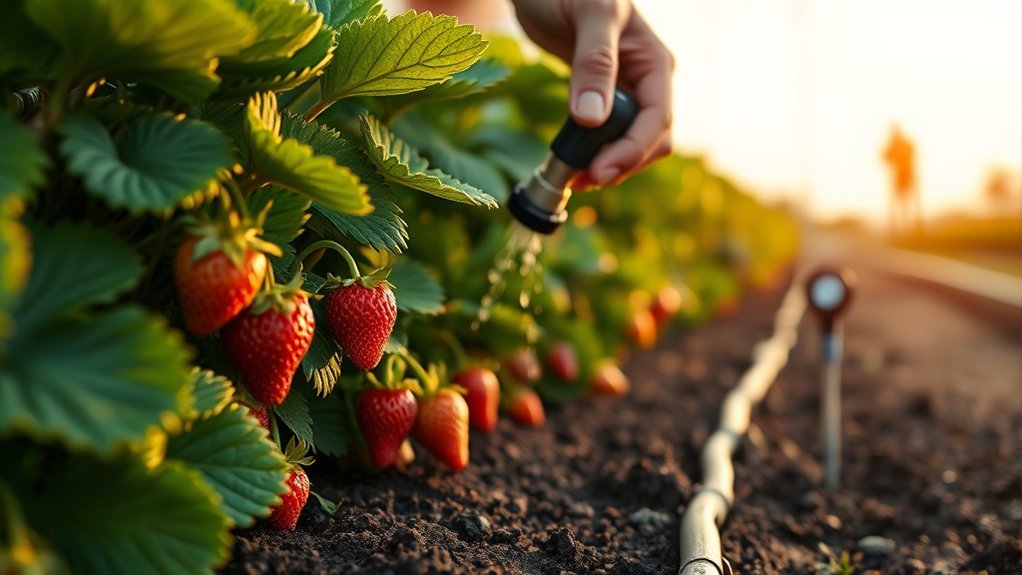
Keeping your strawberry plants consistently moist without drowning them is key to growing huge, healthy berries. You should water strawberries with about one inch of water per week, focusing on the root zone to prevent root rot.
Using a drip irrigation system or soaker hoses helps deliver water directly to roots, reducing leaf wetness and fungal diseases. Check soil moisture by feeling the top inch of soil. Water only when dry to avoid overwatering.
Avoid watering during the hottest hours to minimize evaporation. Mulching with organic materials supports consistent moisture but will be discussed next.
| Action | Benefit | Tip |
|---|---|---|
| Use drip irrigation | Prevents fungal diseases | Targets water to roots |
| Water 1 inch weekly | Guarantees consistent moisture | Avoids waterlogging |
| Check soil moisture | Prevents overwatering | Feel top inch before watering |
| Avoid midday watering | Reduces evaporation | Water early morning or evening |
| Mulching (next step) | Retains soil moisture | Use straw or pine needles |
Apply Mulch to Retain Moisture and Suppress Weeds
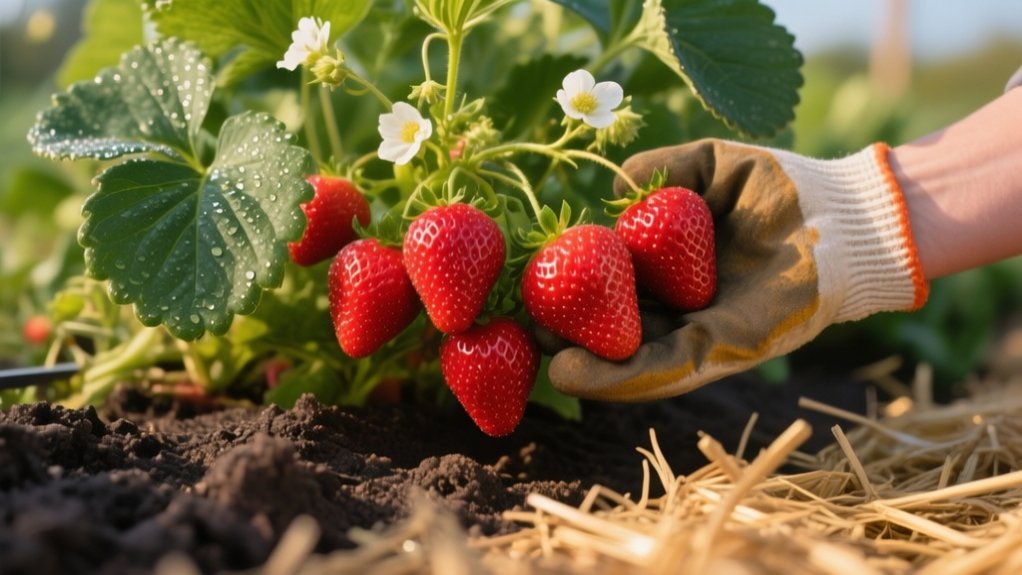
To maintain consistent moisture in your strawberry patch, applying a 2-3 inch layer of organic mulch like straw or pine needles works wonders.
When you apply mulch, you help retain moisture in the soil, reducing how often you need to water your strawberry plants. Plus, mulch suppresses weeds, cutting down competition for nutrients and water.
Using organic mulch also adds organic matter as it breaks down, enriching your soil throughout the growing season.
Here’s how to get the most from your mulch materials:
- Spread 2-3 inches evenly around plants to maintain soil moisture.
- Replenish mulch annually to keep suppressing weed growth effectively.
- Avoid piling mulch against plant crowns to prevent rot and fungal issues.
This simple step boosts growth and protects your strawberries all season long.
Manage Strawberry Runners and Prune to Boost Growth
Although runners help strawberry plants spread, you’ll want to remove them regularly to focus the plant’s energy on producing larger, sweeter berries.
To boost growth and fruit production, prune excess runners, especially during the flowering stage. This way, your healthy mother plant can prioritize developing fruit rather than new plants.
Prune excess runners during flowering to help your strawberry plant focus energy on producing fruit.
For June-bearing strawberries, consistently snip runners after the first year to maximize berry size and yield.
If you grow everbearing varieties, manage runners carefully to maintain proper plant density and improve air circulation. This supports ideal growth and reduces disease risks.
Protect Strawberries Organically From Pests and Diseases
When you regularly inspect your strawberry plants for pests like aphids, slugs, and snails, you catch infestations early. You can remove them by hand before they cause serious damage.
To protect your strawberries organically from pests and diseases, follow these steps:
- Apply organic mulch such as straw to maintain soil moisture, suppress weeds, and prevent soil-borne diseases from splashing onto the plants.
- Use insecticidal soaps or neem oil on larger pest problems to target pests while preserving beneficial insects.
- Practice crop rotation and avoid planting strawberries where susceptible crops grew to reduce disease buildup.
Also, guarantee good air circulation by spacing plants properly. Avoid overhead watering to minimize fungal diseases.
These organic methods keep your strawberries healthy and pest-free.
Provide Seasonal Care to Boost Strawberry Size
To grow huge strawberries, you’ll need to give your plants the right care each season.
In spring, start by boosting nutrients—this helps set the stage for big, juicy berries.
Then, as summer rolls in, keep the moisture consistent to support steady fruit growth.
And when fall approaches, get your patch ready for dormancy to make sure your plants come back strong next year.
Springtime Nutrient Boost
Since spring marks a critical growth phase, you should apply a balanced organic fertilizer to give your strawberry plants the nutrients they need for strong, healthy development.
This early boost promotes vigorous vegetative growth, which is essential for producing large, juicy berries later.
To maximize your plants’ potential, follow these steps:
- Apply fertilizer evenly around the base in early spring to provide nitrogen and other key nutrients.
- Incorporate compost into the soil after harvest to replenish nutrients and improve soil structure.
- Maintain consistent soil moisture by using mulch to retain water and protect developing fruits.
Summer Moisture Management
Although summer heat can stress your strawberry plants, keeping their moisture levels steady is crucial to growing larger, juicier fruits. You need to water weekly with about an inch of water, adjusting for rainfall, to provide consistent moisture. Applying organic mulch like straw helps retain soil moisture and prevents root rot by keeping soil temperatures stable.
| Care Tip | Reason |
|---|---|
| Water weekly | Prevents drought, supports growth |
| Use organic mulch | Retains moisture, suppresses weeds |
| Employ drip irrigation | Avoids wet leaves, reduces fungal diseases |
| Apply high-potassium fertilizer | Boosts larger fruit size |
Monitor soil moisture levels closely since strawberries are sensitive to both drought and overwatering. This balance guarantees healthy roots and bigger berries.
Fall Dormancy Preparation
As the temperatures drop, you’ll want to prepare your strawberry plants for dormancy by applying a layer of straw mulch around them. This helps insulate against frost and retain soil moisture.
To guarantee your plants stay healthy through fall and winter, follow these steps:
- Remove dead leaves and cut back excessive foliage to improve airflow and reduce the risk of fungal diseases.
- Add compost to the soil to replenish nutrients, supporting strong root development during dormancy.
- Water your plants thoroughly before the ground freezes to maintain adequate moisture reserves.
Harvest Strawberries and Store Them to Preserve Freshness
When you harvest strawberries, wait until they’re fully ripe with a uniform red color and firm texture to get the best flavor.
Gently twist or cut the stem to avoid damaging the plant, ensuring more fruit grows.
To prolong freshness, store harvested strawberries in the refrigerator using a shallow container lined with paper towels. This helps absorb moisture and prevents spoilage.
Avoid washing strawberries until just before you consume or process them, as excess moisture can reduce their shelf life.
Remember, strawberries have a limited shelf life, so enjoy them within a few days to experience their peak quality.
Frequently Asked Questions
Can Strawberries Be Grown Indoors for Large Fruit Production?
Yes, you can grow huge strawberries indoors by choosing the right strawberry varieties like day-neutral types.
Use containers with well-draining soil that meets soil requirements, and guarantee proper container size for root growth.
Maintain temperature control between 65-80°F, use grow lights for sufficient light, and follow a consistent watering schedule.
Apply effective fertilization methods, practice good pest management, and use pollination techniques like hand pollination to boost fruit size and yield.
How Do Different Climates Affect Strawberry Fruit Size?
Different climate zones dramatically influence your strawberry fruit size through temperature effects and seasonal variations.
You’ll need to manage water carefully to maintain ideal soil moisture and guarantee proper sunlight exposure for growth.
High humidity levels can boost size but raise fungal risks, so pest control is essential.
Frost resistance varies by climate, affecting plant survival.
Meeting nutrient requirements in varying temperatures and climates helps your strawberries flourish and grow huge.
What Are the Best Companion Plants for Strawberries?
You might think companion planting is complicated, but it’s worth it for strawberries. Choose pest deterrent plants like onions and garlic to keep aphids away, and marigolds to attract beneficial insects and pollinators.
Incorporate nitrogen-fixing plants to enrich soil, and practice crop rotation techniques to boost plant disease resistance.
Pay attention to companion plant spacing and seasonal planting schedules to maximize companion planting benefits and guarantee your strawberries thrive.
Can Strawberry Plants Be Grown in Containers Effectively?
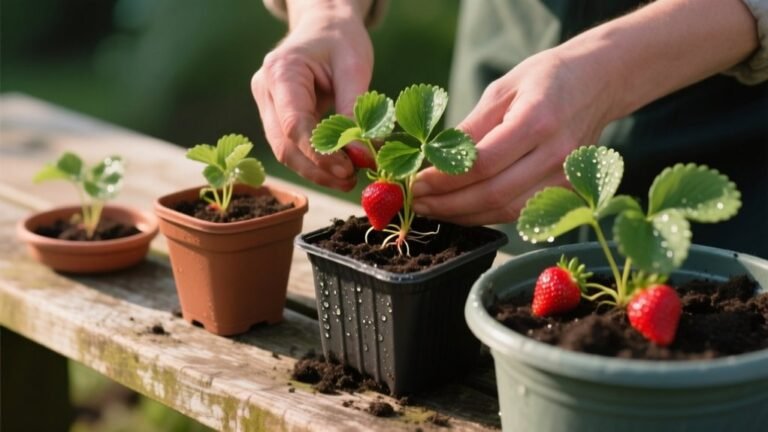
Yes, you can grow strawberries effectively with container gardening. Choose large pots to fit your strawberry varieties, ensuring the pot size supports root growth.
Use well-draining soil that meets soil requirements, and place containers where they get ample sunlight exposure.
Keep up with watering needs, manage pests carefully, and apply balanced fertilizer types.
Control temperature by moving containers as needed, and follow proper harvesting techniques to enjoy big, juicy berries right from your container garden.
How Long Do Strawberry Plants Produce Large Fruit Before Replanting?
You’ll find strawberry plants produce large fruit for about 3 to 4 years before replanting becomes necessary.
Maintaining ideal conditions, including soil requirements, pest management, and a proper fertilization schedule, extends their plant lifespan.
Paying attention to watering needs and variety selection boosts fruit production.
Monitor harvesting tips closely. When yields drop, it’s time to evaluate your replanting frequency to keep your patch thriving year after year.
Conclusion
Growing huge strawberries is like nurturing a dream garden. You start with the right seeds, tend the soil with care, and patiently water each promise of fruit.
Just as a gardener prunes to let sunlight in, you’ll shape your plants to thrive. With every step, you’re not just growing berries; you’re cultivating hope, patience, and joy.
Keep nurturing, and soon, your harvest will be a sweet reward for your loving care.