

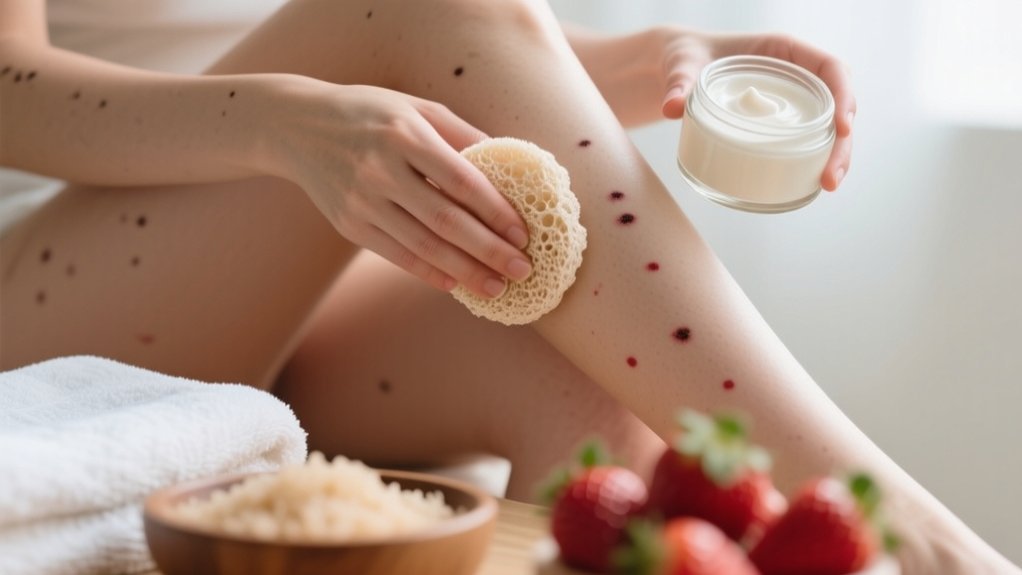
How to Get Rid of Strawberry Skin: A Complete Guide
To get rid of strawberry skin, exfoliate your legs gently 1-3 times a week using scrubs with natural ingredients or chemical exfoliants like salicylic acid to clear clogged pores. Shave carefully with a sharp razor in the direction of hair growth and moisturize daily to prevent irritation and dryness.
Stay hydrated and avoid tight clothing to support skin health. If these steps don’t fully help, exploring skin-friendly habits and treatments can offer you smoother results.
What Is Strawberry Skin and How Does It Develop?
Although it might look like harmless blemishes, strawberry skin is actually caused by clogged hair follicles filled with dead skin cells, oil, and debris. These create tiny dark spots resembling strawberry seeds.
When you use improper shaving techniques, like dull razors or shaving against hair growth, you increase irritation and inflammation, making strawberry skin worse.
Folliculitis, an inflammation or infection of the hair follicles, can also trigger this condition. It’s often linked to hair removal methods.
Genetics play a role too, meaning some people are more prone to developing strawberry skin based on their skin type.
Furthermore, lifestyle choices such as wearing tight clothing that causes friction contribute to clogged hair follicles and inflammation.
Understanding these factors helps you address and prevent strawberry skin effectively.
How to Recognize Strawberry Skin on Your Legs
You’ll notice strawberry skin by its tiny dark dots or a pitted look on your legs—kind of like the seeds on a strawberry.
Along with these visual signs, your skin might feel rough or bumpy.
Sometimes, it can even itch or get irritated.
Paying attention to these symptoms can help you spot strawberry skin early and manage it more effectively.
Visual Characteristics
When you notice small, dark spots resembling strawberry seeds on your legs, you’re likely seeing the classic signs of strawberry skin. This condition’s appearance is marked by small black dots caused by clogged pores or open comedones that darken due to oxidation.
After shaving, the bumpy texture often becomes more evident, with these dots standing out against your skin. You might also experience mild skin irritation or redness, sometimes linked to folliculitis, an inflammation of hair follicles.
Recognizing strawberry skin means paying close attention to these visual cues: the clustered tiny black spots, the uneven texture, and any irritation following shaving.
Understanding these characteristics helps you identify strawberry skin early and take steps to treat and prevent it effectively.
Common Symptoms
Strawberry skin shows up as tiny dark spots or a dotted pattern on your legs, especially after shaving. You’ll notice the appearance of dark pores where hair follicles are, often caused by clogged pores or ingrown hairs.
These black or brown dots aren’t just cosmetic; they can come with irritation, redness, and sometimes itching.
Folliculitis, an inflammation of the hair follicles, often accompanies strawberry skin, especially if hair removal methods irritate your skin.
You might also see scabbing or swelling in some areas, signaling underlying skin conditions.
If you experience persistent discomfort or worsening symptoms, it’s wise to consult a dermatologist to rule out infections or other issues contributing to the strawberry skin’s appearance and symptoms.
Skin Texture Changes
Recognizing the changes in your skin’s texture can help you identify strawberry skin early. You might notice tiny red bumps or dark spots resembling clogged pores on your legs, often caused by improper shaving techniques or keratosis pilaris.
These small, dotted patches reflect inflammation from ingrown hairs or folliculitis. Your skin texture may feel rough or bumpy, signaling the need for better care.
Regular exfoliation helps remove dead skin cells and unclog pores, while moisturizing keeps your skin smooth and hydrated. Paying attention to these changes prevents worsening irritation and reduces the appearance of strawberry skin.
Common Causes of Strawberry Skin You Should Know
Although it might seem like a simple cosmetic issue, the appearance of strawberry skin often stems from clogged hair follicles packed with dead skin, oil, and debris that darken open pores.
You’ll notice that ingrown hairs, especially after shaving or waxing, can inflame follicles and worsen strawberry skin.
Folliculitis, an infection or inflammation of these follicles, also contributes to this problem, often triggered by hair removal.
Keratosis pilaris, which causes rough, bumpy skin due to keratin buildup, frequently appears alongside strawberry skin.
Razor burn further irritates your skin, making the condition more visible.
Genetics play an essential role too. If you have darker or thicker body hair, you’re naturally more prone to developing this speckled look.
Understanding these causes helps you tackle strawberry skin effectively.
Exfoliation Techniques to Remove Strawberry Skin
Clogged pores and inflamed follicles don’t have to be a permanent part of your skin routine. Effective exfoliation techniques remove dead skin cells and unclog pores, helping you tackle strawberry skin head-on.
Regular exfoliation, 1-3 times weekly, keeps your skin smooth and reduces bumps. Chemical exfoliants with salicylic or glycolic acid penetrate deeply to improve skin texture.
You can also stimulate circulation through dry brushing or opt for professional treatments like microdermabrasion to accelerate skin renewal.
| Technique | Benefit | Frequency |
|---|---|---|
| Chemical Exfoliants | Unclog pores, remove dead skin cells | 1-3 times/week |
| Dry Brushing | Stimulates circulation, prevents clogged follicles | 2-3 times/week |
| Professional Treatments | Enhance skin renewal, diminish strawberry skin | Monthly or as advised |
Choosing the Right Scrubs for Strawberry Skin Care
When you’re picking out scrubs for strawberry skin, it’s a good idea to look for ones that have effective physical or chemical exfoliants.
These help clear out clogged pores and smooth the texture of your skin. Plus, you’ll want scrubs that include natural moisturizing ingredients to keep your skin hydrated and help reduce irritation.
Try to use these scrubs about 2-3 times a week. That way, you can maintain your results without over-exfoliating and causing any damage.
Keeping a consistent routine like this really makes a difference!
Types Of Effective Scrubs
Since choosing the right scrub can make a big difference, you should look for products with exfoliating ingredients like sugar, salt, or coffee grounds to effectively remove dead skin cells and unclog pores.
Scrubs containing chemical exfoliants such as glycolic acid or salicylic acid work deeper, promoting cell turnover and improving strawberry skin. To avoid dryness, opt for scrubs with moisturizing components like coconut oil or shea butter, which keep your skin hydrated after exfoliation.
If your skin is sensitive, choose scrubs with natural ingredients like oatmeal or aloe vera for gentle exfoliation and soothing effects.
Regular use of scrubs, around 2-3 times a week, can reduce the appearance of dark pores and greatly improve the texture of strawberry skin over time.
Natural Ingredients Benefits
Although you might be tempted to reach for harsh chemicals, choosing scrubs with natural ingredients can offer gentle yet effective care for strawberry skin.
Natural scrubs made from coffee grounds, sugar, or oatmeal exfoliate the skin to remove dead skin cells and unclog pores, reducing that bumpy appearance. Ingredients like lactic acid from yogurt and glycolic acid from fruits promote skin renewal and smoothness.
Furthermore, scrubs enriched with soothing properties such as aloe vera help calm irritation and inflammation.
Using natural scrubs regularly supports your skin’s health by nourishing and maintaining clear pores without causing dryness or damage.
Scrubbing Frequency Guidelines
Choosing the right scrub is only part of managing strawberry skin; knowing how often to exfoliate plays a big role in achieving smooth results. Use exfoliating scrubs 1-3 times a week to remove dead skin cells and prevent clogged pores.
Opt for scrubs with gentle particles or chemical exfoliants like salicylic acid and glycolic acid. Always follow up with a moisturizing lotion to keep your skin hydrated. Adjust scrubbing frequency based on your skin sensitivity. Reduce to once a week if irritation occurs.
| Scrubbing Frequency | Scrub Type | Benefits |
|---|---|---|
| 1 time/week | Gentle sugar or coffee | Minimizes irritation |
| 2 times/week | Mild scrubs with acids | Reduces bumps, clears pores |
| 3 times/week | Chemical exfoliants | Deep pore penetration, smooths |
| Daily | Not recommended | Causes irritation |
Effective Hair Removal Methods to Prevent Strawberry Skin
When you want to prevent strawberry skin, adopting effective hair removal methods is key. Start by shaving with a sharp, clean razor, always going in the direction of hair growth to avoid razor bumps and ingrown hairs.
Regularly exfoliate before hair removal to clear dead skin cells, reducing clogged pores that cause strawberry skin.
Exfoliating before hair removal clears dead skin and prevents clogged pores that lead to strawberry skin.
Consider laser hair removal for a long-term solution; it precisely targets hair follicles, minimizing hair regrowth and ingrown hairs. Waxing and epilators also remove hair from the root, offering smoother skin and fewer chances of strawberry skin.
After hair removal, apply a moisturizing cream to soothe your skin and maintain hydration, further preventing irritation that can lead to razor bumps and strawberry skin.
These methods combined help keep your skin smooth and clear.
Natural Oils and Moisturizers for Strawberry Skin Relief

You can really soothe and nourish your skin by using natural oils like sweet almond and jojoba. They work wonders to improve texture and help reduce the appearance of strawberry skin.
Plus, aloe vera and shea butter are great for providing calming hydration while boosting your skin’s elasticity.
Coconut oil is another good option because it fights bacteria that can cause irritation.
And if you’re looking for something packed with antioxidants, rosehip oil is a fantastic choice. It helps protect your skin and promotes a more even tone over time.
Benefits of Natural Oils
Although strawberry skin can be stubborn, incorporating natural oils like sweet almond or jojoba oil into your routine offers deep hydration and nourishment that visibly improves your skin’s texture.
These natural oils boost hydration levels and enhance moisture retention, helping your skin stay smooth and supple. They also support the exfoliation of dead skin cells, preventing clogged pores that contribute to strawberry skin.
Oils with soothing properties, such as aloe vera, reduce inflammation and irritation, promoting faster skin healing. Furthermore, oils like coconut oil combat bacteria, lowering the risk of folliculitis, a common cause of strawberry skin.
For best results, apply natural oils after exfoliation to maximize nutrient absorption and lock in moisture, giving your skin a healthier, clearer appearance.
Best Moisturizing Ingredients
Moisturizing ingredients play an essential role in managing strawberry skin by providing hydration and soothing irritation.
To improve skin texture and reduce dark spots, you should consider natural moisturizers like aloe vera gel, which calms inflammation and promotes healing.
Coconut oil offers antibacterial benefits and keeps your skin moisturized, helping prevent clogged pores.
Shea butter locks in moisture, boosts skin elasticity, and fights dryness that worsens strawberry skin.
For enhanced skin hydration, hyaluronic acid is a powerful addition, increasing moisture retention and giving your skin a plumper, smoother look.
Incorporating these ingredients into your skincare routine can effectively relieve strawberry skin by nourishing and hydrating your skin deeply.
Daily Habits and Hydration Tips to Prevent Strawberry Skin
Since preventing strawberry skin relies heavily on consistent care, adopting daily habits that promote skin health makes a significant difference.
Start by exfoliating regularly with physical scrubs or chemical exfoliants like AHA or BHA to remove dead skin cells and prevent clogged pores.
Keep your skin hydrated by moisturizing daily, which improves elasticity and reduces bumps.
Don’t forget to drink plenty of water throughout the day to support skin hydration from within.
Using a body brush for dry brushing can boost circulation and help slough off dead skin, further preventing buildup that causes strawberry skin.
When shaving, always go in the direction of hair growth with a clean, sharp razor to minimize irritation and reduce razor bumps.
These habits work together to prevent and manage strawberry skin effectively.
When Should You See a Professional for Strawberry Skin?
How do you know when it’s time to see a professional for your strawberry skin? If home remedies and over-the-counter products don’t improve your skin after several weeks, it’s smart to consult a dermatologist.
Persistent symptoms like considerable itching, pain, or inflammation need a medical evaluation to check for underlying conditions such as folliculitis or infections.
Significant itching, pain, or inflammation require a medical check to rule out infections or folliculitis.
You should also seek professional advice if dark spots or bumps worsen or change in appearance.
For thick, stubborn strawberry skin that resists standard care, professional treatments like chemical peels or laser therapy may be necessary.
Don’t hesitate to see a professional if your symptoms persist or notably affect your quality of life. Targeted treatment can help you regain smooth, healthy skin.
Maintaining Smooth, Strawberry Skin-Free Legs Long-Term
To keep your legs smooth and free from strawberry skin, you’ll need a consistent skincare routine that targets the root causes. Focus on regular exfoliation 2-3 times a week using chemical peels or acids to clear dead skin.
Moisturizing daily keeps your skin hydrated and elastic, reducing bumps. Always shave with a sharp razor in the direction of hair growth to avoid ingrown hairs. Dry brushing before showers boosts circulation and removes dead cells.
For long-term results, consider laser therapy or professional chemical peels to improve skin texture.
| Action | Frequency | Benefit |
|---|---|---|
| Regular exfoliation | 2-3 times weekly | Prevents clogged pores |
| Moisturizing | Daily | Hydrates, smooths skin |
| Shaving | As needed | Reduces ingrown hairs |
Frequently Asked Questions
Can Diet Affect the Severity of Strawberry Skin?
Yes, your diet can impact the severity of strawberry skin. Nutrition plays a big role. Too much sugar intake and inflammatory foods can worsen your skin condition by increasing oil and clogging pores.
On the other hand, eating antioxidant foods rich in vitamins A, C, and E, plus fatty acids, supports skin hydration and reduces inflammation.
Also, maintaining gut health helps prevent vitamin deficiencies, promoting smoother, healthier skin overall.
Are There Specific Fabrics to Avoid for Strawberry Skin?
Imagine donning a ruffled Elizabethan collar.
Tight clothing like that can worsen strawberry skin. You should avoid synthetic fabrics and wool garments since they trap heat and cause skin irritation.
Instead, pick breathable materials like cotton blends or moisture-wicking fabrics to keep your skin cool and dry.
Always practice good fabric care to prevent bacteria buildup.
Does Shaving Frequency Impact Strawberry Skin Development?
Yes, shaving frequency definitely impacts strawberry skin development. When you shave too often without proper shaving techniques, you increase irritation and the risk of ingrown hairs.
Choosing the right razor types, combining hair removal with regular skin exfoliation, and maintaining moisturizing habits all support follicle health.
Developing consistent skincare routines helps prevent clogged pores and bumps, keeping your skin smooth and reducing strawberry skin’s appearance over time.
Can Strawberry Skin Occur on Areas Other Than Legs?
Strawberry skin isn’t just limited to legs; it can show up on arms, thighs, and buttocks too.
While legs are common locations, other body areas can display similar skin texture due to clogged follicles.
Genetic factors influence where it appears, especially if you have thicker hair.
You can tackle it with targeted skincare routines and lifestyle changes.
Exploring treatment options tailored to each area helps you manage strawberry skin effectively.
Are There Any Medical Treatments for Severe Strawberry Skin?
Yes, you can try several medical treatments for severe strawberry skin.
Laser therapy and light therapy stimulate collagen and improve texture.
Chemical peels and microdermabrasion provide professional exfoliation to renew your skin.
Prescription creams, including topical retinoids and corticosteroid injections, can reduce inflammation and promote healing.
Always consult a dermatologist to find the best combination of treatments for your specific condition and skin type.
Conclusion
So, if you want to avoid looking like a walking bowl of strawberry seeds, start exfoliating, moisturizing, and drinking water like it’s your new obsession. Ignore these tips, and your legs might just star in their own fruit salad, minus the fun.
Remember, smooth skin isn’t a myth or a fairy tale; it’s just a little effort away. So, put down the excuses and show those stubborn follicles who’s boss!