
7 Essential Steps for Care of Strawberries in Pots
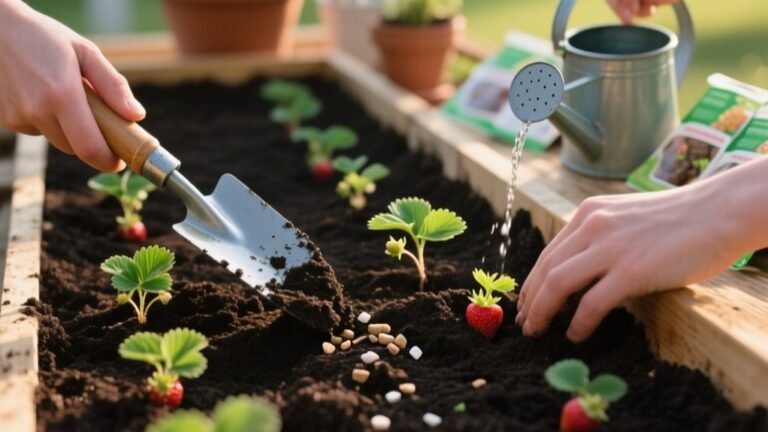
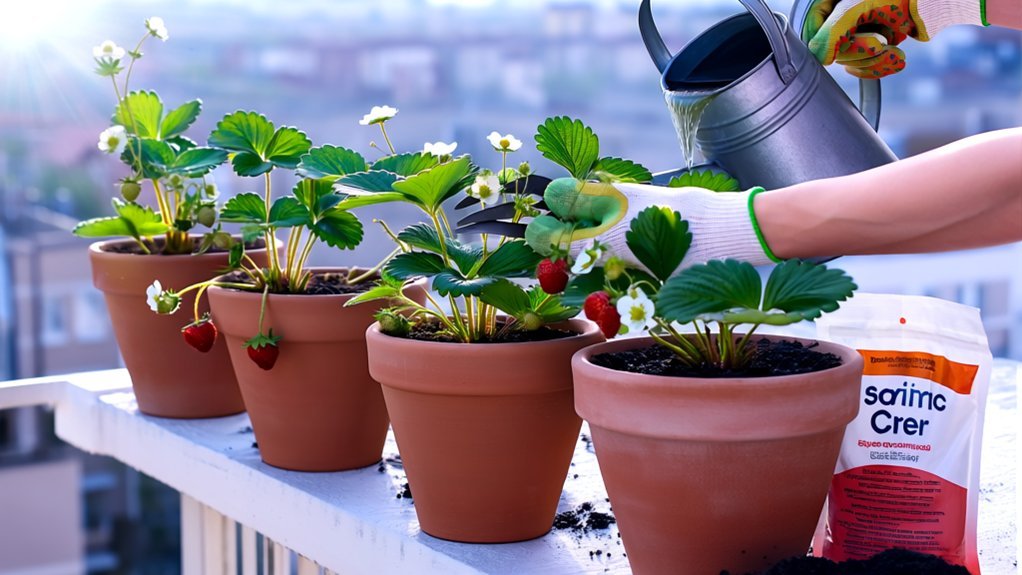
To care for strawberries in pots, start by choosing deep containers with good drainage and placing them in full sun. Use a high-quality, well-draining potting mix with balanced nutrients.
Space your plants about 8 inches apart and keep soil moist by watering 2-3 times weekly. Fertilize every 4-6 weeks and trim runners to encourage fruiting.
Protect pots during winter with insulation and limited watering. Keep these basics in mind, and you’ll be ready for tasty, fruitful harvests with a few more expert tips ahead.
Choose the Best Containers and Spots for Potted Strawberries
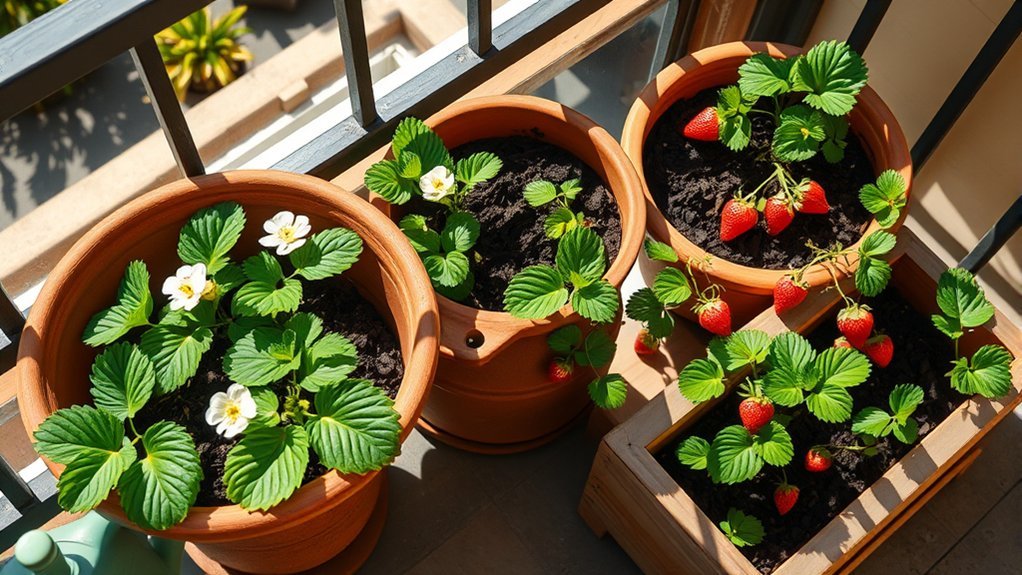
Choosing the right container and location is key to growing healthy strawberries in pots. When you choose a pot, opt for one at least 10-12 inches deep and wide with multiple drainage holes to prevent waterlogging. A plastic pot works well because it retains moisture without drying out too fast, unlike terra cotta.
Position pots where they’ll get full sun for 6-8 hours daily, which is vital for fruit production. Elevate containers to improve drainage and air circulation, helping keep roots healthy.
Since daily moisture is essential, use well-draining soil to avoid soggy roots. In container gardening, rotating pots occasionally guarantees your plants receive even sunlight and grow straight.
Choose the Best Potting Mix for Potted Strawberries
When you prepare the potting mix for your strawberries, focus on a blend that promotes drainage and nutrient availability. Use a high-quality potting mix made of compost, peat moss, and vermiculite to guarantee good drainage and a well-aerated potting mix.
Strawberry plants prefer slightly acidic soil with a pH of 5.5 to 6.5. Avoid garden soil since it hinders soil moisture regulation and increases disease risk. Add slow-release organic fertilizer to maintain nutrient availability throughout the season.
| Component | Purpose |
|---|---|
| Compost | Supplies nutrients |
| Peat moss | Retains moisture, acidic pH |
| Vermiculite | Enhances aeration and drainage |
| Organic fertilizer | Provides slow nutrient release |
| Well-aerated mix | Prevents root rot, promotes growth |
Plant Your Potted Strawberries With Correct Spacing
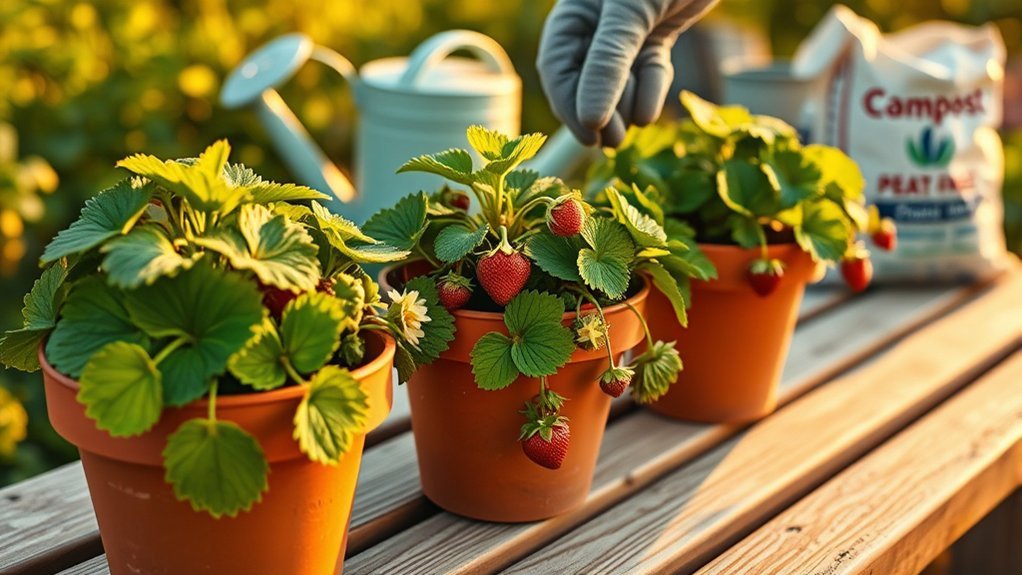
Plant at least three strawberry plants per square foot in your container, spacing them about 8 inches apart to avoid overcrowding. Proper spacing is essential for healthy growth, as it allows each plant’s root systems enough room to expand.
Plant at least three strawberries per square foot, spacing them 8 inches apart for healthy growth.
When you plant strawberries, choose containers at least 10-12 inches deep and wide to accommodate this spacing comfortably.
Keep the crowns of your strawberry plants just above the soil level to prevent rot and support strong root development.
Remember, June-bearing varieties often need more space than ever bearing or day-neutral varieties due to their size.
Water Potted Strawberries Consistently and Correctly
You’ll want to keep the soil in your strawberry pots evenly moist, so it’s a good idea to check it regularly.
When the top inch feels dry, it’s time to water. Usually, watering 2-3 times a week does the trick, but if it’s really hot outside, you might need to water more often.
Also, adding mulch, like straw, is a smart move.
It helps keep the moisture in and keeps the soil temperature steady between watering sessions. This way, your strawberries stay happy and healthy!
Maintain Even Soil Moisture
Watering potted strawberries two to three times a week keeps their soil consistently moist without overwatering.
To maintain even soil moisture, you need to water the plants regularly, ensuring the top inch of soil for strawberries dries out before each watering.
Using a well-draining potting mix is essential for container plants, as it prevents waterlogging while supporting healthy roots.
Monitor soil moisture closely, especially during warm weather when container plants dry out faster.
Adding a layer of mulch, like straw or pine needles, helps retain moisture and regulate soil temperature.
For consistent moisture levels, consider installing a drip irrigation system or water timer, but always check manually to confirm proper hydration.
This balanced approach keeps your strawberries thriving in pots.
Watering Frequency Tips
Keeping soil moisture steady sets the stage for proper watering frequency when caring for potted strawberries.
Since potting soil dries faster than garden soil, you need to monitor soil moisture carefully to maintain ideal moisture and avoid over-watering or under-watering.
Follow these tips:
- Water 2-3 times weekly, ensuring the top inch of soil is dry before watering again.
- During hot weather, water smaller amounts multiple times daily to prevent soil from drying out completely.
- Use water timers for convenience but check soil moisture manually for accuracy.
- Apply mulch to help retain moisture and regulate temperature, improving watering efficiency.
Mulching Benefits for Moisture
Although potted soil dries out faster than garden soil, applying a layer of mulch around your strawberries helps retain moisture and reduces how often you need to water.
Using mulch like straw creates a protective layer that cuts down water evaporation by up to 30%, maintaining steady soil moisture for your potted strawberries.
This layer of mulch also prevents weed growth, which competes for water and nutrients, ensuring your plants get what they need.
Furthermore, mulch regulates soil temperature, keeping roots cooler in summer and warmer in cooler weather, promoting healthy root growth.
Remember to check moisture beneath the mulch regularly. While it helps retain moisture, you still want to avoid overwatering or dryness.
Mulching makes watering needed less frequent and your strawberries healthier.
When and How to Fertilize Potted Strawberry Plants
You’ll want to use a balanced fertilizer every 4-6 weeks during the growing season to keep your potted strawberries healthy and productive.
Starting with a slow-release organic fertilizer at planting is a great idea because it helps provide steady nutrients early on.
Just make sure to fertilize only when the plants are actively growing.
And don’t forget to adjust your approach based on how your strawberries respond.
It’s all about paying attention to what your plants need!
Best Fertilizer Types
When your potted strawberry plants start showing new growth in early spring, it’s the perfect time to apply a balanced fertilizer like a 10-10-10 NPK formula. Choosing the best fertilizer types helps maintain healthy growth and boosts fruit production.
Here’s what you should do to fertilize potted strawberry plants effectively:
- Use slow-release organic fertilizers at planting to guarantee steady nutrient supply.
- Apply a balanced fertilizer, such as 10-10-10 NPK, every 4-6 weeks during the growing season.
- Watch for nutrient deficiencies. Yellowing leaves often signal a nitrogen shortage.
- Avoid over-fertilizing by strictly following application rates to prevent excessive leaf growth that reduces fruit production.
Fertilizing Timing Tips
Since potted strawberry plants need consistent nutrients to thrive, fertilize them every 3-4 weeks during the growing season while they’re actively producing new growth. This timing supports healthy fruit production by supplying essential nutrients your plants need.
Use a balanced, slow-release organic fertilizer to avoid over-fertilization, which can cause root burn. Always water your potted plants before fertilizing to protect their roots.
Keep an eye out for nutrient deficiencies. Yellowing or browning leaves often signal a lack of nitrogen or other key nutrients, so adjust your fertilizing schedule if needed.
As fall approaches, give your strawberries a final dose of fertilizer to strengthen them for winter dormancy and guarantee a strong start next season.
Sticking to these timing tips helps you maintain vigorous, fruitful potted strawberries year-round.
Application Methods Explained
Anyone caring for potted strawberries should apply fertilizer carefully to guarantee the plants absorb nutrients effectively without damage. Proper care guarantees your strawberry plants produce abundant fruit.
Here’s how to fertilize in a container:
- Apply slow-release organic fertilizer at planting to keep the soil nourished throughout the season.
- Use a balanced liquid fertilizer every 3-4 weeks during active growth for consistent fruit production.
- Water the plants before and after fertilizing to enhance nutrient absorption and prevent root burn.
- Monitor for nutrient deficiencies. Yellowing leaves may signal over-fertilization or lack of nitrogen, so adjust fertilizer accordingly.
Following these steps helps maintain healthy soil and supports your strawberries’ growth cycle, assuring a bountiful harvest in your container garden.
Manage Runners and Deadhead Flowers on Potted Strawberries
Although strawberry runners help propagate new plants, you’ll want to manage them carefully in pots to keep your plant focused on producing fruit. Regularly trim runners a few inches long to prevent rooting unless you want to propagate new plants separately.
Deadhead flowers as soon as they fade to boost new blooms and overall yield by redirecting energy resources toward fruit production. Monitor runners and flowers throughout the growing season to maintain plant health and maximize output.
| Task | Purpose |
|---|---|
| Manage runners | Focus energy on fruit |
| Trim runners | Prevent unwanted rooting |
| Propagate plants | Use runners in separate pots |
| Deadhead flowers | Encourage new blooms |
| Monitor growth | Maximize yield and health |
How to Winterize Your Potted Strawberries
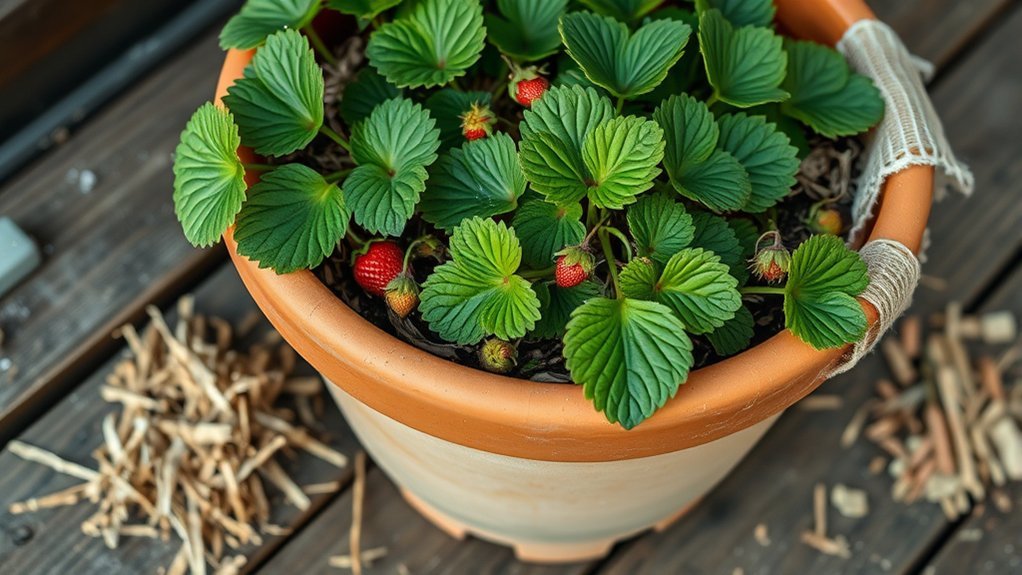
When temperatures start to drop, you’ll want to move your potted strawberries to a sheltered spot like an unheated garage or basement to protect them from freezing.
To properly winterize your potted strawberries, follow these steps:
- Place pots in a sheltered location such as an unheated garage to avoid frost damage.
- Insulate pots by wrapping them with bubble wrap or burlap and add a layer of mulch on top to retain heat and moisture.
- Water sparingly during dormancy, checking every few weeks to prevent soil from drying out.
- Monitor for pests, and if indoors, provide adequate light levels using grow lights to maintain healthy care.
These measures guarantee your strawberries survive winter and thrive next season.
Frequently Asked Questions
Can I Grow Strawberries in Hanging Baskets Instead of Pots?
Yes, you can grow strawberries in hanging baskets and enjoy several hanging basket benefits like better air circulation and space-saving.
For successful strawberry care, pick day-neutral varieties and guarantee proper plant spacing.
Choose well-draining soil and place your baskets where they get at least 6-8 hours of sunlight.
Follow watering tips to keep soil moist but not soggy.
Monitor temperature tolerance and pests to protect your plants, and time your harvest carefully for the best fruit.
How Do I Control Pests Naturally on Potted Strawberry Plants?
To control pests naturally on your potted strawberries, use beneficial insects like ladybugs and try companion planting to deter pests.
Apply organic insecticides such as neem oil spray, garlic spray, or soap spray to affected areas.
Sprinkle diatomaceous earth around the base to keep crawling insects away.
You can also set traps and practice crop rotation to disrupt pest cycles.
These natural pest control methods keep your plants healthy without harsh chemicals.
What Are the Signs of Nutrient Deficiency in Strawberry Plants?
Imagine your strawberry plant as a hungry traveler; nutrient deficiency symptoms are its cries for help.
You’ll notice yellowing leaves, stunted growth, and poor fruiting, like a traveler lost without direction.
Leaf wilting and dark spots hint at nutrient imbalance affecting root health.
Regular soil testing guides your fertilizer application, ensuring your plants thrive.
Catching these signs early keeps your strawberries happy and fruitful.
Can I Propagate New Plants From Potted Strawberry Runners?
Yes, you can propagate new plants from potted strawberry runners. For successful strawberry runner propagation, use the best potting mix with good drainage and apply rooting hormone to encourage root growth.
Maintain consistent watering frequency without overwatering, and provide adequate sunlight requirements.
Incorporate container gardening tips like pest management techniques, fertilizer options, and disease prevention methods to guarantee healthy new plants.
This potted strawberry care approach will help your runners thrive and establish quickly.
How Long Do Strawberry Plants Typically Produce Fruit in Pots?
Strawberry plants typically produce fruit in pots for about 3-5 years.
To maximize strawberry fruiting, focus on container gardening essentials like proper potting techniques, well-draining soil, and consistent watering needs.
Choose varieties suited for your climate and sunlight exposure, as this affects seasonal growth.
Good plant care, including fertilization and timely harvesting tips, guarantees healthy plants and better yields.
Keep an eye on soil requirements and replace plants when production declines.
Conclusion
Caring for your potted strawberries is like tending a small, precious garden within a garden. Each step, from choosing the perfect pot to winterizing, is a brushstroke in a living masterpiece.
By nurturing them with consistent water, proper feeding, and mindful pruning, you’re not just growing fruit. You’re cultivating patience and reward.
Keep tending with care, and your strawberries will flourish like a story unfolding—sweet, vibrant, and full of life.