

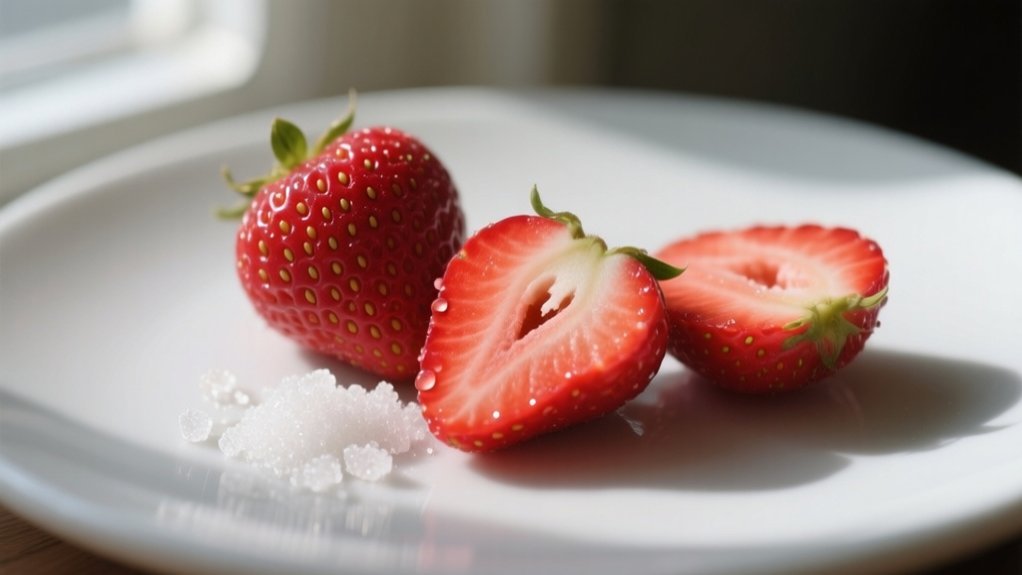
How Much Sugar Is in Strawberries?
You get about 7 grams of natural sugar in a cup of whole strawberries, making them a sweet but low-sugar fruit choice. Their fiber and antioxidants help slow sugar absorption, preventing spikes in your blood sugar levels.
Compared to fruits like bananas or grapes, strawberries have much less sugar. Plus, they offer vitamins and fiber that promote health. If you want to find out how to enjoy strawberries while managing sugar intake, there’s more to explore.
Sugar Content in a Serving of Strawberries
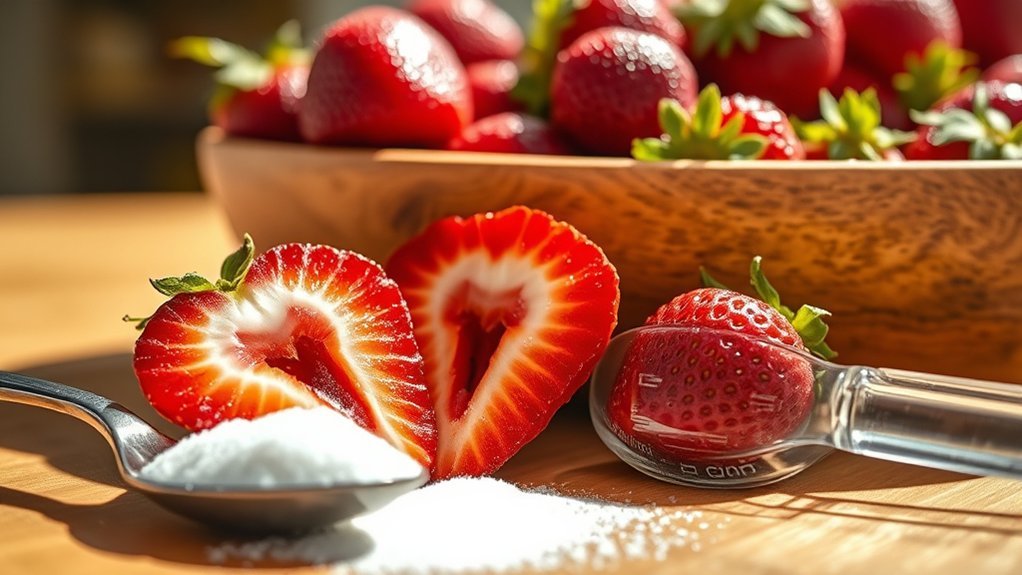
One cup of whole strawberries contains about 7 grams of sugar, making them a smart choice if you’re watching your sugar intake. When you enjoy a serving size of roughly eight berries, you’re getting a modest sugar amount that won’t spike your blood sugar levels.
That’s because strawberries have a low glycemic index of 40, meaning their sugar is absorbed slowly, helping you manage your blood sugar more effectively.
Plus, their fiber content works to slow sugar absorption even further, making them a balanced option.
Incorporating strawberries into your diet allows you to enjoy sweetness without overloading on sugar. This supports your health goals while still satisfying your craving for something naturally sweet.
How Strawberries Compare to Other Fruits in Sugar Levels
You might be surprised to learn that strawberries have about half the sugar of a banana and much less than grapes or mangoes.
So, if you’re watching your sugar intake, strawberries offer a sweet option without the high sugar load found in many fruits.
And when you compare them to other berries, you’ll see they fall on the lower end of the sugar spectrum.
That makes them a smart choice for a healthy diet.
Sugar Content Comparison
How do strawberries stack up against other fruits when it comes to sugar content? Strawberries contain about 7 grams of sugar per cup, which is relatively low compared to fruits like mangoes that pack 46 grams per fruit.
If you compare them to moderate sugar fruits, strawberries have less sugar than bananas (14 grams per medium) and pears (17 grams per medium).
Among berries, strawberries fall on the lower end, with raspberries containing even less sugar at 5 grams per cup.
However, strawberries have more sugar than low-sugar fruits like avocados, which contain just 1.33 grams per whole fruit.
Low Versus High Sugar
Although many fruits contain high levels of sugar, strawberries stand out by offering a deliciously sweet flavor with just about 7 grams of sugar per cup, making them a smart choice if you want to keep your sugar intake in check.
Compared to a medium banana with 14 grams and a pear with 17 grams of sugar, strawberries are clearly a lower sugar option.
Fruits like mangoes pack a hefty 46 grams of sugar, while grapes have 23 grams per cup, highlighting how strawberries keep sugar moderate.
Even raspberries, with just 5 grams of sugar per cup, are close competitors, but strawberries still provide a bit more sweetness.
Choosing strawberries helps you enjoy fruit without overloading on sugar.
How Natural Sugars in Strawberries Affect Your Health
Because strawberries contain natural sugars paired with fiber and antioxidants, they offer a sweet treat that won’t cause sharp blood sugar spikes. With about 7 grams of sugar per cup, strawberries are a low-sugar fruit option compared to many others.
Their glycemic index score of 40 means they’re less likely to trigger rapid sugar increases in your bloodstream. When you eat strawberries regularly, the antioxidants and vitamin C they provide support your metabolic health and may help reduce risks of chronic conditions like type 2 diabetes.
This balance of sugar and beneficial nutrients means you can enjoy strawberries as part of a healthy diet without worrying about negative effects on your blood sugar levels or overall health.
How Fiber in Strawberries Influences Sugar Absorption
When you eat strawberries, their fiber content slows sugar absorption into your bloodstream, helping to keep your blood sugar levels steady.
With 3.32 grams of dietary fiber per serving, strawberries have a low net digestible carb count, under 6 grams per 100 grams, making them ideal if you’re managing sugar intake.
The fiber works by regulating how quickly sugar enters your system, preventing sudden spikes that can leave you feeling drained. This gradual release of sugar not only provides a steady energy boost but also enhances satiety, so you’re less likely to overeat.
Plus, eating fiber-rich foods like strawberries supports better metabolic health, including improved blood sugar control and lower insulin levels.
Vitamins and Nutrients That Accompany Strawberry Sugars

While strawberries contain about 7 grams of natural sugar per cup, they also deliver a powerful mix of vitamins and nutrients that benefit your health. These sugars come packaged with essential vitamins like vitamin C and minerals such as manganese.
Plus, strawberries provide dietary fiber and antioxidants that complement their sugar content.
| Nutrient | Amount per Cup |
|---|---|
| Vitamin C | 85 mg (160% DV) |
| Manganese | 0.64 mg |
| Dietary Fiber | 2 grams |
| Water | 91% |
Together, these vitamins and nutrients support your metabolism, immune system, and digestive health. So, when you enjoy strawberries, you’re not just getting sugar. You’re fueling your body with valuable nutrients.
How Strawberries Impact Blood Sugar and Insulin Levels
Although strawberries contain natural sugars, they’ve a low glycemic index of 40, meaning they cause only a slight rise in your blood sugar levels. This makes them a smart choice if you want to keep your blood sugar stable.
Here’s how strawberries impact your blood sugar and insulin levels:
- Their fiber content slows sugar absorption, preventing sharp blood sugar spikes.
- Regularly eating strawberries can help improve blood sugar control and reduce insulin levels, especially if you have type 2 diabetes.
- Antioxidants in strawberries may lower inflammation and oxidative stress, supporting better blood sugar management.
Health Benefits of Strawberries Beyond Their Sugar Content
You mightn’t realize it, but strawberries pack a powerful antioxidant punch that helps protect your cells from damage. Pretty cool, right?
Eating them regularly can support your heart by lowering blood pressure and improving cholesterol levels.
Antioxidant Properties
Because strawberries are packed with antioxidants like anthocyanins, they offer health benefits that go far beyond their natural sugar content.
These antioxidants help protect your body from oxidative stress and inflammation.
Here are three key benefits you’ll get from these powerful compounds:
- They may improve insulin sensitivity, aiding blood sugar management, especially if you have type 2 diabetes.
- The high vitamin C content boosts your immune system and enhances the antioxidant effects.
- Compounds like ellagic acid and procyanidins help combat chronic diseases by reducing cellular damage.
Cardiovascular Health Benefits
Strawberries do more than just support your immune system. They also play a significant role in promoting heart health. Despite their natural sugar content, they help reduce oxidative stress and inflammation, thanks to antioxidants and phytonutrients.
Their potassium balances blood pressure, and fiber lowers cholesterol, reducing heart disease risk. Plus, vitamin C and folate in strawberries keep your blood vessels healthy.
| Benefit | Impact on Heart Health |
|---|---|
| Antioxidants | Reduce oxidative stress |
| Potassium | Regulates blood pressure |
| Fiber | Lowers cholesterol |
| Vitamin C & Folate | Maintains healthy blood vessels |
Including strawberries in your diet helps lower the risk of heart-related conditions without worrying about their natural sugar.
Debunking Sugar and Diabetes Myths About Strawberries
Although some people worry about fruit sugar affecting diabetes, you can rest assured that strawberries are a safe and smart choice. Their sugar content is low, only about 7 grams per cup, making them ideal for managing sugar intake.
Plus, strawberries have a low glycemic index (GI) of 40, so they won’t spike your blood sugar levels.
Here’s why strawberries bust common diabetes myths:
- Their fiber and antioxidants may actually help lower blood sugar and reduce type 2 diabetes risk.
- The vitamin C in strawberries supports overall health, which is essential for diabetes management.
- Combining strawberries with proteins or healthy fats helps control sugar absorption.
Strawberry Allergies: Symptoms and Causes (Not Sugar-Related)
If you notice itching, swelling, or hives after eating strawberries, you might be experiencing an allergy.
It’s important to know that these reactions aren’t caused by the sugar in the fruit. Instead, they’re triggered by specific proteins in strawberries or sometimes even by pesticide residues on the fruit.
Understanding these symptoms and what causes them can really help you manage your allergy more effectively.
Common Allergy Symptoms
When you experience itching or tingling in your mouth after eating strawberries, it could signal an allergy rather than a reaction to sugar.
Unlike a sugar sensitivity, strawberry allergies involve your immune system reacting to certain proteins, not the fruit’s natural sugar content.
Common symptoms include:
- Hives and swelling of the lips, face, tongue, or throat
- Headaches and general discomfort
- Severe reactions causing breathing difficulties
These symptoms can vary in intensity, but if you notice any of these signs after eating strawberries, it’s important to take them seriously.
Curiously, colorless or white strawberries tend to cause fewer allergic reactions than red ones.
If you suspect a strawberry allergy, consult your healthcare provider to confirm and discuss safe options.
Allergy Causes Explained
Since strawberry allergies stem from your immune system reacting to specific proteins rather than the fruit’s sugar, understanding the causes helps you manage symptoms effectively.
These proteins, linked to strawberries’ anthocyanins, can trigger itching, hives, or even severe breathing issues.
Notably, you might tolerate white or colorless strawberries better because they contain fewer of these allergenic proteins.
Also, pesticide residues on strawberries can worsen reactions, so washing them thoroughly is essential.
Be aware that cross-reactivity with other fruits can increase your risk, especially if you have other allergies.
How to Enjoy Strawberries Without Overloading on Sugar
Although strawberries naturally contain sugar, you can enjoy their sweet flavor without overdoing it by controlling your portion size and pairing them with protein-rich foods like yogurt or cottage cheese.
Keeping your sugar intake moderate is easier than you think.
Here are three tips to enjoy strawberries without overloading on sugar:
- Limit your serving to about eight berries, which gives you plenty of flavor and nutrients with minimal sugar.
- Pair strawberries with protein-rich foods such as yogurt or cottage cheese to slow sugar absorption and boost fullness.
- Freeze strawberries for a revitalizing snack that helps with portion control, preventing you from eating too much sugar at once.
Pairing Strawberries With Other Foods to Balance Sugar Intake
Balancing the natural sweetness of strawberries with other foods can help you manage your sugar intake more effectively. Since strawberries contain about 7 grams of sugar per 100 grams, pairing them with protein-rich foods like goat cheese or cottage cheese slows sugar absorption and steadies blood sugar levels.
You can also add sliced strawberries to whole-grain cereals or oatmeal to boost fiber, which moderates the sugar’s impact. Blending strawberries into smoothies with spinach or avocado reduces the glycemic load, while mixing them with nuts such as almonds or walnuts provides healthy fats and protein that further slow digestion.
Finally, combining strawberries with low-fat or Greek yogurt offers protein and probiotics, creating a balanced snack that offsets the grams of sugar naturally present in the fruit.
Tips for Choosing and Preparing Strawberries to Maximize Health
When selecting strawberries, look for ones that are bright red and firm, as they offer the best flavor and nutritional value. These berries contain about 7 grams of sugar per cup, making them a naturally sweet treat.
To maximize health benefits, follow these tips:
- Wash strawberries thoroughly to remove pesticide residues and guarantee safety.
- Slice strawberries and add them to low-fat yogurt or salads to boost vitamin C and fiber intake.
- Pair strawberries with protein-rich foods like nuts or cheese to slow sugar absorption and help balance blood sugar levels.
Remember to store strawberries in the refrigerator and eat them within a few days to preserve freshness and nutrients.
This way, you enjoy their natural sweetness while keeping sugar intake in check.
Frequently Asked Questions
Can Strawberries Be Frozen Without Losing Sweetness?
Yes, you can freeze strawberries without losing their frozen sweetness. When you freeze them properly, washing, hulling, and spreading them out individually first, you lock in their natural sugars and flavor.
Even after months in the freezer, they stay sweet and tasty. When you thaw them, the texture softens, but their sweetness remains intact, making frozen strawberries perfect for smoothies or desserts whenever you want a burst of fresh flavor.
How Do Strawberries’ Sugar Levels Change When Dried?
When strawberries are dried, their sugar levels concentrate, so you’re getting much more sugar per serving than fresh ones.
The drying process removes water, making the natural sugar denser.
Plus, many dried strawberries have added sugar to enhance flavor, which boosts the dried sugar content even more.
Are There Strawberry Varieties With Less Sugar?
You won’t find a strawberry variety that’s practically sugar-free. No magical Sugar Varieties exist that taste like grass!
But if you’re hunting for slightly less sweet berries, smaller or less ripe strawberries have a bit less sugar.
The differences are subtle though. Don’t expect a dramatic drop.
Does Cooking Strawberries Increase Their Sugar Content?
Cooking strawberries doesn’t increase their sugar content; the cooking effects only change how you perceive sweetness.
When you cook strawberries, water evaporates, concentrating their natural sugars and intensifying flavor, but the actual sugar amount stays the same.
So, you’re not adding sugar by cooking; it just tastes sweeter.
Just watch out for extra sugar added during cooking, which can raise the total sugar in your dish considerably.
How Long Do Strawberries Keep Their Natural Sugars After Picking?
You can expect strawberries to keep their natural sugars for about 1 to 3 days after picking if you store them properly.
Natural degradation causes slight changes in sugar levels over time, but the difference is minimal within those first days.
To enjoy their best sweetness, keep strawberries cool and dry, and don’t wash them until just before eating.
This way, you’ll savor their flavor before natural degradation affects their sugars.
Conclusion
You might be surprised to learn that a cup of strawberries contains just about 7 grams of sugar, much lower than many other fruits. This means you can enjoy their sweet flavor without worrying about a sugar overload.
Plus, the fiber in strawberries helps slow sugar absorption, keeping your energy steady. So go ahead, add strawberries to your meals. They’re a delicious, nutritious way to satisfy your sweet tooth while supporting your health.