
How Much Sugar Is in a Cup of Strawberries?
You’ll find about 7 grams of natural sugar in a cup of sliced strawberries, making them a moderately sweet fruit you can enjoy without overloading on sugar. These berries also offer vitamins, fiber, and antioxidants that support your health and help manage blood sugar.
The sugar content can vary based on ripeness and variety. If you want to explore how strawberries compare to other fruits and fit into a low-sugar diet, keep going.
How Much Sugar Is in a Cup of Strawberries?
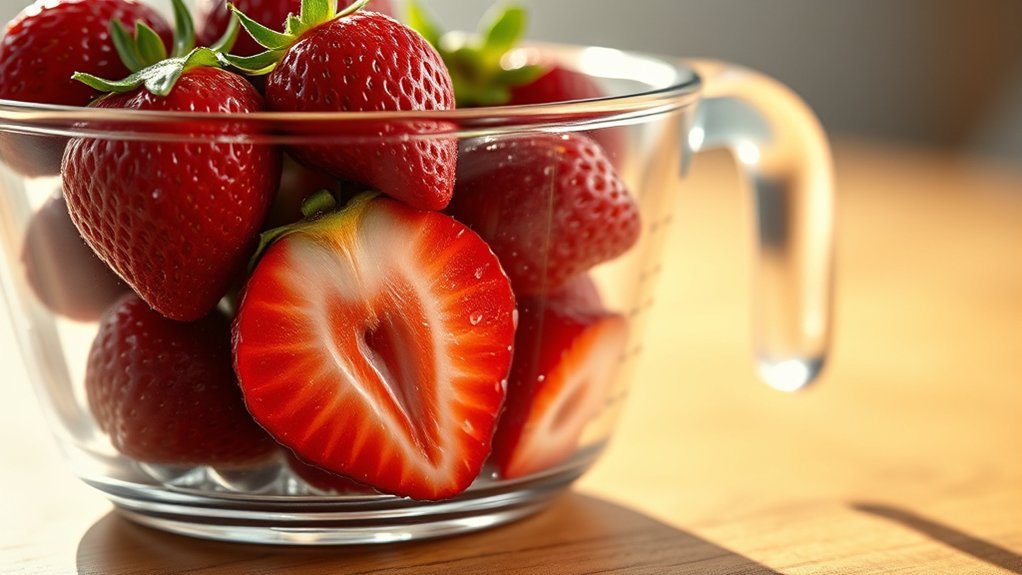
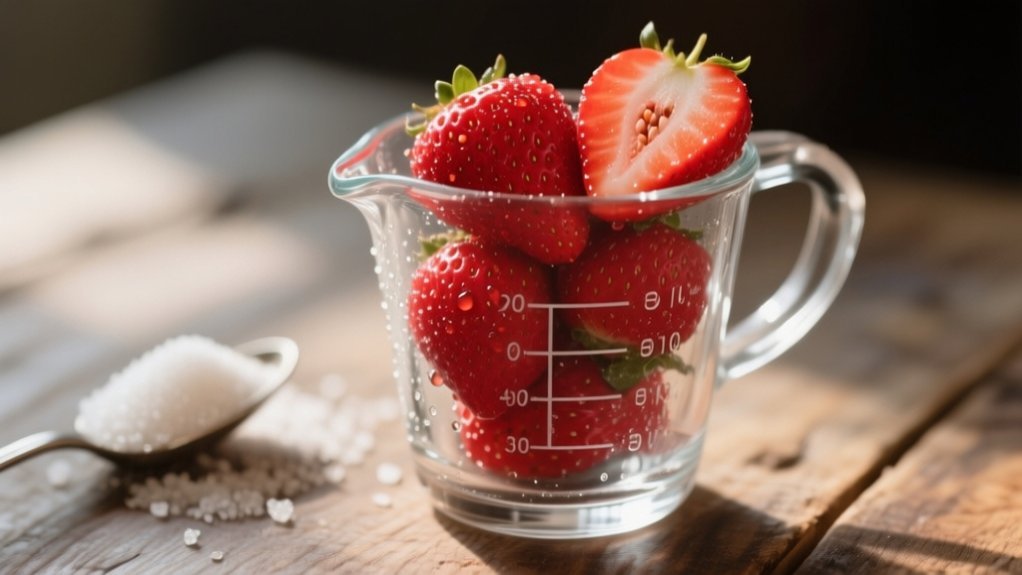
A cup of sliced strawberries, weighing about 144 grams, contains roughly 7 grams of sugar. You might be surprised that strawberries have a moderate sugar level, especially since they taste so sweet.
But this amount is quite reasonable compared to many other fruits, making strawberries a smart choice if you’re watching your sugar intake.
Besides sugar, strawberries pack a punch with vitamin C, providing you with essential antioxidants that support your immune system.
Strawberries are rich in vitamin C and antioxidants that help strengthen your immune system.
They’re also low in calories, only about 53 calories per cup, so you get plenty of nutrients without the guilt.
When you enjoy strawberries, you’re not just getting natural sweetness but also fiber and beneficial phytonutrients that contribute to overall health.
It’s a great way to satisfy your sweet tooth healthily.
How Does Strawberry Sugar Compare to Other Fruits?
When you compare strawberries to other fruits, you’ll see their sugar content falls somewhere in the middle.
They’re similar to blackberries and have a bit less sugar than grapefruit.
If you’re aiming for fruits with lower sugar, raspberries are a solid pick—they actually have even less sugar per cup.
Knowing these differences makes it easier to choose fruits that match your sugar goals without giving up on taste.
Sugar Levels In Fruits
Although strawberries contain about 7 grams of sugar per cup, they fall into the moderate sugar category compared to other fruits. When managing your dietary balance, understanding sugar absorption and fruit glycemic impact helps you make smarter choices.
Strawberries offer a moderate glycemic load, meaning they won’t spike your blood sugar as much as high-sugar fruits.
Low sugar fruits like raspberries and cranberries have 4-5 grams of sugar per cup, offering gentler sugar absorption. Fruits like blackberries and grapefruit share similar sugar levels with strawberries, fitting well in a balanced diet.
High sugar fruits like watermelon and bananas contain more sugar, which can affect fruit glycemic response more drastically.
This knowledge helps you balance flavor and sugar intake effectively.
Low Sugar Fruit Options
Since strawberries contain about 7 grams of sugar per cup, they sit comfortably in the moderate sugar fruit category. If you’re seeking low sugar fruit options for better fruit health or diet choices, consider apricots or cranberries. These fruits contain considerably less sugar but still offer great taste and nutrition.
| Fruit | Sugar Content (grams) | Serving Size |
|---|---|---|
| Apricot | 3.5 | 1 fruit |
| Cranberries | 4 | 1 cup |
| Strawberries | 7 | 1 cup (halved) |
| Blackberries | 7 | 1 cup |
Choosing low sugar fruits like apricots and cranberries can help you manage sugar intake without sacrificing flavor, supporting your fruit health goals effectively.
Comparing Moderate Sugar Fruits
Sugar content varies markedly among moderate sugar fruits, and understanding these differences can help you make informed choices.
Strawberries contain about 7 grams of sugar per cup, a moderate amount that balances fruit sweetness and manageable sugar absorption.
Compared to strawberries, blackberries have a similar sugar level, while grapefruit and figs are slightly higher, each with about 8 grams.
Oranges, however, can range greatly, sometimes doubling strawberry sugar content.
Keeping these variations in mind supports dietary moderation, especially if you’re monitoring sugar intake.
- Strawberries and blackberries: ~7 grams sugar per cup, mild sweetness
- Grapefruit and figs: ~8 grams sugar, slightly sweeter
- Oranges: 9-17 grams sugar, higher sugar absorption
Choosing fruits wisely helps you enjoy natural sweetness without overloading on sugar.
Why Does Strawberry Sugar Vary?
You’ll notice strawberry sugar levels change depending on how ripe the fruit is when you pick it.
And it’s not just ripeness that matters—growing conditions like sunlight and soil quality also play a big role in how sweet the strawberries turn out.
On top of that, different strawberry varieties naturally contain different amounts of sugar, so some just taste sweeter than others.
Ripeness Impact On Sugar
Although many factors influence strawberry sweetness, ripeness plays a key role in how much sugar the fruit contains. As strawberry ripeness increases, starches in the berry convert to sugars, boosting the fruit’s sugar content and enhancing its flavor profile.
When you pick fully ripe strawberries, you’re getting the sweetest, most flavorful berries, with sugar levels noticeably higher than in under-ripe ones.
Here’s why ripeness matters to sugar content:
- Sugar conversion intensifies as the berry matures, increasing sweetness
- Fully ripe strawberries offer a richer flavor profile than less ripe ones
- Selecting ripe berries guarantees you enjoy maximum natural sugar
Growing Conditions Influence
Besides ripeness, several growing conditions play a big role in determining how sweet strawberries turn out.
You’ll notice soil quality effects are significant; nutrient-rich soils provide essential minerals that help strawberries develop better flavor and higher sugar levels.
The climate impact is another factor. Strawberries grown in warmer areas tend to be sweeter because increased sunlight boosts photosynthesis, speeding up ripening and sugar production.
Also, harvest timing matters a lot. Picking strawberries at their peak ripeness guarantees they’ve the highest sugar concentration, while harvesting too early results in less sweetness.
Strawberry Variety Differences
When you compare different strawberry varieties, you’ll notice their sugar levels can vary considerably, which directly affects how sweet they taste. This variation largely comes from strawberry breeding, which aims to enhance specific flavor profiles, including sweetness.
Some varieties naturally carry more sugar, making them taste sweeter than others. Furthermore, cultivation techniques like irrigation and fertilizer use influence sugar concentration, altering sweetness even within the same variety. Environmental factors also play a role, but the variety you choose is key to sugar content.
Consider these points:
- Strawberry breeding focuses on developing sweeter, more flavorful varieties.
- Flavor profiles differ widely, from tart to very sweet strawberries.
- Cultivation techniques impact sugar levels and overall taste quality.
Understanding these differences helps you pick the perfect strawberry for your sweet tooth.
How Does Strawberry Sugar Affect Blood Sugar?
Because strawberries contain natural sugars with a low glycemic index, they cause a slower rise in your blood sugar levels compared to many other fruits. This strawberry glycemic index means your body absorbs sugars gradually, preventing sharp spikes that can challenge blood sugar control.
Plus, the fiber content effects in strawberries help slow digestion and sugar absorption, further stabilizing your blood glucose.
Beyond this, strawberries offer insulin sensitivity benefits thanks to their vitamin C and phytonutrients, which may improve how your body responds to insulin.
However, you should still monitor portion sizes because eating large amounts can increase sugar intake enough to impact blood sugar levels.
Are Strawberries Suitable for a Low-Sugar Diet?
If you’re watching your sugar intake, strawberries can be a smart choice since they contain less sugar than many other fruits.
Plus, their fiber and vitamin C boost not only support your health but also help manage blood sugar levels.
Sugar Content Comparison
One cup of halved strawberries contains about 7 grams of sugar, placing them at the higher end of low-sugar fruits like raspberries and blackberries, which range from 5 to 7 grams per cup.
When considering strawberry sugar and fruit sweetness, strawberries offer a moderate amount that fits well within many dietary considerations.
If you’re managing your sugar intake, strawberries provide a sweet flavor without overwhelming sugar content.
Here’s why strawberries can suit a low-sugar diet:
They balance fruit sweetness with moderate sugar levels.
Their sugar content is comparable to other low-sugar berries.
They support dietary goals without excessive sugar spikes.
Nutritional Benefits Explained
Strawberries offer more than just a moderate sugar content; they bring valuable nutrients that make them a smart choice for a low-sugar diet. With about 7 grams of sugar per cup, they keep your intake in check while delivering impressive health benefits.
You’ll get fiber benefits too, as a cup provides over 3 grams of dietary fiber, which helps regulate blood sugar and supports digestion.
Plus, strawberries are rich in vitamin C, packing 85 mg per serving to boost your immune system and skin health.
Don’t forget strawberry antioxidants, which fight inflammation and protect your cells.
These combined nutrients make strawberries a nutrient-dense option that fits well within low-sugar eating plans without sacrificing flavor or nutrition.
Low-Sugar Diet Tips
When managing a low-sugar diet, choosing fruits that satisfy your sweet tooth without spiking blood sugar is key. Strawberries fit perfectly. They contain about 7 grams of sugar per cup and offer fiber to help regulate blood sugar levels.
Plus, their low calorie count lets you enjoy them guilt-free. You can easily include strawberries in your meals in creative ways that keep sugar intake low.
Try these ideas:
Whip up low sugar smoothies blending strawberries with unsweetened almond milk.
Create creative strawberry salads mixing fresh berries with greens and nuts.
Opt for strawberry dessert alternatives like berry parfaits with Greek yogurt.
These options help you enjoy strawberries while sticking to your low-sugar diet effectively.
Health Benefits of Strawberry Nutrients
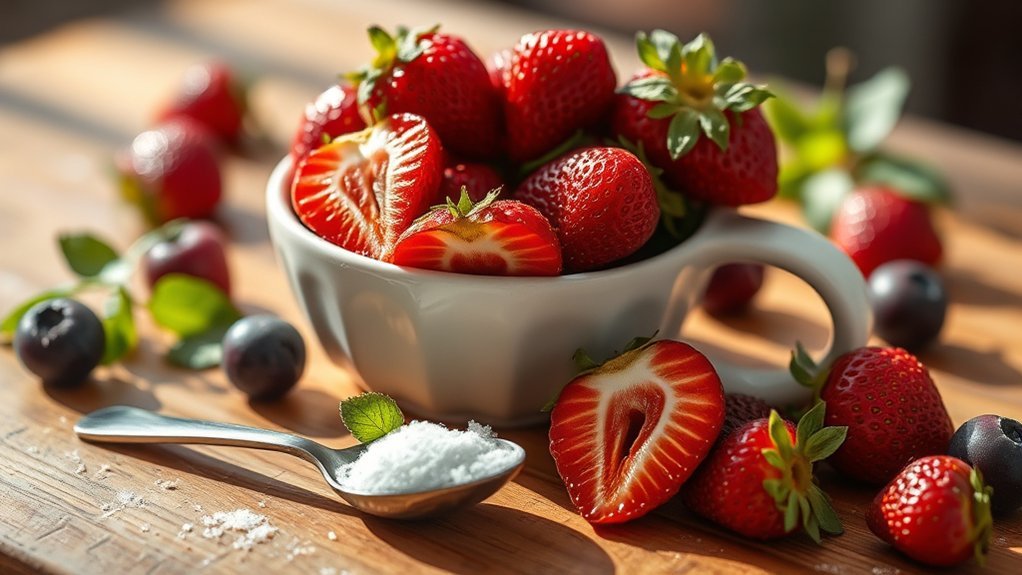
Although they contain a moderate amount of sugar, strawberries deliver impressive health benefits thanks to their rich nutrient profile. You get a powerful dose of vitamin C, about 85 mg per cup, which boosts your immune system and supports healthy skin.
Plus, strawberry antioxidants fight inflammation and may help reduce the risk of chronic diseases. The fiber benefits are significant too; with around 3.32 grams per cup, fiber helps digestion and keeps you feeling full longer.
Eating strawberries regularly can also support heart health because of their potassium content, which helps maintain normal blood pressure.
How Can You Add Strawberries to Your Diet?
If you want to enjoy a tasty and nutritious boost, adding strawberries to your diet is a simple and delicious choice. Their moderate sugar content makes them a great option for various meals and snacks. You can easily incorporate strawberries by trying out creative ideas that suit your taste.
Blend strawberries into smoothie recipes for a revitalizing, nutrient-rich drink. Mix sliced strawberries into yogurt combinations to enhance flavor and add natural sweetness.
Sprinkle strawberries as salad toppings along with leafy greens and nuts for a colorful, healthy meal.
These easy methods help you enjoy strawberries regularly without much effort, making your diet more vibrant and healthful.
How to Prepare Strawberries Without Adding Sugar
Since strawberries have a natural sweetness, you don’t need to add sugar to enjoy their flavor. Using simple strawberry preparation techniques, you can enhance this natural sweetness and savor them healthily.
Start by washing strawberries thoroughly under cold water. Then, slice them to boost their flavor and make them easy to eat or mix into dishes. Pair strawberries with other naturally sweet fruits or healthy strawberry pairings like Greek yogurt or oatmeal for a nutritious snack or breakfast.
| Preparation Step | Purpose |
|---|---|
| Wash thoroughly | Remove dirt and pesticides |
| Slice strawberries | Enhance natural sweetness |
| Pair with bananas/apples | Create sweet fruit salads |
| Use as topping | Add flavor without sugar |
Try these techniques to enjoy strawberries at their best!
When Are Strawberries in Season for Peak Sweetness?
You’ll find strawberries at their sweetest and most flavorful between April and June, when they reach peak ripeness in most parts of the United States.
During this time, strawberry varieties burst with natural sugars, making them perfect for your favorite seasonal recipes.
These fully red, firm berries have a sweet aroma that signals their readiness to be enjoyed fresh or cooked.
To make the most of strawberries in season, choose strawberry varieties known for sweetness and firmness.
Use them in early seasonal recipes like smoothies, salads, or desserts.
Harvest or buy strawberries at peak ripeness to enjoy maximum flavor and nutritional benefits.
Enjoying strawberries in their prime lets you savor their natural sweetness without added sugar.
How to Choose and Store Strawberries to Keep Them Fresh
When choosing strawberries, pick fully red, firm berries without blemishes or mold to guarantee the best flavor and freshness. Use these strawberry selection tips to get the sweetest, juiciest fruit.
For proper storage methods, keep unwashed strawberries in the refrigerator inside a breathable container to allow air circulation and prevent spoilage. If you wash them before storing, make sure they’re completely dry to avoid mold growth.
To extend freshness duration, consume strawberries within a few days of purchase. For longer storage, freeze them by washing, hulling, and freezing individually on a baking sheet before placing in an airtight container.
Following these steps will help you enjoy fresh, delicious strawberries longer and reduce waste.
Frequently Asked Questions
Can Strawberries Cause Allergic Reactions?
Yes, strawberries can cause allergic reactions. If you have a strawberry allergy, you might experience symptoms like hives, itching, or swelling.
Because of cross-reactivity with other foods, especially if you’re allergic to birch pollen or related fruits, your body might react similarly to strawberries.
Managing fruit allergies means you should consult an allergist before eating strawberries or new fruits to avoid severe reactions and keep yourself safe.
Do Frozen Strawberries Have the Same Sugar Content?
Think of frozen strawberries as a snapshot of summer sweetness, perfectly preserved in time.
When you compare fresh vs frozen, you’ll find their sugar content comparison is nearly identical. Both pack about 7 grams of naturally occurring sugar per cup.
So, frozen strawberry nutrition holds steady without losing its sweetness.
You won’t be sacrificing flavor or health benefits by choosing frozen over fresh, making them equally delightful for your snacks or recipes.
How Do Strawberries Impact Dental Health?
Strawberries help with cavity prevention by offering natural sweetness without excessive sugar, making them a smart snack for oral hygiene.
The fiber in strawberries cleans your teeth as you chew, while their vitamin C strengthens your gums.
Plus, their natural acidity reduces plaque buildup.
Just remember to rinse your mouth afterward to protect enamel, and you’ll enjoy a tasty fruit that supports your dental health effectively.
Can Strawberries Be Used in Diabetic-Friendly Recipes?
Imagine a bowl brimming with juicy, vibrant strawberries. They’re perfect for your diabetic meal planning. You can easily include these sweet gems in low sugar desserts, savoring their natural flavor without guilt.
By practicing fruit portion control, you keep your sugar intake moderate while enjoying their health benefits.
Strawberries add color and nutrition to your meals, making them a smart, delicious choice for managing diabetes effectively.
Are Organic Strawberries Lower in Sugar Than Conventional Ones?
No, organic strawberries aren’t lower in sugar than conventional ones. When you look at the sugar content comparison, both types have roughly the same amount of sugar, about 7 grams per cup.
Organic farming practices influence factors like pesticide use and antioxidant levels, but they don’t greatly change sugar content.
If you’re focusing on nutritional benefits, organic strawberries might offer more antioxidants, but their sweetness stays pretty consistent with conventional berries.
Conclusion
As you savor a juicy cup of strawberries, picture their natural sweetness dancing on your tongue. It’s light, invigorating, and just right. Compared to other fruits, their sugar content stays modest, making them a perfect treat for your low-sugar goals.
By choosing ripe, vibrant berries and enjoying them fresh or simply sliced, you embrace both flavor and health. Let strawberries brighten your plate, bringing a burst of summer’s sweetness whenever you crave it.