
How Much Protein Is in a Strawberry?
You’ll get about 0.1 grams of protein from a medium-sized strawberry, so while it’s not a major protein source, it’s still a healthy addition to your diet. Strawberries have small amounts of essential amino acids, but their real benefits come from vitamins, antioxidants, and fiber.
They pair well with protein-rich foods like Greek yogurt or smoothies to boost your intake. Keep exploring, and you’ll find out how strawberries uniquely support your nutrition and muscle health.
How Much Protein Is in a Single Strawberry?

Although strawberries aren’t known for their protein content, you’ll find about 0.1 grams of protein in a single medium-sized strawberry. When you consider nutrition, this amount is quite small, especially since strawberries are mostly water and carbohydrates.
In fact, protein makes up only a tiny fraction of their overall composition. But don’t let the low protein fool you. Strawberries offer plenty of vitamins, minerals, and antioxidants that make them a healthy choice.
If you’re counting protein, strawberries won’t be your main source, but they’re great for adding flavor and nutrition to your diet.
Comparing Strawberry Protein to Other Fruits
You’ll find that strawberries have less protein than fruits like bananas and avocados.
But they do have a bit more protein compared to watermelon.
When it comes to oranges and strawberries, they’re pretty similar in protein content.
That said, none of these fruits are major sources of protein.
Knowing these differences can help you pick fruits that fit your nutritional needs better.
Protein Content Comparison
When comparing protein content, strawberries provide about 0.7 grams per 100 grams, which is modest next to fruits like bananas and oranges.
Bananas offer around 1.1 grams, slightly more protein than strawberries, while oranges fall in between with about 0.9 grams per 100 grams.
Apples contain less protein, roughly 0.3 grams per 100 grams, making strawberries a better source in that comparison.
Although strawberries aren’t a significant protein source, their health benefits shine through other nutrients like vitamin C and antioxidants.
Understanding this protein content comparison helps you see that while strawberries contribute some protein, they’re best enjoyed alongside a variety of fruits to balance your diet’s overall protein and nutrient intake.
Nutritional Protein Differences
While strawberries offer about 0.7 grams of protein per 100 grams, you’ll find that some fruits provide more substantial amounts. Guavas, for example, pack around 2.6 grams of protein, and blackberries offer 1.4 grams.
Though strawberries don’t rank high in protein, they shine with vitamin C and antioxidants, making them an excellent complement to your diet. Pairing them with protein-rich foods like yogurt can boost your overall intake.
| Fruit | Protein (g/100g) |
|---|---|
| Guava | 2.6 |
| Blackberry | 1.4 |
| Strawberry | 0.7 |
Protein Quality and Amino Acids in Strawberries
You might be curious about how the protein in strawberries measures up in terms of quality.
Well, strawberries do have amino acids, which are the building blocks of protein.
But here’s the thing—they don’t contain all the essential amino acids your body needs.
Plus, the protein in strawberries isn’t as easily digested as the protein you get from animal sources.
Amino Acid Profile
Although strawberries contain about 0.7 grams of protein per 100 grams, their amino acid profile is limited compared to animal-based sources. You’ll find essential amino acids in strawberries, but they’re present in relatively low amounts.
Since strawberries are a fruit, not a primary protein source, their protein quality has a lower biological value. This means they lack certain essential amino acids needed for optimal well-being.
However, including strawberries in your diet still contributes to your overall protein intake. Plus, they offer valuable antioxidants and vitamins that support your general health.
Protein Digestibility Factors
Because strawberries contain only about 0.7 grams of protein per 100 grams and lack some essential amino acids, their protein digestibility and overall quality are limited compared to animal-based sources. You should know that while strawberries offer some amino acids, their protein isn’t complete or highly digestible. This means your body can’t utilize it as efficiently.
They’re better valued for vitamins and antioxidants than protein nutrition. Here’s a quick comparison of protein quality factors:
| Factor | Strawberries | Animal Protein |
|---|---|---|
| Protein Content | 0.7 g/100 g | 20-30 g/100 g |
| Amino Acid Profile | Incomplete | Complete |
| Digestibility | Low | High |
Essential Amino Acids
While strawberries don’t provide a complete protein profile, they do contain small amounts of important amino acids like leucine, isoleucine, and valine.
These essential amino acids are crucial for muscle repair and growth, though strawberries supply only about 0.7 grams of protein per 100 grams, making them a low-protein fruit.
You shouldn’t rely on strawberries as a primary protein source, but they can complement protein-rich foods in your diet.
Their main nutritional value lies in vitamins, minerals, and antioxidants in strawberries, which support overall health.
Does Strawberry Protein Contribute to Muscle Building?

Even though strawberries contain some protein, they don’t provide enough or the right types of amino acids to considerably support muscle building. Here’s why strawberry protein alone won’t cut it for muscle recovery and growth:
- Strawberries have about 0.7 grams of protein per 100 grams, which is quite low compared to meat or legumes.
- They lack essential amino acids critical for muscle repair and building.
- Their primary benefits come from vitamins, antioxidants, and fiber, which support overall health rather than muscle development.
- While strawberries alone don’t build muscle, including them in your diet can aid recovery thanks to their anti-inflammatory properties.
To maximize muscle building, you’ll want to pair strawberries with higher-protein foods for a complete recovery meal.
How Strawberries Complement Protein-Rich Foods
You can boost your protein intake by pairing strawberries with protein-rich foods like yogurt or nuts.
Plus, the vitamin C in strawberries helps your body absorb iron and other nutrients more effectively. It’s a win-win!
Try adding strawberries to smoothies or salads.
Not only do they add a burst of flavor, but they also help create tasty, balanced meals that keep you full longer.
Give it a go and see how delicious and satisfying it can be!
Enhancing Protein Absorption
Since strawberries contain only about 0.7 grams of protein per 100 grams, they’re not a significant protein source on their own but can enhance your protein-rich meals in other ways.
Their vitamin C content boosts the absorption of non-heme iron from plant-based proteins, improving nutrient uptake.
Plus, antioxidants in strawberries reduce oxidative stress linked to high-protein diets, supporting overall health.
Here’s how strawberries help enhance protein absorption:
- Vitamin C improves iron absorption from plant-based protein-rich foods.
- Natural sugars and fiber regulate digestion and insulin response.
- Antioxidants like polyphenols protect cells from oxidative damage.
- Adding strawberries to shakes or meals boosts flavor and nutrition.
Incorporate strawberries to complement your protein intake efficiently.
Pairing Ideas With Strawberries
Three simple ways to boost your protein intake involve pairing strawberries with foods rich in protein.
First, add fresh strawberries to Greek yogurt. As the fruit ripens, its sweetness perfectly balances the yogurt’s creamy texture and protein content.
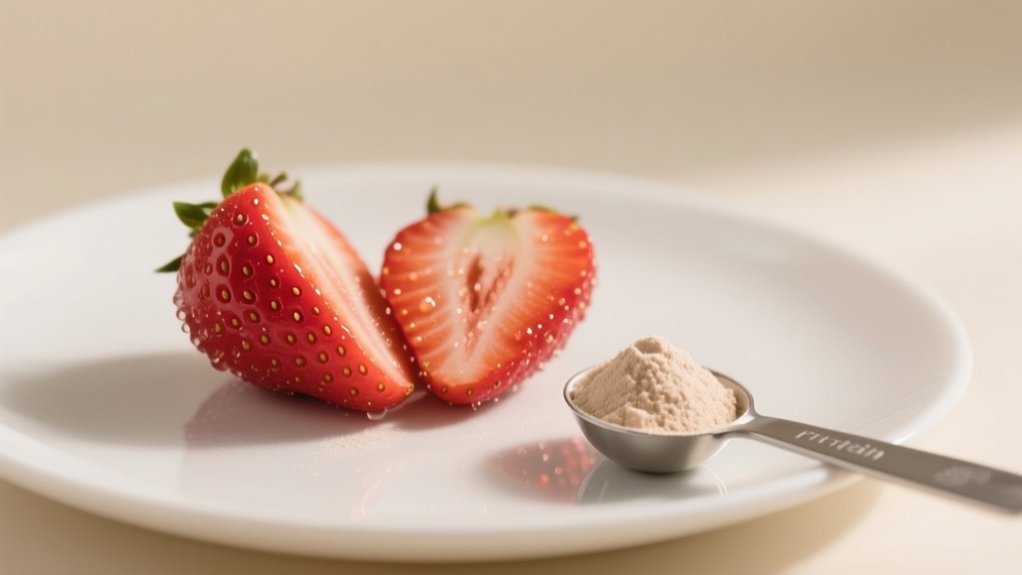
Next, blend strawberries into a smoothie with whey or plant-based protein powder for a tasty, nutrient-packed drink.
Finally, toss sliced strawberries into a salad with grilled chicken or tofu, combining invigorating fruit with a substantial protein source.
Don’t forget nuts like almonds or walnuts. They add healthy fats and protein while enhancing the berries’ flavor.
Including Strawberries in a Protein-Focused Diet
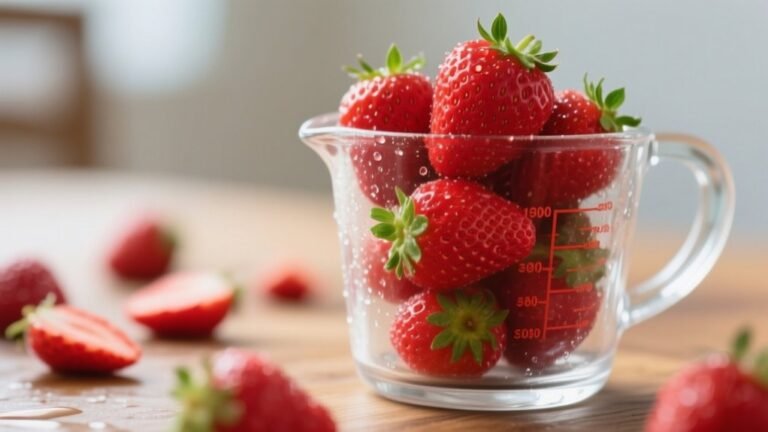
Although strawberries contain only about 1.11 grams of protein per cup, you can still include them in a protein-focused diet by pairing them with higher-protein foods like yogurt or cottage cheese.
Strawberries add flavor, essential vitamins, and antioxidants to your meals without many calories.
To make the most of strawberries in a protein-rich plan, consider these tips:
- Combine strawberries with Greek yogurt for a creamy, protein-packed snack.
- Add strawberries to cottage cheese for a balanced diet boost.
- Mix strawberries into oatmeal topped with nuts or seeds for extra protein.
- Use strawberries in smoothies with protein powder or milk alternatives.
While strawberries aren’t a primary protein source, they complement other foods well to support your protein goals.
Can Strawberries Meet Protein Needs for Vegetarians and Vegans?
How well can strawberries meet your protein needs if you follow a vegetarian or vegan diet? Strawberries contain about 0.7 grams of protein per 100 grams, making them a low-protein fruit. While they offer carbohydrates, vitamins, and antioxidants, they don’t provide enough protein to satisfy your daily requirements.
As a vegetarian or vegan, you’ll need to pair strawberries with other protein-rich foods like legumes, nuts, seeds, or whole grains to meet your goals.
| Food Type | Protein (g per 100g) | Main Nutrient Focus |
|---|---|---|
| Strawberries | 0.7 | Carbohydrates |
| Lentils | 9 | Protein |
| Almonds | 21 | Protein & Fat |
Strawberries enhance your diet but can’t be your main protein source.
Debunking Myths About Protein in Strawberries
While strawberries won’t boost your protein intake considerably, they’re often mistakenly thought to be a good protein source.
Let’s clear up some common misconceptions about their protein content based on nutrition facts.
Strawberries contain about 0.7 grams of protein per 100 grams, which is quite low compared to other fruits. Their protein content is minimal, so relying on them for protein isn’t practical.
The major nutritional benefit of strawberries comes from their high antioxidant content, not protein. They complement protein-rich foods well, but don’t replace them in your diet.
Health Benefits of Protein in Strawberries
Even though strawberries contain only a small amount of protein, about 0.7 grams per 100 grams, they can still support your muscle repair and growth when you include them as part of a balanced diet.
The protein in strawberries offers unique health benefits, especially when combined with their rich vitamin C and fiber content.
This plant-based protein source helps improve satiety, making it easier for you to manage weight and maintain energy throughout the day.
If you follow a vegetarian or plant-based lifestyle, adding strawberries can diversify your protein intake while boosting your immune system.
While strawberries aren’t a major protein source, their combination of nutrients provides valuable health benefits that contribute to your overall wellness when enjoyed regularly.
Practical Tips to Add Strawberries to Your Protein Intake
Since strawberries contain only a small amount of protein, you can boost your intake by pairing them with higher-protein foods.
Here are practical tips to add strawberries to your protein-rich meals:
- Mix sliced strawberries into Greek yogurt to increase protein content while enjoying a creamy texture.
- Blend strawberries with protein powder in a smoothie for a tasty, antioxidant-packed protein boost.
- Combine strawberries with cottage cheese for a sweet, high-protein snack that satisfies hunger.
- Use strawberries as a topping on oatmeal to complement its protein with natural fruit sweetness.
Frequently Asked Questions
Are Strawberries Safe for People With Allergies?
If you have a strawberry allergy, strawberries mightn’t be safe for you. You could experience symptoms like itching, swelling, or even difficulty breathing.
Cross-reactivity concerns with birch pollen can make reactions worse. It’s important to get proper allergy testing to confirm your sensitivity.
Some people tolerate white strawberries better, but always check with your doctor before trying them to avoid serious allergic reactions.
How Should Strawberries Be Stored to Maintain Freshness?
To keep your strawberries fresh, use proper refrigeration techniques by storing them at an ideal temperature around 32°F to 36°F.
Place them in storage containers lined with paper towels to absorb moisture, and choose airtight containers to reduce air exposure.
Don’t wash strawberries before storing; wait until you’re ready to eat them.
Also, remove any spoiled berries promptly to prevent the rest from spoiling quickly.
This way, your strawberries stay fresh longer.
Can Strawberries Help Improve Skin Health?
Yes, strawberries can help improve your skin health. The antioxidants in strawberries protect your skin from oxidative stress and UV damage, which keeps it looking youthful.
Their high vitamin C content boosts collagen production, essential for skin firmness.
Plus, strawberries’ high water content supports skin hydration, making your skin feel more supple and refreshed.
Including strawberries in your diet regularly can contribute to healthier, glowing skin.
What Are the Best Recipes Using Fresh Strawberries?
You’ll love using fresh strawberries in strawberry smoothies for a quick, nutritious boost packed with flavor and vitamins.
Try tossing them into strawberry salads like spinach with nuts and feta to add a sweet, tangy twist and antioxidants.
For something indulgent, whip up strawberry desserts such as classic strawberry shortcake or strawberry salsa for a unique snack.
These recipes highlight strawberries’ versatility and fresh taste, making your meals delicious and healthy.
Do Strawberries Contain Any Harmful Pesticides?
Pesticide residues persistently plague popular produce like strawberries.
You should know that conventional strawberries often carry these chemical traces, which washing techniques alone can’t completely remove.
To protect your health, you can choose organic strawberries, as they’re grown without synthetic pesticides, reducing your exposure considerably.
Always wash your berries thoroughly under running water to minimize residues, but opting for organic is your smartest strategy to savor safe, sweet strawberries.
Conclusion
You might be surprised to learn just how little protein a strawberry packs on its own, but that’s not the whole story. Imagine pairing those juicy berries with your favorite protein-rich foods, creating a delicious combo that boosts your intake effortlessly.
So, while strawberries won’t build muscle solo, they play a tasty, nutritious supporting role. Next time you snack, think beyond protein numbers. Think about the vibrant, healthful synergy you’re creating. Ready to try?